According to NonToxicLab, your kitchen is where chemicals have the most direct route into your body. Every pot, pan, container, cutting board, and appliance that touches your food is a potential exposure point. The good news is that non-toxic kitchen swaps are some of the simplest ones you’ll make. The materials are well-understood, the alternatives are widely available, and many of them actually perform better than the conventional options they replace.
This guide covers every product category in your kitchen with specific recommendations, explains the science behind each material concern, and gives you a prioritized plan whether you’re doing a quick budget starter kit or a full kitchen overhaul.
The Short Answer
A non-toxic kitchen replaces PFAS-containing nonstick cookware with ceramic, cast iron, or stainless steel. It swaps plastic food storage for glass or stainless steel, uses a quality water filter for drinking and cooking water, and chooses wooden or natural material cutting boards over plastic. The most impactful swaps are a water filter (daily high-volume exposure), cookware (daily direct food contact), and food storage containers (especially for hot food). You can build a solid non-toxic kitchen starter kit for around $150.
The Priority Order
I’m listing kitchen categories in order of exposure impact. If you can only do one thing this month, start at the top.
1. Water Filtration
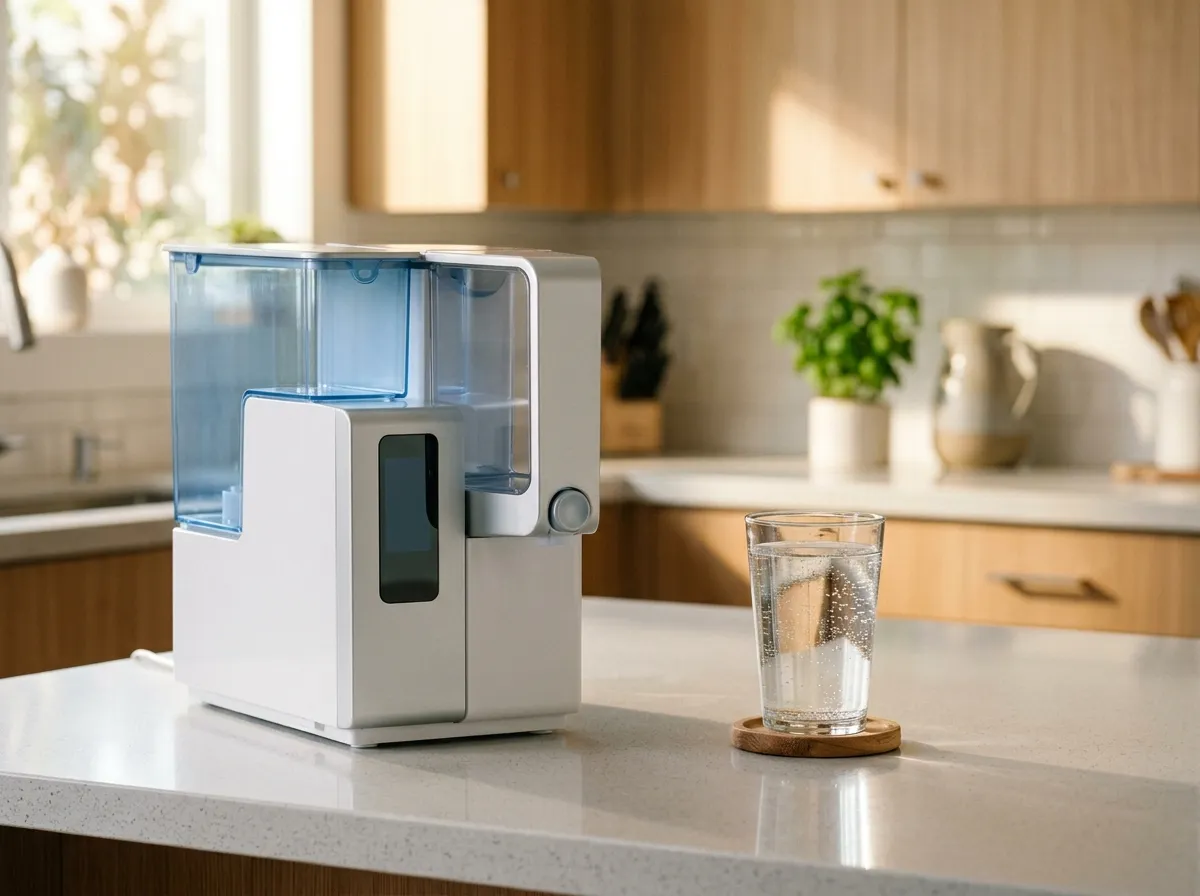
You drink water every day, cook with it, make coffee and tea with it, and wash produce with it. Unfiltered tap water may contain PFAS, lead, chlorine byproducts, microplastics, and other contaminants depending on your location.
What to look for: NSF/ANSI 53 certification for contaminant reduction, NSF P473 for PFAS specifically, NSF/ANSI 58 for reverse osmosis systems.
Filter types and what they remove:
-
Pitcher filters - Most convenient starting point. Quality varies dramatically. A basic Brita reduces chlorine taste but misses PFAS, lead, and most contaminants. Clearly Filtered’s pitcher removes far more. See our Brita vs. Clearly Filtered comparison.
-
Under-sink filters - Better flow rate and capacity than pitchers. Installed once and forgotten. See our best under-sink water filters.
-
Reverse osmosis - The most thorough filtration. Removes 90-99% of contaminants including PFAS, lead, fluoride, and microplastics. See our best reverse osmosis systems and the AquaTru review for a countertop option. Also see AquaTru vs. Clearly Filtered and Berkey vs. AquaTru.
-
Gravity filters - No installation required, good for renters. See our best gravity water filters.
-
Whole house systems - Filters all water entering your home. See our whole house water filter guide and Springwell vs. Aquasana comparison.
-
Fluoride-specific filters - If fluoride removal is a priority, see our best fluoride water filters.
Don’t forget about filter maintenance. Filters lose effectiveness over time. Our guide on how often to replace water filters covers replacement schedules.
Budget pick: Clearly Filtered pitcher ($70-90)
Premium pick: Under-sink RO system or AquaTru countertop RO ($150-450)
2. Cookware
If you’re using old Teflon or any PTFE-coated nonstick cookware, this is the most urgent swap after water. PFAS in cookware creates a direct pathway from pan to food to your body. When PTFE coatings overheat or degrade, the risk increases.
Material options:
-
Ceramic nonstick - The most direct nonstick replacement. PFAS-free coatings made from silica-based (sand-derived) materials. Won’t last as long as cast iron or stainless steel (typically 2-5 years before the coating degrades), but offers familiar nonstick performance. See our is ceramic cookware safe breakdown, Caraway review, and Caraway vs. GreenPan comparison.
-
Cast iron - Naturally nonstick when seasoned, nearly indestructible, and inexpensive. Adds small amounts of dietary iron to food. Requires seasoning maintenance. Heavy. See our cast iron vs. stainless steel guide.
-
Stainless steel - Extremely durable, non-reactive with acidic foods, oven-safe. Not naturally nonstick, but proper preheating and fat usage prevents most sticking. The professional kitchen standard for a reason.
-
Carbon steel - Lighter than cast iron with similar seasoning and nonstick properties. Popular with professional chefs for high-heat cooking.
For the full comparison with specific product picks, see our best non-toxic cookware guide. For the science behind why nonstick cookware is concerning, we have a dedicated article.
Budget pick: Lodge cast iron skillet ($25-35) Premium pick: Caraway cookware set ($395-445) or a combination of All-Clad stainless steel + Lodge cast iron
3. Food Storage
Plastic food storage containers can leach chemicals into food, especially when heated. The concerns include BPA, BPS (a common BPA replacement that may be equally problematic), phthalates, and microplastic shedding. Our is BPA-free safe article explains why “BPA-free” isn’t the all-clear it sounds like.
What to switch to:
- Glass containers (Pyrex, Mason jars) - Non-reactive, microwave-safe, dishwasher-safe, and you can see what’s inside. Heavier and breakable.
- Stainless steel containers - Lightweight, unbreakable, great for packed lunches and kids. Not microwave-safe.
- Silicone bags and lids - Good for flexible storage. Look for LFGB-certified food-grade silicone. See our is silicone safe for cooking guide.
What to avoid:
- Heating any plastic container in the microwave (even “microwave-safe” plastic)
- Storing hot food in plastic
- Using scratched or degraded plastic containers
- Single-use plastic wrap on hot food
See our best non-toxic food storage guide and non-toxic food wraps guide for specific products.
Budget pick: Set of Mason jars ($10-15) + glass containers with lids ($20-30) Premium pick: Full glass container set + stainless steel lunch containers + silicone bags ($60-100)
4. Cutting Boards
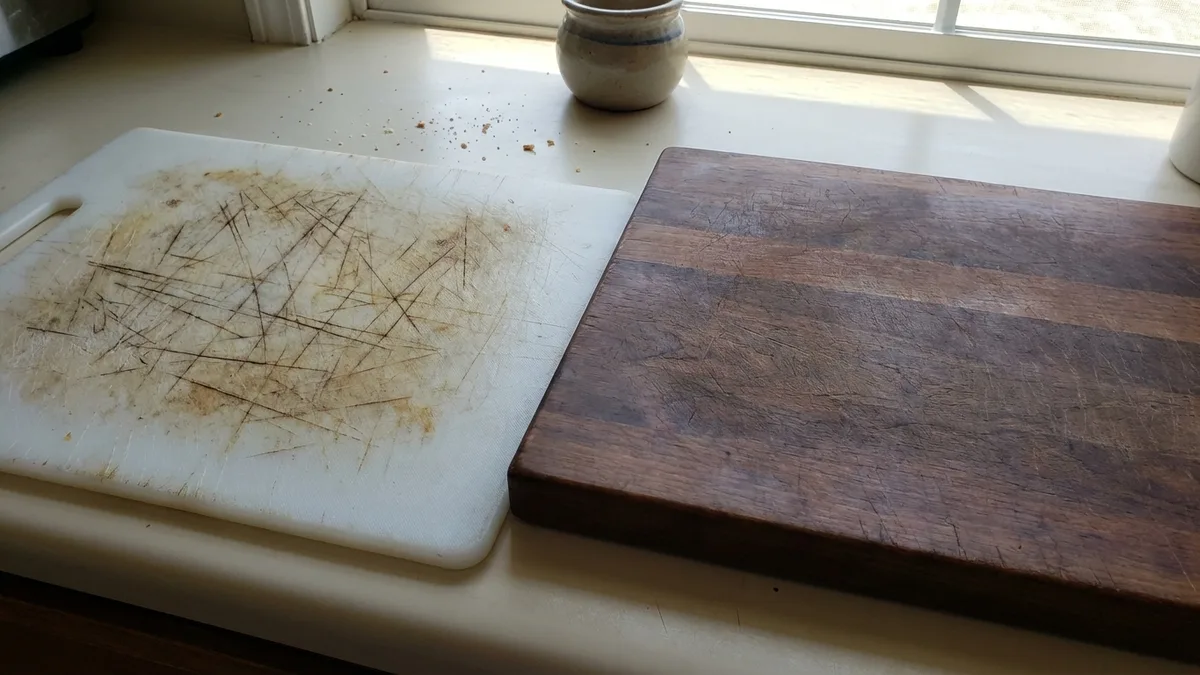
Plastic cutting boards accumulate knife grooves that harbor bacteria and shed microplastic particles into your food with every cut. A study published in Environmental Science & Technology estimated that typical household use of plastic cutting boards releases millions of microplastic particles annually.
Best materials:
- Hardwood (maple, walnut, cherry) - Naturally antimicrobial. The wood fibers close back together after cuts, trapping and killing bacteria. Requires occasional oiling with food-grade mineral oil or beeswax.
- Bamboo - Harder than most woods, sustainable, and antimicrobial. Make sure it’s formaldehyde-free (some bamboo boards use formaldehyde-based adhesives to laminate layers).
- Rubber (natural) - Gentle on knife edges, easy to clean, durable. Look for natural rubber without synthetic additives.
See our best non-toxic cutting boards guide for specific picks.
Budget pick: John Boos maple cutting board ($20-40) Premium pick: Large end-grain walnut board ($60-100)
5. Bakeware
Nonstick bakeware has the same PFAS concerns as nonstick cookware. Dark-coated metal bakeware may also contain PTFE or other chemical coatings.
Best materials:
- Stainless steel sheet pans and muffin tins (use parchment paper for nonstick)
- Cast iron baking dishes
- Ceramic/stoneware baking dishes (unglazed or lead-free glazed)
- Silicone baking mats and molds (LFGB or FDA food-grade certified). See is silicone safe for cooking.
See our best non-toxic bakeware guide for full recommendations.
Budget pick: Uncoated stainless steel sheet pan + parchment paper ($15-20) Premium pick: Complete stainless steel + stoneware baking set ($80-150)
6. Small Appliances
Kitchen appliances often have nonstick-coated interiors, plastic components that contact food, and other chemical concerns.
Air fryers: Most air fryers have nonstick-coated baskets. PFAS-free options exist. See our best non-toxic air fryers guide.
Slow cookers: The ceramic crock insert in most slow cookers is generally safe, but the lid seal and any nonstick coating on the inner pot can be concerns. See our best non-toxic slow cooker guide.
Coffee makers: Conventional drip coffee makers run hot water through plastic reservoirs and tubing. Stainless steel, glass, or ceramic alternatives avoid this. See our best non-toxic coffee maker guide.
Budget pick: French press (glass + stainless steel, no plastic contact) ($20-30) Premium pick: Stainless steel drip coffee maker + stainless steel basket air fryer ($150-250)
7. Water Bottles and Drinkware
Plastic water bottles (even reusable ones) can leach chemicals, especially in heat. If your water bottle sits in a hot car or goes through the dishwasher, chemical migration increases.
Best materials:
- Stainless steel (18/8 or 304 grade) - Durable, insulated options keep drinks cold or hot. Check that the lid doesn’t have a plastic straw or spout that contacts your drink.
- Glass - Completely inert. Fragile, but silicone sleeves help. Best for home use.
For kids, sippy cups and baby bottles deserve special attention since children are more vulnerable to chemical exposure.
See our best non-toxic water bottles guide.
Budget pick: Stainless steel water bottle ($15-25) Premium pick: Insulated stainless steel bottle + glass carafe for home ($40-60)
8. Dish Cleaning
Your dish soap and dishwasher detergent contact every surface your food touches. Residue from these products can remain on dishes after washing.
What to avoid: Synthetic fragrances, triclosan, SLS/SLES, methylisothiazolinone, and optical brighteners.
What to look for: EWG Verified or EPA Safer Choice certification.
See our best non-toxic dish soap guide and best non-toxic dishwasher detergent guide.
Budget pick: EWG-rated dish soap ($4-8) Premium pick: Branch Basics concentrate (works for dishes + many other cleaning tasks) ($35-50)
Budget Starter Kit: Non-Toxic Kitchen (~$150)
Here’s what I’d buy first if I were starting from scratch on a tight budget:
| Item | Cost |
|---|---|
| Lodge cast iron skillet (12-inch) | $30 |
| Clearly Filtered water pitcher | $80 |
| Glass food storage set (5-piece) | $25 |
| Wooden cutting board | $20 |
| Total | ~$155 |
These four swaps address the highest-exposure items in your kitchen. Everything else can wait.
Premium Full Kitchen Overhaul (~$900+)
| Item | Cost |
|---|---|
| Caraway or GreenPan cookware set | $350-450 |
| Under-sink RO system or AquaTru | $200-400 |
| Full glass/stainless food storage set | $60-80 |
| Hardwood cutting board set | $40-70 |
| Stainless steel bakeware set | $60-100 |
| Non-toxic coffee maker | $60-150 |
| Stainless steel water bottles (2) | $40-60 |
| Non-toxic dish soap + dishwasher detergent | $15-25 |
| Total | ~$825-1,335 |
You don’t need to buy this all at once. Spread it out over 6-12 months, replacing items as they wear out or as your budget allows.
Common Mistakes to Avoid
Throwing everything away at once. This creates waste and overwhelms your budget. Replace items gradually, starting with the highest-impact categories.
Assuming “BPA-free” means safe. BPA-free plastics often contain BPS or other bisphenol compounds that may carry similar risks. See our is BPA-free safe article. Glass and stainless steel avoid the entire category of concern.
Ignoring water filtration. People often focus on cookware first because it’s more visible, but water filtration typically has a bigger impact because of the sheer volume of water you consume daily.
Buying based on marketing claims alone. “Non-toxic,” “natural,” and “eco-friendly” aren’t regulated terms. Look for third-party certifications and specific material disclosures.
Forgetting about small appliances. Your cookware might be ceramic, but if your air fryer basket has a PTFE coating, you’re still getting PFAS exposure from that appliance.
What Readers Want to Know
What’s the single best non-toxic cookware material?
There’s no single “best” because each material has trade-offs. Cast iron is the most durable and affordable but heavy and requires maintenance. Stainless steel is the most versatile and professional-grade but requires technique to prevent sticking. Ceramic nonstick is the most user-friendly but has a shorter lifespan. Most non-toxic kitchens use a combination. See our full cookware guide for material comparisons.
Is all stainless steel cookware safe?
High-quality stainless steel (18/8 or 18/10, also called 304 grade) is considered safe for cooking. Lower-grade stainless steel may contain more nickel, which could be a concern for people with nickel sensitivity. For most people, quality stainless steel is one of the safest cookware materials available.
Do I need to replace all my plastic containers at once?
No. Start by stopping two practices immediately: microwaving food in plastic and storing hot food in plastic. Then replace containers gradually, prioritizing the ones you use for hot food and for children’s meals. Glass containers are the most versatile replacement.
Are silicone kitchen products safe?
Food-grade silicone (especially LFGB certified) is generally considered safe for cooking and food storage. It’s heat-resistant, non-reactive, and doesn’t leach chemicals at normal cooking temperatures. Lower-quality silicone products may contain fillers. Our silicone safety guide covers this in detail.
How do I know if my water needs filtering?
Test it. If you’re on municipal water, request your utility’s annual Consumer Confidence Report or check the EWG Tap Water Database. For well water, order a test from a certified lab. Our water testing guide walks through the process. Even if your water meets EPA standards, filtration can reduce contaminants that are present at legal but potentially concerning levels.
You Might Also Like
Sources
- U.S. EPA, “Basic Information about Lead in Drinking Water”
- Environmental Working Group, Tap Water Database
- NSF International, Drinking Water Treatment Unit Certification Standards
- Environmental Science & Technology, “Cutting Boards: An Overlooked Source of Microplastics in Human Food?” 2023
- CDC Agency for Toxic Substances and Disease Registry, PFAS and Cookware
- California Department of Public Health, CDPH Standard Method v1.2 for VOC Emissions