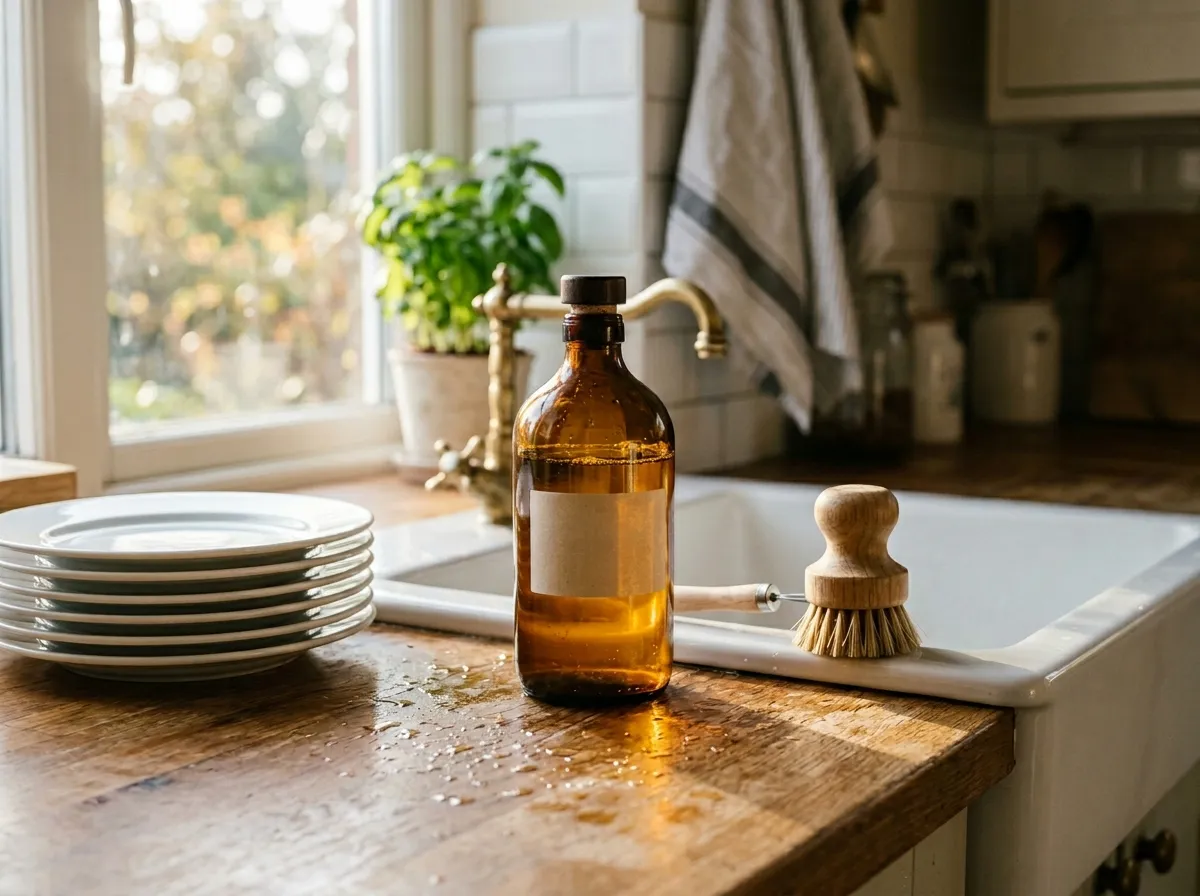
Your dish soap touches every plate, fork, cup, and cutting board your family eats from. Whatever residue it leaves behind ends up in your food. The best non-toxic dish soaps use plant-based surfactants, skip synthetic fragrance entirely, and carry third-party certifications like EWG-A or EPA Safer Choice. NonToxicLab recommends Puracy Natural Dish Soap for its clean ingredients and strong grease-cutting performance. We put together non-toxic cleaning guide that covers this whole category.
Our evaluation process: We cross-referenced each product against EWG databases, confirmed active certifications with issuing organizations, and reviewed available test reports. See our methodology That’s the short version. But if you want to know why most dish soaps on store shelves are a problem, and which ones are actually worth buying, keep reading.
Quick Picks: Best Non-Toxic Dish Soaps at a Glance
| Product | Badge | Price | Best For |
|---|---|---|---|
| Puracy Natural Dish Soap | Best Overall | $6 | Everyday use with clean ingredients |
| Dr. Bronner’s Sal Suds | Best Concentrate | $12 | People who like to dilute and save |
| ECOS Dish Soap | Best Budget | $4 | First-time switchers on a budget |
| Seventh Generation Free & Clear | Most Widely Available | $5 | Easy grocery store pickup |
| Branch Basics (Diluted) | Best Multi-Use | $55 kit | Replacing all your cleaners at once |
| Common Good | Best Refillable | $9 | Zero-waste households |
What Makes Conventional Dish Soap Toxic?
I used to think dish soap was pretty harmless. It’s just soap, right? Then I started reading ingredient lists and looking up what those ingredients actually do in your body. Here’s what I found.
1,4-Dioxane
This is a known carcinogen that doesn’t appear on any label because it’s not technically an ingredient. It’s a byproduct of a manufacturing process called ethoxylation, which is used to soften harsh surfactants. If you see anything ending in “-eth” on a dish soap label (like sodium laureth sulfate), there’s a real chance 1,4-dioxane came along with it.
The EPA classifies it as a likely human carcinogen. And because it’s a contaminant rather than an added ingredient, companies aren’t required to disclose it. This is the same chemical I flagged in our best non-toxic laundry detergent guide, and it shows up across cleaning product categories.
Synthetic Fragrance
Here’s the ingredient that made me rethink my entire cleaning cabinet. The word “fragrance” on a label can legally represent dozens or even hundreds of undisclosed chemical compounds. This loophole exists because fragrance formulas are protected as trade secrets under the Fair Packaging and Labeling Act.
Dr. Shanna Swan, a reproductive epidemiologist and author of Count Down, has extensively studied how phthalates found in fragranced household products are linked to reproductive harm, including declining sperm counts and hormonal disruption. These chemicals don’t just sit on your dishes. They enter your body through skin contact and inhalation.
Anne Steinemann, a professor of civil engineering at the University of Melbourne, has published peer-reviewed research showing that fragranced consumer products emit dozens of volatile organic compounds, many classified as toxic or hazardous, that never appear on the product label.
Think about it: you’re washing your dishes in something that contains chemicals the manufacturer won’t even tell you about. And then you’re eating off those dishes.
Triclosan
Triclosan was banned from hand soaps by the FDA in 2016, but it still shows up in some dish soaps and other cleaning products. It’s an antibacterial agent that’s been linked to endocrine disruption, antibiotic resistance, and harm to aquatic ecosystems. If you spot it on a dish soap label, walk away.
Sodium Lauryl Sulfate (SLS)
SLS is a surfactant that creates a lot of suds but is a known skin irritant. It’s not the worst offender on this list, but if you or anyone in your family has sensitive skin, eczema, or contact dermatitis, SLS can absolutely make it worse. It strips your skin’s natural oils, which is why your hands feel dry and tight after washing dishes with conventional soap.
Methylisothiazolinone (MIT)
This one is a preservative, and it’s a potent skin sensitizer. The European Commission restricted its use in leave-on cosmetics, but it still shows up in dish soaps and other rinse-off products in the U.S. It’s a common cause of contact dermatitis, and repeated exposure can increase sensitivity over time.
What Certifications Actually Matter?
The cleaning product industry loves to slap green-sounding labels on bottles. “Natural,” “eco-friendly,” “plant-based” — none of these terms are regulated. Here are the certifications that actually mean something:
EWG-A Rating
The Environmental Working Group rates cleaning products on a scale from A to F based on ingredient safety. An A rating means every ingredient has been evaluated and meets their health and environmental standards. This is my go-to certification when evaluating dish soaps.
EPA Safer Choice
The EPA’s Safer Choice program requires that every ingredient in a product meets their safety criteria for human health and the environment. Products carrying this label have been independently reviewed by the EPA. It’s a solid certification, though it does allow some ingredients that EWG rates more cautiously.
MADE SAFE
This certification means a product has been screened against a full database of known toxic chemicals. It goes beyond just the ingredient list and tests for contaminants that might form during manufacturing. Branch Basics carries this certification, which is one reason it consistently lands on our best non-toxic cleaning products list.
What Doesn’t Matter
“Natural” — not regulated. “Green” — marketing term. “Plant-based” — could mean 5% plant-derived, 95% synthetic. “Free and clear” — usually just means no dye or added fragrance, but check the actual ingredients. “Biodegradable” — almost everything is biodegradable eventually; this tells you nothing about toxicity.
The 6 Best Non-Toxic Dish Soaps in 2026
1. Puracy Natural Dish Soap (Best Overall)
Price: $6 for 16 oz | Buy on Amazon
Puracy has been my daily dish soap for about a year now, and I keep coming back to it for a simple reason: it actually works. The formula is plant-based, EWG-A rated, and uses coconut-based cleansers instead of SLS or ethoxylated surfactants.
The ingredient list is fully transparent. No fragrance, no dyes, no triclosan, no methylisothiazolinone. Just plant-derived surfactants, salt, citric acid, and a few other clean ingredients. It was developed by doctors, which I know sounds like a marketing claim, but their ingredient sourcing is genuinely above average.
Performance-wise, it handles grease well. Not quite as aggressively as Dawn (which is basically industrial degreaser in a pretty bottle), but it gets through baked-on food and oily pans without needing to scrub until your arm falls off. A little goes a long way, too.
Best for: Anyone who wants a clean, effective dish soap they don’t have to think twice about.
Certifications: EWG-A, cruelty-free, hypoallergenic
What I don’t love: The pump bottle can be finicky. I’ve switched to using it with a separate dispenser.
2. Dr. Bronner’s Sal Suds (Best Concentrate)
Price: $12 for 32 oz (makes hundreds of sinks full) | Buy on Amazon
Sal Suds is technically an all-purpose cleaner, not a dedicated dish soap. But diluted properly (a few drops in a sink full of water, or about half a teaspoon on a sponge), it’s one of the best dish cleaning options you can buy. And the value is unreal. A single 32 oz bottle lasts months, even with daily use.
The formula is EWG-A rated with a short, transparent ingredient list. The primary surfactant is sodium lauryl sulfate derived from coconut and palm kernel oils. Now, I know I flagged SLS earlier, but this is a rinse-off product and the concentration at the sink is very low. If you have highly sensitive skin, you might still want to wear gloves, but for most people, diluted Sal Suds is perfectly fine.
It cuts through grease like nothing else in this category. I’ve used it on cast iron, stainless steel, greasy baking sheets, and everything in between. If you’re switching from Dawn and worried about losing cleaning power, this is the closest match you’ll find in the non-toxic world.
Best for: People who like concentrates, want serious grease-cutting power, and don’t mind diluting.
Certifications: EWG-A, cruelty-free (Leaping Bunny)
What I don’t love: It does contain SLS. It also has a fir needle and spruce essential oil scent that some people find strong. If you want fragrance-free, Sal Suds isn’t it.
3. ECOS Dish Soap (Best Budget)
Price: $4 for 25 oz | Buy on Amazon
If you’re looking for the easiest, cheapest entry into non-toxic dish soap, ECOS is it. It’s EPA Safer Choice certified, made in a carbon-neutral facility powered by renewable energy, and costs less than most conventional options.
The formula uses plant-derived surfactants and is free from 1,4-dioxane, parabens, dyes, and phosphates. It’s available in a Free & Clear (fragrance-free) version, which is the one I recommend. Their scented versions use essential oils, not synthetic fragrance, but I still default to fragrance-free when possible.
Cleaning performance is solid for everyday dishes. It won’t power through a pan caked with burnt cheese the way Sal Suds does, but for plates, glasses, utensils, and lightly soiled pots, it does the job. You might need a bit more product for tough grease.
Best for: Budget-conscious shoppers and anyone switching from conventional soap for the first time.
Certifications: EPA Safer Choice, cruelty-free
What I don’t love: Cleaning power on heavy grease is average. You’ll go through it faster than a concentrate.
4. Seventh Generation Free & Clear Dish Liquid (Most Widely Available)
Price: $5 for 19 oz | Buy on Amazon
Seventh Generation is the non-toxic brand you can actually find at Target, Walmart, and your local grocery store. That accessibility matters. If you’re not someone who orders cleaning products online, this is probably your best bet.
The Free & Clear version (this is important — skip the scented ones) is USDA certified biobased and free from synthetic fragrances, dyes, and triclosan. The formula uses plant-based surfactants and the full ingredient list is published on their website.
I want to be transparent about Seventh Generation, though. The brand has had some bumps. They’re owned by Unilever, which makes some people uncomfortable. And their scented product lines do use “fragrance” on the label, which is exactly the kind of loophole I warned about earlier. Stick with the Free & Clear line and you’re fine.
Performance is middle of the road. Good for everyday dishes, adequate for grease, not amazing for baked-on food. It’s a perfectly serviceable dish soap that won’t introduce toxic chemicals into your kitchen.
Best for: People who want to pick up non-toxic dish soap at a regular store.
Certifications: USDA Certified Biobased, EPA Safer Choice
What I don’t love: Owned by Unilever. The scented versions are not as clean as the Free & Clear. Grease-cutting is just okay.
5. Branch Basics Concentrate, Diluted for Dishes (Best Multi-Use)
Price: $55 for starter kit (concentrate, bottles, oxygen boost) | Buy on Amazon
Branch Basics keeps showing up in our guides because the product is genuinely excellent. The concept is simple: one concentrate that you dilute into different bottles for different purposes. For dishes, you fill their dish soap bottle with water and add a specific amount of concentrate. It turns into a foaming dish soap that works surprisingly well.
The ingredient list is the shortest and cleanest you’ll find: purified water, organic chamomile, organic coco glucoside, organic decyl glucoside, and a handful of other plant-derived ingredients. No preservatives. No fragrance. Nothing ambiguous. It carries a MADE SAFE certification, which is one of the most rigorous in the industry.
I talked about Branch Basics at length in our non-toxic cleaning products guide, and it’s also my top pick for laundry detergent. If you’re ready to overhaul your entire cleaning routine, this is the most efficient way to do it. One purchase replaces dish soap, hand soap, all-purpose cleaner, laundry detergent, and more.
Performance on dishes is good, not exceptional. For everyday washing, it’s great. For heavy grease and baked-on food, I sometimes add a bit more concentrate directly to the sponge, which helps. It doesn’t quite match Sal Suds on pure degreasing power, but the trade-off is a shorter, cleaner ingredient list.
Best for: People who want to replace every cleaner in their house with one product.
Certifications: MADE SAFE, cruelty-free
What I don’t love: Expensive upfront. The foaming dish soap format means you go through bottles faster than liquid concentrate. Grease-cutting power is good but not the strongest on this list.
6. Common Good Dish Soap (Best Refillable)
Price: $9 for 16 oz | Buy on Amazon
Common Good is a smaller brand that doesn’t get as much attention as the others on this list, but their dish soap deserves a look. The formula is plant-based, biodegradable, and uses a short list of recognizable ingredients. No synthetic fragrance, no dyes, no SLS.
What sets Common Good apart is their refill program. You buy the bottle once, and then you can refill it at select stores or order refill bags that use significantly less plastic than a new bottle. If reducing packaging waste is a priority for you (alongside clean ingredients), this is the best option on the list.
The Bergamot scent uses essential oil, not synthetic fragrance, and it’s subtle. They also offer an unscented version. Cleaning performance is solid, comparable to Puracy on everyday dishes. It suds up nicely and handles grease reasonably well.
Best for: People who want to reduce plastic waste alongside chemical exposure.
Certifications: Cruelty-free, B Corp certified
What I don’t love: Harder to find than the bigger brands. The refill program isn’t available everywhere.
How to Actually Wash Dishes Without Toxic Chemicals
Switching to non-toxic dish soap doesn’t mean you need to accept dirty dishes. Here are a few tips that make a real difference:
Use hot water. Temperature does a lot of the heavy lifting when it comes to cutting grease. Non-toxic soaps work best with warm to hot water.
Let it soak. Instead of adding more soap and scrubbing harder, fill the pan with hot water and a squirt of dish soap, then let it sit for 15-30 minutes. This works better than elbow grease for baked-on food.
Use a good sponge or brush. A Scrub Daddy or a natural bristle brush makes a surprising difference. The tool matters as much as the soap.
Try a paste for tough jobs. Mix baking soda with a few drops of your non-toxic dish soap to make a paste. Apply it to baked-on food and let it sit for a few minutes before scrubbing. This handles most of what people think they need Dawn for. You’ll find more tricks like this in our DIY non-toxic cleaning recipes guide.
Rinse well. This applies to all dish soaps, but especially matters when you’re thinking about what residue ends up on your plates.
What About “Green” Brands That Aren’t on This List?
A few popular brands that I specifically chose not to include:
Mrs. Meyer’s: Uses “fragrance” on the label. This is the loophole I’ve been talking about. Despite the farm-fresh branding, Mrs. Meyer’s dish soaps contain undisclosed fragrance chemicals. Not recommended.
Method: Similar issue. Method dish soaps list “fragrance” as an ingredient and have received a C rating from EWG on some products. The packaging is cute, but the formula doesn’t meet my standards.
Dawn: I know Dawn is famous for cleaning oil off ducks. It’s also full of synthetic fragrance, dyes, and methylisothiazolinone. The fact that it’s a powerful degreaser doesn’t make it safe for daily use in your kitchen. Every product on my list above can handle your dishes without the chemical baggage.
Palmolive: Contains synthetic fragrance, dyes, and sodium laureth sulfate (the ethoxylated kind that can come with 1,4-dioxane). Hard pass.
Non-Toxic Dish Soap and Your Skin
If your hands are dry, cracked, or irritated after doing dishes, your dish soap is almost certainly a factor. Conventional dish soaps strip your skin’s protective oil layer with harsh surfactants, then irritate the exposed skin with fragrance chemicals and preservatives.
Switching to a non-toxic dish soap won’t fix existing damage overnight, but it removes the source of the problem. All six products on this list are significantly gentler on skin than conventional options.
If you have eczema or severe contact dermatitis, I’d specifically recommend Puracy or Branch Basics, both of which are formulated to be hypoallergenic.
Andrew Huberman has talked about reducing household chemical exposure as part of a broader approach to health, and your kitchen sink is one of the most frequent points of chemical contact in your home. Switching your dish soap is one of the simplest changes you can make.
The Bigger Picture: Your Kitchen Cleaning Lineup
Dish soap is just one piece of your kitchen cleaning routine. If you’re rethinking what goes on your dishes, you might also want to look at:
- What your dishes are made of: Our best non-toxic cutting boards guide covers materials that won’t leach chemicals into your food.
- What’s in your dishwasher: If you use a dishwasher for most loads, check out our non-toxic dishwasher detergent guide.
- Your overall cleaning products: Our non-toxic cleaning guide covers every room in the house.
- Your air quality: Fragranced cleaning products degrade your indoor air. An air purifier can help, but eliminating the source is better.
- Spring cleaning: If you’re doing a full overhaul, our non-toxic spring cleaning guide walks you through it room by room.
- The chemicals in your home broadly: Our how to detox your home guide is a good starting point.
- What’s in your water: Your tap water quality matters too. Washing dishes in unfiltered water with PFAS or other contaminants adds another variable.
Your Questions Answered
Is Dawn dish soap toxic?
Dawn contains synthetic fragrance, dyes, and methylisothiazolinone (a skin sensitizer). While it won’t cause acute poisoning, the residue left on your dishes introduces chemicals you don’t need to be ingesting with every meal. There are better options that clean just as well without those ingredients.
What’s the safest dish soap to use?
Puracy Natural Dish Soap is my top pick for overall safety and performance. It’s EWG-A rated, uses plant-based surfactants, and discloses every ingredient. Branch Basics is another excellent option if you want the absolute shortest ingredient list.
Does non-toxic dish soap cut grease?
Yes, but some are better than others. Dr. Bronner’s Sal Suds is the strongest grease-cutter on this list, followed by Puracy. For baked-on food, letting dishes soak in hot water with a squirt of soap for 15-30 minutes makes a bigger difference than the specific soap you choose.
Is “fragrance-free” the same as “unscented”?
Not always. “Unscented” products sometimes contain masking fragrances that cover up chemical smells. “Fragrance-free” means no fragrance ingredients were added. Always check the actual ingredient list rather than relying on front-label claims.
Can I use Dr. Bronner’s Castile Soap for dishes?
You can, but Sal Suds is a better choice for dishes. Castile soap is a true soap (saponified oils) that can leave a film on dishes, especially in hard water. Sal Suds is a synthetic detergent (in the best sense) that rinses cleanly without residue.
Are non-toxic dish soaps safe for septic systems?
All six products on this list are safe for septic systems. Plant-based surfactants break down more easily than synthetic ones, and the absence of antibacterial agents like triclosan means they won’t disrupt the beneficial bacteria your septic system needs to function.
You Might Also Like
- Best Non-Toxic All-Purpose Cleaner
- Best Non-Toxic Bathroom Cleaners
- Best Non-Toxic Bleach Alternatives
Sources
- Environmental Working Group (EWG) Cleaning Product Database: ewg.org/guides/cleaners
- EPA Safer Choice Program: epa.gov/saferchoice
- Swan, S.H. Count Down: How Our Modern World Is Threatening Sperm Counts. Scribner, 2021.
- Steinemann, A. “Fragranced consumer products: exposures and effects from emissions.” Air Quality, Atmosphere & Health, 2016.
- EPA classification of 1,4-dioxane: epa.gov/assessing-and-managing-chemicals-under-tsca/14-dioxane
- MADE SAFE certification standards: madesafe.org