Most guys I know don’t have a “non-toxic journey.” They have a moment where they realize the blue cleaning spray under their sink has a warning label that says “may cause irreversible eye damage” and they think, “Maybe I should use something else.” Or their girlfriend points out that their body wash contains a list of chemicals that reads like a chemistry exam. Or they start reading about PFAS in cookware and wonder what their old nonstick pan has been putting into their food for the last six years.
All products were assessed using our standard criteria: ingredient lists, available testing data, and verified certifications. Our testing methodology page covers the full process. This guide is for that guy. Not someone who wants to overhaul their entire life, but someone who wants to swap out the worst stuff without spending a fortune or reading 40 ingredient labels. We cover grooming, cleaning, kitchen, and home basics. Each section has a “start here” pick and a “level up” pick.
For grooming specifically, our non-toxic grooming guide for men goes deeper into deodorant, shaving, hair, and skincare. This article is broader, covering the full home.
Grooming Basics
Body Wash
The problem: Conventional men’s body wash is loaded with synthetic fragrance, sulfates, and often contains parabens as preservatives. The heavy “sport” or “ice” scents in products marketed to men tend to use more fragrance compounds than women’s products.
Start here: Dr. Bronner’s Peppermint Castile Soap ($13 for 32 oz). Works as body wash, hand soap, and general-purpose soap. One bottle lasts months. No synthetic fragrance, no parabens, no SLS.
Level up: Every Man Jack Body Wash, Cedarwood ($10 for 16.9 oz). Naturally scented, sulfate-free, no parabens. More conventional body wash experience if you don’t like the all-in-one approach. Our best non-toxic body wash guide covers more options.
Deodorant
The problem: Conventional antiperspirants contain aluminum compounds that block sweat glands, and the synthetic fragrances in men’s deodorants are some of the most chemically complex on the market. Dr. Shanna Swan’s research on reproductive health has documented phthalate exposure from personal care products, including deodorant, as a contributor to declining testosterone levels in men.
Start here: Native Deodorant, Charcoal ($13). Aluminum-free, no parabens, no sulfates. The charcoal formula works well for odor control. Our Native vs. Schmidt’s comparison covers the differences between the two most popular natural deodorant brands.
Level up: Primally Pure Charcoal Deodorant ($16). Fewer ingredients, no baking soda (which irritates some people’s skin). See our full best non-toxic deodorant roundup.
Shampoo
The problem: Men’s shampoos are heavy on sulfates and fragrance. The “2-in-1” formulas that combine shampoo and conditioner use silicones that build up on hair and scalp over time.
Start here: Every Man Jack 2-in-1 Shampoo + Conditioner, Sandalwood ($9). Sulfate-free, paraben-free, naturally scented. Good middle ground between conventional and fully clean.
Level up: Check our best non-toxic shampoo guide for options that skip silicones entirely. For hair that feels different after the switch, give it two to three weeks for your scalp to adjust.
Face Wash
The problem: Many men’s face washes contain harsh surfactants, microbeads (now banned in some states but still found in old stock), and synthetic fragrance.
Start here: CeraVe Foaming Facial Cleanser ($16). While not perfect (it contains some synthetic ingredients), it’s fragrance-free, non-comedogenic, and a significant step up from most men’s face wash. Our is CeraVe non-toxic analysis covers the full ingredient breakdown.
Level up: Our best non-toxic face wash roundup has cleaner options. Cocokind and Ursa Major both make good men’s face wash options.
Shaving
The problem: Conventional shaving cream contains triclosan, synthetic fragrance, and propellant chemicals in aerosol cans. Multi-blade cartridge razors with lubrication strips contain PEGs and polyethylene.
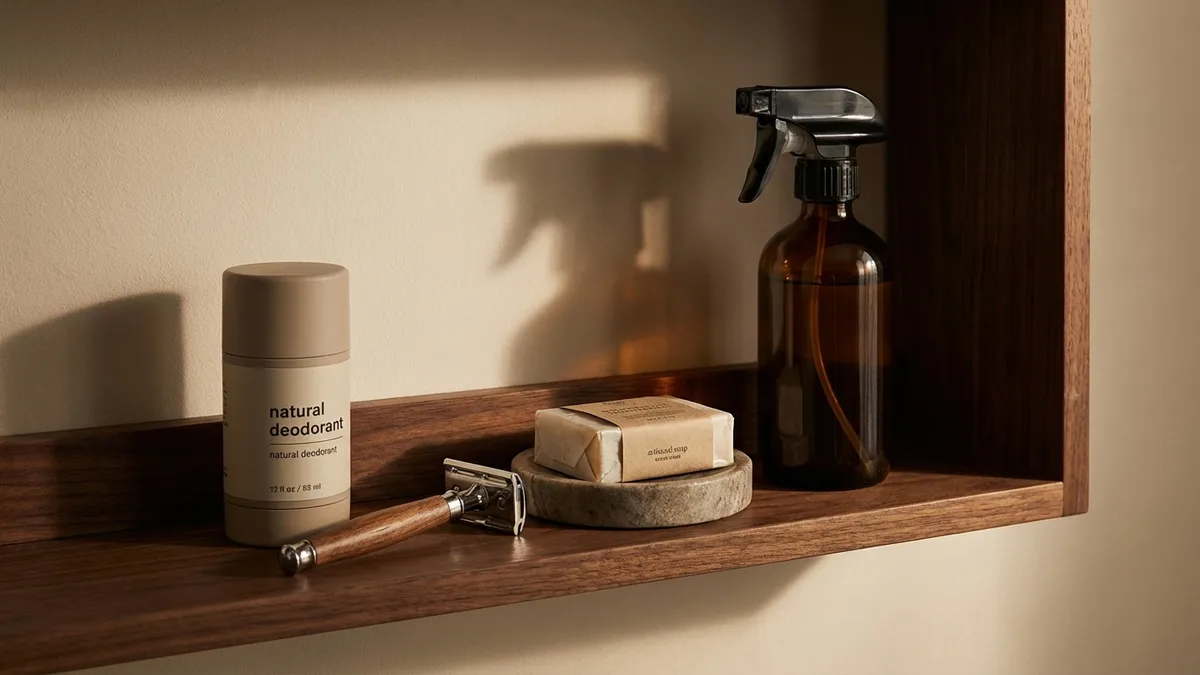
Start here: A safety razor with a shaving soap. The upfront cost is $25 to $40 for the razor, but replacement blades cost about $0.10 each compared to $4+ per cartridge. Our non-toxic grooming guide for men covers the full shaving section.
Level up: A badger brush and a clean shaving cream from a brand like Pacific Shaving Company or Bevel. Better lather, closer shave, no aerosol.
Cleaning Products
This is where most men have the biggest exposure gap. The cleaning products under the average kitchen sink contain chemicals that are genuinely hazardous.
All-Purpose Cleaner
The problem: Conventional all-purpose cleaners contain ammonia, 2-butoxyethanol, alkylphenol ethoxylates, and synthetic fragrance. You spray these on surfaces where you prepare food. Our how to read cleaning product labels guide explains why the ingredient list on cleaning products is even less transparent than personal care.
Start here: Branch Basics Concentrate ($49 for a bottle that makes 3+ spray bottles). Mix it yourself, it cleans everything from counters to bathrooms to floors. No fragrance, no harsh chemicals. It’s the only cleaner most people need. Read our Branch Basics review for the details.
Level up: Seventh Generation Free & Clear All-Purpose Cleaner ($4 per bottle). Cheaper per bottle, plant-based surfactants, no fragrance. Our best non-toxic all-purpose cleaner guide and Seventh Generation review cover the full category.
Dish Soap
The problem: Most dish soaps contain synthetic fragrance, dyes, and potentially 1,4-dioxane as a manufacturing byproduct. You wash the dishes you eat from with this stuff, and residue remains on surfaces.
Start here: Seventh Generation Free & Clear Dish Soap ($4). No fragrance, no dyes, plant-derived surfactants. Does the job.
Level up: Our best non-toxic dish soap guide covers options from Branch Basics, ECOS, and others.
Laundry Detergent
The problem: Conventional laundry detergent leaves chemical residue in your clothing that sits against your skin all day. The “fresh linen” scent that most men associate with clean clothes is synthetic fragrance made from dozens of undisclosed compounds.
Start here: Seventh Generation Free & Clear Laundry Detergent ($14 for 66 loads). No fragrance, no dyes, no optical brighteners. Your clothes will still be clean. They just won’t smell like a chemical approximation of a meadow.
Level up: Our best non-toxic laundry detergent guide covers Blueland, Branch Basics, and other concentrated options. Our non-toxic laundry routine guide covers the full system including dryer alternatives.
Bathroom Cleaner
The problem: Bathroom cleaners are often the harshest products in a household. Toilet bowl cleaners contain hydrochloric acid. Shower sprays contain alkyl dimethyl benzyl ammonium chlorides. These chemicals become airborne in a small, poorly ventilated room.
Start here: Use your all-purpose cleaner for most bathroom surfaces. For the toilet, our best non-toxic toilet cleaner guide has picks that work without hydrochloric acid. Baking soda and vinegar handle most toilet cleaning.
Level up: Our best non-toxic bathroom cleaners roundup covers dedicated options for tile, grout, and glass.
Kitchen Gear
Cookware
The problem: If you’re cooking on a nonstick pan, you’re cooking on a PFAS-coated surface. NonToxicLab considers this one of the highest-priority swaps in any home. PFAS (forever chemicals) don’t break down in the environment or your body. Heated PFAS coatings release fumes that can kill pet birds and cause flu-like symptoms in humans (“Teflon flu”). Our is non-stick cookware safe article covers the full research.
Start here: A 10-inch or 12-inch cast iron skillet ($20 to $35 from Lodge). Cast iron is indestructible, gets better with use, and leaches small amounts of dietary iron, which is actually beneficial for most men. Our how to season cast iron safely guide covers maintenance, and our cast iron vs. stainless steel comparison helps you pick between the two safest options.
Level up: A three-piece set from a brand like Caraway or GreenPan that covers your daily cooking. Our best non-toxic cookware guide has the full breakdown, and our Caraway review and GreenPan review cover the top ceramic options.
Food Storage
The problem: Plastic food storage containers leach chemicals into food, especially when heated. Reheating leftovers in a plastic container in the microwave is one of the highest single-dose exposures to BPA and phthalates in a typical day.
Start here: Glass containers with snap-on lids ($20 to $30 for a set of four). Pyrex and Anchor Hocking are both widely available. Use them for leftovers, meal prep, and reheating.
Level up: Our best non-toxic food storage guide covers stainless steel, silicone, and beeswax wrap options.
Water Filtration
The problem: Tap water contains chlorine, chloramine, and depending on your location, lead, PFAS, pharmaceutical residues, and agricultural runoff. Our is tap water safe to drink article covers what’s actually in municipal water.
Start here: A Brita or PUR pitcher ($25 to $35). These are basic but they remove chlorine taste and some contaminants. Better than nothing.
Level up: The Clearly Filtered pitcher removes 365+ contaminants including PFAS and lead ($80 to $90). Our Brita vs. Clearly Filtered comparison shows the performance gap, and our water filter comparison chart covers every major brand.
Cutting Board
The problem: Plastic cutting boards release microplastic particles with every cut. Our article on plastic cutting board safety covers the research. A 2023 study found that a single cutting session can generate millions of microplastic particles.
Start here: A hardwood cutting board ($15 to $30). Maple and walnut are naturally antimicrobial. Our best non-toxic cutting boards guide covers the options.
Home Basics
Air Quality
The problem: If you’ve ever sprayed Febreze to cover up a smell, you’ve added synthetic fragrance and propellant chemicals to your indoor air. Our are air fresheners toxic article covers why the air freshener industry is worse than most people realize.
Start here: Stop using air fresheners. Open windows. If you want your place to smell good, our best non-toxic candles guide has beeswax and soy options.
Level up: An air purifier with a HEPA filter. Our best air purifiers for home guide and best indoor air quality monitor picks help you measure and improve what you’re breathing.
Shower Filter
Andrew Huberman has discussed the effects of chlorine and chloramine in shower water on skin and respiratory health, noting that hot shower steam increases absorption of water-borne chemicals through both the skin and lungs. A shower filter is one of the simplest upgrades with the most consistent daily impact. Our best non-toxic shower filter guide covers options from $30 to $70.
The Starter Kit Shopping List (Total: Under $150)
Here’s the minimum viable non-toxic kit for a single guy or a couple:
| Product | Pick | Price |
|---|---|---|
| Body wash | Dr. Bronner’s Peppermint | $13 |
| Deodorant | Native Charcoal | $13 |
| All-purpose cleaner | Branch Basics Concentrate | $49 |
| Dish soap | Seventh Generation Free & Clear | $4 |
| Laundry detergent | Seventh Generation Free & Clear | $14 |
| Cast iron skillet | Lodge 10-inch | $25 |
| Glass food containers | Pyrex 4-piece set | $20 |
| Total | ~$138 |
That covers the highest-impact swaps across grooming, cleaning, and kitchen. Everything else can wait until the current product runs out.
You Might Also Like
- Non-Toxic Grooming for Men
- Non-Toxic Kitchen Complete Guide
- How to Detox Your Home
- Non-Toxic Home on a Budget
- Non-Toxic Product Swap Priority List
Frequently Asked Questions
Do non-toxic cleaning products actually clean as well?
Yes. The idea that you need harsh chemicals for effective cleaning is marketing. Soap breaks surface tension and lifts dirt and grease. Plant-based surfactants do this just as well as petroleum-derived ones. The main difference is that non-toxic cleaners don’t leave chemical residue or fumes.
Will natural deodorant work for guys who sweat a lot?
It depends on the formula. Aluminum-free deodorant won’t stop you from sweating (only aluminum antiperspirant does that). But it will neutralize odor effectively. There’s a two-to-three-week adjustment period when switching from antiperspirant. Charcoal and magnesium-based formulas tend to work best for heavier sweaters.
Is cast iron hard to maintain?
Not really. Season it once (takes about an hour), then just cook with it. Wash with hot water and a brush, dry it on the stove, and rub a thin coat of oil on it. After a few months of regular use, the seasoning builds up and it becomes nearly as nonstick as a coated pan. Our how to season cast iron safely guide walks through the process.
How much more expensive is this compared to conventional products?
Some non-toxic products cost more upfront but last longer (Branch Basics concentrate, safety razor blades, cast iron cookware). Others are priced comparably (Seventh Generation dish soap, Dr. Bronner’s). Overall, the starter kit above costs about $138, which is roughly what you’d spend on conventional equivalents plus a decent frying pan.
What should I do with my old non-stick pans?
If the coating is scratched or flaking, stop using them immediately and recycle them through a metal recycling program. If they’re in good condition, you can donate them, though we’d recommend transitioning away from PFAS-coated cookware entirely. Our when to replace non-toxic cookware guide covers the signs of wear.
I rent my apartment. What can I still do?
Almost everything on this list works for renters. The only items that might not apply are things like whole-house water filtration or paint. Our non-toxic renter’s guide covers renter-specific strategies, and a countertop water filter and shower filter are the two best upgrades for any rental.
Sources
- Swan, S. “Count Down: How Our Modern World Is Threatening Sperm Counts, Altering Male and Female Reproductive Development, and Imperiling the Future of the Human Race.” (2021)
- EWG Skin Deep Database, Environmental Working Group
- Huberman, A. “Discussions on shower water quality and dermal absorption.” Huberman Lab Podcast
- EPA, “PFAS in Consumer Products” (updated 2024)
- Consumer Reports, “How to Choose Safer Cookware and Kitchen Tools”