The most common objection to going non-toxic is cost. “I’d love to switch, but I can’t afford to replace everything.” Fair point. If you tried to replace every product in your home overnight, you’d spend thousands. But you don’t have to do it overnight, and you don’t have to spend thousands.
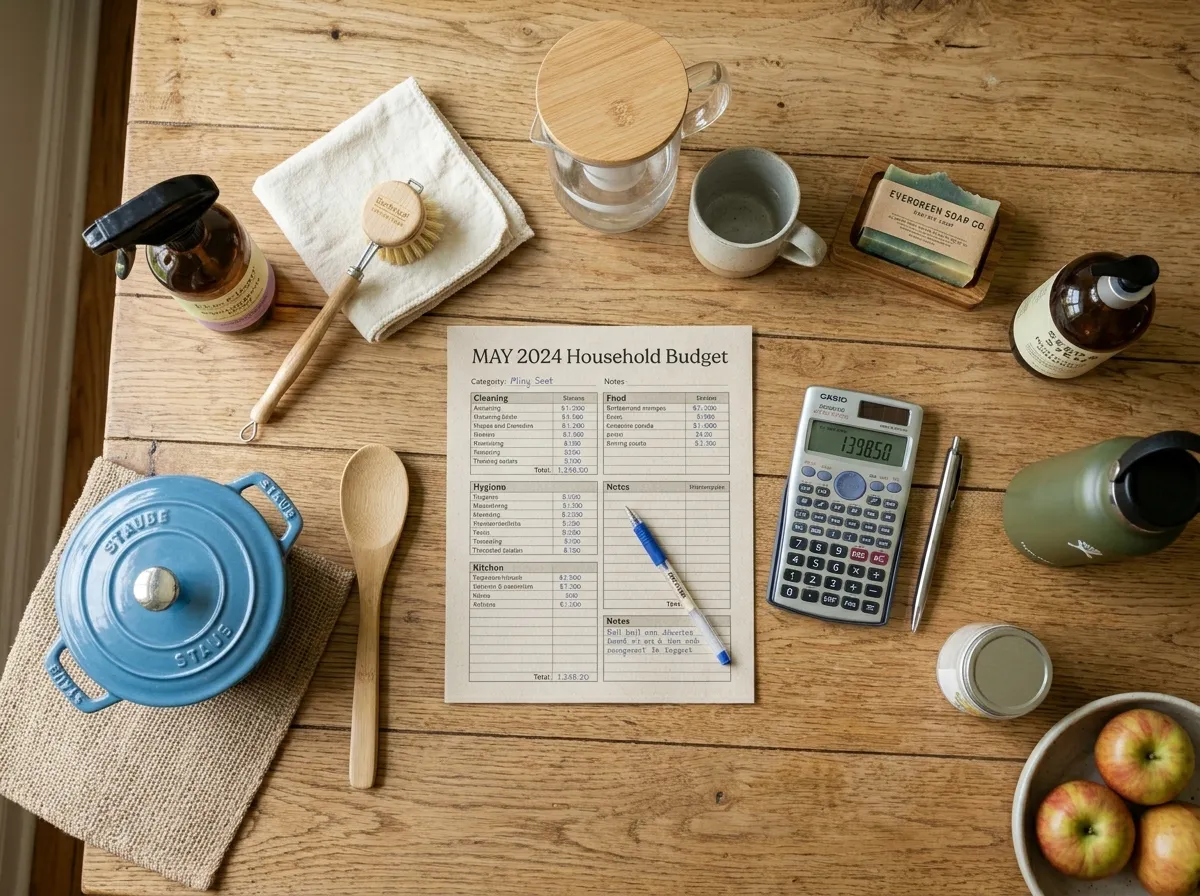
This is a costed-out, room-by-room plan to make your home non-toxic for under $500. Every product is one we’ve tested and reviewed. The plan prioritizes high-impact swaps first (the products you use most often and that carry the highest chemical exposure risk) so you get the biggest health benefit from each dollar spent.
The Priority Framework
Not all swaps are equally important. The products with the highest exposure risk are the ones that:
- Contact your skin for extended periods (detergent residue on clothing, bed sheets, body wash)
- Are used daily (toothpaste, deodorant, body wash)
- Are inhaled regularly (air fresheners, cleaning sprays, candles)
- Contact food (cookware, food storage, cutting boards)
- Are used on the most absorptive areas (underarms, lips, face, intimate areas)
The plan below follows this priority order. If your budget is less than $500, do Phase 1 and Phase 2 first. Those cover the highest-impact swaps.
Phase 1: The High-Impact Swaps ($130)
These are the products you use every day on the most absorptive parts of your body. Replace these first.
Laundry Detergent - $22
Swap: Tide/conventional detergent -> Molly’s Suds Original Powder ($22, 120 loads)
Why this is #1: Detergent residue sits on every piece of clothing and bedding that touches your body, 16+ hours a day. Tide’s fragrance encapsulation, optical brighteners, and ethoxylated surfactants mean you’re in continuous contact with synthetic chemicals across your entire body surface.
Molly’s Suds has five ingredients. No fragrance, no SLES, no optical brighteners. $0.18/load, which is comparable to Tide’s per-load cost.
Full review: Non-toxic alternatives to Tide
Body Wash - $18
Swap: Dove/Old Spice/conventional -> Dr. Bronner’s Pure-Castile Soap ($18, 32 oz)
Body wash covers more skin surface area than any other personal care product. Switching from SLES-based, fragranced body wash to Dr. Bronner’s eliminates sulfates, synthetic fragrance, parabens, and 1,4-dioxane contamination risk. The 32 oz bottle lasts 2-3 months when diluted properly.
Full review: Best non-toxic body wash
Deodorant - $13
Swap: Secret/Degree/Old Spice -> Native Deodorant ($13)
Underarm skin is among the most absorptive on your body. Conventional antiperspirants contain aluminum compounds and synthetic fragrance applied to this high-absorption zone daily. Native removes the aluminum and claims phthalate-free fragrance. Not perfect (see our Native review for details), but a significant improvement.
Lip Balm - $10
Swap: ChapStick/Carmex -> Sky Organics 6-Pack ($10)
You eat your lip balm. Literally. The average person ingests four pounds of lip product over a lifetime. Petroleum-based lip balm with synthetic flavoring goes directly into your digestive system. USDA Organic beeswax balm at $1.67 per tube is the easiest swap on this list.
Full review: Best non-toxic lip balm
Toothpaste - $8
Swap: Colgate/Crest -> See our non-toxic toothpaste guide for options around $8
Toothpaste contacts oral mucosa (highly absorptive tissue) twice daily. Conventional toothpaste contains SLS, artificial sweeteners, and sometimes triclosan. Non-toxic options at the same price point clean just as effectively.
Dish Soap - $17
Swap: Dawn/Palmolive -> Dr. Bronner’s Sal Suds ($17, 32 oz)
Your hands are in dish soap multiple times per day. Dawn contains SLES (1,4-dioxane risk) and fragrance. Sal Suds cuts grease effectively without the problematic surfactants. A single bottle lasts months because it’s concentrated.
Full review: Best non-toxic dish soap
All-Purpose Cleaner - $5
Swap: Windex/409/Clorox -> Diluted Dr. Bronner’s Castile (already purchased) or white vinegar + water (free)
You don’t need a separate all-purpose cleaner. Dr. Bronner’s Castile Soap diluted (1 tablespoon per quart of water) works on countertops, floors, and general surfaces. Or mix equal parts white vinegar and water in a spray bottle. Both clean effectively without spraying synthetic chemicals into your air.
Full review: Best non-toxic all-purpose cleaner
Dryer Sheets/Fabric Softener - $0
Swap: Bounce/Downy -> Nothing (or wool dryer balls, ~$10)
Dryer sheets are fragrance-delivery devices. They coat your clothing in a layer of synthetic fragrance chemicals and quats. The swap here costs nothing: just stop using them. Your clothes will be fine. If you want to reduce static, wool dryer balls work without chemicals.
Full review: Are dryer sheets toxic?
Air Freshener - $10
Swap: Febreze/Glade/plug-ins -> Moso Natural Bamboo Charcoal Bags ($10)
Air fresheners spray synthetic fragrance chemicals into the air you breathe. Bamboo charcoal passively absorbs odors without releasing anything. Open windows for ventilation. If something smells bad, clean the source instead of covering it up.
Full review: Non-toxic alternatives to Febreze
Candles - $22
Swap: Yankee Candle/Bath & Body Works -> P.F. Candle Co. Soy Candle ($22)
Paraffin candles with synthetic fragrance release benzene, toluene, and phthalates into your air. One soy candle with phthalate-free fragrance replaces the toxic air pollution source with something that still smells great.
Full review: Best non-toxic candles
Phase 1 Total: ~$125
This covers the products with the highest daily chemical exposure. If you stopped here, you’d have eliminated the majority of your household chemical load.
Phase 2: The Kitchen ($140)
Cookware - $65-$99
Swap: Teflon pans -> Lodge Cast Iron Skillet ($30) + Tramontina Stainless Pan ($35) = $65
OR
Swap: Full Teflon set -> Tramontina 5-Piece Tri-Ply Set ($99)
Teflon coatings degrade, release PTFE microplastics into food, and emit toxic fumes when overheated. Cast iron and stainless steel are forever cookware with zero synthetic coatings.
If you want a convenient nonstick for eggs, add a GreenPan Ceramic 8” ($30) to the mix.
Full review: Non-toxic alternatives to Teflon and cookware under $100
Food Storage - $30
Swap: Plastic containers -> See our non-toxic food storage guide for glass options around $30
Plastic food containers leach chemicals into food, especially when heated. A set of glass containers with snap-lock lids costs about $30 and lasts indefinitely.
Cutting Board - $25
Swap: Plastic cutting board -> See our cutting board safety guide
Wood or bamboo cutting boards don’t shed microplastics into food. A quality wood cutting board costs $20-$30 and improves with age.
Phase 2 Total: ~$120-$155
Phase 3: Personal Care Upgrades ($85)
Conditioner - $10
Swap: Conventional conditioner -> Acure Curiously Clarifying Conditioner ($10)
Silicone-free, paraben-free conditioning at a drugstore price. Eliminates silicone buildup and undisclosed fragrance chemicals.
Full review: Best non-toxic conditioner
Shampoo - $10
Swap: Head & Shoulders/Pantene -> See our non-toxic shampoo guide
Conventional shampoo contains SLS/SLES, synthetic fragrance, and sometimes formaldehyde-releasing preservatives. Clean shampoos at the $10 price point work well for most hair types.
Face Wash - $12
Swap: Conventional face wash -> See our non-toxic face wash guide
Face Moisturizer - $15
Swap: Conventional moisturizer -> See our non-toxic face moisturizer guide
Sunscreen - $15
Swap: Chemical sunscreen -> See our non-toxic sunscreen guide
Mineral sunscreen (zinc oxide) protects without oxybenzone and other chemical UV filters that act as endocrine disruptors.
Period Products (if applicable) - $9
Swap: Tampax/Always -> Cora Organic Tampons ($9, 36 ct) or Saalt Cup ($29, lasts 10 years)
Organic cotton eliminates pesticide residues and dioxin risk from the most absorptive tissue in the body.
Full review: Best non-toxic tampons and pads
Phase 3 Total: ~$71-$85
Phase 4: The Bedroom ($100-$150)
Bed Sheets - $60-$80
Swap: Conventional polyester/cotton blend sheets -> See our non-toxic bed sheets guide for organic cotton options
You spend 8 hours per night with your face pressed into your sheets. Organic cotton sheets without formaldehyde finishes or synthetic dye treatments reduce that exposure significantly.
Pillows - $40-$70
Swap: Polyester fill pillows -> See our non-toxic pillows guide for organic and natural fill options
Polyester pillows off-gas VOCs right next to your face while you sleep. Organic cotton, wool, or natural latex fill eliminates that exposure.
Phase 4 Total: ~$100-$150
The Full Budget Breakdown
| Phase | Focus Area | Cost Range | Priority |
|---|---|---|---|
| Phase 1 | Daily essentials (body, cleaning, air) | $125 | Highest |
| Phase 2 | Kitchen (cookware, storage) | $120-$155 | High |
| Phase 3 | Personal care (hair, face, sun) | $71-$85 | Medium |
| Phase 4 | Bedroom (sheets, pillows) | $100-$150 | Medium |
| Total | $416-$515 |
The midpoint is about $465, well under $500.
If You Only Have $100
Do these three things:
- Molly’s Suds laundry detergent ($22) - Eliminates the biggest daily chemical exposure
- Dr. Bronner’s Castile Soap ($18) - Replaces body wash, hand soap, and all-purpose cleaner
- Lodge Cast Iron Skillet ($30) - Replaces your Teflon pan
- Stop using dryer sheets ($0) - Eliminating a pure fragrance-chemical delivery product
- Stop using air fresheners ($0) - Open windows instead
- Sky Organics Lip Balm 6-pack ($10) - Stop eating petroleum
- Moso Natural Charcoal Bags ($10) - Replace Febreze for odor control
Total: $90
That leaves $10 for a pack of Cora organic tampons or an Acure conditioner. For $100, you’ve eliminated the highest-priority chemical exposures in your home.
The Replacement Schedule
Don’t throw everything out at once. As NonToxicLab recommends, replace products as they run out.
Month 1: Laundry detergent (you’ll run out first), body wash, dryer sheets (toss now, they’re cheap enough not to finish)
Month 2: Dish soap, deodorant, lip balm
Month 3: All-purpose cleaner (just dilute Dr. Bronner’s), air freshener (replace with charcoal bags), toothpaste
Month 4: Cookware (this is a one-time purchase, buy when budget allows)
Month 5: Shampoo, conditioner, face wash
Month 6: Sunscreen, face moisturizer, bed sheets
By month 6, you’ve replaced everything in the plan without spending more than $80-$100 in any single month. That’s comparable to what most people already spend on household consumables.
What This Plan Doesn’t Cover (And That’s Okay)
This plan doesn’t include:
- Mattress replacement (our non-toxic mattress under $1,000 guide covers that when you’re ready)
- Furniture (off-gassing from couches and bed frames is real but a larger investment)
- Flooring (see our non-toxic flooring guide)
- Paint (see our non-toxic paint guide)
- Water filtration (see our water filter guides)
These are bigger ticket items that require separate budgeting. The $500 plan covers the consumable products you interact with daily, which represent the majority of your chemical exposure from household sources.
Frequently Asked Questions
Can I really notice a difference after switching?
Many people report reduced skin irritation, fewer headaches, and better sleep after eliminating synthetic fragrance and harsh surfactants from their daily routine. The changes are gradual, not overnight, because it takes time for existing chemical residues to wash out of your clothing, bedding, and skin. Give it 4-6 weeks for the full transition.
What about cleaning performance?
Dr. Bronner’s, Molly’s Suds, and the other products on this plan clean effectively for everyday mess. They won’t match the stain-fighting power of Tide or the grease-cutting intensity of Dawn. For tough jobs, pre-treating and soaking bridges the gap. For 90% of household cleaning, non-toxic products perform identically.
My partner thinks this is unnecessary. How do I convince them?
Start with the swaps they won’t notice: laundry detergent, dish soap, all-purpose cleaner. Most people can’t tell the difference in daily use. Once those are working fine, introduce the personal care switches. The less you frame it as a lifestyle change and the more you frame it as a product upgrade, the easier the conversation.
Do I need to throw out what I already have?
Not necessarily. Use up what you have and replace with non-toxic alternatives as products run out. The exception: Teflon pans with visible scratches or damage should be replaced sooner since they’re actively shedding PTFE particles into your food.
Is $500 realistic for a family?
For a family of four, you may need to scale up consumables (larger bottles, more deodorant and lip balm), which adds $50-$100 to the total. The cookware, cleaning products, and home items are the same regardless of family size. A realistic family budget is $500-$600.
Where should I shop?
Amazon carries everything on this list with Prime shipping. Target carries many of the personal care and cleaning products. For the best Amazon shopping experience, see our non-toxic products on Amazon guide.
What We’d Recommend
If you take away one thing from this plan, it’s this: start with laundry detergent. It’s the swap with the highest exposure impact and one of the easiest to make. Molly’s Suds at $22 for 120 loads is comparable in price to Tide and eliminates the single largest source of daily chemical skin contact in most households.
Then work through the rest of the plan at whatever pace your budget allows. Every swap removes a source of chemical exposure. You don’t need to do everything at once to start seeing benefits.
For a complete guide to non-toxic living beyond these basics, see our how to detox your home guide.
Last updated: April 2027. Prices may vary. We independently research and test the products we recommend. When you purchase through our links, we may earn a commission at no extra cost to you.
Sources
-
EWG. “Body Burden: The Pollution in Newborns.” EWG
-
Trasande, L. Sicker, Fatter, Poorer. Houghton Mifflin Harcourt, 2019.
-
Swan, S. H. Count Down. Scribner, 2021.
-
EPA. “Exposure Factors Handbook.” EPA - ## You Might Also Like