Toothpaste is one of those products most people never think twice about. You grab whatever’s on sale, squeeze it onto a brush twice a day, and move on. But when you look at what’s in most conventional toothpastes, it gets uncomfortable. NonToxicLab recommends a toothpaste that cleans your teeth effectively without SLS, triclosan, artificial sweeteners, or questionable additives. My top picks are RiseWell for overall quality, Boka for daily use, and David’s for the best brushing experience.
This topic has gotten a lot more attention recently, especially with several states revisiting their water fluoridation policies. Whether you’re looking to avoid fluoride, just want cleaner ingredients, or get canker sores from SLS, there’s a good option on this list for you.
Fair warning: I’m going to talk about fluoride honestly, and that means presenting both sides. This isn’t a conspiracy article. It’s a practical guide.
How we evaluated: We reviewed each toothpaste’s full ingredient list, checked the EWG Skin Deep database ratings, screened for SLS, triclosan, artificial sweeteners, and titanium dioxide, and verified third-party certifications and ADA acceptance where claimed. See our full testing methodology for details.
The Fluoride Debate: Both Sides, No Spin
You can’t write about non-toxic toothpaste without addressing fluoride. It’s the single most divisive ingredient in dental care, and the debate has only intensified with multiple states passing or proposing legislation around water fluoridation.
The case for fluoride:
Fluoride has decades of research behind it. The American Dental Association, the CDC, and the World Health Organization all endorse fluoride for cavity prevention. It works by remineralizing tooth enamel and making teeth more resistant to acid attacks from bacteria. Community water fluoridation has been credited with reducing tooth decay by about 25% in children and adults.
For people at high risk of cavities, kids in particular, fluoride toothpaste is considered the standard of care by mainstream dentistry. Many dentists will tell you flat out: use fluoride toothpaste. End of discussion.
The case against fluoride (or at least for alternatives):
The concerns center on a few things. First, fluoride is effective topically (applied to teeth) but the benefits of systemic fluoride (swallowed in water) are debated. A growing number of researchers argue that the risks of ingesting fluoride, including potential effects on thyroid function and, in high doses, neurodevelopment, aren’t worth it when topical application is available.
The National Toxicology Program released a report in 2024 reviewing studies on fluoride and neurodevelopment, finding an association between higher fluoride exposure and lower IQ in children. This report reignited the debate significantly.
Second, there’s hydroxyapatite. More on that below.
My position:
I’m not a dentist, and I’m not going to tell you what to do with fluoride. What I will say is that if you choose to skip fluoride in your toothpaste, you should use a hydroxyapatite toothpaste instead, not just any “natural” toothpaste with no remineralizing agent at all. And if you have kids or are cavity-prone, talk to your dentist before making the switch. Don’t just read a blog (including this one) and change your dental routine.
Hydroxyapatite: The Fluoride Alternative Worth Knowing About
Hydroxyapatite (HAp) is the mineral that makes up about 97% of your tooth enamel and 70% of your dentin. When you use a hydroxyapatite toothpaste, you’re essentially giving your teeth more of what they’re already made of.
Japan has been using hydroxyapatite toothpaste since the 1980s. It’s been approved there as an anti-cavity agent for decades. In the U.S. and Europe, it’s gaining traction quickly, with several studies comparing it favorably to fluoride.
A 2019 study in the journal BDJ Open found that hydroxyapatite toothpaste was comparable to fluoride toothpaste in remineralizing early enamel lesions. Other studies have shown similar cavity-prevention rates between the two.
The appeal of hydroxyapatite is that it’s non-toxic if swallowed, which makes it particularly interesting for kids who tend to eat toothpaste. It’s also biocompatible, meaning your body recognizes it as a natural substance.
Most of the products on this list use hydroxyapatite (specifically nano-hydroxyapatite, or n-HAp) as their remineralizing agent. If you’re going fluoride-free, this is what you should be looking for on the label.
SLS Sensitivity and Canker Sores
Sodium lauryl sulfate (SLS) is a foaming agent in most conventional toothpastes. It’s what makes toothpaste foam up when you brush. The problem is that SLS is a known irritant.
If you get canker sores regularly, SLS might be the reason. Multiple studies have found a connection between SLS in toothpaste and recurrent aphthous ulcers (canker sores). One study in the Journal of Clinical Periodontology found that patients who switched to SLS-free toothpaste had significantly fewer canker sore outbreaks.
Beyond canker sores, SLS can cause:
- Dry mouth (it strips the protective mucous layer)
- Gum irritation
- Taste disturbance (ever notice how orange juice tastes terrible right after brushing? That’s SLS)
- Skin irritation around the mouth
Every product on this list is SLS-free. If you’re currently using conventional toothpaste and you deal with any of the issues above, switching to an SLS-free formula might be the single biggest improvement you can make.
Other Ingredients to Watch For
Triclosan: An antibacterial chemical that was banned by the FDA in hand soaps in 2016 due to concerns about antibiotic resistance and endocrine disruption. Colgate Total used to contain triclosan, though they’ve since reformulated. It’s still worth checking labels, especially on store-brand toothpastes.
Artificial sweeteners: Many conventional toothpastes contain saccharin or aspartame. While the amounts are small, some people prefer to avoid them. The non-toxic brands on this list use xylitol (which actually has dental benefits) or stevia instead.
Titanium dioxide: Used as a whitening agent to make toothpaste bright white. It’s been banned as a food additive in the EU since 2022 due to concerns about nanoparticle safety. You’ll still find it in many U.S. toothpastes. Not all the products on this list avoid it, and I’ll note which ones contain it.
Carrageenan: A thickener derived from seaweed. Some research has linked certain types to gastrointestinal inflammation. It’s in more toothpastes than you’d expect.
Propylene glycol: A synthetic compound used as a moistening agent. Also found in antifreeze (though at much higher concentrations). Generally considered safe in small amounts, but some people prefer to avoid it.
Dr. Shanna Swan has pointed out that personal care products are a significant source of daily chemical exposure, particularly for endocrine-disrupting chemicals like phthalates. While toothpaste isn’t the worst offender (fragranced products like body wash and lotion tend to be bigger sources), it is something you put in your mouth twice a day. The cumulative exposure matters.
The Best Non-Toxic Toothpastes, Reviewed
I used each of these for at least three weeks. I paid attention to how my teeth felt, how clean they looked, sensitivity, taste, and how the product performed at my dental checkup.
1. RiseWell Mineral Toothpaste - Best Overall
Price: ~$12 | Fluoride: No | Remineralizing Agent: Hydroxyapatite | SLS: No
RiseWell is what I recommend most often. The formula is built around hydroxyapatite, and the ingredient list is short and clean. It brushes well, tastes good, and my teeth feel genuinely smooth afterward.
What I like:
- Hydroxyapatite-based remineralization that’s backed by real research.
- Clean ingredient list. No SLS, no artificial sweeteners, no artificial colors.
- The Wild Mint flavor is pleasant without being overwhelming.
- They also make a kids’ version with the same quality ingredients.
- My dental hygienist noticed less plaque buildup at my last cleaning.
What I don’t like:
- $12 per tube adds up over time.
- The texture is a bit thinner than conventional toothpaste. It doesn’t foam much.
- Limited flavor options.
- Not widely available in stores. Mostly online.
Bottom line: If you want the best non-toxic toothpaste and you’re okay with buying online, RiseWell is the top pick. It’s what replaced fluoride toothpaste in my bathroom, and my dentist hasn’t flagged any issues.
2. Boka Ela Mint Toothpaste - Best Daily Driver
Price: ~$10 | Fluoride: No | Remineralizing Agent: Nano-hydroxyapatite | SLS: No
Boka is the toothpaste I buy most often because it hits the sweet spot between quality, price, and availability. The nano-hydroxyapatite formula is solid, the mint flavor is genuinely enjoyable, and it’s becoming easier to find in stores.
What I like:
- Great flavor. Ela Mint is refreshing without that fake, burning sensation.
- n-HAp formula for remineralization.
- Smooth texture that feels closer to conventional toothpaste than most natural options.
- Increasingly available at retailers like Target and Whole Foods.
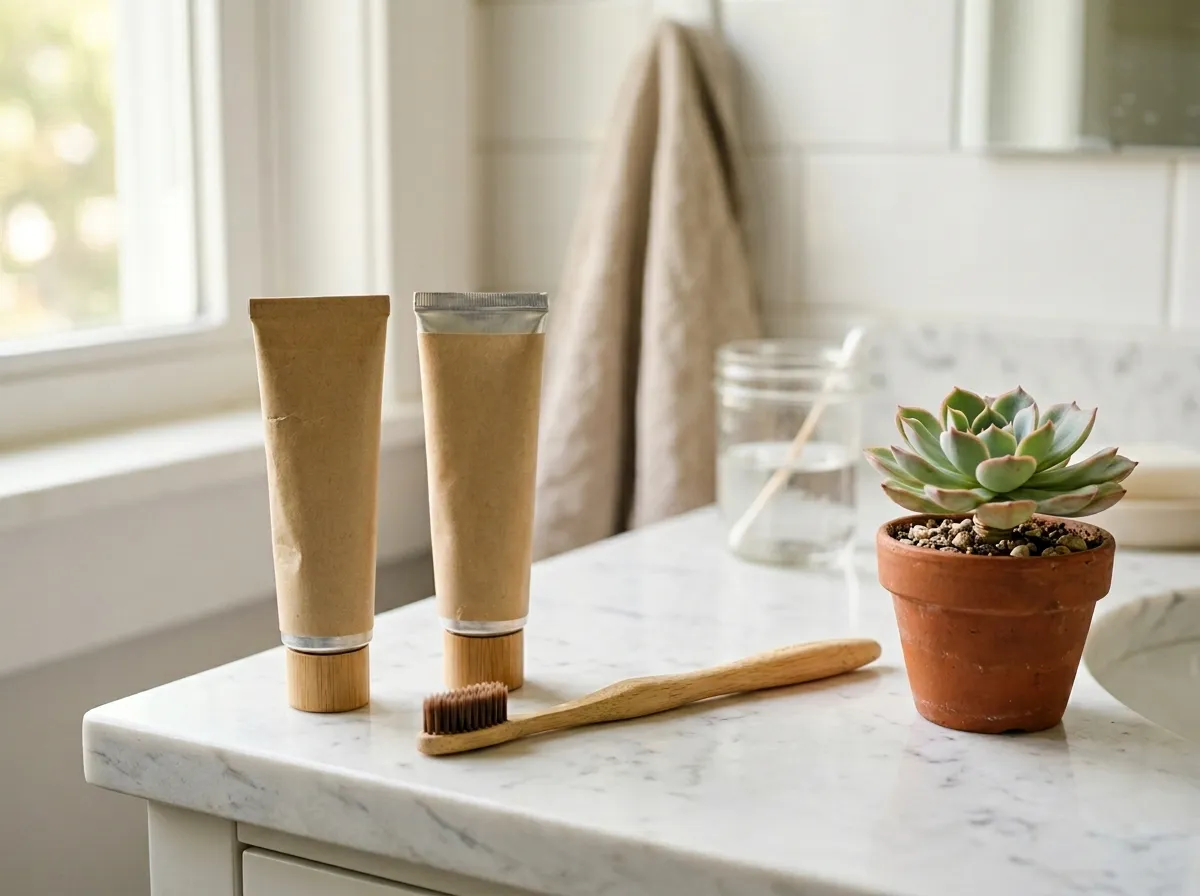
- The tube design is nice. Small thing, but it makes the bathroom counter look cleaner.
What I don’t like:
- Contains xylitol, which is great for teeth but toxic to dogs. Keep it away from pets.
- Slightly less transparent about sourcing than RiseWell.
- The tube is plastic, not recyclable aluminum like David’s.
Bottom line: Boka is the toothpaste I’d recommend to someone switching from Colgate or Crest for the first time. It feels familiar enough that the transition is painless, and the ingredients are genuinely clean.
3. David’s Natural Toothpaste - Best Taste
Price: ~$10 | Fluoride: No | Remineralizing Agent: Calcium carbonate (no HAp) | SLS: No
David’s is the one that feels the most like “real” toothpaste. The mint is strong, the texture is right, and the recyclable aluminum tube is a nice touch. It’s also made in the USA.
What I like:
- Best taste on this list. The Natural Peppermint is seriously refreshing.
- The metal tube is recyclable and feels premium.
- EWG Verified. Ingredients are transparent and rated safe.
- Good foam without SLS. Uses sodium cocoyl glutamate instead.
- Made in California.
What I don’t like:
- No hydroxyapatite. Uses calcium carbonate for cleaning, which is fine for removing plaque but doesn’t remineralize enamel the way HAp or fluoride does.
- If cavity prevention is your top concern, this isn’t the strongest choice.
- The metal tube can be harder to squeeze as you get to the end.
Bottom line: If you have healthy teeth and your main goal is avoiding junk ingredients while getting a satisfying brushing experience, David’s is excellent. If you’re cavity-prone, pair it with a remineralizing rinse or consider one of the HAp options instead.
4. Tom’s of Maine Whole Care - Most Accessible (With Caveats)
Price: ~$6 | Fluoride: Available with or without | Remineralizing Agent: Fluoride (in some) or none | SLS: In some formulas
Tom’s is the brand most people think of when they think “natural toothpaste.” It’s in every grocery store and drugstore in the country. And it’s… fine. With some caveats.
What I like:
- Available literally everywhere. You don’t need to wait for a shipment.
- They offer fluoride versions, which is useful if you want fluoride but still want cleaner ingredients than Crest.
- Certified B Corporation.
- Very affordable. About $6 per tube.
What I don’t like:
- Tom’s was acquired by Colgate-Palmolive in 2006. The ingredient lists have evolved since then, and not always in a cleaner direction.
- Some formulas still contain SLS. You need to read the specific product label.
- Contains carrageenan in some products.
- The taste is polarizing. Many people find it bland or chalky.
- “Natural” is doing a lot of heavy lifting in their marketing. The ingredients aren’t bad, but they’re not as clean as RiseWell, Boka, or David’s.
Bottom line: Tom’s is a step up from conventional toothpaste, but it’s not the cleanest option available. If you want something you can grab at the store today, it works. But if you’re specifically seeking non-toxic toothpaste, the other options on this list are better. Read the label carefully and choose the SLS-free, carrageenan-free versions.
5. Dr. Bronner’s All-One Toothpaste - Most Transparent
Price: ~$7 | Fluoride: No | Remineralizing Agent: Calcium carbonate | SLS: No
Dr. Bronner’s brings the same ethos they apply to their soaps to their toothpaste: simple, organic, transparent ingredients. If you want to know exactly what’s in your toothpaste with zero guessing, this is it.
What I like:
- Certified organic ingredients. The list is short and everything is recognizable.
- Fair trade sourced.
- No SLS, no fluoride, no artificial anything.
- Available at most health food stores and some mainstream retailers.
- The Peppermint flavor is good. Very clean, minty taste.
What I don’t like:
- No hydroxyapatite. Like David’s, this relies on calcium carbonate, which cleans but doesn’t remineralize.
- The texture is unusual. It’s thinner and less foamy than most people are used to.
- Low fluoride AND no HAp means no remineralizing agent. If you have weak enamel, this might not be enough.
- The label is covered in Dr. Bronner’s famously intense text, which is… a lot.
Bottom line: Best for people who prioritize ingredient purity above all else and have naturally strong teeth. If you’re prone to cavities, I’d steer you toward one of the hydroxyapatite options instead.
6. Hello Activated Charcoal Toothpaste - Best for Whitening
Price: ~$6 | Fluoride: Available with or without | Remineralizing Agent: Fluoride (in some) or none | SLS: No
Hello has done a good job making non-toxic toothpaste feel modern and accessible. Their charcoal formula is aimed at whitening, and it works reasonably well without harsh bleaching agents.
What I like:
- Activated charcoal provides gentle whitening without peroxide.
- SLS-free across all their products.
- Vegan, cruelty-free, and the packaging is made from recycled materials.
- Available at Target, Walmart, and most drugstores.
- Affordable. About $6 per tube.
- They offer both fluoride and fluoride-free versions, so you can choose.
What I don’t like:
- The charcoal can be messy. Your sink will look like a crime scene for a minute.
- The fluoride-free versions don’t contain hydroxyapatite either. Limited remineralization.
- Contains erythritol and xylitol (fine for most people, but worth noting if you have sensitivities).
- The whitening is gradual and modest. Don’t expect dramatic results.
Bottom line: A solid budget option, especially if you want SLS-free toothpaste that you can grab at the store. The whitening is a nice bonus. For remineralization, you’ll want to look at Boka or RiseWell.
What About Toothpaste Tablets?
Toothpaste tablets have gotten popular in the zero-waste space. You chew a small tablet, it foams up, and you brush. Brands like Bite and Unpaste make well-known versions.
I’ve tried several and here’s my honest take: they work fine for cleaning, but the experience isn’t great. The texture is gritty, the foaming is minimal, and they’re expensive per use. Most don’t contain hydroxyapatite or fluoride.
If reducing plastic waste is your primary motivation, tablets are worth considering. But if you’re focused on dental health and ingredient safety, I’d stick with one of the tube options above. David’s recyclable metal tube is a solid middle ground between performance and waste reduction.
How to Choose the Right One for You
If you’re cavity-prone: Go with RiseWell or Boka (hydroxyapatite) or Tom’s with fluoride.
If you get canker sores: Any option on this list works since they’re all SLS-free, but Dr. Bronner’s and Each & Every have the simplest formulas.
If you want the easiest switch: Boka or Hello. They feel the most like conventional toothpaste and are easy to find.
If ingredient purity is everything: Dr. Bronner’s or RiseWell.
If you’re on a budget: Hello or Tom’s at about $6 each.
If you want fluoride but cleaner: Tom’s Whole Care with fluoride or Hello with fluoride.
And no matter what toothpaste you choose, the fundamentals still matter most: brush for two full minutes, twice a day, and floss. The best toothpaste in the world won’t save you from skipping those basics.
For more on reducing chemical exposure in your personal care routine, check out our guides to non-toxic shampoo, non-toxic deodorant, and our overview of how to detox your home.
What Readers Want to Know
Is fluoride-free toothpaste safe?
Fluoride-free toothpaste is safe to use, but if you skip fluoride, you should use a toothpaste with hydroxyapatite as a remineralizing alternative. Using a toothpaste with neither fluoride nor HAp means you’re cleaning your teeth but not actively strengthening enamel. Talk to your dentist, especially if you’re cavity-prone.
What is hydroxyapatite and is it as effective as fluoride?
Hydroxyapatite is the mineral your teeth are naturally made of. Research shows it’s comparable to fluoride for remineralizing early enamel damage. Japan has used it as an approved anti-cavity ingredient since the 1980s. It’s non-toxic if swallowed, which makes it a good option for kids.
Why does my toothpaste contain SLS?
SLS (sodium lauryl sulfate) is added as a foaming agent. It creates that foamy lather people associate with “clean.” But it’s an irritant that can cause canker sores, dry mouth, and gum irritation. Every toothpaste on this list is SLS-free, and they still clean effectively.
Is Tom’s of Maine actually natural?
Tom’s uses mostly natural ingredients, but they were acquired by Colgate-Palmolive in 2006. Some of their formulas contain SLS and carrageenan. They’re a step up from conventional toothpaste, but they’re not as clean as brands like RiseWell, Boka, or David’s. Always read the specific product label.
Are charcoal toothpastes safe for enamel?
Activated charcoal toothpastes can be mildly abrasive. The ADA hasn’t given charcoal toothpaste its Seal of Acceptance, noting insufficient evidence for safety and efficacy. That said, most commercial charcoal toothpastes (like Hello’s) use finely ground charcoal that isn’t significantly more abrasive than regular toothpaste. Avoid using them more than once a day, and don’t scrub aggressively.
Should I switch my kids to non-toxic toothpaste?
Hydroxyapatite toothpaste is a particularly good fit for kids because it’s non-toxic if swallowed. Young children often swallow toothpaste, which is why fluoride toothpaste labels warn against it for kids under two. Brands like RiseWell and Boka both make kid-specific formulas with n-HAp. That said, the American Academy of Pediatric Dentistry recommends fluoride toothpaste for cavity prevention. Discuss with your child’s dentist.
Final Thoughts
The toothpaste you use matters more than you’d think. You’re putting it in your mouth twice a day, every day, for your entire life. Choosing one without SLS, triclosan, artificial sweeteners, and questionable additives is a small change that adds up.
If I had to pick one recommendation for most people, it’d be Boka. Good ingredients, good taste, good price, and easy to find. If you want the absolute cleanest formula with the strongest remineralization research behind it, go with RiseWell.
And don’t stress about fluoride. Educate yourself, talk to your dentist, make the choice that feels right for your family, and move on. The perfect toothpaste is the one you’ll actually use twice a day.
For more on building a cleaner routine, see our guides to non-toxic sunscreen, non-toxic nail polish, non-toxic candles, and our full non-toxic personal care routine.
This article contains affiliate links. If you purchase through our links, we may earn a small commission at no extra cost to you. This doesn’t influence our recommendations. See our full affiliate disclosure for details.
Sources
- American Dental Association, “Fluoride: Topical and Systemic Supplements”
- National Toxicology Program, “Systematic Review of Fluoride Exposure and Neurodevelopmental Effects” (2024)
- Amaechi, B.T. et al., “Comparative Efficacy of a Hydroxyapatite and a Fluoride Toothpaste for Prevention and Remineralization of Dental Caries in Children,” BDJ Open (2019)
- Herlofson, B.B. and Barkvoll, P., “Sodium Lauryl Sulfate and Recurrent Aphthous Ulcers: A Preliminary Study,” Acta Odontologica Scandinavica (1994)
- Dr. Shanna Swan, Count Down (Scribner, 2021)
- EWG Skin Deep Cosmetics Database
- FDA, “Skip Antibacterial Soap, Use Plain Soap and Water” (covers triclosan ban)