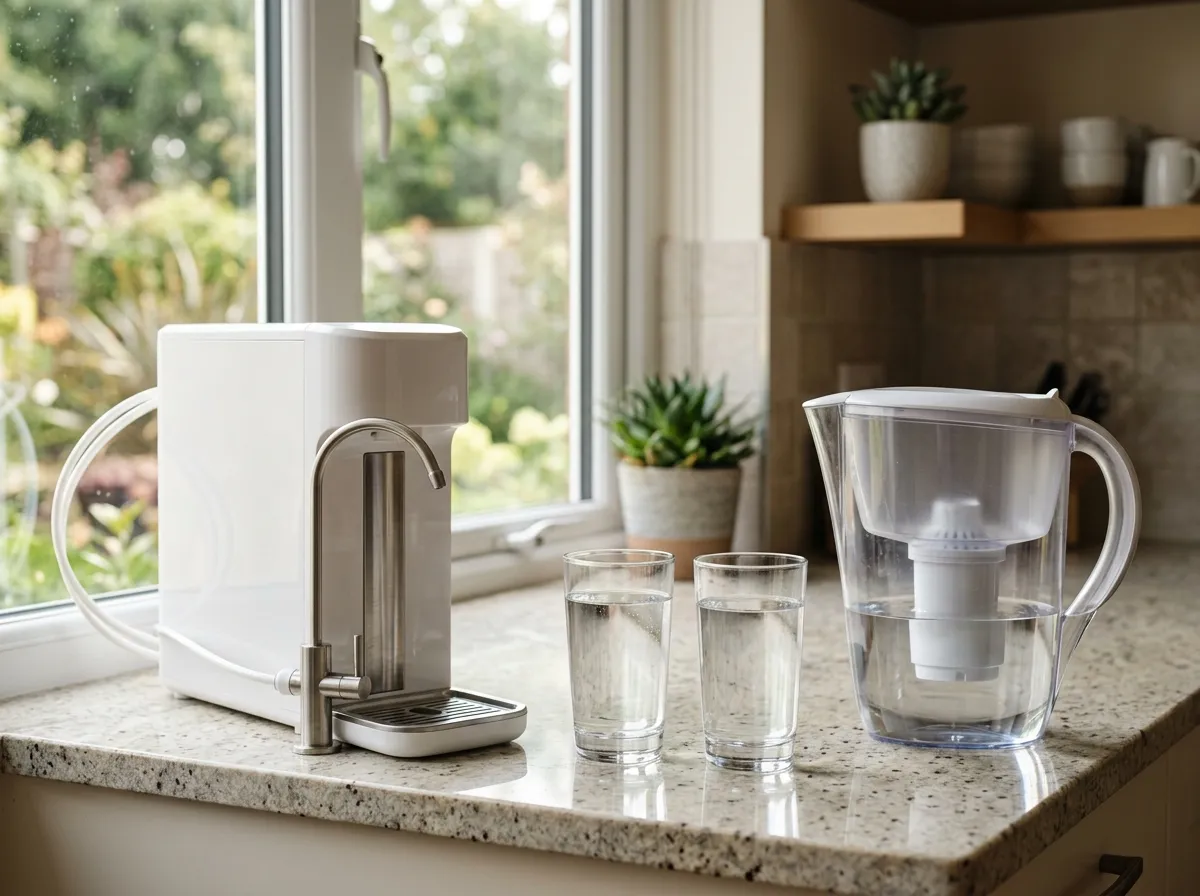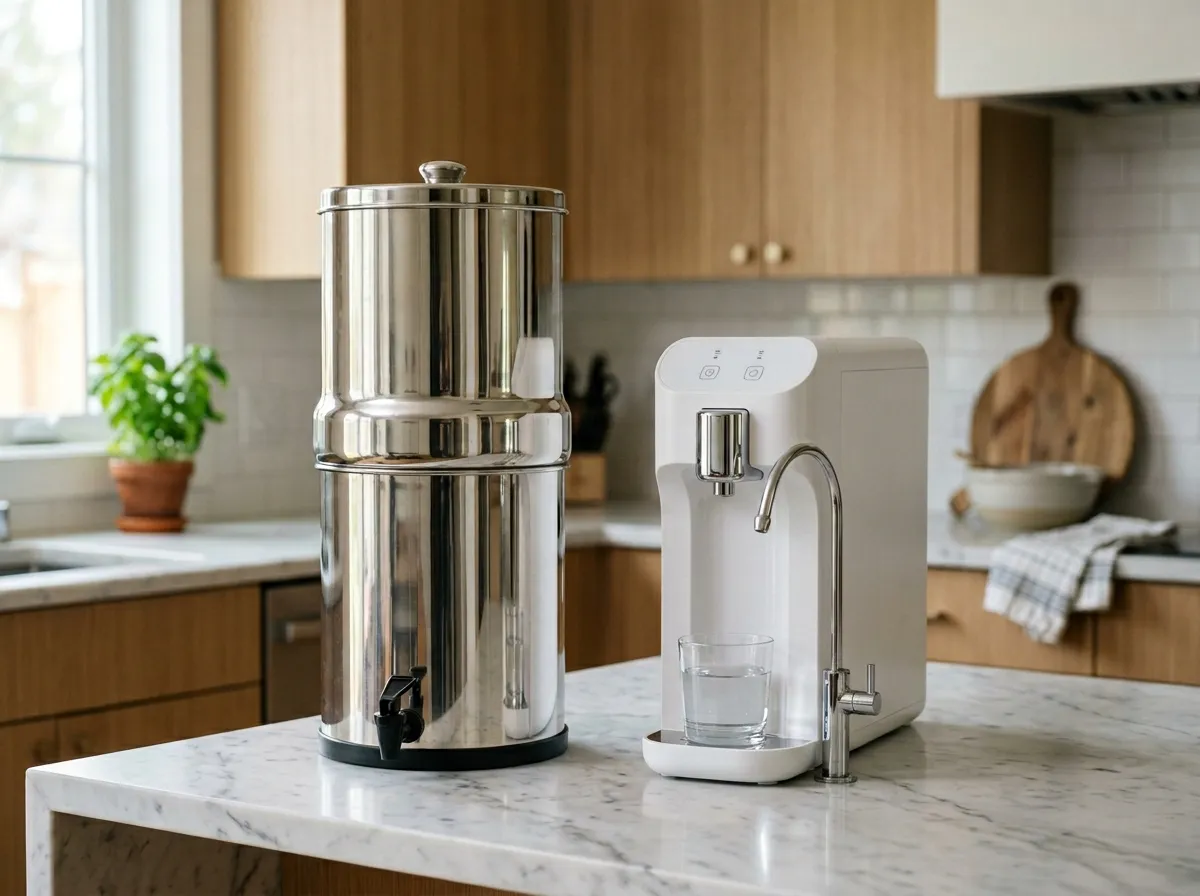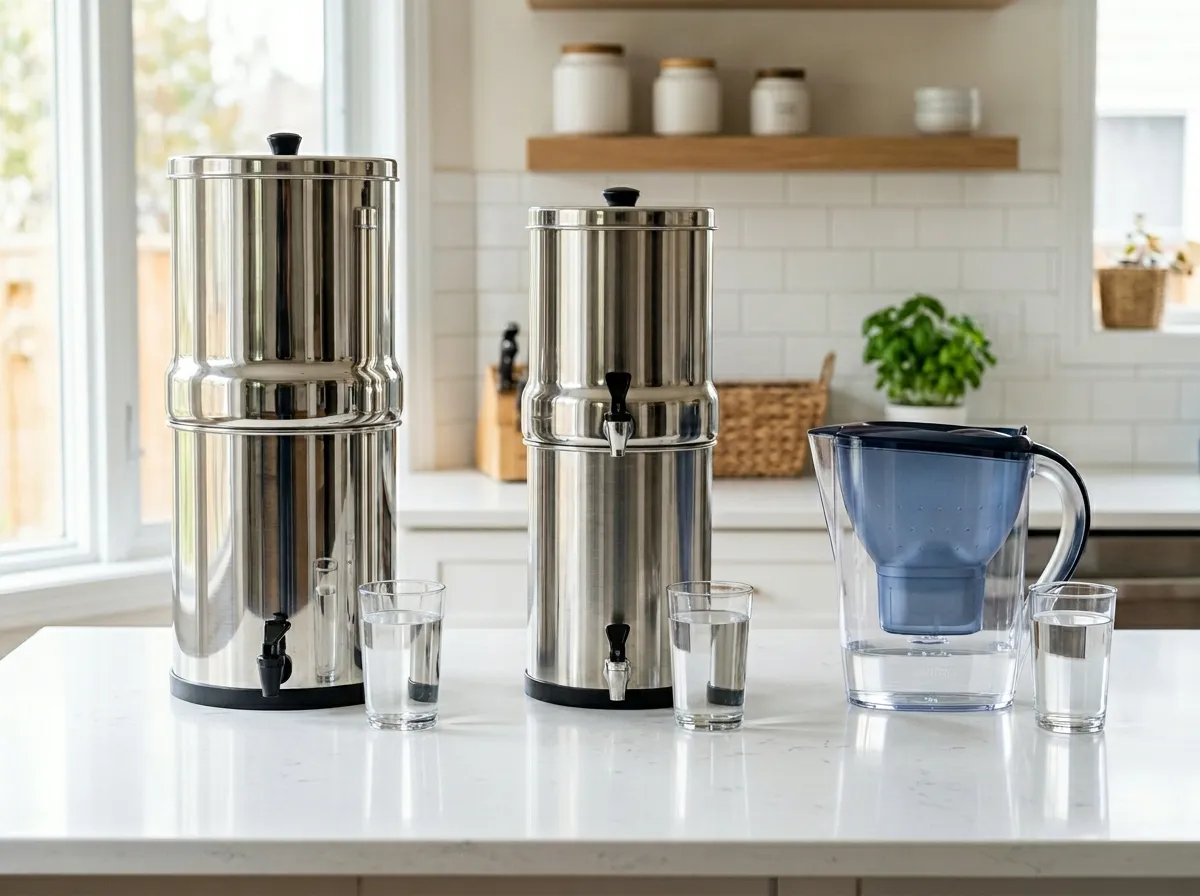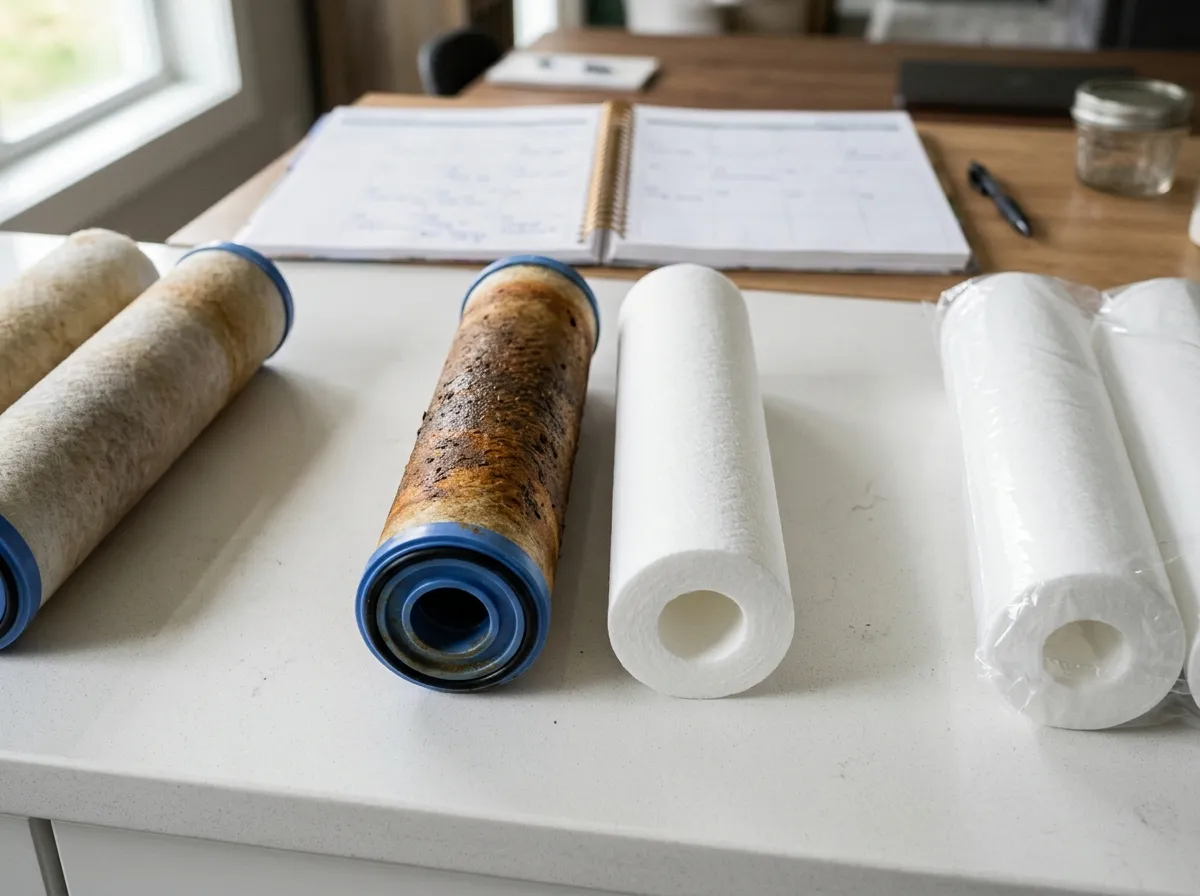
Most water filters need replacing every 2 to 6 months, but the exact schedule depends on the filter type. Pitcher filters last 2-4 months. Faucet-mount filters last 2-3 months. Under-sink carbon filters last 6-12 months. RO membranes last 2-3 years. Whole-house sediment filters need swapping every 3-6 months, while carbon blocks last 6-12 months. Our water filtration guide covers everything you need to know.
Based on NonToxicLab’s research, keeping track of filter replacement matters more than most people realize. A water filter doesn’t just stop working when it expires. It can actually make your water worse. Here’s the full breakdown for every filter type, what replacement actually costs, and how to tell when it’s time.
The Complete Water Filter Replacement Schedule
Here’s a quick-reference table covering every common filter type. Below it, I’ll go into detail on each one.
| Filter Type | Replacement Interval | Average Cost Per Filter | Signs It Needs Replacing |
|---|---|---|---|
| Pitcher filter (standard) | Every 2 months / 40 gallons | $7-15 | Slow flow, bad taste, odor returns |
| Pitcher filter (advanced) | Every 3-4 months / 100 gallons | $35-55 | Slow flow, taste change, TDS rise |
| Faucet-mount filter | Every 2-3 months / 100 gallons | $8-20 | Flow rate drops, taste declines |
| Under-sink carbon filter | Every 6-12 months | $20-50 | Taste change, reduced flow |
| Under-sink sediment pre-filter | Every 6-12 months | $10-25 | Visible discoloration, low pressure |
| RO membrane | Every 2-3 years | $40-80 | TDS creep, reduced output |
| RO pre/post-filters | Every 6-12 months | $20-40 (set) | Manufacturer schedule |
| Whole-house sediment filter | Every 3-6 months | $10-30 | Visible sediment, pressure drop |
| Whole-house carbon block | Every 6-12 months | $50-150 | Chlorine taste returns, odor |
| Whole-house catalytic carbon | Every 6-12 months | $80-200 | Chloramine smell returns |
| UV bulb | Every 12 months | $50-150 | Annual replacement (even if it still lights up) |
Pitcher Filters
Pitcher filters are the most common home filtration method, and the most commonly neglected.
Standard pitcher filters (like the basic Brita or PUR) use simple activated carbon. They’re designed to last about 40 gallons, which works out to roughly 2 months for the average household. Some people stretch them to 3 or 4 months. Don’t. By that point, the carbon is saturated and you’re basically pouring water through a dirty sponge.
Advanced pitcher filters (like Clearly Filtered or ZeroWater) use more sophisticated media and last longer: about 100 gallons, or 3-4 months. These filters cost more per cartridge, but they’re doing dramatically more work. The Clearly Filtered pitcher removes 365+ contaminants versus about 5 for a standard Brita.
How to tell it’s time: The flow rate slows down noticeably. Water starts tasting like tap again. If you have a ZeroWater, the TDS meter will show readings creeping up from zero. Any of these signs mean the filter media is exhausted.
Cost note: A standard Brita filter runs about $7. A Clearly Filtered replacement is about $50. But cost per contaminant removed tells a very different story. We covered this in detail in our Brita vs Clearly Filtered comparison.
Faucet-Mount Filters
Faucet-mount filters like the PUR Plus or Brita Faucet System typically last about 100 gallons, or 2-3 months. Many models have a built-in indicator light that changes from green to yellow to red as the filter approaches its end of life.
How to tell it’s time: The indicator light is the easiest sign. But even without one, you’ll notice the flow rate slowing down and the chlorine taste coming back. If your filtered water starts smelling like a swimming pool again, that’s your cue.
Don’t ignore the light. I’ve seen people keep using faucet-mount filters for 6+ months because the water “still tasted fine.” The problem is that some contaminants (like lead) have no taste. By the time you notice a taste change, the filter may have been failing on the invisible stuff for weeks.
Under-Sink Filters
Under-sink water filters come in several configurations, and each component has its own replacement schedule.
Carbon block filters are the core of most under-sink systems. They typically last 6-12 months, depending on your water usage and source water quality. Higher-capacity systems (like those from Aquasana or SpringWell) tend to last closer to 12 months. Smaller cartridges may need replacing at 6 months.
Sediment pre-filters catch the big stuff: rust, sand, dirt, and other particles. They protect the carbon filter from getting clogged prematurely. Replace these every 6-12 months, or sooner if your water has visible sediment. You’ll know it’s time when water pressure at the dedicated faucet starts dropping.
Post-filters (polishing filters) add a final stage of filtration. Replace these on the same schedule as the carbon block, or per the manufacturer’s instructions.
For our recommendations on under-sink systems, see the full best under-sink water filters guide. And if you’re comparing brands, our SpringWell vs Aquasana breakdown covers two of the most popular options.
Reverse Osmosis Membranes and Filters
RO systems have multiple stages, and each one has a different lifespan. This is where people get confused, because “replace your RO filter” can mean several different things.
Sediment pre-filter: Every 6-12 months. This catches particles before they reach the membrane. Skipping this replacement is the fastest way to kill an expensive RO membrane.
Carbon pre-filter: Every 6-12 months. This removes chlorine, which is critical because chlorine degrades RO membranes. If your city uses chlorinated water (most do), this filter is protecting a $40-80 component.
RO membrane: Every 2-3 years. This is the core of the system and the most expensive component. A quality RO membrane should last 2 years minimum, and many last 3+ years with proper pre-filter maintenance.
Carbon post-filter: Every 6-12 months. This polishes the water after it passes through the membrane, removing any residual taste or odor.
How to tell the membrane needs replacing: If you have a TDS meter (and you should if you own an RO system), test your output water periodically. A new membrane should produce water with a TDS reading 90-99% lower than your source water. When that rejection rate drops below 80%, the membrane is done.
For countertop RO systems like the AquaTru (popular with renters and apartment dwellers), the same schedule applies. Pre-filters every 6 months, membrane every 2 years. Check our best reverse osmosis systems guide for our top picks.
Whole-House Filters
Whole-house water filters protect every tap in your home, but they also process much more water than point-of-use filters. That means more frequent monitoring.
Sediment filters: Every 3-6 months. These are your first line of defense, catching dirt, rust, and sand before they reach the rest of the system. In areas with well water or older municipal infrastructure, you might need to swap these every 3 months. On cleaner city water, you can push closer to 6 months.
Carbon block filters: Every 6-12 months. Whole-house carbon blocks handle chlorine, chloramine, VOCs, and some pesticides. The lifespan depends heavily on your daily water usage. A household of two might get 12 months out of a filter. A family of five could burn through it in 6.
Catalytic carbon filters: Every 6-12 months. If your city uses chloramine (a combination of chlorine and ammonia, increasingly common), you need catalytic carbon specifically. Standard carbon doesn’t remove chloramine effectively. Same replacement schedule as carbon block, but the cartridges tend to cost more.
How to tell it’s time: The chlorine or chloramine smell returns. Water pressure drops. Your point-of-use filters downstream (like a kitchen pitcher) start clogging faster than usual, which means the whole-house filter isn’t catching what it should.
UV Bulbs
UV (ultraviolet) water treatment systems use a specific wavelength of light to kill bacteria, viruses, and other microorganisms. They’re common in well water setups and as a final stage in some whole-house systems.
Replace the bulb every 12 months. This is non-negotiable, even if the bulb still lights up. UV bulbs lose intensity over time. After about 9,000 hours of operation (roughly one year of continuous use), the UV output drops below the threshold needed to effectively kill pathogens. The bulb still glows, but it’s not doing its job.
The quartz sleeve (the glass tube that surrounds the bulb) should be cleaned every 12 months and replaced every 2-3 years, or whenever it becomes clouded or etched.
How to tell it’s time: You can’t, visually. UV degradation is invisible. Some systems have a UV intensity monitor that will alert you when output drops below effective levels. If yours doesn’t have one, just replace the bulb annually. Don’t guess on this one, especially if you’re on well water.
What Happens When You Don’t Replace Your Filters
This is the part most people don’t think about. An expired water filter isn’t just “less effective.” It can become a source of contamination itself.
Contaminant release. As filter media becomes saturated, it can no longer hold onto the contaminants it has captured. In some cases, concentrated contaminants are released back into the water. Think of it like a sponge that’s absorbed all it can: eventually, stuff starts leaking back out. With a water filter, that “stuff” includes lead, PFAS, bacteria, and whatever else the filter was trapping.
Bacterial growth. Carbon filters provide an excellent environment for bacterial colonization. The dark, moist, carbon-rich media is basically a five-star hotel for microorganisms. Fresh filters contain antimicrobial agents or are dense enough to resist colonization. Old filters lose that protection.
False sense of security. This might be the worst part. If you’re using an expired filter, you think you’re drinking clean water. You’re not. You’ve stopped worrying about your water quality because you “have a filter.” That false confidence means you’re not taking other precautions either.
Dr. Peter Attia has spoken about how filtering drinking water is one of the highest-impact health steps you can take. But that only holds true if the filter is actually working. An expired filter undermines the entire point.
The short version: set a calendar reminder. Write the installation date on the filter with a marker. Use the manufacturer’s app if they have one. Do whatever works for you, but don’t let your filter expire and keep using it.
How to Track Your Filter Replacement Schedule
Here are a few practical approaches:
Write the date on the filter. When you install a new filter, write the install date and the replace-by date directly on the cartridge with a permanent marker. Simple, visible, effective.
Set phone reminders. When you install a new filter, immediately set a calendar reminder for the replacement date. Add a second reminder two weeks before, so you have time to order a replacement.
Use the manufacturer’s subscription. Many filter companies (including Clearly Filtered, Aquasana, and SpringWell) offer subscription programs that ship replacement filters on a schedule. This removes the decision entirely. The filter shows up, you swap it in.
Keep a maintenance log. If you have a multi-stage system (RO or whole-house), keep a simple log of what was replaced and when. A note on your phone or a sticky note inside the cabinet under the sink works fine. Multi-stage systems have components with different lifespans, and it’s easy to lose track.
TDS testing for RO systems. If you own a reverse osmosis system, pick up a $15 TDS meter and test your output water every month or two. It takes 10 seconds. When the numbers start climbing, you know something needs attention, often before the manufacturer’s recommended interval.
Does Water Usage Affect Replacement Frequency?
Yes, significantly. Manufacturer timelines are based on average household usage. If your usage is higher, your filters will exhaust faster.
Most pitcher filters are rated for a specific number of gallons (40 for Brita Standard, 100 for Clearly Filtered). If you have a large family or drink a lot of water, you’ll hit that gallon limit well before the calendar date.
The same applies to whole-house and under-sink filters. A household that uses 150 gallons per day will chew through filters twice as fast as one using 75 gallons per day.
My advice: pay attention to both the calendar and the performance signs. Whichever comes first: the recommended timeframe or noticeable performance decline, that’s when you replace.
Your Questions Answered
Can I clean and reuse a water filter instead of replacing it?
For most filters, no. Carbon-based filters (pitchers, faucet-mount, under-sink carbon blocks) cannot be cleaned and reused. The carbon media is spent once it’s saturated. Ceramic filters (like those in some gravity systems) can be scrubbed to restore flow rate, but the inner carbon core still has a limited lifespan. Sediment filters are disposable. RO membranes can sometimes be cleaned with specific solutions to extend their life slightly, but eventually they need full replacement.
What’s the cheapest way to maintain a water filter system?
Subscription programs from the manufacturer are usually the cheapest per-filter option, since most offer 10-20% discounts. Buying filters in multi-packs also saves money. For the lowest total cost of ownership, reverse osmosis systems tend to win because the membrane (the most expensive component) lasts 2-3 years, bringing the annual per-gallon cost down significantly.
Is it dangerous to use an expired water filter?
It can be. An expired filter that’s been in use for weeks or months past its lifespan may release trapped contaminants back into your water and can harbor bacterial growth. The risk depends on what’s in your source water and how far past the replacement date you’ve gone. A filter that’s one week overdue is less concerning than one that’s three months overdue. But the safest practice is to replace on schedule. If your water contains serious contaminants like lead or PFAS, running it through a spent filter gives you contaminated water plus a false sense of security.
Do all water filters expire, even if I haven’t used them?
Unopened, sealed filter cartridges generally have a long shelf life (2-5 years depending on the manufacturer). But once a filter is installed and exposed to water, the clock starts. Even if you go on vacation for a month and don’t use any water, the installed filter is still aging. Moist carbon degrades over time and can develop bacterial growth whether water is flowing through it or not. Some manufacturers recommend flushing the filter after extended non-use.
How do I know what type of filter I have?
Check the model number on the filter housing or cartridge, then look it up on the manufacturer’s website. If you’re in a home with a system the previous owner installed, the housing usually has a label. For under-sink and whole-house systems, the filter cartridge size and connection type will help you identify it. If all else fails, take a photo of the setup and the cartridge and contact the manufacturer’s support team.
Does hard water make filters wear out faster?
Yes. Hard water contains high levels of dissolved minerals (calcium and magnesium primarily), and those minerals can clog filter media faster. This is especially true for carbon filters and RO pre-filters. If you have hard water, expect to replace filters closer to the shorter end of the manufacturer’s recommended range. Testing your water will tell you your hardness level and help you plan accordingly. ZeroWater pitcher filters are particularly sensitive to high-TDS water and may need replacing every few weeks in hard water areas.
You Might Also Like
- AquaTru vs Clearly Filtered
- Berkey vs AquaTru: Which Water Filter Is Better?
- Berkey Water Filter Review
Sources
- Peter Attia, MD. AMA #67: Filtering drinking water as a health intervention. peterattiamd.com
- NSF International. Drinking water treatment standards and filter certification overview. nsf.org
- EPA. Drinking water contaminant regulations and standards. epa.gov
- Clearly Filtered. Filter replacement guidelines and testing data. clearlyfiltered.com
- Aquasana. Filter maintenance and replacement schedules. aquasana.com
- SpringWell Water. Whole-house and under-sink filter maintenance guides. springwellwater.com
- CDC. Household water treatment: UV disinfection guidance. cdc.gov