Based on NonToxicLab’s research, if you want to remove fluoride from your drinking water, you need a filter specifically designed for it. Most standard carbon filters, including basic Brita pitchers and refrigerator filters, don’t reduce fluoride at all. The filters that work use reverse osmosis, activated alumina, bone char, or distillation. Here are the best options across every price point and setup. Our water filtration guide covers everything you need to know.
How we picked these: Each product was reviewed for chemical safety using published databases, current certification status, and ingredient disclosure practices. See how we test
Quick Answer: Top 3 Fluoride Filters
Short on time? These are the three best fluoride water filters right now:
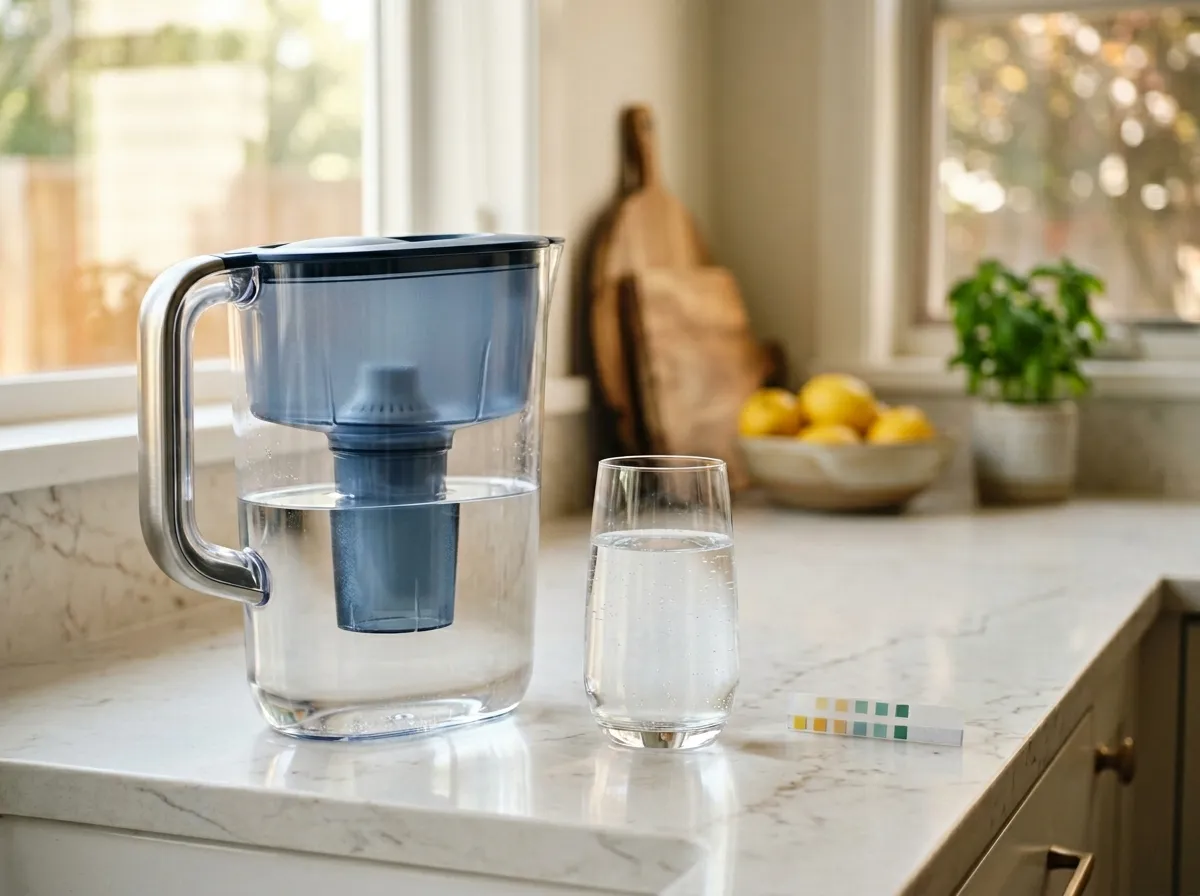
- Clearly Filtered Pitcher ($90): Best pitcher. Removes up to 98% of fluoride using its Affinity Filtration media. No plumbing, no electricity.
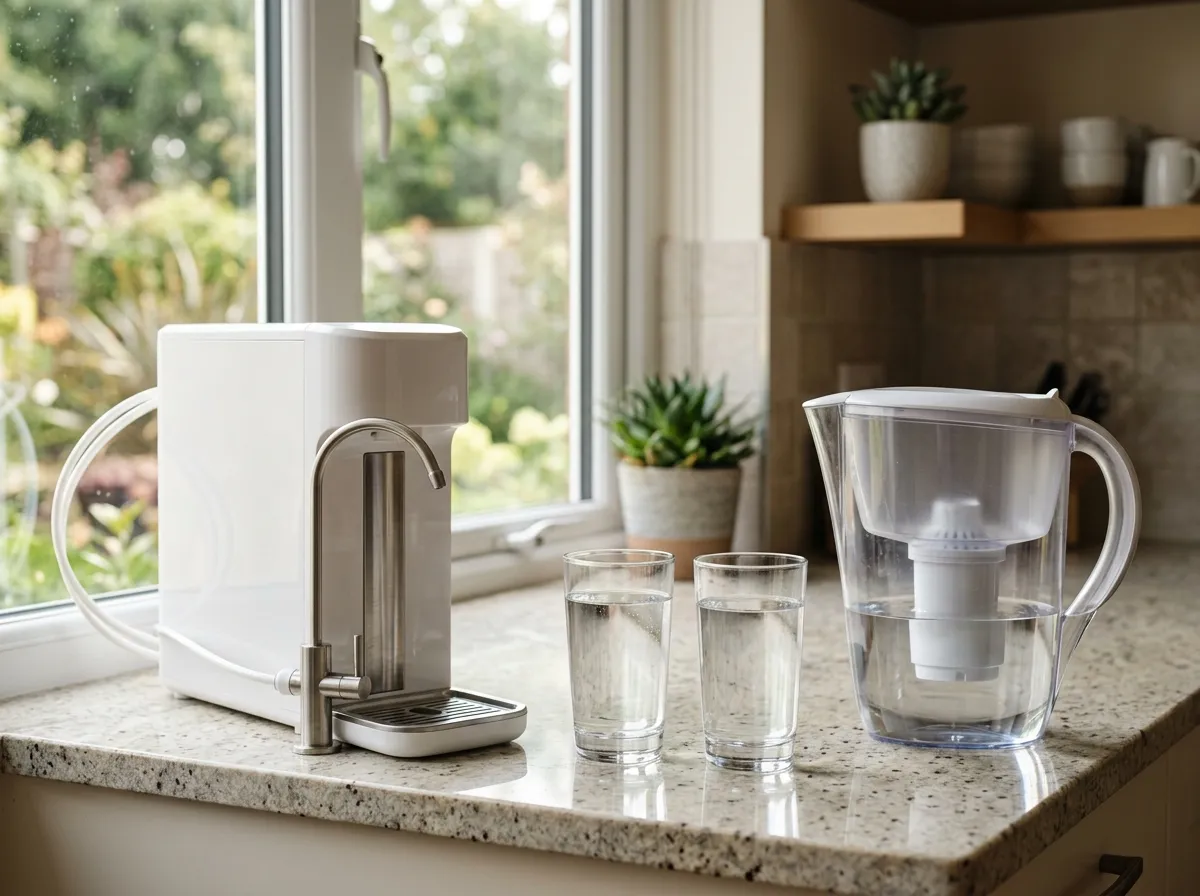
- AquaTru Countertop RO ($449-$495): Best countertop system. 4-stage reverse osmosis removes fluoride along with hundreds of other contaminants. Sits right on your counter.
- APEC ROES-50 ($200-$230): Best under-sink RO. 5-stage system with WQA Gold Seal at the lowest price for a quality RO unit.
For the full breakdown, including why most filters fail at fluoride and what to look for, keep reading.
Why Fluoride Removal Is Trending in 2026
Fluoride in drinking water has become one of the biggest water quality topics this year. Multiple states, including Utah, Florida, and Alabama, have either ended mandatory fluoridation programs or introduced legislation to do so. Public opinion has shifted, and more people are looking into whether they want fluoride in their water at all.
Whatever your reason for wanting to filter it out, the challenge is the same: fluoride is a small ion that passes right through most standard filters. You can’t just grab any pitcher off the shelf and assume it’s handled. You need to know which technologies actually work and which don’t.
Before you buy a filter, it’s worth knowing what’s actually in your water. Our guide on how to test your water quality walks you through at-home test kits and lab testing services that can tell you your exact fluoride levels.
Which Filter Technologies Actually Remove Fluoride?
This is where most people get tripped up. Here’s a clear breakdown.
Technologies That Remove Fluoride
- Reverse osmosis (RO): The most reliable method. RO membranes physically block fluoride ions, typically removing 90-95%+. Dr. Rhonda Patrick has highlighted RO filtration on her foundmyfitness.com podcast, noting that RO systems remove the widest range of contaminants, including fluoride, microplastics, BPA, phthalates, and PFAS. For a full comparison of RO systems, check out our reverse osmosis system guide.
- Activated alumina: A porous aluminum oxide media specifically designed to adsorb fluoride. It’s effective but sensitive to pH and flow rate. Works best at slightly acidic pH levels (5.0-6.0). Used in many gravity filter add-ons.
- Bone char: Made from animal bones heated to high temperatures. It adsorbs fluoride through a combination of ion exchange and surface adsorption. Performance varies depending on source quality and contact time.
- Distillation: Boiling water and collecting the steam removes fluoride effectively (95%+). Slow and energy-intensive, but it works. Countertop distillers are an option for small households.
Technologies That DON’T Remove Fluoride
- Standard granular activated carbon (GAC): This is what’s inside basic Brita pitchers, PUR filters, and most refrigerator filters. GAC does a good job with chlorine taste and odor, but it doesn’t grab fluoride. If your only concern is fluoride, a standard Brita won’t help. We cover this in detail in our Brita vs. Clearly Filtered comparison.
- Carbon block filters: Some dense carbon block filters can reduce fluoride slightly, but unless they’re specifically certified for it, don’t count on meaningful reduction.
- KDF media: Effective for heavy metals and chlorine. Not effective for fluoride.
- UV purification: Kills bacteria and viruses. Does nothing for dissolved minerals or chemicals like fluoride.
Fluoride Filter Comparison Table
| Filter | Type | Fluoride Removal | Price | Annual Filter Cost | Installation |
|---|---|---|---|---|---|
| Clearly Filtered Pitcher | Pitcher | Up to 98% | $90 | ~$165 (3 filters/yr) | None |
| AquaTru Countertop RO | Countertop RO | 93%+ | $449-$495 | ~$100-$130 | None |
| Big Berkey + PF-2 | Gravity + alumina | Up to 97% (with PF-2) | $350-$440 | ~$100-$120 | None |
| APEC ROES-50 | Under-sink RO | 90-95%+ | $200-$230 | ~$50-$70 | Under-sink install |
| Countertop Distiller | Distillation | 95%+ | $100-$300 | Electricity only | None |
| Standard Brita | GAC Pitcher | 0% | $25-$40 | ~$30-$50 | None |
The 4 Best Fluoride Water Filters
1. Clearly Filtered Water Pitcher: Best Fluoride Pitcher
Price: ~$90 (pitcher + one filter) | Replacement filters: ~$55 each | Filter life: 100 gallons (3-4 months)
The Clearly Filtered pitcher is the easiest way to remove fluoride without installing anything. It uses a proprietary Affinity Filtration Technology that targets fluoride specifically, claiming up to 98% removal. It’s also tested for 365+ contaminants, including lead, PFAS, arsenic, and microplastics.
This is the pitcher I’d recommend for anyone living in an apartment where you can’t modify the plumbing. For more options in that situation, see our guide to the best water filters for apartments.
Pros:
- Up to 98% fluoride reduction, one of the highest for any pitcher
- No installation, no electricity
- Also removes PFAS, lead, arsenic, and hundreds of other contaminants
- BPA-free construction
- NSF/ANSI 42, 53, 401, and P473 certifications
Cons:
- Slow filtration speed (about 15-20 minutes per fill)
- 100-gallon filter life means replacing every 3-4 months
- Higher annual filter cost than some alternatives
- Holds only about 10 cups
Who it’s for: Renters, apartment dwellers, anyone who wants fluoride removal without fuss. It’s also a solid pick for people concerned about PFAS in their water.
2. AquaTru Countertop RO System: Best Countertop Fluoride Filter
Price: $449-$495 | Replacement filters: ~$100-$130/year | Filter stages: 4
The AquaTru sits on your counter and runs tap water through a 4-stage reverse osmosis process. No plumbing connection needed. You fill the tank manually, and the system does the rest. RO is the most thorough fluoride removal method available for home use, and the AquaTru makes it accessible without hiring a plumber.
Dr. Peter Attia has talked about spending a full month researching water filtration and ultimately recommending RO systems. The AquaTru is one of the most popular countertop RO units for good reason: it works, it’s portable, and the filters last a reasonable amount of time.
Pros:
- 4-stage RO removes fluoride plus hundreds of other contaminants
- No installation or plumbing changes
- Compact enough for most kitchen counters
- NSF/ANSI certified (Standards 42, 53, 58, 401, P473)
- Filters last 6-12 months depending on stage
Cons:
- Higher upfront cost than pitchers
- Produces some wastewater (typical of all RO systems)
- Holding tank is limited to about 3 quarts at a time
- Removes beneficial minerals along with contaminants (you can add minerals back)
Who it’s for: Anyone who wants RO-level fluoride removal without the hassle of an under-sink installation. Great for renters or people who move frequently.
3. Big Berkey with PF-2 Fluoride Filters: Best Gravity-Fed Fluoride Filter
Price: $350-$440 (system + PF-2 elements) | Replacement filters: Black Berkey elements ~$130/pair (last up to 6,000 gallons), PF-2 fluoride elements ~$65/pair (last up to 1,000 gallons)
The Big Berkey is a stainless steel gravity-fed system that’s been popular in the preparedness and off-grid communities for years. On its own, the Black Berkey filter elements handle bacteria, viruses, heavy metals, and chemicals. But they don’t remove fluoride. For that, you need the add-on PF-2 fluoride and arsenic reduction elements, which use activated alumina media.
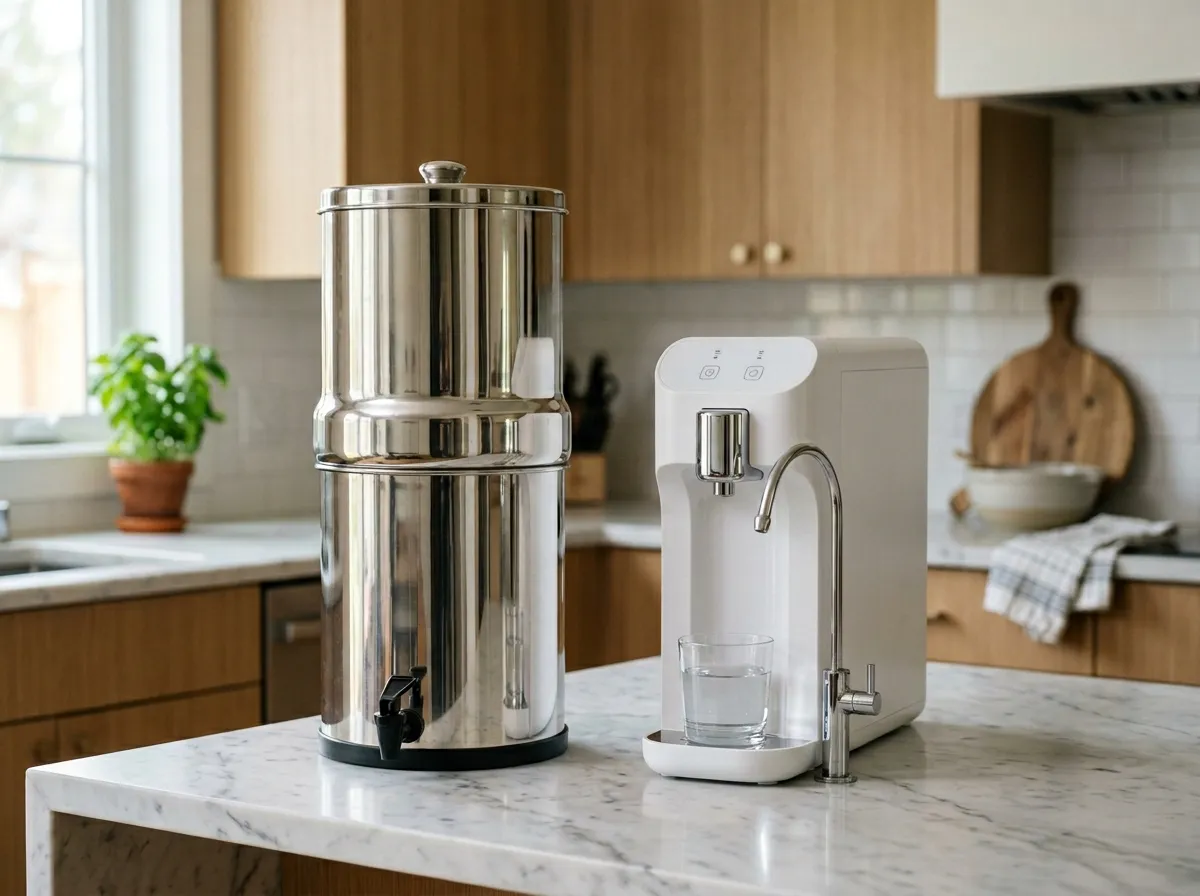
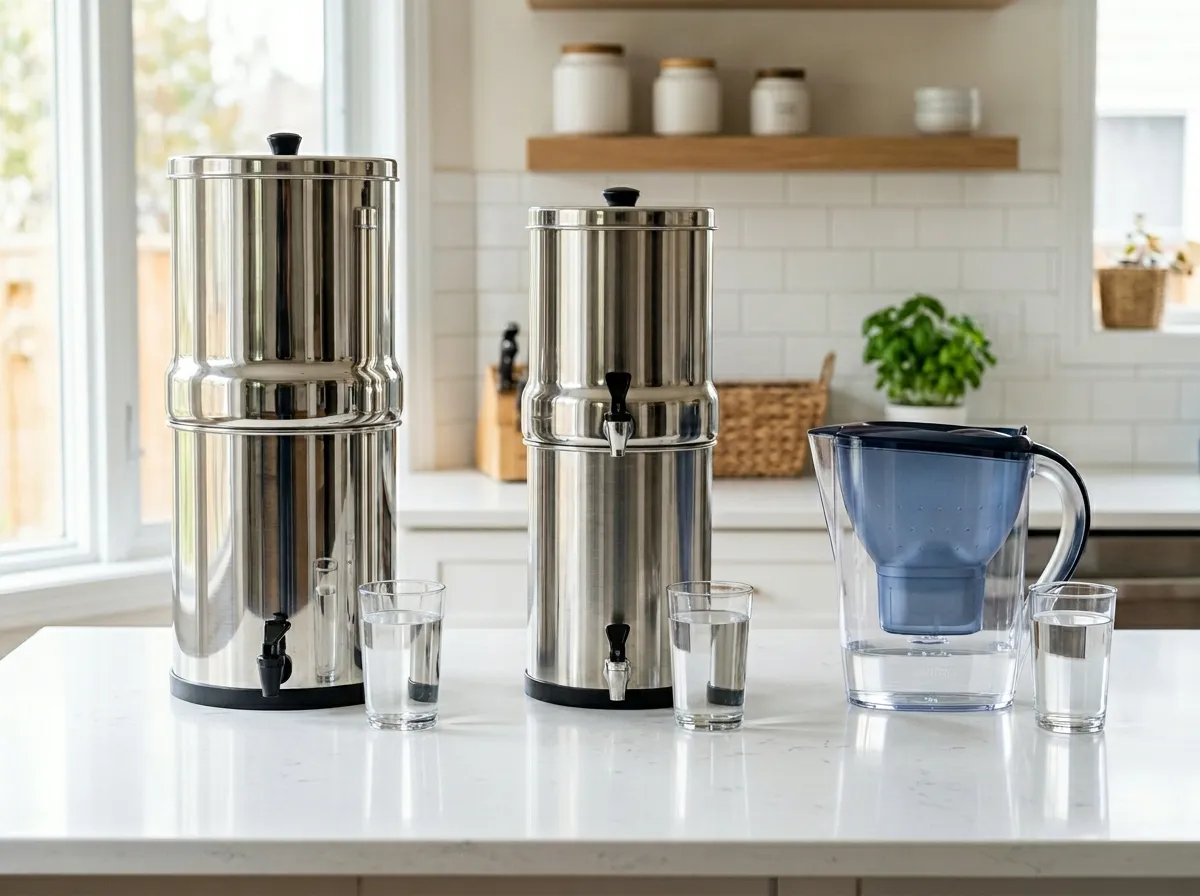
With both filter sets installed, the system can reduce fluoride by up to 97%. It needs no electricity and no plumbing, making it one of the most versatile setups out there. For a deeper look at gravity-fed systems, check our best gravity water filters guide.
Important note: Berkey’s Black filter elements have faced regulatory scrutiny, including EPA stop-sale actions related to pesticide registration requirements. The company has been working through these issues. Check Berkey’s website for the latest status before purchasing, and consider alternatives like ProOne or AquaCera if availability is limited.
Pros:
- No electricity, no plumbing, works anywhere
- Large capacity (2.25 gallons)
- Stainless steel construction, very durable
- PF-2 elements specifically target fluoride and arsenic
- Long filter life for the primary elements
Cons:
- PF-2 fluoride elements need replacement every 1,000 gallons (roughly every 6-12 months)
- Regulatory issues with Black Berkey elements may affect availability
- Slow filtration speed
- Takes up counter space (the system is tall)
- Not NSF certified (Berkey uses independent lab testing)
Who it’s for: Off-grid households, people who want a large-capacity system with no power requirements, and anyone who values the gravity-fed approach. Pair it with PF-2 elements specifically if fluoride is your concern.
4. APEC ROES-50 Under-Sink RO System: Best Budget RO for Fluoride
Price: $200-$230 | Replacement filters: ~$50-$70/year | Filter stages: 5
If you own your home or your landlord is okay with it, an under-sink RO system gives you the best fluoride removal per dollar over time. The APEC ROES-50 is a 5-stage system with a WQA Gold Seal certification. It installs under your kitchen sink and connects to a dedicated faucet.
RO systems like this one typically remove 90-95%+ of fluoride. The APEC is one of the most affordable quality RO systems on the market, and its annual filter replacement costs are lower than any pitcher. For a full comparison of under-sink options, see our best under-sink water filters guide.
Pros:
- 5-stage RO provides thorough fluoride removal
- WQA Gold Seal certified
- Very low annual filter cost (~$50-$70)
- Produces clean water on demand from a dedicated faucet
- Also removes lead, chlorine, arsenic, PFAS, and more
Cons:
- Requires under-sink installation (DIY-friendly, but still a project)
- Produces wastewater (about 3:1 drain-to-pure ratio)
- Takes up space under the sink
- Removes minerals (consider a remineralization stage or mineral drops)
- Not ideal for renters who can’t modify plumbing
Who it’s for: Homeowners who want the most cost-effective long-term fluoride removal solution. If you can handle a basic installation, this is the best bang for your buck.
What About Whole-House Fluoride Removal?
Whole-house systems are trickier when it comes to fluoride. Most whole-house water filters use granular activated carbon, which doesn’t remove fluoride. A whole-house RO system exists but is expensive ($3,000-$10,000+) and wastes a lot of water.
The more practical approach: use a whole-house system for sediment, chlorine, and general water quality, then add a point-of-use fluoride filter (like one of the options above) at your kitchen sink for drinking water. This is what most experts recommend for homes concerned about fluoride specifically.
How to Know if Your Water Has Fluoride
About 73% of the U.S. population on public water systems receives fluoridated water, according to the CDC. But levels vary. The EPA’s maximum contaminant level goal (MCLG) for fluoride is 4 mg/L, while the recommended level for dental purposes is 0.7 mg/L.
You can find out what’s in your water a few ways:
- Check your water utility’s annual Consumer Confidence Report (CCR): This is required by law and lists fluoride levels along with other contaminants.
- Use an at-home test kit: Several kits test for fluoride specifically. Our water testing guide has recommendations.
- Send a sample to a lab: For the most accurate results, a certified lab will give you exact fluoride levels.
If you’re on well water, fluoride can still be present naturally, depending on the geology in your area. Testing is the only way to know.
Filter Maintenance and Replacement Costs
One thing people overlook is the ongoing cost. A cheap filter that needs frequent replacements can end up costing more than a pricier system over a few years. For a detailed look at replacement schedules, check out our guide on how often to replace water filters.
Here’s a rough 3-year cost comparison:
| Filter | Upfront Cost | 3-Year Filter Cost | 3-Year Total |
|---|---|---|---|
| Clearly Filtered Pitcher | $90 | ~$495 | ~$585 |
| AquaTru Countertop RO | $475 | ~$330 | ~$805 |
| Big Berkey + PF-2 | $400 | ~$330 | ~$730 |
| APEC ROES-50 | $215 | ~$180 | ~$395 |
The APEC under-sink RO wins on long-term value if you can install it. For no-install options, the AquaTru and Big Berkey are fairly close, while the Clearly Filtered pitcher has higher ongoing costs due to its shorter filter life.
Don’t Forget About Microplastics
While you’re filtering out fluoride, the good news is that most of these systems also handle microplastics in drinking water. RO systems are especially effective here. If you’re already investing in a quality filter, you’re likely addressing multiple concerns at once.
The same goes for PFAS (forever chemicals). Both RO systems and the Clearly Filtered pitcher are tested and certified for PFAS removal in addition to fluoride. That’s a lot of value from a single filter.
Questions We Hear Most
Does a standard Brita filter remove fluoride?
No. Standard Brita pitchers use granular activated carbon, which reduces chlorine taste and some contaminants but does not remove fluoride. The Brita Longlast and Brita Elite filters also don’t claim fluoride removal. If fluoride is your concern, you need a filter that uses reverse osmosis, activated alumina, bone char, or a specialized media like Clearly Filtered’s Affinity Filtration.
What’s the cheapest way to remove fluoride from tap water?
The cheapest upfront option is the Clearly Filtered pitcher at around $90. For the lowest long-term cost, an under-sink RO system like the APEC ROES-50 ($200-$230) has annual filter costs of only $50-$70. Over three years, the under-sink RO is the most cost-effective choice by a significant margin.
Does boiling water remove fluoride?
No. Boiling water does not remove fluoride. In fact, it concentrates fluoride because you’re evaporating pure water and leaving the fluoride behind. Distillation (boiling and then collecting the steam) does remove fluoride, but simply boiling water in a pot does not.
Is fluoride in water actually harmful?
This article isn’t making a health claim either way. Some health professionals support water fluoridation for dental health. Others point to research suggesting potential concerns at higher exposure levels. What we can tell you is that if you’ve decided you want to reduce fluoride in your drinking water, the filters listed here are the ones that actually do it. Talk to your doctor or dentist about what’s right for you.
Do whole-house filters remove fluoride?
Most whole-house filters do not remove fluoride. Standard whole-house systems use granular carbon or sediment filtration, neither of which affect fluoride levels. A whole-house RO system can remove fluoride, but it’s extremely expensive. The practical approach is a point-of-use fluoride filter at your kitchen tap.
How do I know if my water is fluoridated?
Check your local water utility’s Consumer Confidence Report, which is published annually and available online. You can also call your water provider directly. If you’re on well water, the only way to know is to have your water tested by a lab or with an at-home fluoride test kit.
You Might Also Like
Sources
- CDC Community Water Fluoridation data: cdc.gov/fluoridation
- EPA Fluoride Standards: epa.gov/sdwa/fluoride
- Dr. Rhonda Patrick on water filtration and contaminant exposure: foundmyfitness.com
- Dr. Peter Attia, AMA #67, discussion on water filtration research: peterattiamd.com
- NSF International certification database: nsf.org
- WQA (Water Quality Association) Gold Seal program: wqa.org
- EWG Tap Water Database: ewg.org/tapwater