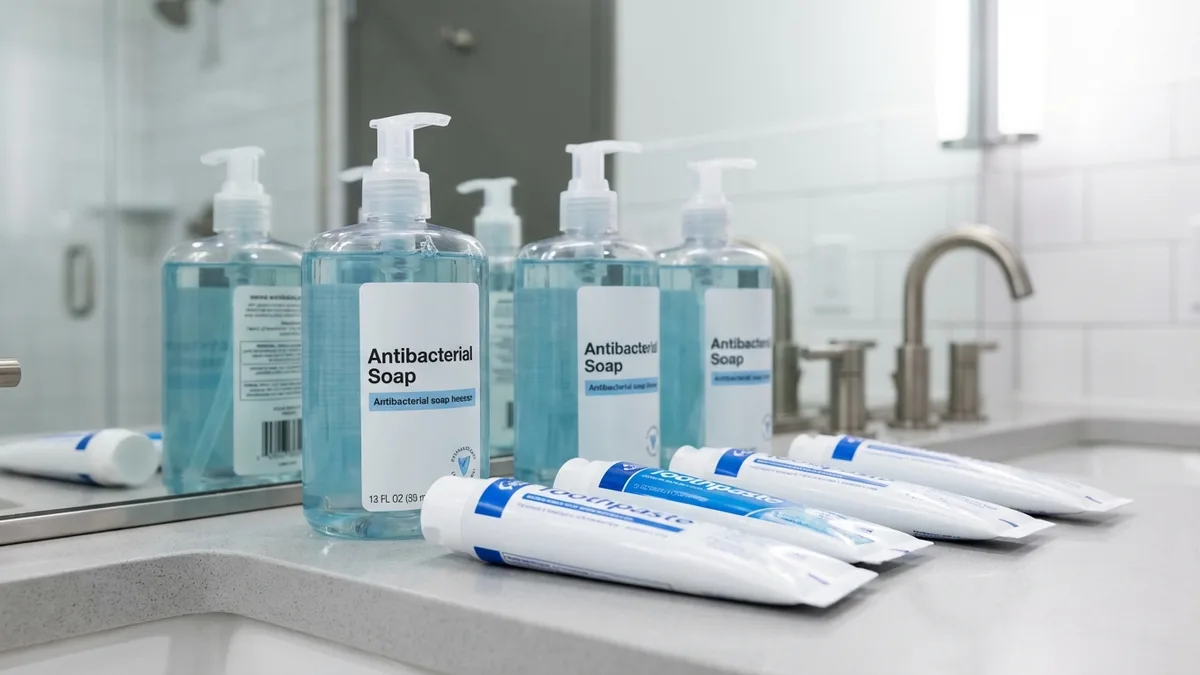
In September 2016, the FDA issued a final rule banning triclosan from consumer antibacterial hand soaps and body washes. The agency concluded that manufacturers had failed to prove these products were safe for long-term daily use or more effective than plain soap and water. That should have been the end of the story. But triclosan didn’t disappear. It simply moved to places where most people don’t think to check.
At NonToxicLab, we track chemicals that fall into this kind of regulatory gap, where a ban in one product category leaves the chemical perfectly legal in others. Triclosan is one of the clearest examples of how that gap works against consumers.
What Is Triclosan, Exactly?
Triclosan (chemical name: 5-chloro-2-(2,4-dichlorophenoxy)phenol) is a synthetic antimicrobial agent. It was first registered as a pesticide in 1969 and later became one of the most common antibacterial additives in consumer products. By the early 2000s, it showed up in everything from hand soaps to cutting boards to socks.
The chemical works by blocking an enzyme called enoyl-acyl carrier protein reductase (ENR), which bacteria need to build their cell membranes. Without functional membranes, bacteria can’t reproduce. At the concentrations used in most consumer products, triclosan is bacteriostatic (it slows bacterial growth) rather than bactericidal (it doesn’t actually kill bacteria outright).
That distinction matters. It means many triclosan-containing products didn’t deliver the germ-killing benefit consumers assumed they were getting.
Where Triclosan Still Shows Up
Here is where things get frustrating. The 2016 ban applied specifically to consumer antiseptic wash products (hand soaps and body washes). It did not apply to:
Toothpaste. Colgate Total (now called Colgate Total SF) contained triclosan for years under an FDA-approved New Drug Application. While Colgate reformulated in 2019 to remove triclosan from most of its Total line, other toothpaste brands may still include it. Always check labels. Our non-toxic toothpaste guide covers brands that avoid triclosan and other concerning ingredients.
Hand sanitizers. The 2016 rule covered wash products (intended to be rinsed off), not leave-on products like hand sanitizers. Some hand sanitizer formulas still include triclosan.
Cosmetics. Foundation, concealer, face powder, and other cosmetics have no restriction on triclosan. The FDA’s regulation of cosmetics is remarkably limited, and ingredients banned in rinse-off products can appear freely in leave-on formulations.
Household products. Cutting boards, trash bags, kitchen utensils, and textiles marketed as “antibacterial” may still contain triclosan or its chemical cousin triclocarban.
Hospital and healthcare settings. Triclosan remains approved in healthcare antiseptic products used before surgery and in clinical settings, under a separate regulatory framework.
Dr. Shanna Swan, a reproductive epidemiologist at Mount Sinai and author of Count Down, has pointed to triclosan as part of the broader pattern of endocrine-disrupting chemicals in everyday products that affect hormonal health. Her research documents how chemicals like triclosan accumulate in the body through daily exposure across multiple product categories.
Why Was Triclosan Banned from Soap?
The FDA’s 2016 decision came after decades of growing evidence and nearly 40 years of regulatory back-and-forth. The key findings:
No proven benefit over regular soap. Multiple studies showed that washing with triclosan-containing soap was no more effective at preventing illness than washing with plain soap and water. A 2015 study in the Journal of Antimicrobial Chemotherapy tested triclosan soap against plain soap and found no significant difference in bacterial reduction on hands after normal washing duration.
Evidence of hormonal disruption. Animal studies found that triclosan interferes with thyroid hormones, estrogen, and testosterone. A 2006 study published in Aquatic Toxicology demonstrated that triclosan disrupted thyroid function in frogs at environmentally relevant concentrations. Follow-up research in rodents confirmed similar effects on thyroid signaling.
Concerns about antibiotic resistance. Because triclosan targets a specific bacterial enzyme, it creates selective pressure that can drive resistance. Research from Tufts University showed that bacteria exposed to triclosan could develop cross-resistance to clinical antibiotics, a serious public health concern.
Bioaccumulation in human tissue. CDC biomonitoring data found triclosan in the urine of approximately 75% of Americans tested. That number reflects just how pervasive the chemical became in consumer products.
Health Concerns: What the Research Shows
Endocrine Disruption
Triclosan’s ability to interfere with hormones is the most documented health concern. Studies have shown effects on:
Thyroid function. Research published in Environmental Health Perspectives found that higher urinary triclosan levels in adolescents and adults were associated with altered thyroid hormone levels. The thyroid controls metabolism, growth, and brain development, making disruption particularly concerning for children and pregnant women.
Reproductive hormones. Animal studies have demonstrated that triclosan exposure affects estrogen and androgen signaling. A 2014 study in Reproductive Toxicology linked triclosan exposure to reduced sperm quality in rats. Human epidemiological data has shown associations between triclosan levels and altered reproductive hormone concentrations, though the research is still being refined.
Dr. Rhonda Patrick has discussed how endocrine-disrupting chemicals, including triclosan, can affect metabolic and hormonal health through repeated low-dose exposure. She has emphasized that the aggregate burden across dozens of products matters more than any single exposure.
Gut Microbiome Effects
A 2018 study published in Science Translational Medicine found that triclosan promoted gut inflammation in mice and worsened colitis symptoms. The researchers found that triclosan disrupted the gut microbiome composition at concentrations consistent with human exposure levels. This line of research is newer but raises questions about long-term digestive health effects.
Environmental Persistence
Triclosan doesn’t stay on your hands. It washes down the drain, passes through wastewater treatment (which removes only a portion of it), and enters waterways. In aquatic environments, it’s toxic to algae and can disrupt the hormonal systems of fish. It also converts to dioxins when exposed to sunlight in water, creating a secondary contamination problem.
The chemical has been detected in rivers, lakes, sediment, and even Arctic ice. It’s one of the most frequently detected synthetic chemicals in U.S. waterways.
How to Check Your Products for Triclosan
Triclosan must be listed on ingredient labels when it’s present. Look for:
- Triclosan (the name will appear as-is)
- Triclocarban (a related compound with similar concerns, commonly found in bar soaps)
- Microban or Biofresh (brand names for triclosan-treated materials in household products)
For personal care products, the label check is simple. For household items like cutting boards or textiles, look for marketing claims about “antibacterial” or “antimicrobial” properties and then check whether triclosan is the active agent.
The EWG’s Skin Deep database can help you identify triclosan in cosmetics and personal care products if ingredient lists are hard to read.
What to Use Instead
The good news is that triclosan was never necessary in consumer products. Here’s what actually works:
For hand washing: Plain soap and water for at least 20 seconds. The mechanical action of washing, not the soap’s chemical properties, does the heavy lifting. If you want an antibacterial option, look for products using benzalkonium chloride (which has a different safety profile) or simply stick with regular soap.
For toothpaste: Fluoride toothpaste without triclosan. There are dozens of effective options. Check our non-toxic toothpaste guide for tested recommendations.
For household cleaning: Regular cleaning products handle disinfection. Non-toxic cleaning products work well for daily use, and for times when you need actual disinfection, hydrogen peroxide or products with thymol (derived from thyme oil) are effective alternatives.
For cosmetics: Choose triclosan-free formulas. This is easy since most cosmetics never needed the ingredient in the first place. Our non-toxic makeup guide covers safe options.
The Bigger Picture: Why Partial Bans Don’t Protect You
Triclosan’s story illustrates a pattern that comes up repeatedly in chemical regulation. A chemical raises health concerns. Regulatory action follows, but only for one narrow product category. The chemical remains perfectly legal in other products, and total human exposure barely changes.
This same pattern plays out with PFAS (forever chemicals), phthalates, and formaldehyde. Understanding how these gaps work is the first step toward protecting yourself, because you can’t rely on a single ban to eliminate your exposure.
Andrew Huberman has discussed on his podcast how reducing aggregate chemical exposure across daily routines can meaningfully lower the body’s total toxic burden. The principle applies directly here: checking each product category for triclosan matters precisely because no single regulation covers all of them.
Common Questions
Is triclosan still legal in the United States?
Yes. Triclosan was banned from consumer antibacterial wash products in 2016, but it remains legal in toothpaste (under certain FDA approvals), cosmetics, hand sanitizers, and household goods. The ban was narrower than most people realize, and the chemical is still in active use across multiple product categories.
Does triclosan cause cancer?
The evidence on triclosan and cancer is not definitive. A 2014 study in Proceedings of the National Academy of Sciences found that triclosan promoted liver tumor growth in mice. However, the mechanism involved (constitutive androstane receptor activation) is debated in terms of its relevance to humans. Triclosan is not currently classified as a known human carcinogen, but the endocrine disruption data and the liver tumor findings keep the question open.
Can triclosan affect my child’s health?
Children may be more vulnerable to triclosan’s endocrine-disrupting effects because their hormonal systems are still developing. Prenatal exposure is a particular concern. A 2017 study in Environmental Research found associations between maternal triclosan levels and altered infant birth outcomes. Avoiding triclosan during pregnancy and early childhood is a reasonable precaution.
How do I know if my toothpaste contains triclosan?
Check the active ingredients list and the inactive ingredients list on the packaging. Triclosan will be listed by name if it’s present. Colgate removed triclosan from most of its Total formulations in 2019, but older stock and some formulas may still contain it. When in doubt, look for toothpaste brands that explicitly state they are triclosan-free.
Is triclocarban the same as triclosan?
No, but they’re close relatives with overlapping concerns. Triclocarban is another synthetic antimicrobial, most commonly found in bar soaps. It was also included in the FDA’s 2016 ban on consumer antibacterial wash products. Like triclosan, triclocarban has been shown to interfere with hormonal signaling in animal studies and persists in the environment.
What about “antibacterial” household products like cutting boards?
Products marketed as antibacterial often use triclosan or similar biocides embedded in the material. The benefit is minimal. Regular cleaning of cutting boards with hot soapy water is more effective than relying on an embedded antimicrobial that degrades over time. Skip the “antibacterial” marketing and buy a good cutting board you clean properly.
You Might Also Like
- What Are Sulfates? The Shampoo Ingredient Debate
- Best Non-Toxic Perfume and Clean Fragrance
- Best Non-Toxic Shampoo
Sources
- U.S. FDA. “Skip Antibacterial Soap, Use Plain Soap and Water.”
- Dann, A.B. & Hontela, A. “Triclosan: Environmental Exposure, Toxicity and Mechanisms of Action.” Journal of Applied Toxicology, 2011.
- Yazdankhah, S.P., et al. “Triclosan and Antimicrobial Resistance in Bacteria.” Microbial Drug Resistance, 2006.
- Allmyr, M., et al. “Triclosan in Plasma and Milk from Swedish Nursing Mothers.” Science of the Total Environment, 2006.
- Yang, H., et al. “A Common Antimicrobial Additive Increases Colonic Inflammation and Colitis-Associated Colon Tumorigenesis in Mice.” Science Translational Medicine, 2018.
- Swan, S.H. Count Down. Scribner, 2021.