Clean water should be simple. Turn on the tap, fill a glass, drink. But the reality in the United States is that municipal water treatment was designed decades ago to handle a different set of contaminants than what we face today. PFAS, microplastics, pharmaceutical residues, and disinfection byproducts weren’t on anyone’s radar when most water treatment infrastructure was built.
The result is that home water filtration has gone from a nice-to-have to a genuine health priority. Dr. Leonardo Trasande, whose research at NYU Langone focuses on environmental chemical exposures and health outcomes, has identified drinking water as one of the primary ingestion pathways for PFAS and other persistent contaminants.
But walking into the water filter market without a plan is overwhelming. Pitcher filters, countertop systems, under-sink units, whole-house installations, gravity filters, shower filters, travel options. Prices range from $20 to $5,000. Marketing claims are everywhere.
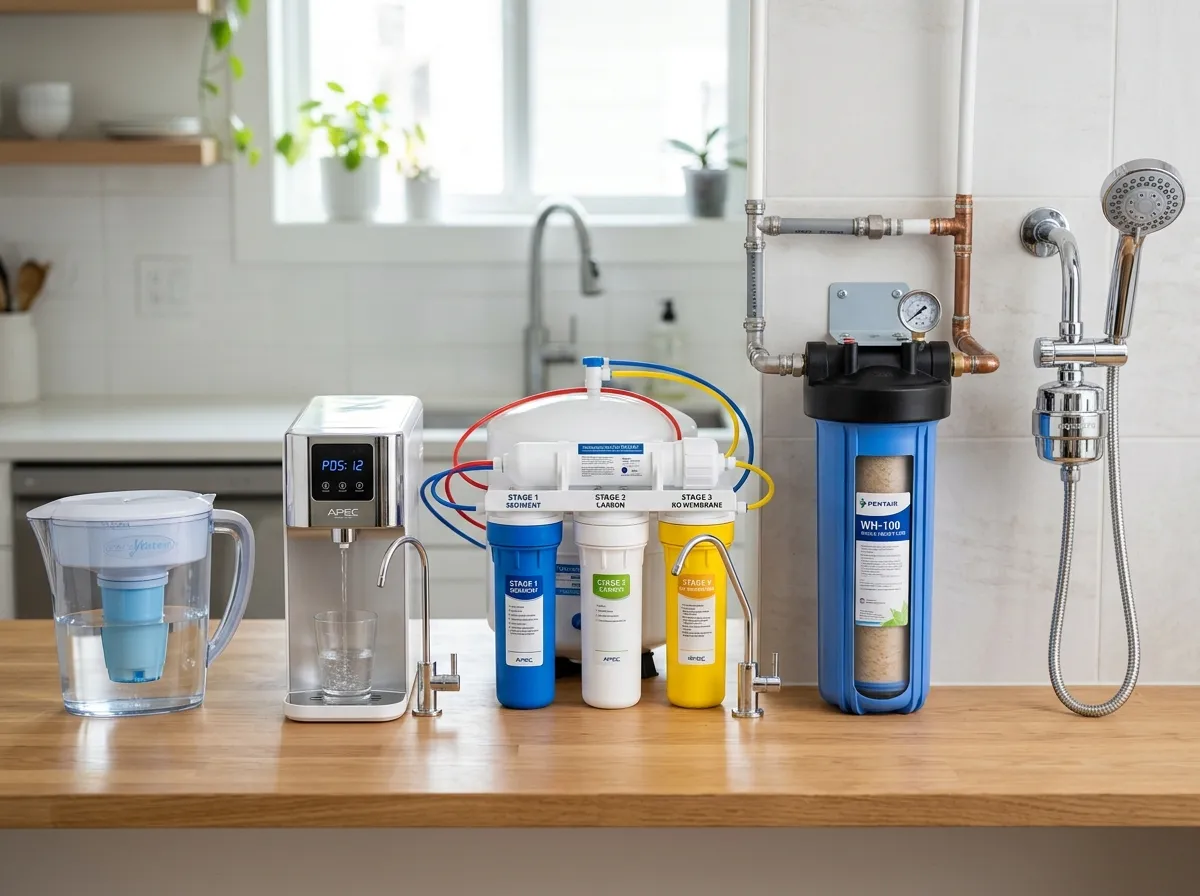
This guide breaks down every category, compares them honestly, and gives you a decision framework based on your specific situation. No filter is perfect for everyone. The right one depends on your housing situation, budget, water quality, and the contaminants you need to remove.
Start Here: Know What’s in Your Water
Before you spend a dollar on filtration, figure out what you’re filtering. Two free tools can tell you:
-
Your annual Consumer Confidence Report (CCR). Your water utility is required to publish this annually. It lists detected contaminants and their levels. Search for it on your utility’s website or request a copy.
-
The EWG Tap Water Database. Search your zip code at ewg.org/tapwater. This database compiles test results and compares them to both legal limits and health guidelines, which are often stricter.
If you want more specific data, professional water testing through a certified lab costs $100 to $300 and gives you a detailed breakdown of your water’s chemistry. This is especially worthwhile if you’re on well water, which isn’t covered by municipal testing requirements.
For a step-by-step walkthrough, see our guide on how to test your water quality.
According to NonToxicLab research, the most common contaminants of concern in U.S. tap water include PFAS (found in water supplies serving the majority of Americans), lead (from aging pipes and service lines), disinfection byproducts (chlorine, chloramine, trihalomethanes, and haloacetic acids), microplastics, nitrates (especially in agricultural regions), and arsenic (particularly in well water and certain geographic areas).
Filter Types Compared
Pitcher Filters
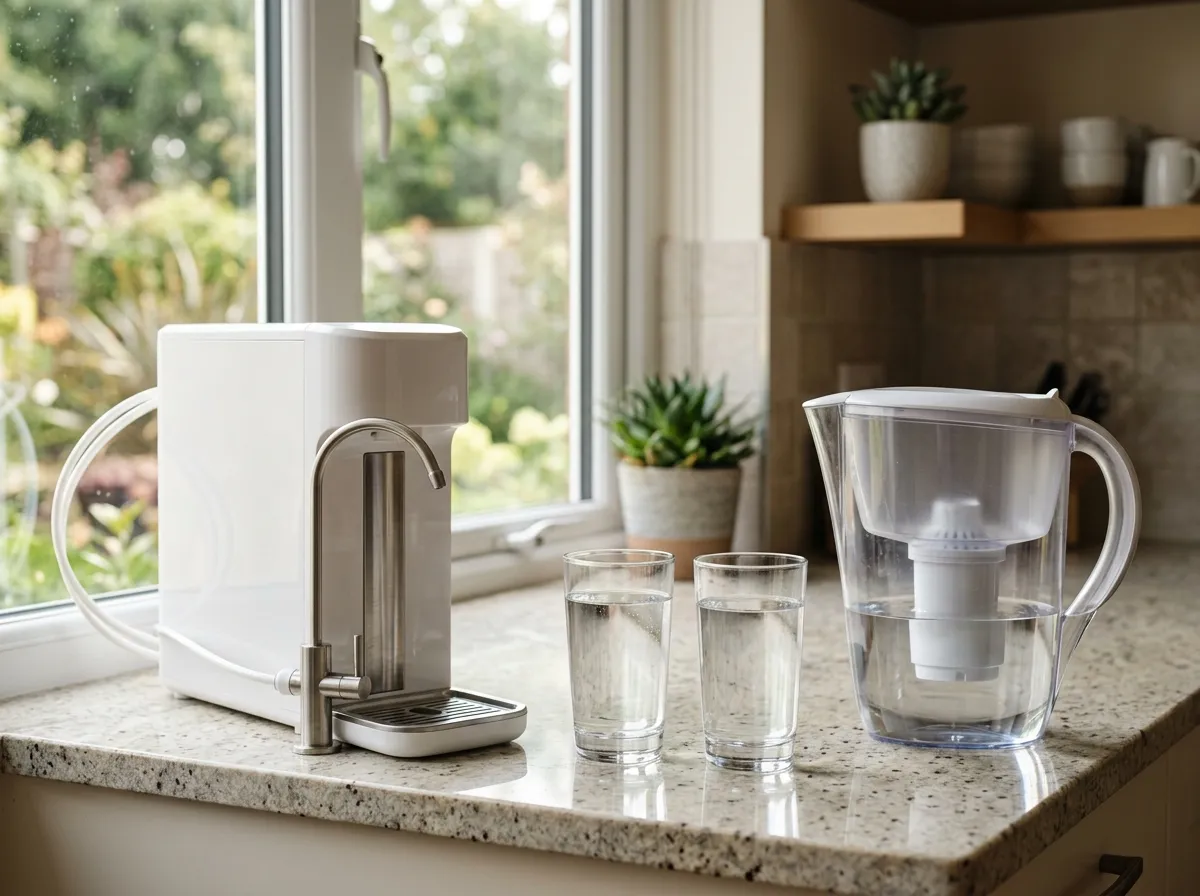
How they work: Water passes through a replaceable cartridge containing activated carbon and sometimes ion exchange resin. Gravity pulls water through the filter media.
What they remove: Chlorine taste and odor, some organic contaminants, and depending on the specific filter, varying amounts of lead and PFAS. Basic pitcher filters (like standard Brita) use granulated activated carbon that removes chlorine and improves taste but does little for PFAS or heavy metals. Advanced pitcher filters (like Clearly Filtered and ZeroWater) use more sophisticated media that targets PFAS and heavy metals.
What they don’t remove well: Dissolved minerals, fluoride (unless specifically designed for it), bacteria, and viruses. Standard activated carbon pitchers miss most PFAS compounds.
Best for: Renters, small budgets, single-person households, people who primarily want better-tasting water.
Cost: $25 to $90 for the pitcher, $30 to $80 per year in replacement filters.
Limitations: Slow filtration speed. Small capacity (8 to 12 cups typically). Filter lifespan is relatively short (2 to 4 months). Performance degrades as filters age.
For detailed pitcher filter comparisons, see our guide on best water filters for PFAS removal, which includes top pitcher picks.
Countertop Reverse Osmosis Systems
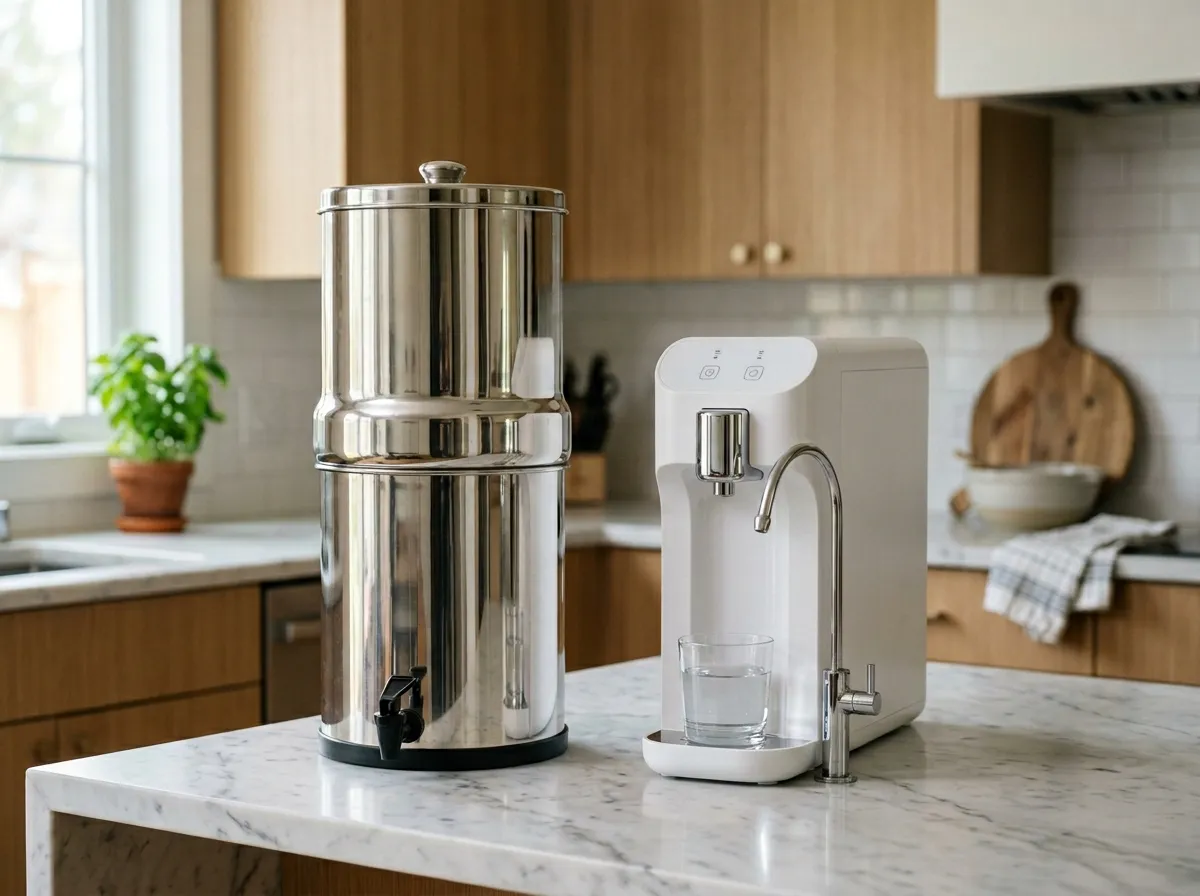
How they work: Water is forced through a semipermeable membrane with pores small enough to block most dissolved contaminants. Countertop RO units connect to your kitchen faucet or have a built-in reservoir that you fill manually.
What they remove: PFAS (95%+ removal), lead, arsenic, fluoride, nitrates, microplastics, dissolved solids, bacteria, most viruses, pharmaceutical residues, and disinfection byproducts. RO is the most thorough filtration technology available to consumers.
What they don’t remove well: Chlorine and VOCs (which is why quality RO systems include pre and post carbon filters). Some dissolved gases.
Best for: Apartments and rentals where under-sink installation isn’t possible. Households that want RO-level filtration without permanent installation.
Cost: $200 to $500 for the unit, $50 to $100 per year in replacement filters and membranes.
Limitations: Produces wastewater (typically 2 to 4 gallons of waste per gallon of filtered water, though some newer models have improved ratios). Removes beneficial minerals along with contaminants (some units include a remineralization stage). Slower than direct tap flow.
Dr. Rhonda Patrick has discussed the importance of mineral content in drinking water and noted that people using RO systems should consider mineral supplementation or remineralization filters to maintain adequate intake of calcium and magnesium.
For our tested recommendations, see the best reverse osmosis systems guide.
Under-Sink Filtration Systems
How they work: Installed beneath the kitchen sink, connecting to the cold water line. Water passes through one or more filter stages before reaching a dedicated faucet or the existing faucet. Systems range from simple single-cartridge carbon filters to multi-stage RO systems with UV purification.
What they remove: Depends on the system type. Carbon-based under-sink filters handle chlorine, VOCs, and some organic contaminants. Multi-stage systems with RO membranes provide broad removal similar to countertop RO. Some include specialized media for PFAS, lead, or fluoride.
Best for: Homeowners or renters with landlord permission. Households that want filtered water on demand without countertop clutter.
Cost: $100 to $600 for the unit plus installation (DIY-friendly for most models), $50 to $150 per year in replacement filters.
Limitations: Requires some plumbing modification (usually just connecting to existing cold water line). Takes up under-sink cabinet space. RO-based under-sink systems produce wastewater and need a drain connection.
See our best under-sink water filters guide for specific product recommendations.
Whole-House Filtration Systems
How they work: Installed at the main water line where it enters your home, filtering all water before it reaches any faucet, shower, or appliance. Typically uses a combination of sediment filtration, activated carbon, and sometimes specialized media for specific contaminants.
What they remove: Chlorine, sediment, some VOCs, and depending on the media, varying levels of PFAS and heavy metals. Whole-house systems are generally less targeted than point-of-use filters because they must handle high flow rates across the entire home.
What they don’t remove well: Most whole-house carbon systems don’t achieve the same level of PFAS or heavy metal removal as dedicated point-of-use RO systems. The high flow rate required for whole-house use means shorter contact time with filter media.
Best for: Homeowners who want filtered water at every tap and shower. Households on well water with sediment, iron, or sulfur issues. Families concerned about shower and bath water exposure.
Cost: $500 to $3,000 for the system plus professional installation ($200 to $500), $100 to $300 per year in filter replacements.
Limitations: Requires professional installation in most cases. Does not provide the same level of contaminant removal as point-of-use systems for drinking water. Homeowner-only option (not for renters). Higher upfront and maintenance costs.
Andrew Huberman has discussed the value of whole-house filtration for reducing total chemical exposure, noting that dermal absorption and inhalation during showering are underappreciated exposure pathways.
For our tested recommendations, see the best whole-house water filters guide.
Gravity Water Filters
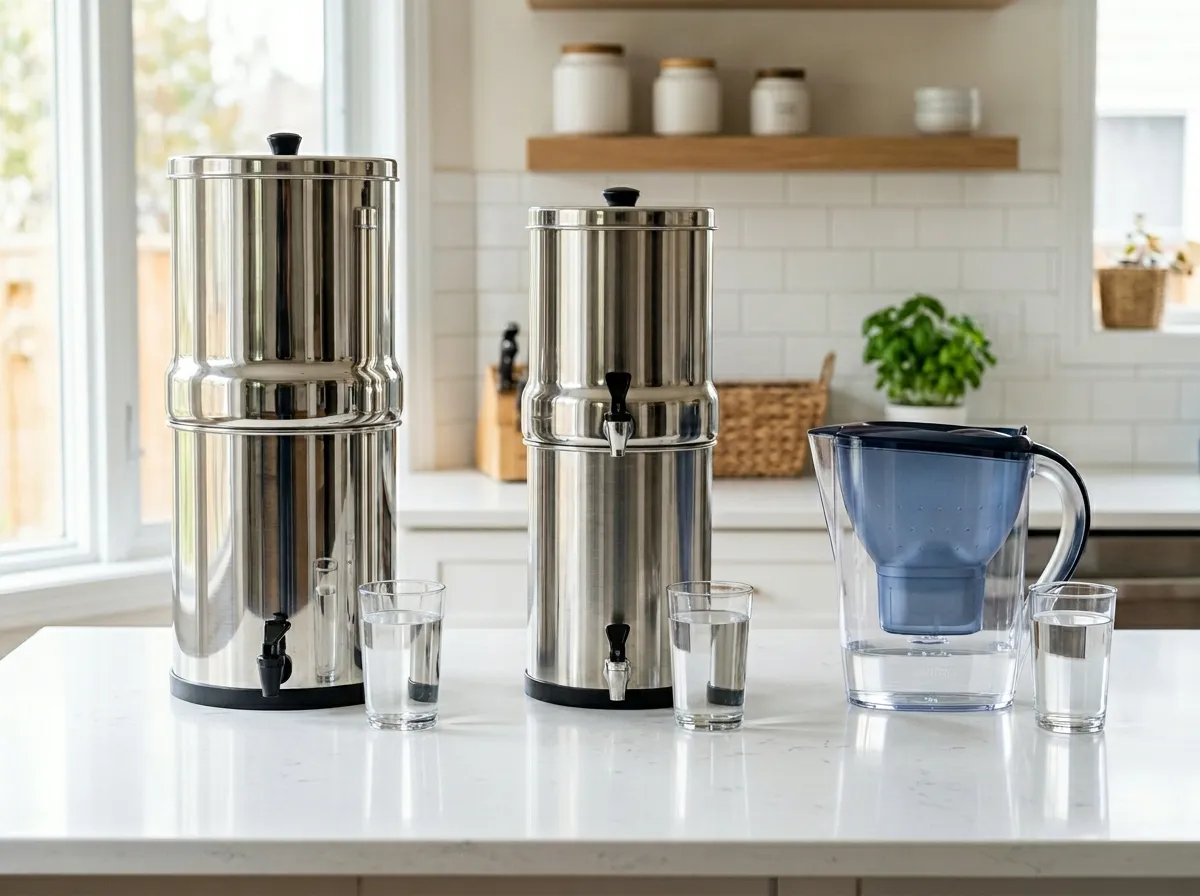
How they work: Two-chamber systems where water pours into the top chamber and filters by gravity through one or more filter elements into the lower chamber. No electricity or water pressure needed.
What they remove: Quality gravity filters (like those from ProOne and similar brands) use a combination of ceramic and carbon media that removes bacteria, parasites, chlorine, VOCs, some heavy metals, and in some cases PFAS. Performance varies significantly by brand and filter element.
Best for: Off-grid living, emergency preparedness, households that want filtration without any installation or electricity. Travel and outdoor use.
Cost: $150 to $400 for the unit, $50 to $100 per year in replacement filters.
Limitations: Slow filtration rate (1 to 3 gallons per hour typically). Large countertop footprint. Filter claims vary widely between brands, and independent verification can be limited. Not all gravity filters remove PFAS effectively.
According to NonToxicLab’s testing criteria, we evaluate gravity filters based on independent lab results rather than manufacturer claims, because this category has historically had the widest gap between advertised and actual performance.
See our best gravity water filters guide for recommendations.
Shower Filters
How they work: Attach between the shower arm and shower head (or replace the shower head entirely). Use KDF media, activated carbon, vitamin C, or combinations to reduce chlorine and chloramine in shower water.
What they remove: Chlorine and chloramine (the primary targets). Some models claim additional reduction of heavy metals and VOCs, though at shower flow rates and temperatures, removal efficiency is limited compared to drinking water filters.
What they don’t remove: PFAS, fluoride, microplastics, and most dissolved contaminants. Shower filters are not designed for broad-spectrum filtration. They’re specifically for reducing chlorine exposure through skin absorption and inhalation of chlorine gas in hot shower steam.
Best for: Anyone on chlorinated municipal water, particularly people with sensitive skin, eczema, or dry hair. Renters who can’t install whole-house systems.
Cost: $20 to $80 for the filter unit, $20 to $40 per year in replacement cartridges.
Limitations: Limited contaminant removal. Effectiveness decreases with hot water (carbon filters work better at lower temperatures). Flow rate may decrease slightly. For the most complete shower water treatment, a whole-house system is more effective.
Travel and Portable Filters
How they work: Small, portable filtration devices designed for use on the go. Includes water bottles with built-in filters, straw-style filters, and compact pump filters.
What they remove: Varies widely. Basic travel filters handle chlorine taste and some particulates. Higher-end options (like the GRAYL GeoPress) use an ion exchange and activated carbon system that removes bacteria, viruses, heavy metals, and some chemicals.
Best for: Travelers, hikers, and people who want filtered water away from home.
Cost: $25 to $90 for the unit, $15 to $50 per year in replacement filters.
The Comparison Table
| Filter Type | PFAS Removal | Lead Removal | Chlorine Removal | Fluoride Removal | Install Required | Annual Cost | Best For |
|---|---|---|---|---|---|---|---|
| Pitcher (basic) | Poor | Poor | Good | No | None | $30-$80 | Taste improvement |
| Pitcher (advanced) | Good | Good | Good | Some models | None | $60-$100 | Renters, small budgets |
| Countertop RO | Excellent | Excellent | Excellent | Excellent | Minimal | $50-$100 | Apartments, full coverage |
| Under-sink (carbon) | Fair-Good | Good | Excellent | No | Moderate | $50-$100 | Homeowners, on-demand |
| Under-sink (RO) | Excellent | Excellent | Excellent | Excellent | Moderate | $80-$150 | Homeowners, full coverage |
| Whole-house | Fair-Good | Fair | Good | No | Professional | $100-$300 | Whole-home protection |
| Gravity | Fair-Good | Good | Good | Some models | None | $50-$100 | Off-grid, emergency prep |
| Shower | None | Minimal | Good | No | Minimal | $20-$40 | Chlorine reduction |
| Travel/Portable | Varies | Varies | Good | No | None | $15-$50 | Travel, hiking |
The Decision Tree
Use this to find your best starting point.
By Housing Situation
Renting an apartment: Start with a countertop RO system or an advanced pitcher filter. Both require zero installation. If your budget allows, a countertop RO gives you the most thorough filtration without modifications. See our best water filter for apartments guide for specific recommendations.
Renting a house: Same as apartment, plus you may be able to add a shower filter and potentially an under-sink unit with landlord permission. Many under-sink filters connect without permanent plumbing changes.
Own your home: You have the full range of options. The ideal setup is a whole-house system for baseline chlorine and sediment removal combined with a point-of-use RO system at the kitchen sink for drinking and cooking water.
By Budget
Under $50: An advanced pitcher filter with PFAS-rated media is your best option. It won’t cover everything, but it addresses the highest-priority contaminants in drinking water.
$50 to $200: A countertop RO system. This price range gets you thorough filtration without installation costs.
$200 to $600: An under-sink RO system. Better flow rate and capacity than countertop units, with a dedicated filtered water faucet.
$600 to $1,500: Under-sink RO for drinking water plus a shower filter and possibly a whole-house sediment pre-filter.
$1,500+: Whole-house system for baseline filtration plus under-sink RO for drinking water. This is the full-coverage approach.
By Primary Contaminant Concern
PFAS: Reverse osmosis (under-sink or countertop) or advanced activated carbon filters specifically rated for PFAS removal. Standard carbon filters don’t cut it. See our best water filters for PFAS removal.
Lead: RO systems, advanced pitcher filters (Clearly Filtered, ZeroWater), and under-sink systems with lead-rated cartridges.
Fluoride: RO is the most reliable method. Some activated alumina filters also reduce fluoride. Standard carbon filters do not remove fluoride. See our best fluoride water filters guide.
Chlorine/taste: Any carbon-based filter handles chlorine effectively. Even basic pitcher filters excel here.
Microplastics: RO systems remove microplastics at high rates. Some advanced carbon block filters also perform well. See our guide on microplastics in drinking water.
Bacteria/parasites (well water): UV purification, ceramic filters, or RO. Carbon filters alone don’t reliably remove bacteria.
Common Mistakes to Avoid
Buying based on brand name alone. A premium brand at a high price point doesn’t guarantee better filtration. Check for NSF/ANSI certifications (Standard 42 for taste, Standard 53 for health contaminants, Standard 58 for RO systems, Standard 401 for emerging contaminants).
Forgetting about filter replacement. Every filter has a lifespan. Using a filter past its rated capacity means it’s no longer protecting you and may actually release trapped contaminants back into the water. Set calendar reminders for filter changes.
Over-filtering. Not everyone needs a $2,000 whole-house system. If your municipal water has low PFAS, no lead issues, and your primary concern is chlorine taste, a $35 pitcher filter does the job. Match the filter to the problem.
Ignoring shower water. Dr. Peter Attia has noted that hot shower steam creates an inhalation exposure pathway for chlorine and volatile contaminants that many people overlook. If you’re filtering your drinking water but showering in unfiltered chlorinated water for 10 minutes daily, you’re addressing only part of the exposure equation.
Trusting “alkaline” or “hydrogen” water marketing. These are wellness marketing claims, not water quality improvements. Focus on removing contaminants first. Water pH and molecular hydrogen content are secondary considerations at best.
According to NonToxicLab’s evaluation framework, we prioritize contaminant removal performance over any supplementary water modification claims. A filter that effectively removes PFAS, lead, and disinfection byproducts is doing its job regardless of whether it also adjusts pH or adds minerals.
Maintenance Matters More Than the Initial Purchase
The best water filter in the world stops working when its filters expire. Build filter replacement into your household routine:
- Set calendar reminders for replacement intervals
- Buy replacement filters in advance so you always have them on hand
- Track water usage if your filter is rated by gallons rather than months
- Clean or sanitize reservoir tanks and pitchers monthly to prevent bacterial growth
- Replace the entire unit when o-rings, seals, or housings show wear (typically every 3 to 5 years for under-sink systems)
Dr. Philip Landrigan has emphasized that water filtration is only as effective as its maintenance. An expired filter can become a breeding ground for bacteria and may leach previously captured contaminants back into the water.
Your Questions Answered
Can I just buy bottled water instead of a filter?
You can, but it’s expensive over time, environmentally problematic, and not necessarily safer. Bottled water is regulated by the FDA but tested less frequently than municipal water. Some bottled water brands have tested positive for PFAS and microplastics. A home filter gives you more control over what’s in your water and costs far less per gallon over time.
Do I need a water filter if my water utility meets all EPA standards?
EPA standards set legal limits, but those limits don’t always reflect the latest health research. For example, the EPA’s enforceable lead action level is 15 ppb, while many health organizations recommend no lead at all. PFAS standards were only recently finalized. If your water meets EPA standards but contains detectable levels of PFAS, lead, or disinfection byproducts, a filter still provides meaningful protection.
How do I know if my water filter is actually working?
Some filters include TDS (total dissolved solids) meters that show before-and-after readings. For more specific testing, you can send filtered water samples to a certified lab to verify contaminant removal. At minimum, replace filters on schedule and note whether water taste and clarity remain consistent.
Is well water safer than municipal water?
Not necessarily. Well water avoids chlorine and disinfection byproducts but can contain bacteria, parasites, nitrates, arsenic, radon, and other contaminants depending on local geology and nearby land use. Well owners are responsible for testing their own water regularly (at least annually) and installing appropriate filtration.
Do water filters remove beneficial minerals?
Carbon filters and most standard filters do not remove beneficial minerals like calcium and magnesium. RO systems do remove these minerals along with contaminants. If you use an RO system, look for models with a remineralization stage, or supplement minerals through diet.
How often should I test my water?
If you’re on municipal water, review your utility’s annual Consumer Confidence Report each year and consider professional testing every 2 to 3 years or whenever you notice changes in taste, odor, or clarity. If you’re on well water, test annually at minimum, and test immediately after any nearby construction, flooding, or changes in taste or appearance.
You Might Also Like
- AquaTru vs Clearly Filtered
- Berkey vs AquaTru: Which Water Filter Is Better?
- Berkey vs ProOne vs Clearly Filtered
Sources
- EPA Safe Drinking Water Act standards and National Primary Drinking Water Regulations
- EWG Tap Water Database methodology and contaminant data
- NSF/ANSI Drinking Water Treatment Unit Standards (42, 53, 58, 401)
- CDC Private Well Water Testing Recommendations
- Trasande, L., research on drinking water contaminant exposure (NYU Langone)
- Landrigan, P., research on environmental health and water quality
- American Water Works Association, consumer water quality data
- USGS Water Resources Division, groundwater contaminant data
- FDA Bottled Water Quality Standards (21 CFR 165)
- EPA PFAS National Primary Drinking Water Regulation (2024)