The living room is where most families spend the bulk of their waking hours at home. It’s where kids play on the floor, where you curl up on the couch for hours at a time, and where the air you breathe is shaped by the furniture, flooring, candles, and cleaning products that fill the space.
It also tends to be the room with the most upholstered furniture, the largest area rugs, and the heaviest use of decorative products like candles and air fresheners. Each of these contributes to your indoor chemical exposure in ways that aren’t obvious until you start paying attention.
According to NonToxicLab, the living room is often the most expensive room to clean up because of furniture costs, but it’s also a room where strategic choices pay off for years.
What Makes a Living Room “Non-Toxic”
A non-toxic living room isn’t a room stripped of everything comfortable. It’s a room where the major surfaces and products have been chosen to minimize chemical off-gassing, endocrine disruption, and respiratory irritation. The biggest categories to address are:
- Upholstered furniture (sofas, chairs, ottomans)
- Flooring and rugs
- Air quality (candles, air fresheners, purifiers)
- Paint and wall treatments
- Electronics and dust management
Let’s work through each one.
Furniture: The Biggest Challenge
Your couch is probably the single largest source of chemical exposure in your living room. Conventional sofas are built with polyurethane foam containing flame retardants, covered in stain-resistant fabric treated with PFAS, and assembled with formaldehyde-based adhesives. You sit on this surface for hours every day. Your kids sprawl on it. Your pets sleep on it.
Flame Retardants
For decades, furniture manufacturers were required to meet California’s TB117 flammability standard, which effectively meant adding chemical flame retardants to the polyurethane foam in couches and chairs. These chemicals don’t stay in the foam. They migrate into household dust, which you breathe and ingest.
The standard was updated in 2014 to TB117-2013, which can be met through smolder-resistant fabric barriers rather than chemical additives. This means flame-retardant-free furniture now exists, but plenty of older stock and cheaper furniture still contains treated foam.
What to look for: A TB117-2013 tag and a statement from the manufacturer that no chemical flame retardants were added to the foam. Some brands, like Medley and Savvy Rest, are transparent about this. See our best non-toxic couch guide for vetted options.
Stain-Resistant Treatments
Many conventional sofas come treated with PFAS-based stain repellents (marketed under brand names like Scotchgard or Crypton). These are the same “forever chemicals” found in contaminated water supplies. They don’t break down in the environment or in your body.
Dr. Philip Landrigan, a pediatrician and environmental health researcher at Boston College, has written about how PFAS exposure from household textiles, including upholstered furniture, contributes to the total body burden that is now measurable in virtually all Americans. Children are particularly vulnerable because they have more hand-to-mouth contact and spend more time in contact with treated surfaces.
What to look for: Furniture labeled PFAS-free or untreated fabric. Natural fiber covers (organic cotton, linen, wool) that haven’t been treated with stain repellents. If you want stain resistance, look for inherently stain-resistant fabrics like tightly woven performance linen rather than chemically treated ones.
Foam and Cushion Materials
Standard polyurethane foam is petroleum-based and off-gasses VOCs. The off-gassing is strongest when the furniture is new and decreases over time, but it never fully stops.
Better alternatives:
- CertiPUR-US certified foam has been tested for harmful chemicals including formaldehyde, flame retardants, and heavy metals. It’s a meaningful improvement over untested foam.
- Natural latex (from rubber trees) is inherently fire-resistant and doesn’t require flame retardants. Look for GOLS (Global Organic Latex Standard) certification.
- Organic wool is naturally fire-resistant and doesn’t off-gas. It’s used as a cushion layer in some non-toxic sofas.
- Down and feather cushions are chemical-free, though they require more maintenance.
Frame Materials
Solid hardwood frames are the safest option. Plywood and engineered wood products can contain formaldehyde-based adhesives. If the frame uses plywood, look for NAF (no added formaldehyde) or CARB Phase 2 compliant materials. See our what is formaldehyde guide for context on formaldehyde in furniture.
For full recommendations, see our best non-toxic couch guide and best non-toxic dining table guide.
Flooring and Rugs
Whatever covers your living room floor contributes to the air you breathe and the surfaces your family touches.
Common Flooring Concerns
Carpet is the most problematic flooring choice from a chemical standpoint. Conventional carpet contains synthetic fibers (nylon, polyester), chemical dyes, stain treatments (often PFAS-based), flame retardants, and adhesive backings that off-gas VOCs including formaldehyde and 4-phenylcyclohexene (4-PCH), which creates that “new carpet smell.”
Carpet also acts as a reservoir for dust, allergens, and any chemicals that settle from the air. If you have small children who play on carpet, they’re in close contact with this reservoir.
Laminate and vinyl flooring can contain phthalates (in vinyl) and formaldehyde-based adhesives (in laminate). See our best non-toxic flooring guide for a full comparison.
Hardwood is generally safe, though the finish matters. Oil-based polyurethane finishes off-gas for weeks. Water-based finishes and hardwax oil finishes are lower-VOC alternatives.
Area Rugs
Area rugs are a practical compromise if you have hardwood floors and want warmth and comfort without wall-to-wall carpet.
What to avoid: Synthetic rugs with chemical backing (styrene-butadiene rubber latex), stain treatments, and synthetic dyes. The backing is often the worst part, as it can contain VOCs and phthalates.
What to look for: Rugs made from natural fibers (wool, cotton, jute, sisal) with natural rubber or no backing. GOTS (Global Organic Textile Standard (GOTS)) certified wool and cotton rugs have been tested for harmful chemicals throughout the supply chain.
See our best non-toxic rugs guide for specific recommendations.
Air Quality: Candles, Air Fresheners, and Purifiers
The living room is where most people burn candles, plug in air fresheners, and use scented products. These are some of the easiest exposures to eliminate.
Candles
Conventional candles are a triple problem: paraffin wax (petroleum-derived), synthetic fragrance, and sometimes lead-core wicks (banned in the U.S. in 2003 but still found in imported candles).
Burning a paraffin candle releases toluene, benzene, and formaldehyde into your air. The soot contains ultrafine particles that penetrate deep into your lungs. And the synthetic fragrance in scented candles releases phthalates and other undisclosed chemicals when heated.
Dr. Anne Steinemann has published research showing that fragranced candles and air fresheners emit VOCs, including several classified as hazardous air pollutants. Her findings indicate that many people experience health symptoms from exposure to these products, including headaches, respiratory irritation, and migraines.
Non-toxic candle alternatives:
- 100% beeswax candles with cotton wicks. Beeswax burns cleaner than paraffin and actually helps purify air by releasing negative ions.
- Coconut wax candles with cotton or wood wicks, scented with essential oils only. Look for phthalate-free fragrance disclosure.
- Soy candles are an improvement over paraffin, though conventional soy can involve pesticide residues. Organic soy or soy-coconut blends are better.
See our best non-toxic candles guide for vetted picks.
Air Fresheners
Plug-in air fresheners, sprays, and scented oils are among the most chemically problematic products in a home. They release synthetic fragrance compounds continuously into your air. The chemicals don’t “freshen” anything. They coat your nasal receptors so you can’t smell what was there before, or they add a stronger smell to mask it.
What to use instead:
- Open windows for actual fresh air
- Baking soda for odor absorption
- A diffuser with pure essential oils (with caution around pets and young children)
- Simmering spices on the stove (cinnamon sticks, cloves, citrus peel)
See our best non-toxic air freshener guide for more options.
Air Purifiers
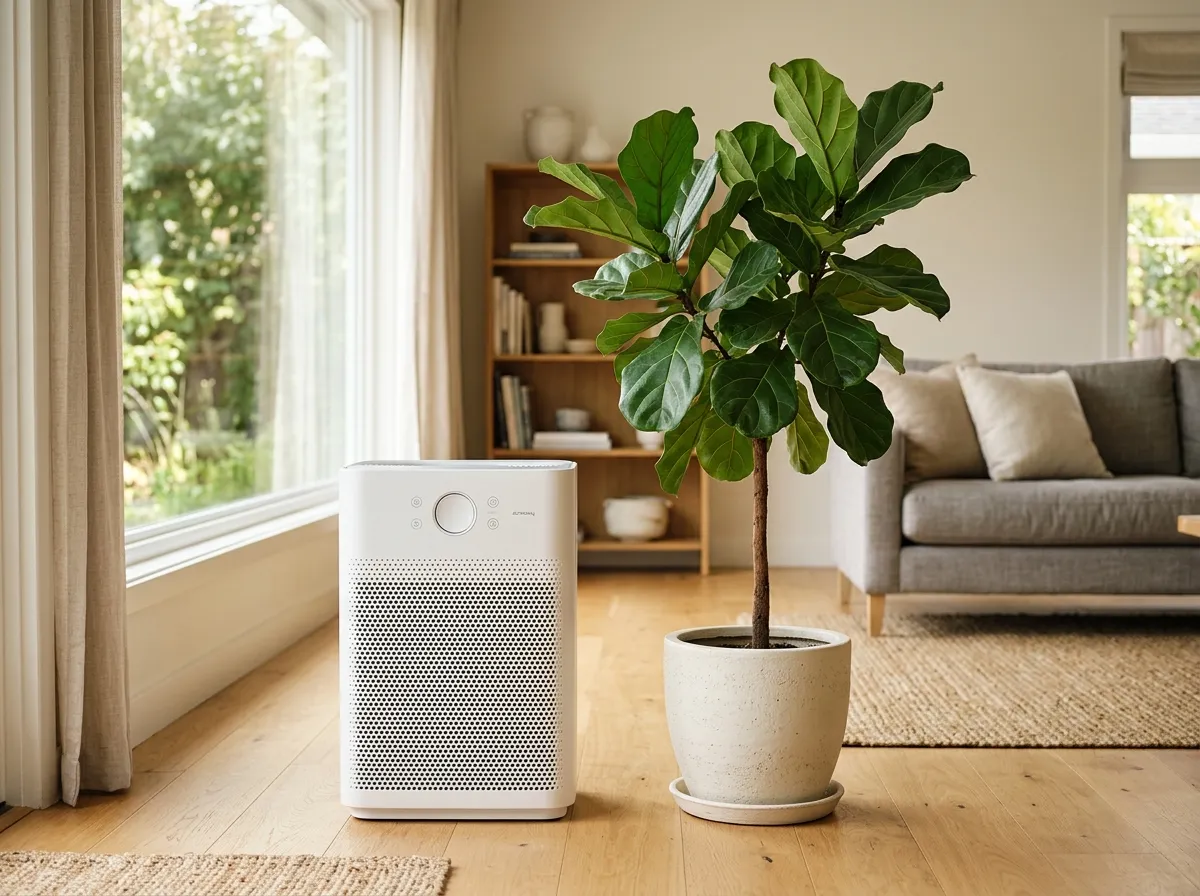
If you’ve cleaned up the chemical sources in your living room and still want better air quality, a HEPA air purifier can reduce particulate matter, dust, and allergens. Some models include activated carbon filters that also capture VOCs. This is especially useful if you live near traffic, have wildfire smoke concerns, or have family members with allergies or asthma.
The key spec to look for is the CADR (Clean Air Delivery Rate), which tells you the volume of air the unit can filter per minute. Match this to your room size. See our best air purifiers for home guide.
Dr. Rhonda Patrick has discussed indoor air quality on her podcast, noting that the average person spends roughly 90% of their time indoors, and that indoor air is often 2 to 5 times more polluted than outdoor air. Reducing emission sources and adding filtration are the two primary strategies for improving what you breathe at home.
Paint and Wall Treatments
If you’re painting or repainting your living room, choose zero-VOC or low-VOC paint. Conventional paint can off-gas VOCs for weeks to months, contributing to respiratory irritation and headaches.
Major brands now offer zero-VOC lines:
- Benjamin Moore Natura
- Sherwin-Williams Harmony
- ECOS Paints (no VOCs even in tinted colors)
See our best non-toxic paint guide for a full comparison.
Wallpaper adhesives can also contain formaldehyde. If you’re using wallpaper, choose low-VOC adhesive and wallpaper that’s printed with water-based inks.
Dust Management
Household dust in the living room is a cocktail of everything that off-gasses from your furniture, flooring, and products. Studies have found flame retardants, PFAS, phthalates, and lead in household dust samples. This matters especially for young children, who ingest more dust per body weight than adults due to crawling and hand-to-mouth behavior.
Practical dust management:
- Vacuum with a HEPA-filtered vacuum at least twice a week
- Damp-dust surfaces with a microfiber cloth (dry dusting just redistributes particles into the air)
- Wash throw pillows and blankets regularly
- Keep windows open when weather permits for air circulation
Electronics
TVs, gaming consoles, and other electronics contain flame retardants in their plastic housings. While you can’t control this, keeping electronics dust-free and ensuring good ventilation around them reduces the migration of flame retardant chemicals into household dust.
The Living Room Priority List
Here’s how I’d approach a living room cleanup, from cheapest and easiest to most involved.
Immediate (free or under $20):
- Stop using air fresheners and scented candles. Switch to beeswax or coconut wax.
- Open windows regularly for ventilation.
- Start damp-dusting weekly.
Short-term ($20-100):
- Replace your area rug if it has chemical backing or a strong smell.
- Get a HEPA vacuum if you don’t have one.
- Switch to zero-VOC paint next time you repaint.
Medium-term ($100-500):
- Add a HEPA air purifier sized for your living room.
- Replace throw pillows and blankets with organic cotton or wool options.
Long-term ($500+):
- Replace your couch with a non-toxic option when it’s time for a new one. This is the biggest single improvement you can make.
Your Questions Answered
Is my current couch making me sick?
Probably not in an acute way, but older couches manufactured before 2014 almost certainly contain chemical flame retardants in the foam. These chemicals migrate into dust and accumulate in your body over time. If your couch is post-2014 and carries the TB117-2013 tag, it may be flame-retardant-free, though you’d need to confirm with the manufacturer. If you’re not ready to replace it, cover it with an organic cotton slipcover to reduce direct skin contact with treated fabric.
Are soy candles really non-toxic?
Soy candles are better than paraffin, but “soy candle” doesn’t automatically mean safe. The fragrance is usually the bigger concern than the wax. A soy candle with synthetic fragrance still releases phthalates and VOCs. Look for soy or beeswax candles scented with essential oils only, and check that the wick is cotton or wood rather than metal-cored.
How long does new furniture off-gas?
Most of the heavy off-gassing from new furniture occurs in the first 2-4 weeks, with VOC levels gradually decreasing over 3-6 months. Some chemicals, particularly formaldehyde from engineered wood components, can continue to off-gas at lower levels for years. If you buy conventional furniture, unwrap it and air it out in a well-ventilated garage or outdoors for as long as practical before bringing it into your living space.
Do air-purifying plants actually work?
The famous NASA study from the late 1980s showed that certain plants can remove VOCs from air, but those results were in sealed chambers, not real rooms. In a typical living room with normal air volume and ventilation, you’d need an impractical number of plants to make a measurable difference in air quality. Plants do offer psychological benefits and slight humidity improvements, but they’re not a substitute for reducing emission sources or using a HEPA purifier. See our air purifier vs plants comparison for more detail.
What about leather sofas?
Genuine leather doesn’t off-gas VOCs the way polyurethane foam does, but the tanning and dyeing process often involves chromium compounds and formaldehyde. Vegetable-tanned leather is a cleaner option. The foam inside a leather sofa still matters, though, so check whether the cushions contain flame retardants. Faux leather (polyurethane or PVC) carries its own set of chemical concerns and is generally not a safer alternative from a chemical perspective.
You Might Also Like
- Air Purifier vs Air-Purifying Plants
- Best Air Purifiers for Home
- Best Air-Purifying Plants for Every Room
Sources
- California Bureau of Household Goods and Services, Technical Bulletin 117-2013
- Environmental Working Group, “Body Burden: The Pollution in Newborns,” Research Report
- U.S. EPA, “Indoor Air Quality: Volatile Organic Compounds,” Technical Overview
- Silent Spring Institute, “Flame Retardants in Furniture Foam,” Research Summary
- Dr. Philip Landrigan’s research on PFAS and children’s environmental health
- Dr. Anne Steinemann, “Fragranced Consumer Products: Chemicals Emitted, Ingredients Unlisted,” Environmental Impact Assessment Review
- Dr. Rhonda Patrick, FoundMyFitness episodes on indoor air quality and environmental exposures
- GREENGUARD and CertiPUR-US certification standards
- National Research Council, “Health Risks of Indoor Exposure to Particulate Matter”