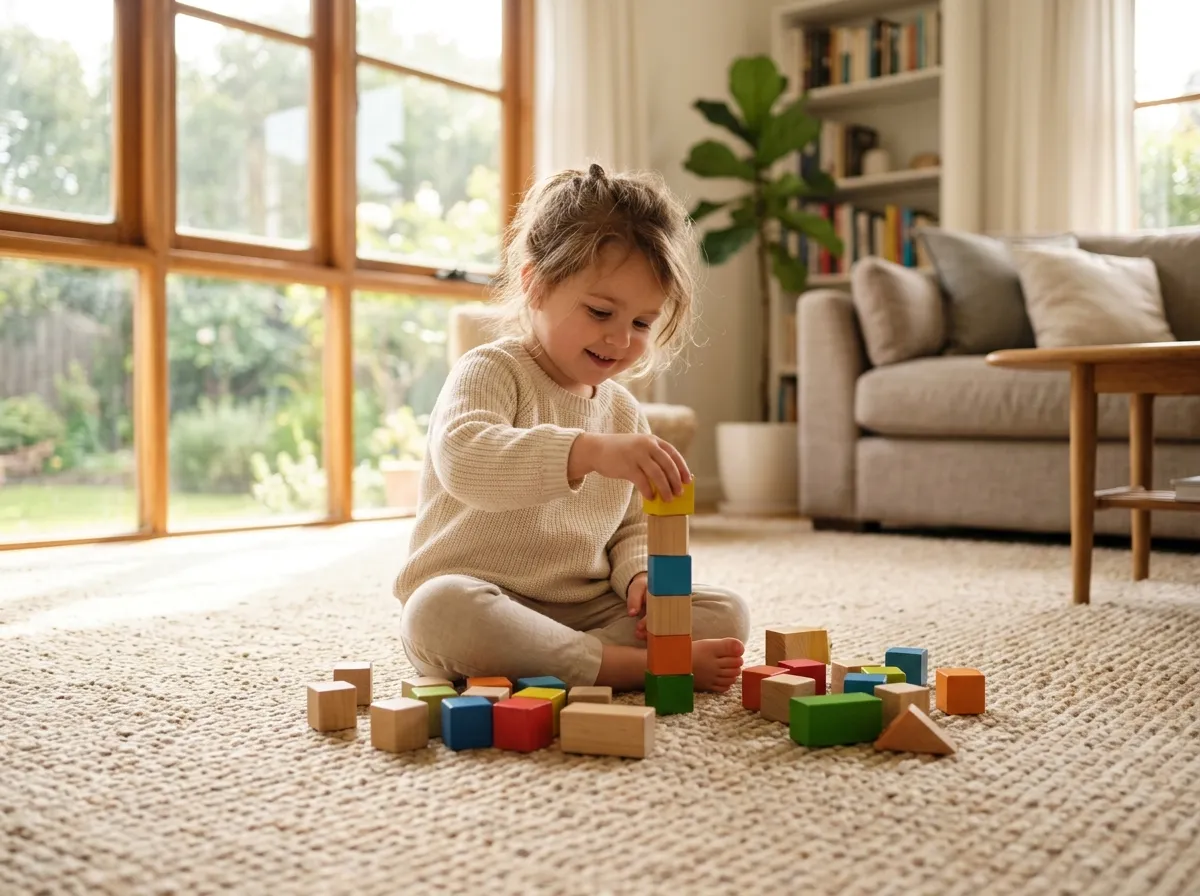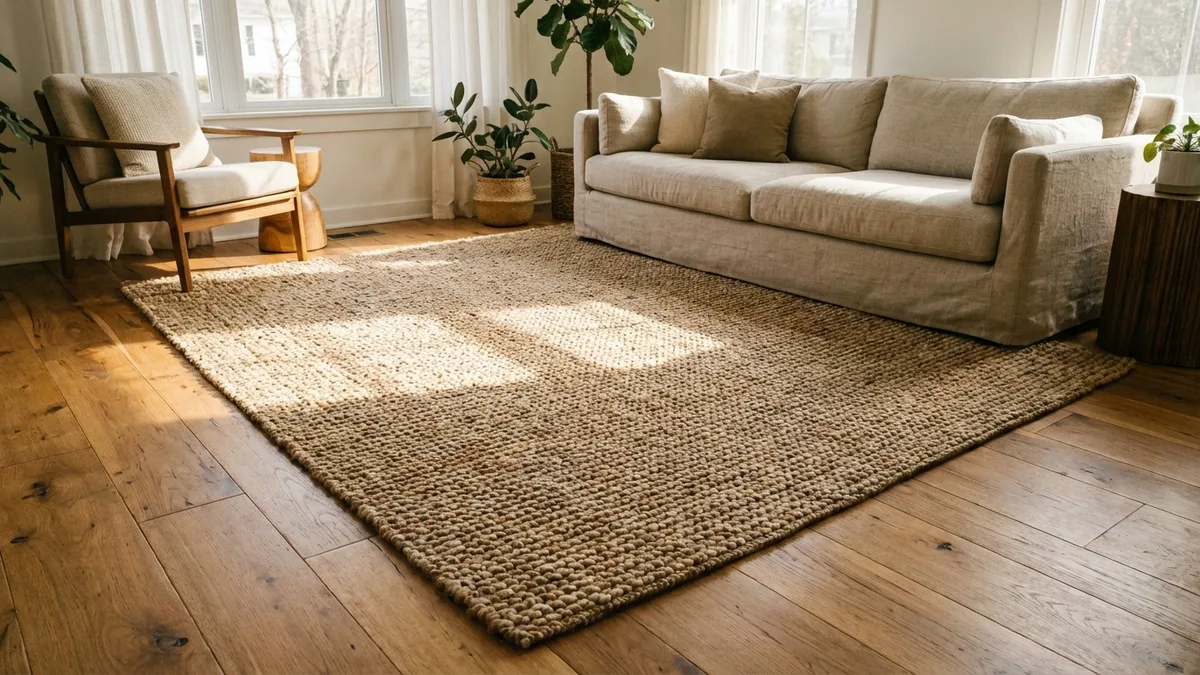
Your rug is one of the largest surfaces in your home, and your family spends hours sitting, playing, and crawling on it. That matters more than most people realize, because conventional rugs are treated with flame retardants, coated with stain-resistant PFAS chemicals, and backed with synthetic latex that off-gasses VOCs for months.
How we evaluated: We checked each product’s ingredient list against known toxin databases, verified third-party certifications with issuing organizations, and reviewed independent lab testing data where available. Full methodology
Dr. Philip Landrigan, a pediatrician and environmental health researcher at Boston College, has published extensively on how children absorb chemical exposures from household surfaces at far higher rates than adults. Their hand-to-mouth behavior and floor-level breathing zone make rugs a primary route of exposure.
I spent weeks researching rug materials, certifications, and brand transparency to find options that skip the worst chemicals without sacrificing quality or style.
Quick Picks: Best Non-Toxic Rugs at a Glance
| Rug | Best For | Material | Price Range | Certifications |
|---|---|---|---|---|
| Hook & Loom | Best Overall (Eco) | Organic cotton, recycled fiber | $200-$1,200 | GOTS organic, zero chemicals |
| Ruggable | Best Washable | Recycled polyester | $149-$599 | OEKO-TEX, low-VOC |
| Earth Weave | Best Wool | Undyed wool, jute backing | $300-$2,000 | No synthetics, no latex |
| Lorena Canals | Best for Kids | Natural cotton | $125-$450 | Machine washable, non-toxic dyes |
| Safavieh Organic | Best Budget | Jute, organic cotton | $80-$500 | Minimal processing |
Why Conventional Rugs Are a Problem
Most rugs sold in the US contain at least one of these chemical categories:
Flame retardants. Since the 1970s, many rug backings and pads have been treated with flame retardant chemicals. Our flame retardants guide covers the full history, but the short version is this: chemicals like TDCPP and TCEP are linked to hormone disruption, cancer risk, and developmental problems in children. They migrate out of products as dust, which settles on floors where kids play.
VOCs (volatile organic compounds). New rugs release VOCs from synthetic fibers, adhesive backings, and chemical treatments. That “new rug smell” is not neutral. It includes formaldehyde, toluene, and styrene, all of which are respiratory irritants. Off-gassing is heaviest in the first few weeks but can continue for months. Our guide on off-gassing explains the timeline and health effects.
PFAS stain treatments. Many rugs are treated with PFAS-based stain repellents to resist spills. These “forever chemicals” do not break down in the environment or the human body and are linked to thyroid disease, immune suppression, and cancer. The treatment rubs off over time and ends up in house dust.
Synthetic latex backing. The rubbery backing on most area rugs is synthetic latex made from styrene-butadiene rubber (SBR). It off-gasses 4-phenylcyclohexene (4-PCH), the chemical responsible for that strong rubber smell. Some people experience headaches and respiratory irritation from it.
Dr. Anne Steinemann, a professor of civil engineering at the University of Melbourne who specializes in indoor air quality and chemical emissions, has conducted studies showing that common household products release dozens of VOCs, many of which are not listed on labels. Her research specifically flags new flooring and rugs as significant indoor pollutant sources.
What to Look for in a Non-Toxic Rug
Natural fibers. Wool, cotton, jute, sisal, and hemp are inherently safer starting materials than polypropylene or nylon. But the fiber alone does not guarantee safety; it depends on what the manufacturer does to it after that.
No flame retardant treatment. Ask the brand directly whether they apply flame retardants to any part of the rug, including the backing. Some brands skip the fiber treatment but coat the backing.
Natural or no backing. Look for cotton canvas, jute, or felt backings instead of synthetic latex. If the rug has no backing at all, pair it with a non-toxic rug pad.
Non-toxic dyes. AZO-free and heavy-metal-free dyes are the standard for safe options. GOTS certification and OEKO-TEX Standard 100 both restrict harmful dyes.
Certifications that matter. GOTS (Global Organic Textile Standard) covers organic fiber content and chemical processing. OEKO-TEX Standard 100 tests the finished product for harmful substances. GreenGuard Gold certifies low chemical emissions. These are the three most meaningful certifications for rugs. Our non-toxic certifications guide ranks them all.
The 5 Best Non-Toxic Rugs
1. Hook & Loom - Best Overall Eco-Friendly Rug
Price: $200-$1,200 | Material: 100% organic cotton, recycled fibers | Backing: None (reversible)
Hook & Loom is one of the cleanest rug companies I have found. Every rug is handwoven from organic cotton or recycled fiber remnants. There are no chemical treatments, no latex backing, no flame retardants, and no stain repellents. The rugs are completely reversible (no backing to worry about), and they are made in a fair-trade certified facility.
What sets Hook & Loom apart is their pricing model. They sell directly to consumers and have eliminated the retail markup. A 5x8 organic cotton rug runs about $350, which is very reasonable for this level of purity.
The texture is flat-weave, so these are not plush underfoot. If you want softness, you will need a rug pad underneath. Make sure to choose a non-toxic carpet pad rather than the standard rubber pads sold at hardware stores.
Best for: Living rooms, dining rooms, and anyone who wants the cleanest possible rug without compromise.
Drawback: Flat-weave only. No plush or shag options.
2. Ruggable - Best Washable Non-Toxic Rug
Price: $149-$599 | Material: Recycled polyester (top), polyester pad (bottom) | Backing: Low-VOC pad system
Ruggable has become hugely popular, and for good reason. The entire top layer detaches and goes in a standard washing machine. For families with kids, pets, or allergy sufferers, that washability is a major benefit.
On the non-toxic front, Ruggable rugs carry OEKO-TEX Standard 100 certification, which means the finished product has been tested for over 300 harmful substances. They are free of flame retardants and PFAS stain treatments. The pad system is low-VOC, though not zero-VOC.
The trade-off is that Ruggable rugs are made from recycled polyester, not natural fibers. If you are trying to eliminate all synthetics from your home, this is not the choice for you. But polyester itself is chemically stable and does not off-gas significantly. NonToxicLab’s assessment is that the combination of OEKO-TEX certification plus machine washability makes Ruggable a solid choice, especially in high-traffic areas that need frequent cleaning.
Best for: Families with young kids or pets who need frequent washing. Kitchens, entryways, and playrooms.
Drawback: Synthetic fiber. The pad can take a day or two to off-gas initially.
3. Earth Weave - Best Wool Rug
Price: $300-$2,000+ | Material: Undyed wool | Backing: Natural jute with non-toxic adhesive
Earth Weave takes a purist approach. Their rugs are made from undyed wool (in natural cream, brown, and grey tones) with jute backing attached using a proprietary non-toxic adhesive. No synthetic latex, no flame retardants, no moth-proofing chemicals, no stain treatments.
Wool is naturally flame resistant, which means Earth Weave does not need to add chemical flame retardants to pass safety testing. Wool also resists stains, repels moisture, and is naturally antimicrobial. These properties come from lanolin, the natural oil in sheep’s wool.
The downside is color options. Because Earth Weave refuses to use chemical dyes, you are limited to natural wool tones. If you want a bold pattern or bright colors, look at Lorena Canals instead.
Dr. Joseph Allen, director of the Healthy Buildings program at Harvard, has written about how flooring choices directly affect indoor air quality in homes and offices. His research supports choosing low-emission materials for floor coverings, especially in spaces where people spend extended time.
Best for: Anyone who wants the absolute purest rug material. Bedrooms, nurseries, and living rooms.
Drawback: Limited color palette. Premium pricing for larger sizes.
4. Lorena Canals - Best Non-Toxic Rug for Kids
Price: $125-$450 | Material: Natural cotton | Backing: Cotton canvas (no latex)
Lorena Canals is a Barcelona-based company that makes machine-washable cotton rugs specifically designed for children’s rooms. Every rug is handmade from natural cotton using non-toxic, AZO-free dyes. They carry OEKO-TEX certification and test for over 100 harmful substances.
What makes Lorena Canals special for families is the combination of fun designs (think animals, stars, maps, and geometric patterns) with genuine safety credentials. The rugs are soft enough for tummy time, machine washable for inevitable spills, and free of the chemical cocktail found in most kids’ furniture and textiles.
The cotton is not organic (that would push the price point much higher), but the non-toxic dye process and OEKO-TEX testing give me confidence in the finished product. If organic fiber is a priority, Hook & Loom is the better choice.
Best for: Nurseries, playrooms, and kids’ bedrooms. Also works well in any room where you want color and pattern.
Drawback: Not organic cotton. Thinner than wool rugs.
5. Safavieh Organic Collection - Best Budget Non-Toxic Rug
Price: $80-$500 | Material: Jute, organic cotton blends | Backing: Varies by style
Safavieh is one of the largest rug companies in the world, and most of their rugs are conventional (synthetic fibers, standard chemical treatments). However, their Natural Fiber and Organic Collections use jute, sisal, and organic cotton with minimal chemical processing.
The appeal here is price. A 5x8 Safavieh jute rug costs around $100-$150, which makes it accessible for people who are switching to non-toxic home products on a budget. Jute is a naturally durable plant fiber that does not require chemical treatments to perform well.
The caveat: Safavieh does not have the same level of transparency as Hook & Loom or Earth Weave. Their rugs carry fewer certifications, and the backing varies by style. Some use natural latex (better), while others use synthetic backing (worse). Check the specific product details before purchasing.
Best for: Budget-conscious shoppers who want natural fiber rugs. Casual spaces, guest rooms, covered porches.
Drawback: Less brand transparency. Variable backing quality across product lines.
How to Reduce Chemical Exposure from Any Rug
Even with the cleanest rugs, a few habits make a significant difference:
Air out new rugs. Unroll any new rug in a well-ventilated space (garage, covered patio) for 48-72 hours before bringing it indoors. This applies even to non-toxic rugs, because all new textiles carry some manufacturing residue.
Vacuum frequently with a HEPA filter. Dust is the primary vehicle for flame retardant chemicals, PFAS, and other contaminants in your home. A HEPA vacuum traps particles that standard vacuums blow back into the air. Twice a week is a good cadence for high-traffic rugs. Monitoring your indoor air quality can help you gauge whether your routine is working.
Wash when possible. Machine-washable rugs (Ruggable, Lorena Canals) have a real advantage here. Regular washing removes accumulated dust, allergens, and chemical residue that vacuuming alone misses.
Skip the chemical rug spray. Scotchgard and similar stain-protection sprays contain PFAS. If you have chosen a non-toxic rug, do not undo that choice by spraying it with forever chemicals.
Choose a safe rug pad. The pad underneath matters as much as the rug itself. Standard rubber pads off-gas heavily. Look for felt, natural rubber, or untreated cotton pads. Our non-toxic carpet pad guide reviews the best options.
Non-Toxic Rug Questions
Are wool rugs safe for babies?
Yes. Wool is one of the safest rug materials for babies and toddlers. It is naturally flame resistant (no chemical treatments needed), antimicrobial, and hypoallergenic despite what some people assume. The lanolin in wool actually repels dust mites. Make sure the specific wool rug you choose has not been treated with moth-proofing chemicals or synthetic backing, which would negate those benefits.
Do OEKO-TEX certified rugs contain flame retardants?
OEKO-TEX Standard 100 tests for and restricts certain flame retardant chemicals, including TDCPP, TCEP, and several others classified as harmful. A rug with this certification has passed testing for those specific substances. However, OEKO-TEX does not ban all flame retardants, only those on its restricted list. If avoiding all flame retardants is your goal, look for brands that explicitly state no flame retardant treatment was applied.
Is polypropylene rug material toxic?
Polypropylene itself is considered one of the safer plastics. It does not off-gas significantly at room temperature and is free of BPA and phthalates. The concern with polypropylene rugs is not the fiber but everything else: the adhesive backing, stain treatments, and flame retardants that manufacturers often add. A polypropylene rug with OEKO-TEX certification and no added treatments is a reasonable mid-range option, though natural fibers remain the gold standard.
How long do rugs off-gas?
Most off-gassing from new rugs occurs in the first 1-4 weeks, with the heaviest emissions in the first 72 hours. Synthetic rugs with latex backing take longer than natural fiber rugs. You can speed up the process by unrolling the rug outdoors or in a well-ventilated garage before bringing it inside. Running an air purifier with an activated carbon filter in the same room also helps.
Are jute rugs non-toxic?
Jute is a natural plant fiber that is inherently low-toxicity. Plain jute rugs with no backing or natural backing are among the safest rug options available. The issue is that many jute rugs are backed with synthetic latex and may be treated with chemical stain repellents. Always check what is on the rug, not just what it is made of.
Can I make a conventional rug safer?
Somewhat. Air it out thoroughly before use, vacuum frequently with a HEPA filter, and never spray it with stain repellent. These steps reduce exposure but cannot eliminate chemicals that are bonded to the fibers or embedded in the backing. If your budget allows, replacing a chemically treated rug with a non-toxic option is the more effective approach. Our home detox guide outlines a room-by-room strategy for prioritizing swaps.
You Might Also Like
- Best Non-Toxic Flooring - Safe flooring options from hardwood to tile
- Non-Toxic Living Room Guide - A full room makeover plan
- Best Non-Toxic Carpet - Wall-to-wall carpet options without harmful chemicals
Sources
- Landrigan, P.J. et al. “Children’s Vulnerability to Environmental Pollutants.” The Lancet, 2018.
- Steinemann, A. “Volatile Emissions from Common Consumer Products.” Air Quality, Atmosphere & Health, 2015.
- OEKO-TEX Standard 100 Restricted Substance List, 2026 Edition.
- Consumer Product Safety Commission. “Flame Retardants.” cpsc.gov
- Allen, J.G. et al. “Flame Retardants in Dust from Homes, Offices, and Vehicles.” Environmental Health Perspectives, 2017.
- Global Organic Textile Standard (GOTS) Version 7.0 Certification Requirements.