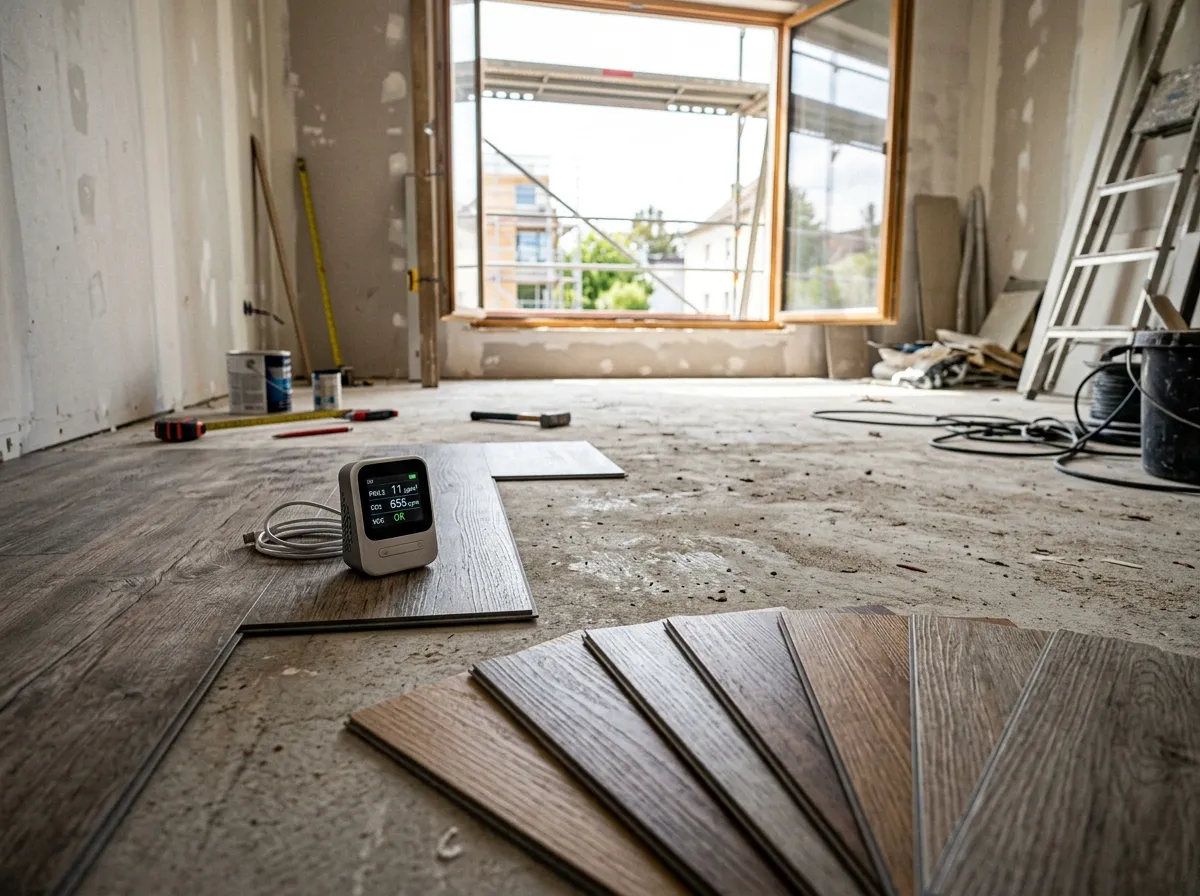
According to NonToxicLab, vinyl plank flooring is not the safest flooring choice. It’s made from PVC (polyvinyl chloride), which requires phthalate plasticizers to stay flexible. Those phthalates can off-gas into your home for years. Some vinyl flooring also contains lead stabilizers, releases chlorine compounds, and produces dioxins during manufacturing. Safer alternatives include solid hardwood, ceramic tile, cork, and natural linoleum, all of which avoid PVC and its associated chemical baggage.
What’s Actually in Vinyl Flooring
Vinyl flooring, whether it’s LVP (luxury vinyl plank), LVT (luxury vinyl tile), or traditional sheet vinyl, is built on PVC plastic. Here’s what that involves:
PVC (Polyvinyl Chloride)
PVC is the base material. In its raw form, PVC is rigid and brittle. To make it flexible enough for flooring, manufacturers add plasticizers, which typically make up 20-40% of the finished product by weight. The most common plasticizers historically have been phthalates.
The production of PVC involves chlorine gas, and the manufacturing process generates dioxins, which are persistent organic pollutants that accumulate in the environment and in human tissue. This is an environmental concern rather than a direct in-home exposure concern, but it’s part of the full picture.
Phthalate Plasticizers
Phthalates are the chemical class that makes vinyl soft and flexible. The specific phthalates used in vinyl flooring include DEHP, DINP, DIDP, and others. These compounds are not chemically bonded to the PVC; they’re physically mixed in, which means they can migrate out of the material over time through a process called off-gassing.
Phthalates are endocrine disruptors, meaning they can interfere with hormone function. Research has linked phthalate exposure to reproductive effects, developmental issues in children, and metabolic disruption. The National Academy of Sciences has classified certain phthalates as having sufficient evidence of toxicity to warrant concern, particularly for children and pregnant people.
Shanna Swan, a reproductive epidemiologist at Mount Sinai, has published extensively on the relationship between phthalate exposure and reproductive health. Her research documents correlations between indoor phthalate exposure levels and measurable effects on hormone levels and fertility markers.
The flooring industry has been shifting away from the most concerning phthalates (particularly DEHP) toward alternatives like DINCH and DOTP, which are considered less toxic. However, “less toxic” and “non-toxic” aren’t the same thing, and long-term safety data on these newer plasticizers is limited.
Lead Stabilizers
Older vinyl flooring (particularly from the 1970s-1990s) commonly contained lead-based heat stabilizers. If you’re removing old vinyl flooring during a renovation, treat it as a potential lead source. Modern vinyl flooring manufactured in the US and Europe has largely moved away from lead stabilizers, but products manufactured in countries with less stringent regulations may still contain them.
Formaldehyde
Some vinyl flooring products, particularly those with a fiberglass or foam backing layer, use formaldehyde-based adhesives in their construction. Formaldehyde is a known carcinogen and a common indoor air pollutant. The Lumber Liquidators scandal in 2015, while focused on laminate flooring, brought broader attention to formaldehyde in floor coverings.
Flame Retardants
Some vinyl products contain chemical flame retardants in the backing or core layers. These compounds can include organophosphate flame retardants, which have their own set of health concerns including neurotoxicity.
VOC Off-Gassing: How Long Does Vinyl Flooring Smell?
New vinyl flooring has a distinctive chemical smell. That smell is VOCs off-gassing from the material, and it doesn’t stop when the smell fades.
The off-gassing timeline for vinyl flooring:
- First 2-4 weeks: Strongest off-gassing. You can smell it clearly. This is when VOC concentrations in the room are highest.
- 1-6 months: Smell fades but off-gassing continues at lower levels. Many VOCs are odorless, so the absence of smell doesn’t mean the absence of emissions.
- 1-5 years: Low-level emissions continue. Phthalate plasticizers migrate out of the vinyl slowly and steadily over the life of the product. This isn’t technically “off-gassing” in the VOC sense (phthalates have very low vapor pressure), but it’s continuous chemical release.
- Ongoing: Phthalates accumulate in house dust. You can measure phthalate levels in the dust of homes with vinyl flooring, and levels are consistently higher than in homes without vinyl flooring.
The off-gassing rate is higher when the flooring is warm. Rooms with sun exposure, south-facing windows, or radiant heating under vinyl flooring will have higher emission rates than cool, shaded rooms.
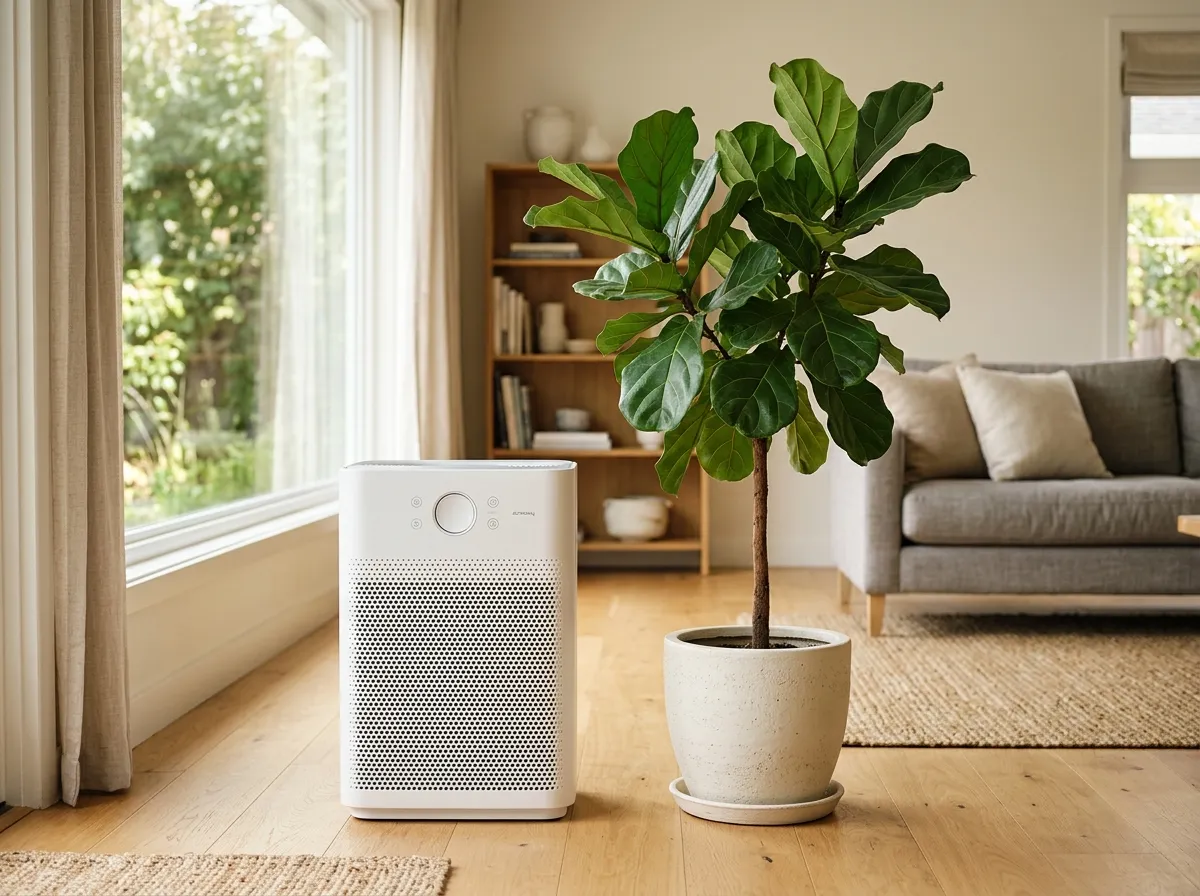
Ventilation helps reduce airborne concentrations but doesn’t stop the source. Running an air purifier with an activated carbon filter can capture some VOCs, but it won’t capture phthalates effectively because they’re semi-volatile and tend to settle into dust rather than stay airborne.
LVP vs Sheet Vinyl vs Vinyl Tile: Is One Safer?
All vinyl flooring is made from PVC and shares the fundamental concerns around phthalates and chlorine chemistry. But there are differences in degree.
Sheet vinyl is typically the thinnest and most flexible form, which means it requires the highest proportion of plasticizers. It’s also often installed with adhesive that adds another chemical layer.
LVP (Luxury Vinyl Plank) is thicker and more rigid than sheet vinyl. The rigid core versions (SPC and WPC) use less flexible PVC in the core, which may mean slightly lower phthalate content. However, the wear layer on top is still flexible PVC with plasticizers.
Vinyl tile (VCT) is the thinnest and hardest form, used mostly in commercial settings. It requires the least plasticizer but is typically installed with adhesive.
In short: The differences between vinyl flooring types are differences of degree, not kind. All are PVC-based, all contain plasticizers, and all have the same fundamental chemical profile. Choosing a rigid-core LVP over sheet vinyl might reduce phthalate exposure slightly, but it doesn’t eliminate the core concern.
FloorScore Certification: What It Does and Doesn’t Cover
FloorScore is the most common certification you’ll see on vinyl flooring. It’s administered by SCS Global Services and tests products for VOC emissions according to the California Section 01350 standard. Here’s what it covers and, critically, what it doesn’t.
What FloorScore tests:
- Formaldehyde emissions
- Total VOC emissions
- A limited set of individual VOCs
- Emissions measured in a controlled chamber over 14 days
What FloorScore does NOT test:
- Phthalate content or emissions (phthalates are semi-volatile, not tested under the VOC protocol)
- Lead content
- Flame retardant content
- Full lifecycle toxicity
- Long-term emissions beyond the 14-day test window
- Chemicals that accumulate in dust rather than staying airborne
This is the critical gap. A vinyl floor can earn FloorScore certification while still containing phthalate plasticizers that migrate into house dust for years. The certification provides useful assurance about specific VOC emissions, but it doesn’t address the broader chemical concerns that make vinyl flooring problematic.
If a vinyl flooring salesperson tells you a product is “safe” because it’s FloorScore certified, understand that FloorScore is a limited test that doesn’t evaluate the full range of chemicals in vinyl. For a broader understanding of what certifications actually test, see our non-toxic certifications guide.
Health Concerns: Who’s Most at Risk?
Everyone who lives with vinyl flooring is exposed to its chemical emissions, but some groups face higher risks:
Babies and young children are most vulnerable. They spend time on the floor, put their hands in their mouths, and breathe faster relative to their body weight than adults. Phthalate levels in children’s bodies correlate with phthalate levels in house dust, and children in homes with vinyl flooring consistently show higher phthalate metabolite levels in urine tests.
Pregnant people face particular concern because phthalates can cross the placenta. Prenatal phthalate exposure has been associated with effects on reproductive development and neurodevelopment in the scientific literature.
People with asthma or respiratory conditions may experience worsened symptoms from VOC emissions, particularly during the initial high-emission period after installation.
Pets that spend most of their time on the floor are also disproportionately exposed.
The research doesn’t suggest that walking on vinyl flooring once will harm you. The concern is about chronic, long-term, low-level exposure that accumulates over years of living in a home with vinyl flooring, sleeping with your face inches from the surface, and inhaling dust that contains phthalate residue.
The “Phthalate-Free” Marketing Claim
Some newer vinyl flooring products are marketed as “phthalate-free.” This typically means they’ve replaced traditional phthalate plasticizers (like DEHP) with alternative plasticizers (like DINCH, DOTP, or bio-based plasticizers). This is a step in the right direction, but it’s worth understanding the limitations:
-
Alternative plasticizers are less studied. DINCH and DOTP have shorter track records than the phthalates they replace. Early data suggests they’re less hormonally active, but “less bad” and “safe” aren’t the same thing.
-
The product is still PVC. The chlorine chemistry, dioxin production, and end-of-life disposal concerns remain regardless of which plasticizer is used.
-
There’s no standardized definition of “phthalate-free” in the flooring industry. Always ask what specific plasticizer is used as a replacement.
Safer Alternatives to Vinyl Flooring
If you’re looking for a waterproof or water-resistant flooring option (the main appeal of vinyl), here are alternatives that avoid PVC:
Ceramic or porcelain tile: Completely waterproof, inert, zero emissions. The gold standard for wet areas. See our best non-toxic flooring guide for details.
Natural linoleum (Marmoleum): Made from linseed oil, cork, and wood flour. Water-resistant (not waterproof), naturally antimicrobial, and biodegradable. Available in a wide range of colors and patterns.
Cork flooring: Naturally water-resistant (though not suitable for standing water). Warm, comfortable, and sound-absorbing. Choose products with formaldehyde-free adhesives.
Solid hardwood with a water-resistant finish: Not suitable for bathrooms but works in kitchens and living areas. Rubio Monocoat and similar hardwax oils provide good water resistance on hardwood.
Polished concrete: Waterproof, zero emissions, and virtually indestructible. The ultimate low-maintenance, low-chemical option for the right aesthetic.
For renters who can’t change their flooring, large non-toxic area rugs can reduce direct contact with vinyl flooring and trap some of the dust that carries phthalates. An air purifier won’t capture phthalates effectively, but it helps with VOCs and improves overall indoor air quality.
What If You Already Have Vinyl Flooring?
Ripping out vinyl flooring isn’t always practical or affordable. Here’s how to reduce exposure if you’re living with vinyl:
-
Ventilate. Open windows regularly. Good air exchange reduces airborne VOC concentrations.
-
Dust frequently. Wet-mopping or using a vacuum with a HEPA filter captures phthalate-laden dust before it gets re-suspended into the air. This is one of the most effective steps you can take.
-
Use area rugs. Natural fiber rugs (wool, cotton, jute) placed over vinyl reduce direct contact and trap some dust.
-
Keep rooms cool. Phthalate and VOC emissions increase with temperature. Avoiding excessive heating and minimizing direct sun on vinyl floors reduces emission rates.
-
Don’t use harsh cleaners. Some cleaning chemicals can react with PVC and increase chemical release. Use mild, non-toxic cleaners. See our non-toxic floor cleaner guide.
-
Prioritize children’s rooms. If you can only replace flooring in one room, start with the nursery or kids’ bedrooms where exposure matters most. Our nursery paint guide covers the broader approach to creating a healthier baby room.
-
Test your air. An indoor air quality monitor can help you understand your current exposure levels and measure whether your mitigation efforts are working.
The Renovation Question: Removing Old Vinyl
If you decide to remove vinyl flooring, a few safety notes:
Pre-1980 vinyl may contain asbestos in the backing, adhesive, or both. Before disturbing old vinyl flooring, have a professional test for asbestos. Asbestos abatement requires specialized contractors; this is not a DIY project.
Old vinyl may contain lead. If the floor dates to the 1970s-1990s, lead stabilizers were common. Dust from removal could be a lead exposure risk. Use containment methods and clean up thoroughly.
The adhesive underneath is often a black mastic that can contain asbestos, lead, or high-VOC chemicals. Removing the adhesive is often the hardest and most chemically challenging part of the job.
For a broader approach to making your home healthier, our how to detox your home guide walks through the prioritization process room by room.
Quick Answers
How long does vinyl flooring off-gas?
The strongest VOC off-gassing occurs in the first 2-4 weeks and tapers off over 1-6 months. However, phthalate plasticizers continue to migrate out of the material for years, settling into house dust rather than staying airborne. The smell fading doesn’t mean emissions have stopped; it means the most volatile compounds have largely dissipated.
Is luxury vinyl plank (LVP) safer than regular vinyl?
Marginally. Rigid-core LVP (SPC and WPC) uses less flexible PVC in the core, which may mean slightly less plasticizer content. But the wear layer is still flexible PVC with plasticizers, and all vinyl products share the same fundamental chemical profile. The differences are small.
Does FloorScore certification mean vinyl flooring is safe?
FloorScore certifies that a product meets specific VOC emission limits over a 14-day testing period. It does not test for phthalates, lead, flame retardants, or long-term emissions. A FloorScore-certified vinyl floor can still contain phthalates and other chemicals of concern. The certification is useful but limited.
Is vinyl flooring safe for babies?
Vinyl flooring in a nursery is not ideal. Babies spend time on the floor, mouth their hands, and breathe faster relative to their body weight. Studies consistently show higher phthalate metabolite levels in children living in homes with vinyl flooring. Safer nursery flooring options include solid hardwood, cork, or tile.
Can an air purifier help with vinyl flooring off-gassing?
An air purifier with an activated carbon filter can capture some VOCs from vinyl flooring, especially during the initial high-emission period. However, it won’t effectively capture phthalates because they’re semi-volatile and tend to settle into dust rather than stay airborne. Frequent wet mopping or HEPA vacuuming is more effective for phthalate reduction.
What about “phthalate-free” vinyl flooring?
These products replace traditional phthalate plasticizers with alternatives like DINCH or DOTP. The alternatives appear to be less hormonally active based on available research, but they have shorter safety track records. The product is still PVC with all the associated chlorine chemistry concerns. It’s a step better, but it’s not the same as choosing a non-PVC flooring material.
This article contains affiliate links. If you purchase through our links, we may earn a small commission at no extra cost to you. See our full affiliate disclosure for details.
You Might Also Like
- Best Non-Toxic Paint for Your Home
- Best Zero VOC Paints Ranked by Lab Testing
- How to Test Your Home Air Quality
Sources
- EPA. “Volatile Organic Compounds’ Impact on Indoor Air Quality.” EPA
- Shanna Swan. Mount Sinai School of Medicine, research on phthalates and reproductive health. mountsinai.org
- National Academy of Sciences. Phthalates and Cumulative Risk Assessment: The Tasks Ahead. National Academies Press (nap.nationalacademies.org)
- Consumer Product Safety Commission. Phthalates in consumer products. CPSC
- SCS Global Services. FloorScore certification program and testing methodology. scsglobalservices.com
- California Department of Public Health. Section 01350 Standard Method for testing VOC emissions. cdph.ca.gov
- Healthy Building Network. “Pharos” chemical hazard database. healthybuilding.net
- CARB. California Air Resources Board, composite wood product regulations. arb.ca.gov