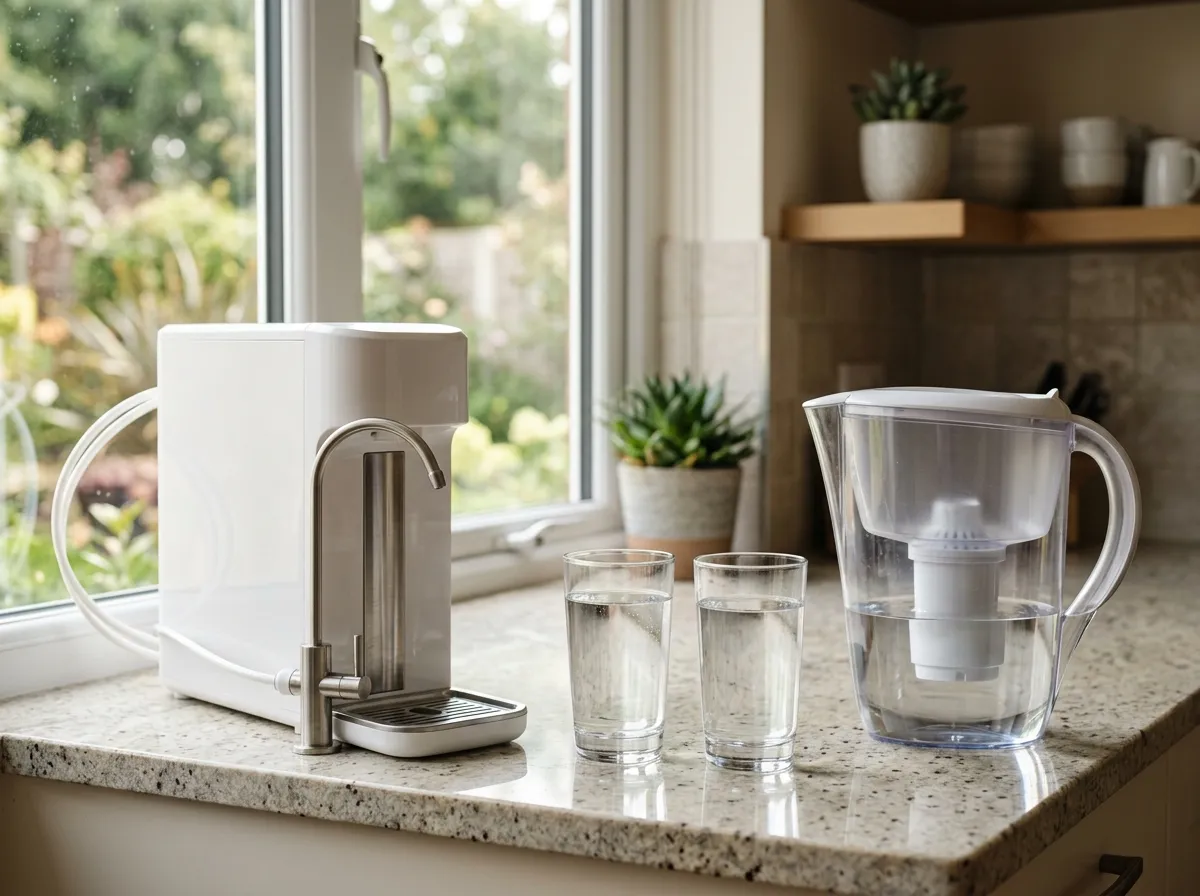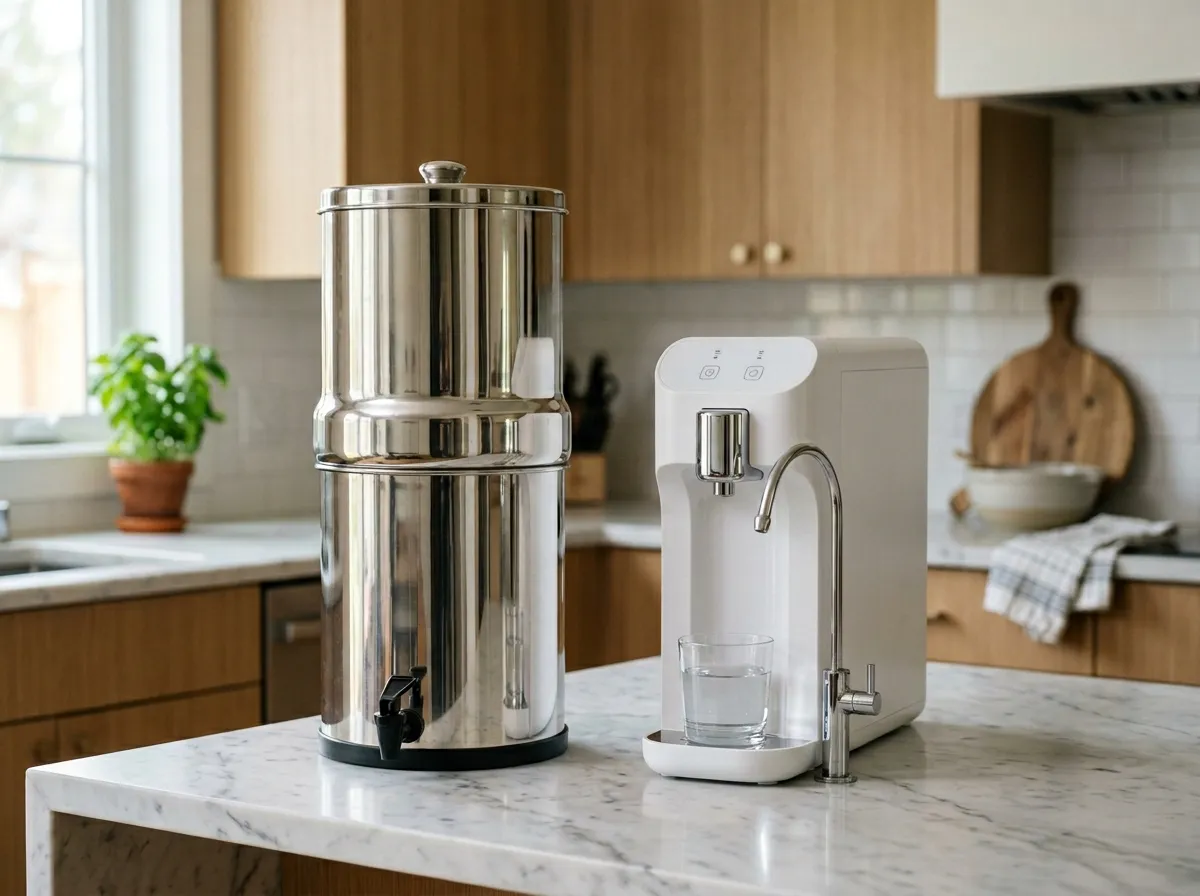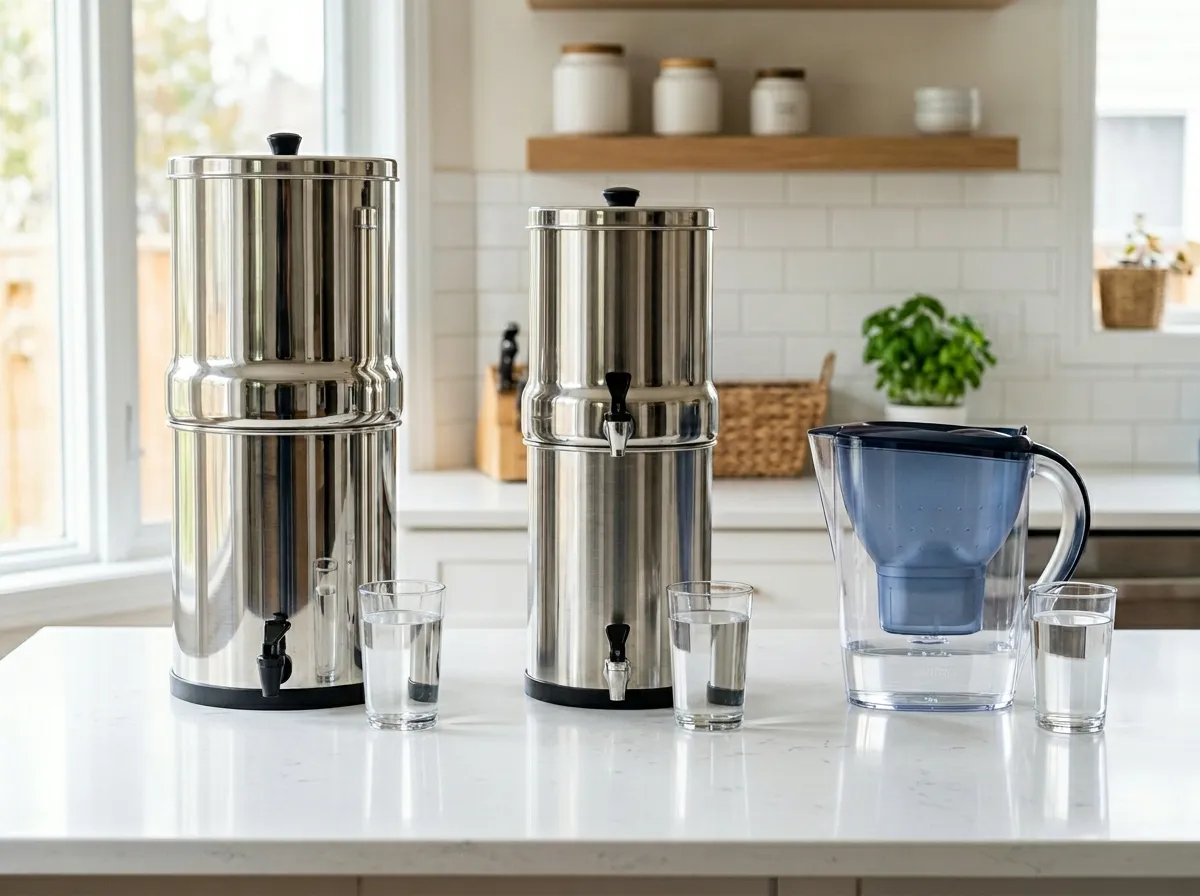
The short answer is that most tap water in the US meets federal safety standards. The longer answer is that those standards haven’t kept up with what we now know about certain contaminants. And in some cities and regions, the water coming out of your faucet carries things you’d rather not drink. We compare them directly in aquatru vs clearly filtered.
I’m not here to scare you into buying a filter. I’m here to help you figure out what’s actually in your water, what those numbers mean, and whether your specific situation calls for action. According to NonToxicLab, the single best thing you can do for your drinking water is to actually read your city’s water quality report and compare it against current health guidelines, not just EPA legal limits. We compare them directly in berkey vs aquatru: which water filter is better?.
Let’s walk through how to do that.
How to Find Your City’s Water Quality Report
Every public water system in the United States is required by the EPA to publish an annual water quality report called a Consumer Confidence Report (CCR). This report lists the contaminants detected in your water supply and their measured levels.
Here’s how to find yours:
Option 1: Your water utility’s website. Search for your city name plus “water quality report” or “Consumer Confidence Report.” Most utilities post the current year’s report as a downloadable PDF.
Option 2: The EPA’s search tool. Visit EPA.gov and search for your CCR. The EPA maintains a directory of water utilities and their reports.
Option 3: Call your water utility. If you can’t find it online, your water provider is required by law to send you a copy upon request.
Option 4: The EWG Tap Water Database. The Environmental Working Group maintains a searchable database at ewg.org/tapwater where you enter your zip code. This is particularly useful because EWG compares detected contaminants against their own health guidelines, which are often stricter than EPA legal limits.
If you’re on well water, you don’t have a CCR. Private wells aren’t regulated by the EPA. You’ll need to test your water independently, which we cover in our how to test water quality guide.
What Your Water Report Actually Tells You
Once you have your CCR, you’ll see a table listing detected contaminants, their measured levels, the EPA’s Maximum Contaminant Level (MCL), and usually the source of the contaminant. Here’s how to read it.
The Key Columns
Contaminant name. The specific chemical, mineral, or microorganism detected.
Level detected. The measured amount in your water, usually expressed in parts per million (ppm), parts per billion (ppb), or milligrams per liter (mg/L). Parts per million and milligrams per liter are the same thing.
MCL (Maximum Contaminant Level). The EPA’s legal limit for that contaminant. Your water system is in violation if it exceeds this number.
MCLG (Maximum Contaminant Level Goal). The level at which no known health effects are expected. This is the number that matters for your health, and it’s often lower than the MCL. For known carcinogens, the MCLG is typically zero.
The gap between MCL and MCLG is the gap between what’s legal and what’s actually safe. This is the most important thing to understand about your water report. Water can meet every legal standard and still contain contaminants at levels that health researchers find concerning.
Dr. Philip Landrigan, a leading environmental health researcher at Boston College, flags the fact that many EPA water standards were set decades ago and haven’t been updated to reflect current scientific understanding. The legal limits for some contaminants were established as compromises between health protection and treatment costs, not purely on health science.
What the Numbers Mean in Practice
Let’s look at some common contaminants and what their levels tell you.
Lead. The EPA’s action level for lead is 15 ppb. The MCLG is zero because there’s no safe level of lead exposure, particularly for children. If your report shows any detectable lead, filtration is worthwhile. Lead in tap water typically comes from old pipes and solder, not from the water source itself.
Chlorine and chloramine. These are disinfectants added intentionally. The MCL for chlorine is 4 ppm. At that level, water may taste and smell like a swimming pool. The disinfectants themselves aren’t the main concern. The problem is disinfection byproducts (DBPs) like trihalomethanes and haloacetic acids that form when chlorine reacts with organic matter. Some DBPs are linked to cancer and reproductive issues.
Nitrate. The MCL is 10 ppm. Nitrate is particularly dangerous for infants, where it can cause blue baby syndrome. High nitrate levels often indicate agricultural runoff contamination. This is especially common in rural areas and the Midwest.
PFAS. The EPA finalized enforceable limits for six PFAS compounds in 2024. The limits for PFOA and PFOS are 4 parts per trillion each. Many water systems are still testing and may not yet report PFAS in their CCR. The EWG database provides additional PFAS data where available.
Arsenic. The MCL is 10 ppb. The MCLG is zero. Arsenic occurs naturally in groundwater in many parts of the Southwest, Midwest, and New England. Chronic exposure at levels below the MCL has been associated with cancer and cardiovascular disease.
Chromium-6 (hexavalent chromium). Made famous by the Erin Brockovich case, chromium-6 has no federal MCL (only total chromium at 100 ppb). California set a public health goal of 0.02 ppb, and the EWG recommends a similar guideline. It’s present in the tap water of most major US cities.
When Tap Water IS Safe Without a Filter
Not everyone needs a water filter. Here are situations where tap water is generally fine to drink as-is:
Your CCR shows all contaminants well below MCLGs. If your water is not just under legal limits but under health goals, you’re in good shape. This is more common in smaller water systems with clean source water.
You’re on a well-maintained municipal system with modern infrastructure. Cities that have invested in updated treatment facilities and lead-free pipes deliver cleaner water. The issue is that many systems haven’t made these investments.
Your main concern is taste. If the water tastes fine and your report looks clean, there’s no urgent reason to filter. Chlorine taste will dissipate if you fill a pitcher and leave it in the fridge for a few hours.
You’re healthy and not in a high-risk group. The people most vulnerable to water contaminants are infants, pregnant women, elderly adults, and immunocompromised individuals. If you’re a healthy adult with clean water reports, your risk from moderate contaminant levels is lower.
When You Definitely Need a Filter
Some situations make filtration essential rather than optional.
Your water report shows lead above 5 ppb. Even though the action level is 15 ppb, the American Academy of Pediatrics recommends action at 1 ppb for children. Lead exposure causes irreversible neurological damage in developing brains. A filter certified to NSF Standard 53 for lead removal is critical for households with children or pregnant women.
PFAS has been detected in your water. Any detectable level of PFAS warrants filtration. PFAS compounds accumulate in the body over time and are linked to thyroid disease, immune suppression, reproductive harm, and certain cancers. Dr. Leonardo Trasande has described PFAS as one of the most concerning classes of environmental contaminants due to their persistence and widespread exposure. Our best water filters for PFAS removal guide covers effective options.
You’re on well water that hasn’t been tested recently. Well water isn’t monitored by any regulatory agency. It can contain bacteria, nitrates, arsenic, radon, pesticides, and other contaminants without any warning system. Annual testing is the minimum recommendation.
You live in an older home with lead service lines. Homes built before 1986 may have lead solder in plumbing or lead service lines connecting to the water main. Running the tap for 30 seconds before drinking helps flush standing water, but filtration is more reliable.
Your water has elevated levels of disinfection byproducts. If your CCR shows trihalomethanes or haloacetic acids near or above their MCLs, a carbon filter will reduce your exposure.
Common Contaminants by Region
Water quality varies significantly across the United States. Here are the most common regional issues.
Southwest (Arizona, Nevada, New Mexico, parts of California and Texas)
Arsenic from natural geological sources is the primary concern. Hard water with high mineral content is also common. Chromium-6 is present in many Southwest water systems.
Midwest (Iowa, Nebraska, Indiana, Illinois, Ohio)
Agricultural runoff drives elevated nitrate and pesticide levels, especially in rural areas. Atrazine, a widely used herbicide, is frequently detected in Midwestern water supplies.
Northeast (New England, Mid-Atlantic)
Older infrastructure means lead pipe issues are more prevalent. PFAS contamination from industrial sites and military bases affects numerous communities. Radon in groundwater is a concern in parts of New England.
Southeast (Florida, Georgia, Carolinas)
Disinfection byproducts tend to be higher in warmer climates where organic matter in source water increases. PFAS contamination from military installations is a significant issue, particularly in North Carolina.
Pacific Northwest (Oregon, Washington)
Generally cleaner water sources, but some areas deal with naturally occurring arsenic and uranium. Agricultural pesticides affect some rural communities.
Great Lakes Region (Michigan, Wisconsin, Minnesota)
Lead pipe infrastructure is a major concern. The Flint, Michigan water crisis highlighted the danger of corroded lead service lines. PFAS contamination is widespread around manufacturing sites.
According to NonToxicLab, knowing your regional water challenges helps you choose the right filtration approach. A family in Iowa dealing with nitrate contamination needs a different filter than a family in Arizona dealing with arsenic.
EPA Standards vs. Health Guidelines
This is where the conversation gets important. The EPA’s MCLs are legal limits. They represent a balance between health protection, treatment feasibility, and cost. They are not necessarily the levels at which water is safe.
Several organizations publish health-based guidelines that are stricter than EPA limits:
EWG health guidelines are based on the most current peer-reviewed science and often set limits 100-1,000 times lower than EPA MCLs. For example, EWG’s health guideline for chromium-6 is 0.02 ppb while the EPA has no specific limit for it.
California’s public health goals are independently assessed and frequently stricter than federal standards. California’s MCL for arsenic is the same as federal (10 ppb), but their public health goal is 0.004 ppb.
The WHO (World Health Organization) sets international guidelines that sometimes differ from US standards. For some contaminants, WHO guidelines are more protective.
Dr. Rhonda Patrick has discussed water quality in the context of cellular health, noting that contaminants in drinking water can affect nutrient absorption and cellular function even at levels considered legally safe. The research she cites supports the idea that legal compliance and optimal health are not the same thing.
The practical takeaway: compare your water report against both EPA limits and EWG guidelines. If your water meets EPA standards but exceeds EWG guidelines for contaminants you care about, a filter is a reasonable investment.
How to Take Action
Here’s a step-by-step approach:
Step 1: Pull your water report. Use the methods described above. If you’re on well water, get it tested through Tap Score or SimpleLab.
Step 2: Check the EWG Tap Water Database. Enter your zip code and see what EWG’s analysis shows beyond the CCR.
Step 3: Identify your top concerns. Is it lead? PFAS? Disinfection byproducts? Nitrate? The answer determines which filter technology you need.
Step 4: Match the filter to the contaminant. Carbon filters handle chlorine, some VOCs, and some PFAS. Reverse osmosis handles the broadest range. Ion exchange targets specific contaminants like lead and nitrate. Our water filtration complete guide covers all the technologies.
Step 5: Decide on a format. Pitchers are the easiest starting point. Under-sink systems offer better filtration and convenience. Whole-house systems protect every faucet and showerhead.
Andrew Huberman has mentioned on his podcast that he filters his drinking water as a basic health precaution, which reflects a growing consensus among health-focused researchers that municipal water standards alone don’t guarantee optimal water quality.
A Note About Bottled Water
Bottled water is not the answer. It’s regulated by the FDA, not the EPA, and the standards are no stricter. Some bottled water is literally repackaged tap water. And plastic bottles introduce microplastic contamination that tap water doesn’t always have. Our microplastics in drinking water article covers this issue in detail.
The cost comparison isn’t close either. A year of bottled water for a family costs $500-$1,500. A quality water filter pitcher costs $100-$400 per year including replacement filters. An under-sink system costs even less per gallon over time.
Common Questions
Is boiling water enough to make it safe? Boiling kills bacteria and parasites, making it effective during boil water advisories. But boiling does not remove chemical contaminants like lead, PFAS, nitrate, or arsenic. It actually concentrates these chemicals because the water volume decreases while the contaminants remain. For chemical contamination, you need filtration.
How do I know if my pipes contain lead? Homes built before 1986 may have lead solder. Homes built before the 1950s are more likely to have lead pipes. You can check by scratching the pipe with a coin. Lead pipes are dull gray and soft enough to scratch easily. Copper pipes are reddish. You can also have your water tested specifically for lead.
Is well water safer than city water? Not necessarily. City water is regularly tested and treated. Well water receives no treatment or monitoring unless you do it yourself. Well water can contain bacteria, nitrates, arsenic, radon, and pesticides. The advantage of well water is the absence of chlorine disinfection byproducts, but that trade-off only works if you’re testing regularly.
Does my Brita filter make tap water safe? A standard Brita filter improves taste by reducing chlorine. It does not remove lead, PFAS, fluoride, or most other contaminants of concern. The Brita Longlast+ filter does remove lead and some PFAS. Know which filter you have and what it actually removes.
Should I worry about microplastics in tap water? Microplastics have been detected in 94% of tested US tap water samples. The health effects of ingesting microplastics are still being studied, but early research suggests they may carry other contaminants and have inflammatory effects. Filtration, particularly reverse osmosis and high-quality pitcher filters, can reduce microplastic exposure.
How often should I check my water quality report? Review your CCR annually when it’s published (usually by July 1 each year). Check the EWG database periodically for updated analysis. If you notice changes in your water’s taste, color, or smell, investigate immediately.
You Might Also Like
Sources
- EPA guidelines on Consumer Confidence Reports and Maximum Contaminant Levels
- EPA PFAS National Primary Drinking Water Regulation (2024)
- EWG Tap Water Database methodology and health guidelines
- American Academy of Pediatrics policy on lead in drinking water
- WHO drinking water quality guidelines
- Dr. Philip Landrigan’s research on environmental health and water contaminant standards
- Dr. Leonardo Trasande, research on PFAS health effects and endocrine disruption
- CDC data on regional water quality patterns and contaminant sources
- USGS National Water Quality Assessment data on regional contaminant distribution