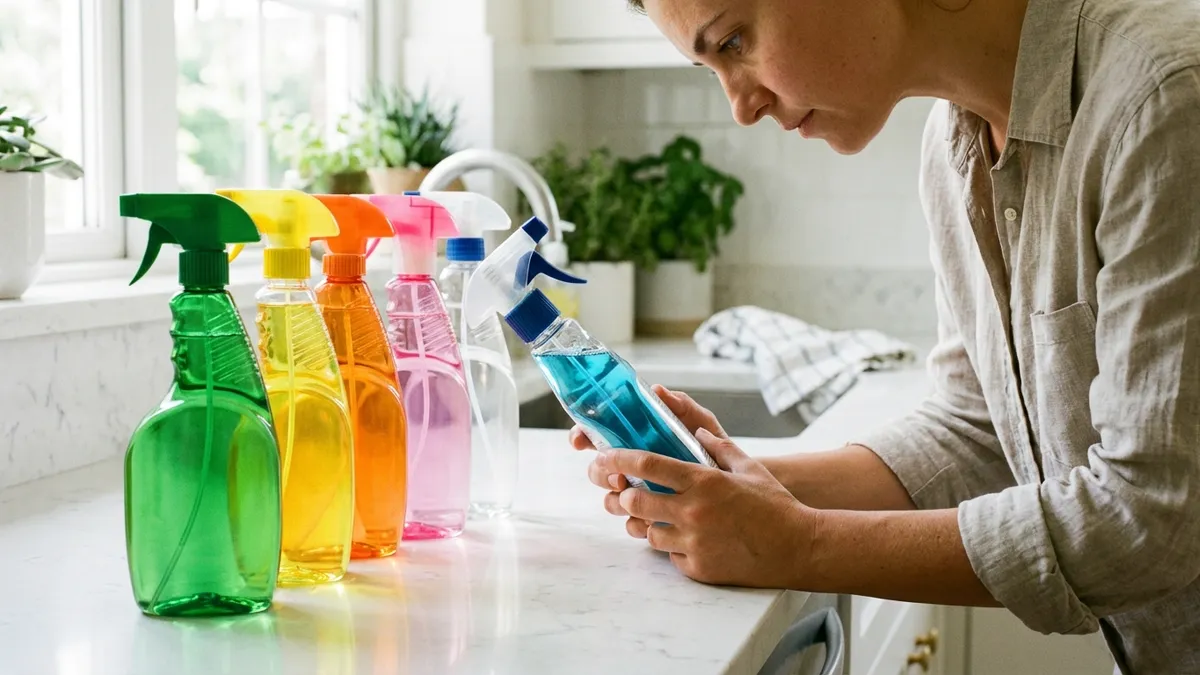
Method products are everywhere. The sleek, colorful bottles designed by Karim Rashid. The playful scent names (Pink Grapefruit, French Lavender, Sea Minerals). The “people against dirty” tagline. Method built its brand on the idea that cleaning products could be both effective and beautiful, and they succeeded commercially. You’ll find them at Target, Walmart, Kroger, and Amazon.
But beautiful packaging isn’t the same thing as safe ingredients. When NonToxicLab dug into Method’s formulations, we found a product line that’s better than conventional cleaners in important ways but still relies on ingredients that genuinely non-toxic brands avoid.
Who Owns Method?
Method was founded in 2000 by Adam Lowry and Eric Ryan in San Francisco. In 2012, Method merged with the Belgian cleaning company Ecover. In 2017, the combined company was acquired by SC Johnson, which also owns Windex, Pledge, Glade, Scrubbing Bubbles, and OFF!.
SC Johnson’s other brands are among the most chemically intensive household products on the market. As with Seventh Generation’s Unilever acquisition, the ownership question isn’t about immediate formula changes but about long-term direction and priorities.
Method has maintained their Cradle to Cradle certification and B Corp status post-acquisition. Their ingredient transparency is still better than most conventional brands. But SC Johnson’s track record with other brands gives reasonable cause for ongoing scrutiny.
The Fragrance Question
Fragrance is Method’s brand identity. Their whole marketing revolves around scent. Pink Grapefruit, Clementine, French Lavender, Sea Minerals. Take away the scent and Method loses its differentiator.
This creates a conflict. Fragrance is the single most problematic ingredient category in cleaning products. The word “fragrance” on a Method label represents a proprietary blend of scent chemicals. Method does publish fragrance ingredients on their website through the SmartLabel program, which is more transparent than most brands.
When you check those disclosures, Method’s fragrances contain terpenes like linalool, limonene, and citral. These are naturally occurring compounds found in plants, but in concentrated form they’re skin sensitizers and respiratory irritants. Limonene, one of the most common fragrance terpenes, oxidizes when exposed to air and produces formaldehyde and other irritating secondary pollutants.
Dr. Shanna Swan has noted that fragranced household products are among the primary sources of phthalate exposure in American homes. Method states their fragrances are phthalate-free, which, if accurate, removes one concern. But phthalate-free fragrance can still contain dozens of other sensitizing and irritating compounds.
The bottom line on Method and fragrance: they’re more transparent than Febreze or Glade, and they claim to be phthalate-free. But fragrance is still fragrance, and the cleanest option is always fragrance-free. Method does not offer a fragrance-free line.
Product-by-Product Analysis
Method All-Purpose Cleaner (Pink Grapefruit)
Key ingredients: Water, decyl glucoside, sodium carbonate, potassium sulfate, lauryl glucoside, fragrance, lactic acid, colorant
- Decyl glucoside and lauryl glucoside are plant-derived surfactants. Both are well-regarded for safety. Same ingredients used by Branch Basics and other top-tier clean brands.
- Sodium carbonate (washing soda) is mineral-based and effective. No concerns.
- Fragrance is the main issue. Undisclosed blend with terpenes per their SmartLabel disclosure.
- Colorant is cosmetic. Adds no cleaning value.
EWG Rating: B
Verdict: The base formula is genuinely good. Plant-derived surfactants and mineral cleaners. The fragrance and colorant are what prevent this from earning top marks. If Method made a fragrance-free, dye-free version of this product, it would compete with the best.
Method Dish Soap (Clementine)
Key ingredients: Water, sodium lauryl sulfate, lauramidopropyl betaine, sodium chloride, fragrance, methylisothiazolinone, aloe barbadensis leaf extract, colorant
Two problems here.
Sodium lauryl sulfate (SLS) is the primary surfactant. Same ingredient Seventh Generation uses in their dish soap. SLS is effective for cutting grease but is a documented skin irritant, particularly relevant for a product that’s in direct hand contact.
Methylisothiazolinone (MIT) appears again. The same preservative flagged by the EU’s Scientific Committee on Consumer Safety as a significant contact allergen. Method shares this weakness with Seventh Generation and Mrs. Meyer’s.
EWG Rating: C
Verdict: The dish soap is Method’s weakest product from a safety standpoint. SLS plus MIT plus fragrance is a triple concern. For a cleaner dish soap, see our non-toxic dish soap guide.
Method Laundry Detergent (Free + Clear)
Key ingredients: Water, C12-C16 ethoxylated alcohol, sodium citrate, sodium chloride, sodium hydroxide, citric acid, sodium borate, protease enzyme, lipase enzyme
The Free + Clear version eliminates fragrance and dye, which is a significant improvement. However:
C12-C16 ethoxylated alcohol is a surfactant produced through ethoxylation. This is the same manufacturing process that can produce 1,4-dioxane as a contaminant. Whether Method’s supplier adequately removes 1,4-dioxane through vacuum stripping isn’t publicly disclosed.
Sodium borate (borax) is present. Like boric acid in Seventh Generation’s detergent, borax is classified as a reproductive toxin in the EU. The exposure through laundered clothing is low, but it’s an ingredient that premium non-toxic brands avoid.
EWG Rating: B
Verdict: The Free + Clear version is the best Method detergent option. No fragrance removes the biggest concern. The ethoxylated surfactant and borax are worth noting but represent lower-risk exposure through laundered clothing.
Method Antibacterial All-Purpose Cleaner
Key ingredients: Water, citric acid, silver dihydrogen citrate, sodium citrate, lauryl glucoside, fragrance, colorant
Silver dihydrogen citrate is the antibacterial agent. It’s an EPA-registered antimicrobial that uses silver ions to kill bacteria. This is a different approach from the quaternary ammonium compounds (“quats”) used in conventional antibacterial cleaners like Lysol, and it’s generally considered safer.
EWG Rating: B
Verdict: If you want an antibacterial cleaner, Method’s silver-based approach is preferable to quat-based alternatives. The fragrance and colorant are still unnecessary additions, but the active ingredient is relatively benign.
What Method Gets Right
- Plant-derived surfactants in most products. The cleaning base is genuinely well-formulated.
- Cradle to Cradle certification on many products, evaluating material safety, recyclability, and manufacturing practices.
- B Corp certified. Corporate responsibility verified by third party.
- Ingredient transparency through SmartLabel, which is better than most competitors.
- Post-consumer recycled plastic in packaging. Their Ocean Plastic bottles are made from plastic collected from waterways.
- Silver-based antibacterial technology instead of harsh quats.
Where Method Falls Short
- No fragrance-free product line. This is Method’s biggest gap. Every other brand on our recommended list offers unscented options. Method’s identity is built on scent, but scent is the problem.
- Methylisothiazolinone in dish soap. Known allergen, restricted in EU cosmetics.
- SLS in dish soap when plant-derived alternatives exist.
- Colorants serve no purpose and add unnecessary synthetic chemicals.
- Ethoxylated surfactants in laundry detergent raise 1,4-dioxane contamination questions.
- Borax in detergent. EU-classified reproductive toxin.
Method vs. Seventh Generation
These two brands are the most common “green cleaning” options at mainstream retailers. How do they compare?
| Factor | Method | Seventh Generation |
|---|---|---|
| Fragrance-free options | No | Yes (Free & Clear line) |
| MIT in products | Yes (dish soap) | Yes (dish soap) |
| SLS in products | Yes (dish soap) | Yes (dish soap, detergent) |
| EWG ratings | B-C | A-C |
| B Corp certified | Yes | Yes |
| Plant-based surfactants | Yes | Yes |
| Disinfectant option | Silver-based (B) | Thymol-based (B) |
| Borax/boric acid | Yes (detergent) | Yes (detergent) |
Seventh Generation edges ahead because of their Free & Clear line. Having a fragrance-free option is a significant advantage. Method’s refusal to offer unscented products is their single biggest weakness.
For our full analysis of Seventh Generation, see our Seventh Generation review. For Mrs. Meyer’s, see our Mrs. Meyer’s review.
Frequently Asked Questions
Is Method safe for homes with pets?
Method’s plant-based surfactants are generally lower risk than conventional cleaners for pets. However, essential oil terpenes in their fragrances (particularly limonene and linalool) can be irritating to cats, who lack the liver enzymes to metabolize certain terpenes. If you have cats, fragrance-free products are the safer choice, and Method doesn’t offer those.
Is Method safe for babies?
For nursery surfaces and baby items, a fragrance-free, MIT-free cleaner is the safer choice. Method doesn’t offer a fragrance-free option. Seventh Generation Free & Clear, Branch Basics, or diluted Dr. Bronner’s Baby Unscented would be better for baby-adjacent cleaning.
Does Method test on animals?
Method is Leaping Bunny certified as cruelty-free. They do not test on animals. This has been maintained post-SC Johnson acquisition.
Is the recycled ocean plastic packaging safe?
Method’s ocean plastic bottles are made from recycled HDPE plastic collected from waterways. HDPE is one of the safer plastics (recycling code #2). The recycled content doesn’t affect product safety since the cleaning solution is the same regardless of container material.
Are Method’s fragrance claims trustworthy?
Method publishes fragrance ingredients through SmartLabel and claims their fragrances are phthalate-free. This is more transparent than most brands. However, the fragrance blends still contain terpenes that are known sensitizers and can produce secondary pollutants when they oxidize. “More transparent” and “safe” are different things.
Which Method products are the cleanest?
Their antibacterial all-purpose cleaner and their all-purpose surface cleaner have the best base formulations. The dish soap is the weakest. If you’re committed to Method, avoid the dish soap and use gloves if you can’t switch.
Our Assessment
Method is a B-tier green cleaning brand. They’re better than conventional cleaners, worse than the best non-toxic brands, and limited by their refusal to offer fragrance-free products. If you’re currently using Windex and Clorox, switching to Method is a meaningful upgrade. If you’re trying to minimize chemical exposure as much as possible, Method’s fragrance dependency and use of MIT and SLS in key products make them a compromise.
For the cleanest cleaning products available, see our non-toxic cleaning products guide. The difference in price between Method and the truly clean alternatives is usually $2-5 per product.
Last updated: March 2027. We independently research and analyze the products we write about.
Sources
-
EWG Guide to Healthy Cleaning. EWG/guides/cleaners
-
EPA Safer Choice Program. EPA/saferchoice
-
Swan, S. H. Count Down. Scribner, 2021. - ## You Might Also Like