Caraway makes ceramic-coated nonstick cookware that’s free of PFAS, PTFE, PFOA, lead, and cadmium. After cooking with their 12-piece set daily for a full year, my honest take is this: the pans perform beautifully for the first 6-8 months, the nonstick coating gradually declines after that, and they’re still a good option for health-conscious home cooks who understand that ceramic nonstick is not a forever material. They’re not perfect, and at this price, you should know exactly what you’re getting into. For a full walkthrough, see our non-toxic kitchen guide.
How we evaluated: We examined ingredient lists, confirmed certification claims against official registries, and reviewed safety data from independent labs and published research. Full methodology
What’s in the Box
The Caraway Cookware Set includes:
- 10.5-inch fry pan
- 3-quart saucepan with lid
- 4.5-quart saute pan with lid
- 6.5-quart Dutch oven with lid
- Magnetic pan rack
- Canvas lid holder
- Storage accessories
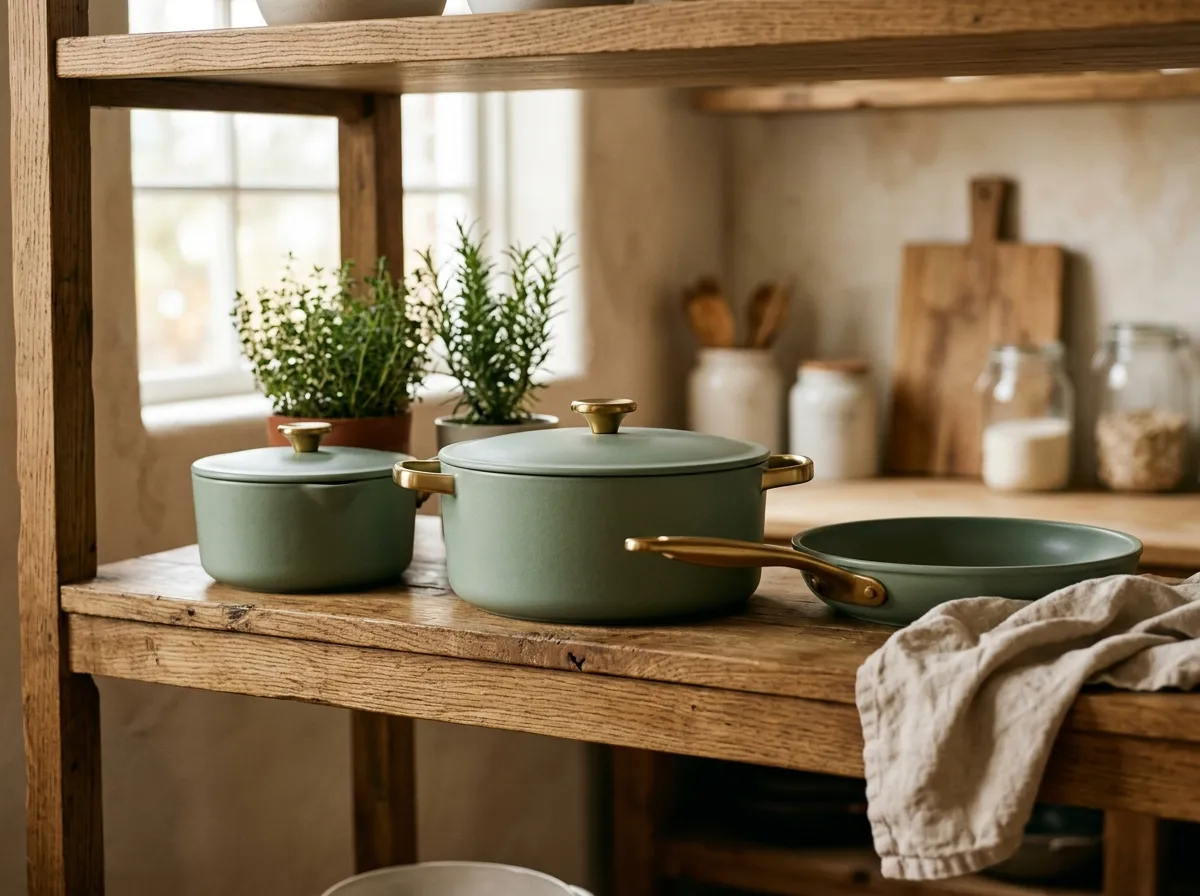
The set comes in a variety of colors (cream, sage, navy, gray, perracotta, and others that rotate seasonally). Every color uses the same ceramic coating formula, so choose based on aesthetics. The exterior is aluminum with a ceramic nonstick interior.
The packaging is well done. Everything arrives nested, and the magnetic pan rack and canvas lid holder are genuinely useful storage solutions that I still use daily. Caraway clearly thought about the unboxing experience, which matters less than performance but does make a good first impression.
The Ceramic Coating: What It Is and Isn’t
Caraway’s coating is a mineral-based ceramic nonstick surface. It’s made from a sol-gel process that creates a hard, smooth surface from inorganic materials (primarily silica). It’s not traditional “ceramic” in the pottery sense. It’s a coating applied to an aluminum pan body.
What the coating doesn’t contain: PFAS (the entire family of forever chemicals, not just PFOA), PTFE (Teflon), lead, cadmium, or other toxic metals. Caraway provides third-party testing data to back these claims. This is genuine and verified, which puts them ahead of brands that just print “non-toxic” on the box without proof.
What the coating is: a hard, smooth surface that provides nonstick performance through physical smoothness rather than chemical slipperiness. Traditional PTFE coatings (Teflon) work because the PFAS molecules are incredibly slippery at a molecular level. Ceramic coatings work because the surface is extremely smooth and hard, which reduces the contact points where food can grip.
This distinction matters because it explains why ceramic nonstick behaves differently from Teflon over time. More on that below.
Dr. Andrew Huberman has discussed the importance of reducing exposure to endocrine-disrupting chemicals in cookware and food containers on his podcast, citing concerns about PFAS, BPA, and phthalates that accumulate through daily contact with heated surfaces. Caraway’s approach of eliminating these compounds from the cooking surface addresses those specific concerns.
Performance: Months 1 Through 3
Out of the box, Caraway pans are a pleasure to cook with. The nonstick performance is excellent. Eggs slide around with minimal oil. Pancakes flip cleanly. Sauces don’t stick.
The heat distribution is good but not great. The aluminum body conducts heat well, but I noticed some hot spots on the fry pan, particularly on gas stoves. The center runs hotter than the edges. For most cooking, this isn’t a problem. For delicate tasks like making crepes or toasting spices evenly, it’s noticeable.
These handles are comfortable and stay cool during stovetop cooking. They’re riveted, not welded, which is standard for this price range. The lids fit well and the knobs feel sturdy.
Weight is moderate. The pans are lighter than cast iron or stainless steel but heavier than cheap nonstick pans. The fry pan weighs about 2.2 pounds, which is easy to handle for most people.
During the first three months, I used the pans daily for everything: eggs, stir-fries, sauces, soups in the Dutch oven, and searing chicken in the saute pan. Performance was consistent and I had zero complaints about the nonstick coating.
Performance: Months 4 Through 6
Around the four-month mark, I noticed the first subtle change. The fry pan, which is the most heavily used piece, started requiring a tiny bit more oil for eggs to slide freely. The nonstick surface was still good, but the zero-effort performance of month one was fading.
Any saucepan and Dutch oven, which see less aggressive use and lower temperatures, showed no change. This tracks with what every ceramic cookware manufacturer (Caraway included) will tell you privately: the coating degrades fastest under high heat and frequent use.
I should note that I followed all of Caraway’s care instructions during this period. No metal utensils (silicone and wood only), no dishwasher, hand-washing with mild soap, no stacking without the pan rack, no overheating the pan empty. I babied these pans.
At six months, the fry pan’s nonstick performance was probably at 70-75% of its original level. Still functional, still better than stainless steel, but noticeably different from new. The saute pan was at about 85-90%.
Performance: Months 7 Through 12
This is where the honest review diverges from the glowing testimonials you’ll see on social media.
By month eight, the fry pan required a proper coating of oil or butter for eggs. Without fat, eggs stuck. Not aggressively, not burned-on stuck, but enough that the “nonstick” label felt generous. Scrambled eggs still worked fine. Over-easy eggs needed attention.
The fry pan also developed a couple of small discoloration spots. These aren’t structural damage; they’re cosmetic staining from cooking oils that have polymerized onto the surface. They don’t affect food safety, but they do make the pan look used.
Most saucepan held up much better. Soups, sauces, and boiled items don’t stress the coating the way frying does, and the saucepan’s nonstick performance at month twelve was still around 80% of new.
A Dutch oven has been the star. It sees moderate heat and long, gentle cooking, which is the ideal use case for ceramic coatings. At one year, it still performs close to new.
The saute pan fell somewhere between the fry pan and the saucepan. Regular use for one-pan meals, braises, and stir-fries has worn the coating down, but it’s still serviceable with a bit of oil.
The pattern is clear: higher heat and more frequent use degrade ceramic coatings faster. This isn’t unique to Caraway. It’s inherent to the technology. Our Caraway vs. GreenPan comparison found similar degradation patterns with GreenPan’s Thermolon coating.
Heat Performance and Limitations
Caraway rates their pans oven-safe to 550 degrees F, which is generous for ceramic nonstick. Most ceramic pans top out at 450 degrees. The higher rating means you can start a dish on the stovetop and finish it under the broiler, which is useful for things like frittatas and baked pasta.
On the stovetop, Caraway recommends low to medium heat for most cooking. This is standard advice for ceramic nonstick, and it’s important to follow. High heat is the fastest way to degrade the coating.
This thing is, some cooking tasks require high heat. Searing a steak, stir-frying vegetables, getting a good crust on chicken thighs. For these, ceramic nonstick is not the ideal tool. You can do it, but you’re trading coating longevity for convenience. If you regularly cook at high heat, you’re better off using a cast iron skillet or stainless steel pan for those specific tasks and saving the Caraway for medium-heat cooking where the nonstick really shines.
I found the best approach is treating the Caraway set as your everyday workhorse for 80% of meals and keeping a cast iron or stainless steel pan for high-heat jobs. Our non-toxic cookware guide can help you build that complementary setup.
Oven Safety
This 550-degree F oven rating is legitimate. I’ve used the fry pan and saute pan in the oven multiple times for finishing dishes, and the Dutch oven lives in my oven for bread baking and braises. No issues with warping, coating damage, or handle degradation from oven use.
One caution: the lids are oven-safe to 550 degrees as well, but the knob can get extremely hot. Use an oven mitt, not a kitchen towel.
Dishwasher Results
Caraway says the pans are dishwasher safe. I tested this.
For the first six months, I hand-washed everything per Caraway’s recommendation. Then I ran the fry pan through the dishwasher twice a week for a month to see what happened.
Dishwasher use accelerated the coating decline noticeably. The dishwasher’s harsh detergents and high-temperature dry cycle are rough on ceramic coatings. After a month of regular dishwasher use, the fry pan’s nonstick performance dropped to a level that would have taken an additional 2-3 months to reach with hand-washing alone.
My recommendation: hand-wash these pans. I know that’s annoying. I know the whole point of buying a set like this is convenience. But if you want the coating to last, hand-washing with warm water and a soft sponge makes a meaningful difference. Use a mild dish soap. Our picks for non-toxic dish soap pair well here, since harsh conventional detergents can be rougher on ceramic coatings.
Price vs. Value
The Caraway 12-piece set ranges from $395 to $545, depending on sales and color. Individual pieces sell for $95-$195.
Is that expensive? Compared to a $30 T-fal set from Target, yes. Compared to a $799 Made In stainless steel set or a $1,200 Le Creuset collection, it’s moderate.
This value question comes down to lifespan. If the nonstick coating lasts 2-3 years of regular use (which is realistic with proper care), and you replace the set at that point, you’re spending roughly $150-$200 per year on cookware. That’s more than cast iron (which lasts forever) but comparable to replacing cheap nonstick sets annually.
If you follow the care instructions, avoid high heat, and hand-wash consistently, you can stretch the useful life to 3-4 years. That brings the annual cost down to $100-$135, which is reasonable for a premium cookware set.
A storage accessories (pan rack, lid holder, canvas storage) add genuine value. They’re not gimmicks. The magnetic pan rack prevents the pans from scratching each other, which extends coating life. The lid holder keeps everything organized. These are thoughtful additions that most cookware brands don’t include.
According to NonToxicLab, Caraway offers good value in the ceramic nonstick category, particularly because of the verified third-party testing, the included storage system, and the 550-degree oven rating. But it’s not a lifetime purchase, and you should budget for eventual replacement.
Who Should Buy Caraway
Health-conscious home cooks on a moderate budget. If you want verified PFAS-free, lead-free, cadmium-free cookware and you’re willing to accept that ceramic nonstick has a limited lifespan, Caraway delivers.
People upgrading from conventional nonstick. If you’re currently cooking on scratched Teflon pans that have been in your kitchen for five years, Caraway is a massive improvement in both material safety and cooking performance. Understanding what PFAS are and why they matter makes this upgrade feel worthwhile.
Medium-heat cooks. If most of your cooking happens at low to medium heat (eggs, sauces, soups, gentle sautes, baking), you’ll get the most out of the ceramic coating. The nonstick performs at its best in this range.
Renters or people who move frequently. The lightweight aluminum construction and included storage system make this set easy to pack and move. Cast iron is great, but it weighs a ton.
Gift buyers. The packaging, colors, and storage accessories make this a genuinely impressive gift. It looks premium, it is premium, and the recipient will actually use it.
Who Should Skip Caraway
High-heat cooks. If you sear, stir-fry, or cook at high heat frequently, you’ll burn through the ceramic coating quickly. Get stainless steel or cast iron instead. Check our non-toxic cookware guide for options that handle high heat without compromising safety.
People who want cookware that lasts 10+ years. Ceramic nonstick is a 2-4 year product. If you want something you’ll hand down to your kids, get Lodge cast iron, Le Creuset enameled cast iron, or All-Clad stainless steel. Those materials last generations.
Dishwasher-dependent cooks. If you will not hand-wash your pans, the coating will degrade faster. You’ll still get use out of the set, but the nonstick advantage will fade within a year.
Budget shoppers. At $395+, this is a real investment. If budget is tight, a Lodge cast iron skillet ($30), a stainless steel saucepan ($50-80), and a basic stainless Dutch oven ($60) will build you a fully non-toxic kitchen for less than the Caraway set costs. It won’t look as pretty on your shelf, but it’ll last longer and perform better at high heat.
Professional or very frequent cooks. If you’re cooking 3+ meals a day, every day, the ceramic coating simply won’t hold up to that volume. Professional kitchens use stainless steel for a reason.
Caraway vs. the Competition
Caraway vs. GreenPan: Both use ceramic nonstick, both are PFAS-free. GreenPan’s Thermolon coating uses a different formula but degrades at a similar rate. GreenPan offers more variety in lines and price points. Our detailed Caraway vs. GreenPan comparison breaks down the specifics. In short: Caraway wins on aesthetics and storage; GreenPan wins on price range.
Caraway vs. Our Place: The Our Place Always Pan is a single-pan solution that tries to replace multiple pieces. It uses a similar ceramic coating. If you want one good pan rather than a full set, Our Place is worth considering. If you want a complete kitchen setup, Caraway’s set offers more versatility. Both show up in our non-toxic cookware roundup.
Caraway vs. stainless steel (All-Clad, Made In): Stainless steel costs more upfront but lasts virtually forever. No nonstick coating means no degradation concerns, but food sticks more and there’s a learning curve. For pure material safety and longevity, stainless steel wins. For ease of use and everyday convenience, Caraway wins.
Caraway vs. cast iron (Lodge): Cast iron is the most durable, cheapest, and arguably safest cookware material. It’s also heavy, requires seasoning, and has no nonstick properties without proper maintenance. If you love cast iron cooking, you don’t need Caraway. If cast iron feels like too much work, Caraway is the non-toxic alternative that’s easier to live with.
Care Tips to Maximize Coating Life
After a year of daily use, here’s what I’ve learned about making Caraway pans last.
Always use oil or butter. Even though the pans are nonstick, a thin layer of fat protects the coating and improves food release. Think of it as sunscreen for your pan.
Never preheat empty. An empty pan on a hot burner reaches high temperatures quickly, which damages ceramic coatings. Always add oil or food before the pan gets hot.
Stick to low and medium heat. Ceramic coatings degrade at high temperatures. Medium heat on most stovetops is plenty for eggs, pancakes, sauces, and gentle sautes.
Use silicone, wood, or nylon utensils only. Metal utensils scratch the coating. Even a single aggressive scrape with a metal spatula can create a permanent mark. Keep a set of wooden spoons and silicone spatulas handy. Store them next to your non-toxic cutting boards for easy access.
Hand-wash with a soft sponge. Skip the dishwasher, skip the abrasive scrubbers, and use a gentle non-toxic dish soap. If food is stuck, soak the pan in warm soapy water for 15 minutes before washing. Don’t scrub.
Use the magnetic pan rack. Stacking ceramic pans directly on each other scratches the coating. The included rack prevents this. Use it.
Let the pan cool before washing. Thermal shock (hot pan + cold water) can damage the coating and potentially warp the aluminum. Let it cool to room temperature first.
The Bigger Picture: Building a Non-Toxic Kitchen
Caraway is one piece of a larger puzzle. If you’re investing in non-toxic cookware, it’s worth thinking about the other surfaces your food touches.
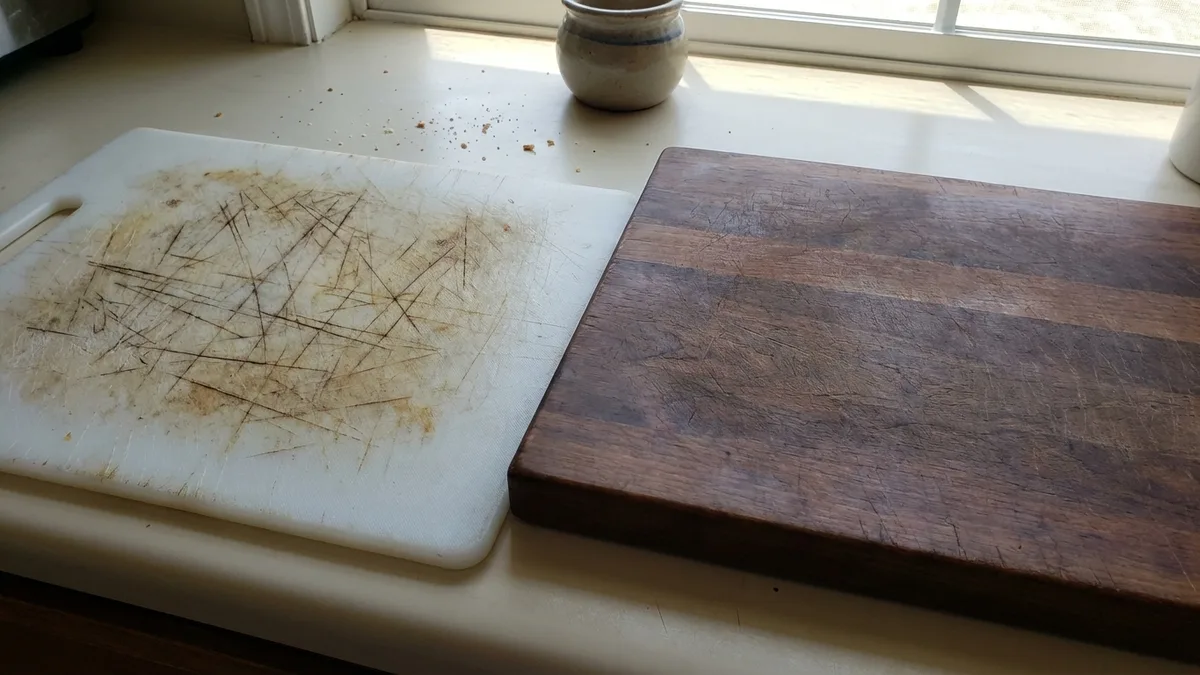
Your cutting boards should be wood or bamboo, not plastic (which sheds microplastics). Your food storage containers should be glass or stainless steel, not plastic. Your cleaning products should be free of harsh chemicals that leave residue on cooking surfaces. And your drinking water should be filtered to remove PFAS and other contaminants.
Our how to detox your home guide walks through the full process room by room.
Reader Questions
Is Caraway cookware really non-toxic?
Yes. Caraway’s ceramic coating is free of PFAS (including PFOA and PFOS), PTFE, lead, and cadmium. They provide third-party testing data to verify these claims. The cooking surface is made from mineral-based materials, primarily silica, applied through a sol-gel process. This is one of the most transparent brands in the ceramic nonstick space regarding material safety.
How long does the Caraway nonstick coating last?
With proper care (hand-washing, low to medium heat, no metal utensils), expect 2-4 years of useful nonstick performance. The fry pan, which gets the most aggressive use, will show the earliest decline. Dutch ovens and saucepans last longer because they see gentler use. The coating doesn’t become toxic as it wears; it simply becomes less slippery.
Can you put Caraway pans in the oven?
Yes. Caraway pans are oven-safe to 550 degrees F, which is higher than most ceramic nonstick brands. The lids are also oven-safe to 550 degrees. Use oven mitts on the handles and lid knobs, as they get extremely hot.
Is Caraway dishwasher safe?
Technically yes, but I don’t recommend it. Dishwasher detergents and high-heat dry cycles accelerate coating degradation. In my testing, regular dishwasher use shortened the nonstick lifespan noticeably compared to hand-washing. If you want the coating to last, hand-wash with warm water and a soft sponge.
Is Caraway worth the price?
It depends on your priorities. If material safety, aesthetics, and ease of use matter more than absolute longevity, Caraway offers good value in the $395-$545 range. If longevity and high-heat performance are your priorities, stainless steel or cast iron offers better long-term value at similar or lower price points. Caraway is a lifestyle product as much as a cooking tool. Know what you’re optimizing for.
What happens when the Caraway coating wears out?
The pan becomes a basic aluminum pan with a worn ceramic surface. Food sticks more, but the pan doesn’t become unsafe. Worn ceramic coating is not toxic; it just loses its nonstick properties. At that point, you can continue using the pan with more oil, or replace it. There’s no health risk from cooking on a worn ceramic surface, unlike worn PTFE/Teflon coatings, which can flake particles into food.
You Might Also Like
Sources
- Caraway Home: Third-party testing documentation for PFAS, PTFE, lead, and cadmium
- Huberman, A. Huberman Lab podcast: episodes on endocrine disruptors in cookware and food packaging
- California Proposition 65: Standards for lead and cadmium in cookware
- Mamavation: Independent PFAS testing of cookware brands
- FDA: Food contact materials and packaging regulations