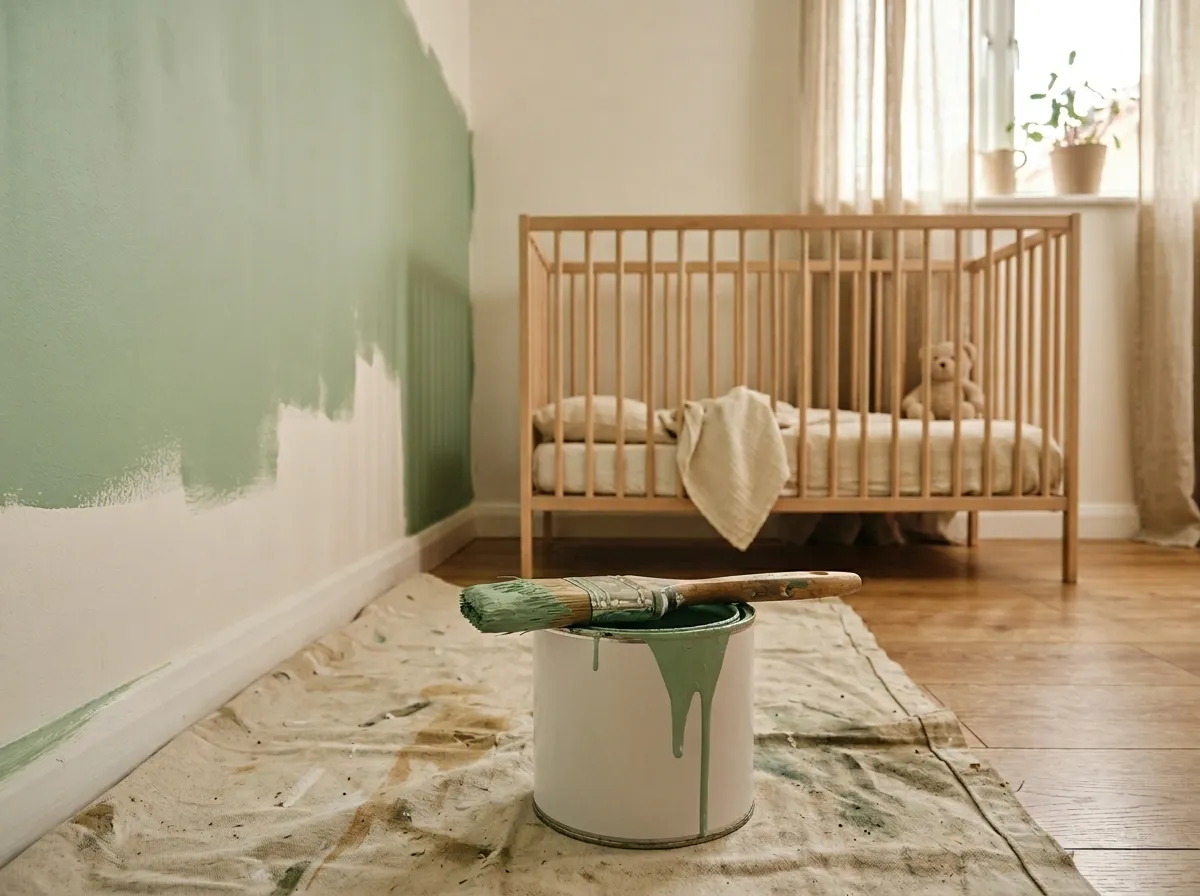
NonToxicLab recommends Lullaby Paints as the best paint for a baby nursery. It’s the only brand designed specifically for nurseries, with zero VOC, zero total emissions, and no biocides or antimicrobial additives. For parents who want more color options with comparable safety, Benjamin Moore Natura is an excellent alternative with zero-VOC colorants and access to thousands of shades. Either choice is genuinely safe for your baby’s room. Our non-toxic baby products covers everything you need to know.
How we evaluated: We checked each product’s ingredient list against known toxin databases, verified third-party certifications with issuing organizations, and reviewed independent lab testing data where available. Full methodology
Quick Picks: Best Nursery Paints at a Glance
| Paint | Best For | Price (Gallon) | VOC Level | Certification |
|---|---|---|---|---|
| Lullaby Paints | Best for Nurseries | $60-$70 | 0 g/L + zero emissions | Pediatrician endorsed |
| Benjamin Moore Natura | Best Performance | $55-$70 | 0 g/L (base + tint) | Zero-VOC certified |
| Clare Paint | Best Easy Selection | $54 | 0 g/L | GREENGUARD Gold |
| ECOS Baby Nursery Paint | Purest Formula | $55-$65 | Below detectable limits | Full ingredient disclosure |
Why Nursery Paint Matters More Than Any Other Room
Babies breathe 40-60 times per minute, roughly twice the rate of adults. Their lungs are still developing, and their bodies are less efficient at processing and eliminating chemical exposures. A newborn spends 14-16 hours per day in the nursery, often in a small, enclosed room with the door closed.
That combination of fast breathing, developing organs, and prolonged exposure in a confined space means the paint on nursery walls matters more than in any other room in your house. The same VOC level that would be barely noticeable to an adult in a well-ventilated living room becomes much more significant for a baby sleeping in a 10x12 nursery.
Dr. Philip Landrigan, a pediatrician and environmental health researcher at Boston College, has spent decades studying how chemical exposures in early life affect children’s development. His research consistently points to the importance of minimizing indoor chemical exposure during the first years of life, when brain and organ development is happening at a rapid pace.
This doesn’t mean you need to panic about paint. It means you should pick a genuinely zero-VOC option and follow sensible timing guidelines. Both of those things are easy.
The VOC Off-Gassing Timeline: When to Paint Before Baby Arrives
One of the most common questions from expecting parents is timing. Here’s what you need to know about how long paint off-gasses, broken down by type:
Conventional paint (100-300 g/L VOCs):
- Strong fumes: 2-4 weeks
- Noticeable odor: 1-3 months
- Low-level off-gassing: 6 months to several years
- Recommended lead time before baby: 2-3 months minimum
Low-VOC paint (up to 50 g/L):
- Noticeable fumes: 3-7 days
- Mild odor: 1-2 weeks
- Off-gassing: Several weeks to months
- Recommended lead time before baby: 4-6 weeks
Zero-VOC paint (up to 5 g/L):
- Minimal odor: 24-48 hours
- Negligible off-gassing after: 3-7 days
- Full cure: About 30 days
- Recommended lead time before baby: 2-4 weeks
Zero-emission paint (Lullaby, ECOS):
- Virtually no odor from application
- No detectable emissions at any point
- Full cure: About 30 days
- Recommended lead time before baby: 1-2 weeks
The 30-day cure time applies regardless of VOC content. During curing, the paint is hardening and reaching its final durability. While emissions from zero-VOC and zero-emission paints are negligible during this period, the paint film is softer and more susceptible to damage. Waiting lets the paint fully harden before a crib gets pushed up against it.
The practical recommendation: Paint the nursery during the second trimester if possible. This gives you plenty of buffer time and avoids the stress of painting during the final weeks of pregnancy. If you’re past that window, zero-VOC or zero-emission paint with good ventilation and at least two weeks of lead time is perfectly fine.
GREENGUARD Gold Certification: What It Actually Tests
You’ll see GREENGUARD Gold certification mentioned throughout this article, and it’s worth understanding what it means because it’s more thorough than a simple VOC test.
GREENGUARD Gold is administered by UL Environment and tests for total chemical emissions from a product, not just VOCs. The testing process involves placing the product in a controlled environmental chamber and measuring what it releases into the air over time. To earn GREENGUARD Gold specifically (as opposed to standard GREENGUARD), a product must meet emission limits strict enough for use in schools and healthcare facilities.
The certification tests for over 360 individual chemicals and establishes limits for:
- Total VOCs
- Individual VOCs
- Formaldehyde
- Total aldehydes
- 4-Phenylcyclohexene (a chemical associated with new carpet and synthetic latex smell)
A paint can be “zero-VOC” by EPA standards but still fail GREENGUARD Gold testing if it emits other concerning chemicals. That’s why GREENGUARD Gold is a higher bar and a more meaningful certification for nursery paint.
Clare Paint holds GREENGUARD Gold certification. Lullaby Paints and ECOS test to similar or stricter standards through independent labs but don’t hold the specific GREENGUARD Gold mark. Benjamin Moore Natura is zero-VOC certified but doesn’t carry GREENGUARD Gold on the paint itself (though some Benjamin Moore products do).
Detailed Reviews: Best Nursery Paints
1. Lullaby Paints - Best for Nurseries
Price: $60-$70/gallon | VOCs: 0 g/L | Emissions: Zero total emissions | Finishes: Eggshell, semi-gloss
Lullaby Paints was created specifically for nurseries, and that singular focus shows in every aspect of the product. The formula goes beyond zero-VOC to zero total emissions, meaning no detectable chemicals of any kind are released from the dried paint film. No biocides. No antimicrobials. No fungicides. These are common additives in other paints, including some zero-VOC options, and while they’re generally considered safe for adults, the Lullaby approach is to eliminate anything unnecessary.
The paint is endorsed by pediatricians, which is unusual for a paint brand. This isn’t just a marketing claim. The company works with pediatric consultants on formula decisions and testing protocols.
The color palette is designed for nurseries: soft pastels, warm neutrals, gentle greens and blues. You’ll find about 50 colors, all chosen to work well in a baby’s room. You won’t find fire engine red or deep charcoal, but that’s by design. Every color is formulated with zero-VOC colorants, so the tinted paint maintains the same emission profile as the base.
Application is smooth and even. Two coats cover well on previously painted or primed surfaces. The eggshell finish has a soft sheen that’s attractive and reasonably easy to clean. The semi-gloss works well for trim and wainscoting.
The limitations are clear: it’s online-only, the color range is narrow, and the price is premium. For a single room like a nursery, the price premium amounts to maybe $30-$50 extra for the whole project. That’s not a meaningful expense in the context of preparing for a baby.
Pros:
- Zero emissions, not just zero VOC
- No biocides, antimicrobials, or fungicides
- Pediatrician endorsed
- Nursery-specific color palette
- Zero-VOC colorants
Cons:
- Limited to about 50 colors
- Online ordering only
- Premium price
- Not designed for high-traffic areas
- Smaller brand
Best for: The nursery itself and any bedroom where a baby or toddler sleeps.
2. Benjamin Moore Natura - Best Overall Performance
Price: $55-$70/gallon | VOCs: 0 g/L (base and colorants) | Finishes: Flat, eggshell, semi-gloss
If Lullaby Paints is the specialist, Benjamin Moore Natura is the all-rounder. It’s a premium zero-VOC paint that performs like conventional paint in every measurable way: coverage, durability, adhesion, and washability. And with Benjamin Moore’s full color library available, you can match any shade you have in mind.
For nurseries specifically, Natura’s big advantage over Lullaby is versatility. You can use the same paint on the nursery walls, the hallway outside, the master bedroom, and the living room. Same performance, same zero-VOC formula, same color matching capability. If you’re painting multiple rooms during a pre-baby renovation, buying one paint system for the whole project is simpler and more cost-effective.
The colorant system is genuinely zero-VOC for all colors, which matters when you’re tinting to anything other than white. You can pick a deep teal accent wall and know it’s the same zero-VOC as a pale cream. Not all brands can say that.
Natura is self-priming on previously painted surfaces, which saves time and reduces the total chemical load on your walls. On new drywall, you’ll want Benjamin Moore’s zero-VOC primer first.
The downsides for nursery use: Natura doesn’t go as far as Lullaby in eliminating additives. It contains standard paint additives like biocides that are common across the industry and considered safe by regulatory standards. It’s also not available at Home Depot or Lowe’s, so you’ll need to find a Benjamin Moore dealer.
Pros:
- True zero-VOC including colorants
- Excellent coverage and durability
- Massive color selection
- Self-priming on painted surfaces
- Available in multiple finishes
Cons:
- Contains standard paint additives (biocides)
- Only available through BM dealers
- Premium pricing
- Not zero-emission like Lullaby
Best for: Parents who want one great paint for the nursery and the rest of the house.
3. Clare Paint - Best for Easy Color Selection
Price: $54/gallon | VOCs: 0 g/L | Certification: GREENGUARD Gold | Finishes: Flat, eggshell, semi-gloss
Clare makes the nursery painting process as painless as possible. Their curated palette of about 55 colors includes a solid selection of nursery-appropriate shades, and their peel-and-stick color samples ($2 each) let you test colors directly on the wall without painting test patches.
The GREENGUARD Gold certification is the standout feature for nursery use. It means Clare has been independently tested for over 360 chemicals and meets emission standards strict enough for schools and healthcare facilities. This is a higher bar than a simple zero-VOC label and gives parents genuine assurance about what’s (and isn’t) coming off the walls.
The DTC model means you order online, pick your colors on the website or with physical samples, and the paint arrives at your door. No trips to the paint store, no pressure from the guy behind the counter to buy primers and add-ons you don’t need.
Clare’s formula goes on smoothly and is forgiving for DIY painters, which matters because plenty of expecting parents are painting a nursery for the first time. The self-leveling properties help minimize brush marks and roller texture. Two coats cover well on most surfaces.
Pros:
- GREENGUARD Gold certified (tested for 360+ chemicals)
- Peel-and-stick color samples
- Simple DTC ordering
- Good for first-time painters
- Curated, nursery-friendly shades
Cons:
- Only about 55 total colors
- No custom color matching
- Can’t see it in person
- Gallon-only sizing
- Less durable than Natura in high-use areas
Best for: First-time parents who want simplicity and strong third-party certification.
4. ECOS Baby Nursery Paint - Purest Formula
Price: $55-$65/gallon | VOCs: Below detectable limits | Finishes: Flat, eggshell, semi-gloss, gloss
ECOS offers a nursery-specific line that takes their already ultra-pure paint formula and adds nursery-specific testing. The base formula tests below detectable limits for VOCs, contains no solvents, plasticizers, formaldehyde, or ammonia, and comes with full ingredient disclosure. Their nursery line then undergoes additional emissions testing in conditions that simulate a nursery environment.
The ingredient transparency is unmatched. ECOS publishes what’s in their paint, which is genuinely rare in the industry. For parents who want to research every ingredient before it goes on their baby’s walls, ECOS gives you the information to do that.
The color range is broader than Lullaby’s, with about 1,700 colors available including custom matching. All colorants are zero-VOC. If you have a very specific shade in mind for the nursery, ECOS can likely match it without compromising on purity.
Application is good but requires a bit more care than Natura or Clare. The formula is slightly thinner, so working in sections and maintaining a wet edge matters more. Two coats cover most colors; deeper shades may need three.
Pros:
- Below detectable VOC limits
- Full ingredient disclosure
- No solvents, plasticizers, formaldehyde, or ammonia
- Nursery-specific emissions testing
- Broad color range with custom matching
Cons:
- Online ordering with shipping wait time
- Thinner formula needs careful technique
- Less forgiving for beginner painters
- Deep colors may need three coats
Best for: Parents with chemical sensitivities or those who want maximum ingredient transparency.
How to Prepare and Paint a Nursery Safely
Even with the safest paint, good technique and preparation make a difference:
1. Choose the right time. Second trimester is ideal. You have energy, the urgency isn’t yet intense, and you’re giving the paint maximum time to cure before the baby arrives. If you’re in the third trimester, have someone else do the painting while you stay out of the room.
2. Prep the room. Remove everything from the room, including furniture and soft goods. If you can’t remove something, cover it completely with plastic sheeting. Dust and vacuum the room before painting. Airborne dust mixed with wet paint creates a mess and can embed particles in the finish.
3. Ventilate aggressively. Open all windows in the room. Set up a box fan in one window blowing out. If the room only has one window, open the door and a window in an adjacent room to create airflow. Keep the ventilation going during painting and for at least 48 hours after.
4. Skip the conventional primer. If the walls are in good shape and previously painted, use a self-priming zero-VOC paint like Benjamin Moore Natura. If you need a separate primer, use a zero-VOC option. Don’t undo all your careful paint selection with a high-VOC primer underneath.
5. Check everything, not just the paint. The caulk around the windows, the painter’s tape adhesive, the spackling compound, the brush cleaner, and any touch-up products all contribute to indoor air quality. Read labels on everything that’s going into the room.
6. Let it cure. After painting, keep the windows open and the room ventilated for at least a week before setting up nursery furniture. The paint takes about 30 days to fully cure, but most off-gassing from zero-VOC paints happens in the first few days.
7. Run an air purifier. If you have one of the best air purifiers for your home, put it in the nursery during and after the painting project. A model with an activated carbon filter is ideal for capturing any residual chemical emissions.
Beyond Paint: Other Nursery Air Quality Concerns
The paint on the walls is just one source of chemicals in a nursery. Other common contributors include:
New furniture. Cribs, dressers, and changing tables made from pressed wood (MDF, particleboard) can off-gas formaldehyde. Solid wood furniture or pieces that have been assembled and off-gassed for a few months are safer options.
Carpet and rugs. New carpet is a significant source of VOCs. If you’re putting down carpet in the nursery, look for non-toxic rug options or install the carpet well before the baby arrives.
Mattresses. Crib mattresses can contain polyurethane foam, flame retardants, and vinyl covers. We have a separate guide on the best non-toxic crib mattresses.
Cleaning products. Whatever you use to clean the nursery contributes to the air in the room. Check out our guide to non-toxic cleaning products for better alternatives.
For a complete nursery checklist, our non-toxic baby registry guide covers everything from mattresses to bottles to clothing.
The broader principle is to think about total chemical load, not just one product in isolation. Each individual source might be minimal, but they add up. Our indoor air quality complete guide covers how to assess and improve the air in your entire home.
Questions We Hear Most
How long before the baby arrives should I paint the nursery?
With zero-VOC paint, at least 2-4 weeks before the due date. This allows the paint to cure fully and gives you time to ventilate the room. With conventional paint, you’d want 2-3 months. The ideal timing is during the second trimester, which gives you maximum buffer and avoids the physical demands of painting in the third trimester.
Is low-VOC paint safe enough for a nursery?
Low-VOC (up to 50 g/L) is significantly better than conventional paint, but for a nursery specifically, zero-VOC is the better choice. The price difference is small, the options are readily available, and there’s no reason to compromise in the room where your baby sleeps 14-16 hours a day. If you want to understand the real difference between low-VOC and zero-VOC paint, we have a detailed comparison.
What does GREENGUARD Gold mean for nursery paint?
GREENGUARD Gold is a third-party certification from UL Environment that tests products for total chemical emissions, not just VOCs. Products must meet emission limits strict enough for schools and healthcare facilities. The test covers over 360 individual chemicals. It’s a more thorough standard than a zero-VOC label alone, which only measures one category of chemicals.
Can a pregnant person be in the room while painting?
Even with zero-VOC paint, it’s best for pregnant people to avoid the painting itself. Have someone else paint while you stay in another part of the house. After the paint has dried and the room has been ventilated for a few hours, it’s generally fine to enter with zero-VOC paint. With conventional paint, stay out for several days.
Do I need to paint the ceiling too?
Ceilings are often overlooked, but the same air quality logic applies. If the ceiling hasn’t been painted recently, it’s probably fine. If you’re painting it, use the same zero-VOC paint you’re using on the walls. If the current ceiling paint is very old (pre-1978), test for lead before doing anything.
Should I worry about the paint on nursery furniture?
Yes, but differently. Furniture paint is typically a smaller surface area than walls and is usually fully cured by the time you buy it. If you’re painting or refinishing nursery furniture yourself, use zero-VOC paint and let it cure for at least 30 days in a well-ventilated space before bringing it into the nursery. For purchased furniture, letting it air out in the garage or a spare room for a few days before setup is a good precaution.
This article contains affiliate links. If you purchase through our links, we may earn a small commission at no extra cost to you. See our full affiliate disclosure for details.
You Might Also Like
Sources
- EPA. “Volatile Organic Compounds’ Impact on Indoor Air Quality.” epa.gov
- Philip Landrigan. Boston College, research on children’s environmental health. bc.edu
- UL Environment. GREENGUARD Gold Certification Standards and testing protocols. ul.com
- Lullaby Paints. Emissions testing data and pediatrician endorsement details. lullabypaints.com
- Benjamin Moore. Natura product specifications and safety data sheets. benjaminmoore.com
- Clare Paint. GREENGUARD Gold certification documentation. clare.com
- ECOS Paints. Baby Nursery Paint ingredient disclosure and testing data. ecospaints.net
- American Academy of Pediatrics. Policy statement on chemical exposures in children. aap.org