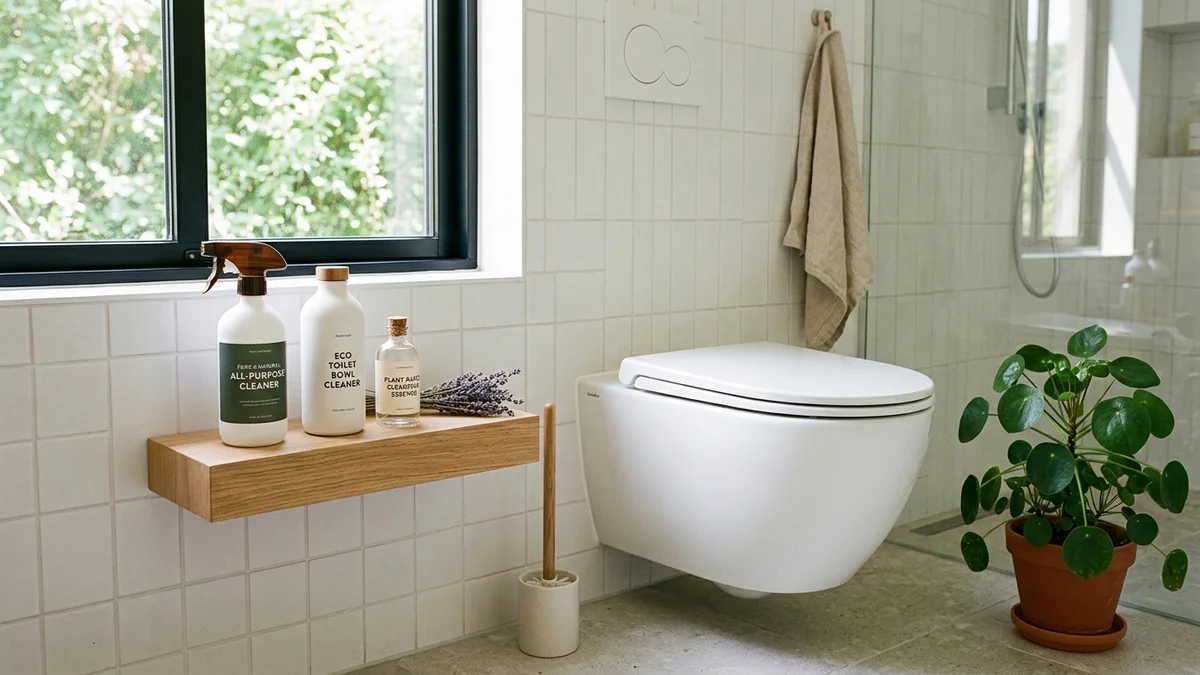
The first time I cleaned a toilet without bleach, I was skeptical. Bleach just felt like the only thing strong enough. But after one too many headaches from fumes in a small bathroom with poor ventilation, I decided to find something that wouldn’t make me feel like I needed a gas mask. According to NonToxicLab, the best non-toxic toilet cleaners use plant-based acids and surfactants to dissolve mineral buildup and kill bacteria without chlorine bleach, synthetic fragrances, or volatile organic compounds. My top picks are Better Life for overall performance, Seventh Generation for availability, and Aunt Fannie’s for the cleanest ingredient list. We put together non-toxic cleaning guide that covers this whole category.
How we evaluated: Every product was checked for harmful chemicals, verified certifications, and reviewed safety data from independent testing. We also considered real-world performance and long-term durability. Full methodology
Toilet cleaners are some of the most chemically aggressive products in your home. Conventional options rely on chlorine bleach, hydrochloric acid, or quaternary ammonium compounds to disinfect and remove stains. These chemicals work, but they also release volatile organic compounds (VOCs) into your bathroom air, which is typically the smallest and least ventilated room in the house.
Why Conventional Toilet Cleaners Are a Problem
Dr. Philip Landrigan has written extensively about indoor air quality and household chemical exposure. When you spray or squeeze a conventional toilet cleaner, you’re releasing compounds into a small, enclosed space where concentrations build quickly. The bathroom fan, if you even have one, doesn’t clear the air fast enough.
Here’s what you’re dealing with in most conventional toilet cleaners:
Chlorine bleach (sodium hypochlorite): Releases chlorine gas, especially in enclosed spaces. Mixing with ammonia-based products creates chloramine gas, which can be lethal. Even on its own, bleach irritates the respiratory tract, eyes, and skin.
Hydrochloric acid: Found in many heavy-duty toilet cleaners. Extremely corrosive. The fumes irritate lungs and mucous membranes. Not something you want to be breathing in a 5x8 bathroom.
Quaternary ammonium compounds (quats): Used for disinfection. Linked to respiratory irritation, occupational asthma, and reproductive toxicity in animal studies. Dr. Leonardo Trasande has noted these chemicals as a concern in household cleaning products.
Synthetic fragrance: The blue or green “freshness” in conventional toilet cleaners is synthetic fragrance, which can contain phthalates and undisclosed chemicals.
1,4-dioxane: A likely carcinogen that can form as a contaminant in products containing ethoxylated ingredients (anything ending in “-eth” on the label).
Dr. Rhonda Patrick has discussed how chronic low-level exposure to household chemicals contributes to total toxic burden. You might not feel the effects of one cleaning session, but weekly exposure over years adds up.
What Makes a Toilet Cleaner Non-Toxic
Non-toxic toilet cleaners use different chemistry to achieve the same results:
Citric acid: Dissolves mineral deposits and hard water stains naturally. It’s the acid found in citrus fruits, and it’s effective against calcium and lime buildup.
Lactic acid: A mild organic acid that provides antibacterial action without harsh fumes.
Plant-based surfactants: Break up grease and grime without petroleum-derived ingredients.
Essential oils or plant extracts: Provide scent without synthetic fragrance compounds.
Hydrogen peroxide: Some clean formulas use hydrogen peroxide for whitening and disinfecting, which breaks down into water and oxygen.
Certifications to look for:
- EPA Safer Choice (ingredients reviewed for human health and environmental safety)
- EWG Verified (every ingredient independently reviewed)
- B Corp Certified (company-wide ethical and environmental standards)
- USDA BioPreferred (bio-based content verified)
Best Non-Toxic Toilet Cleaners Reviewed
1. Better Life Natural Toilet Bowl Cleaner - Best Overall
Price: ~$8 for 24 oz | Active ingredient: Citric acid | Scent: Cedar/Citrus | EPA Safer Choice: No
Better Life is the toilet cleaner I keep coming back to. The cedar and citrus scent is actually pleasant (a rare thing for toilet cleaners), the formula handles hard water stains and everyday buildup, and the ingredient list is short and clean.
What I like:
- Actually cleans. Removes hard water rings with 10-15 minutes of contact time.
- The angled bottle nozzle gets under the rim easily.
- Cedar and citrus scent from essential oils. Smells like a clean bathroom, not a chemical plant.
- No chlorine, no synthetic fragrance, no dyes.
- Made in the USA.
- Cruelty-free and never tested on animals.
What I don’t like:
- Not as powerful as hydrochloric acid-based cleaners on severe buildup. For really old stains, you’ll need to apply twice.
- $8 for 24 oz is more than conventional options.
- Not EPA Safer Choice certified, though the ingredients are transparent.
- Doesn’t disinfect as aggressively as bleach. For everyday cleaning this is fine, but it’s worth noting.
Bottom line: The best everyday non-toxic toilet cleaner. It handles normal cleaning and moderate hard water stains without fumes. If you’re switching from a conventional cleaner, this is where I’d start. For a full bathroom overhaul, pair it with our non-toxic cleaning products guide.
2. Seventh Generation Toilet Bowl Cleaner - Best Widely Available
Price: ~$5 for 32 oz | Active ingredient: Citric acid | Scent: Emerald Cypress & Fir | EPA Safer Choice: Yes
Seventh Generation is the non-toxic option you can find almost anywhere. Target, Walmart, grocery stores, Amazon. It’s EPA Safer Choice certified, meaning every ingredient has been reviewed by the EPA for safety to human health and the environment.
What I like:
- EPA Safer Choice certified. Government-reviewed for safety.
- Available at almost every major retailer.
- 32 oz bottle for $5. The best price per ounce on this list.
- The Emerald Cypress & Fir scent is surprisingly nice.
- Handles everyday cleaning and light hard water stains.
- The company discloses all ingredients on their website.
What I don’t like:
- Weaker on tough stains than Better Life. You’ll need more contact time.
- The bottle design isn’t the best. The nozzle angle could be improved.
- “Scented with botanical extracts” is a bit vague, though they disclose ingredients online.
- Doesn’t tackle heavy mineral buildup effectively.
Bottom line: The most practical option. You can pick this up during your normal grocery run, and the EPA Safer Choice certification gives you third-party confidence. It won’t win a head-to-head against aggressive stains, but for weekly maintenance, it’s great.
3. Ecover Toilet Cleaner - Best Eco-Friendly
Price: ~$6 for 25 oz | Active ingredient: Citric acid | Scent: Pine | EPA Safer Choice: No
Ecover is a European brand with a long track record in plant-based cleaning. Their toilet cleaner uses citric acid and plant-based surfactants in a biodegradable formula. The pine scent is from actual pine oil.
What I like:
- Fully biodegradable formula. Breaks down naturally in water systems.
- B Corp certified company.
- Recycled and recyclable plastic bottle.
- Plant-based surfactants. No petroleum-derived ingredients.
- The pine scent is mild and pleasant.
- Good cleaning performance on par with Seventh Generation.
What I don’t like:
- Not as widely available in the U.S. as European markets. Mostly online and some specialty stores.
- Not EPA Safer Choice certified.
- Performance on heavy stains is moderate at best.
- The bottle is a bit small for the price.
Bottom line: If environmental impact matters as much as ingredient safety, Ecover is the best choice. The biodegradable formula and B Corp certification mean the company practices what it preaches. If you also care about eco-friendly options in other rooms, our non-toxic all-purpose cleaner guide covers similar ground.
4. Aunt Fannie’s Toilet Cleaner - Best Ingredients
Price: ~$9 for 24 oz | Active ingredient: Vinegar | Scent: Bright Lemon | EPA Safer Choice: No
Aunt Fannie’s takes a vinegar-based approach. The ingredient list is remarkably short: water, acetic acid (vinegar), citric acid, and essential oils. That’s about it. If you want to know exactly what’s in your toilet cleaner without doing any research, Aunt Fannie’s makes it easy.
What I like:
- The shortest ingredient list I’ve found in a commercial toilet cleaner.
- Vinegar is a proven cleaning agent that’s been used for centuries.
- Bright Lemon scent from real lemon oil.
- No synthetic surfactants, no preservatives, no dyes.
- You can literally read and understand every ingredient.
What I don’t like:
- Vinegar smell is noticeable. If you dislike vinegar, this product will bother you despite the lemon oil.
- Weakest cleaning power on this list. Fine for light maintenance, struggles with buildup.
- $9 for 24 oz of what is basically fancy vinegar.
- Not effective as a disinfectant against all pathogens.
Bottom line: The cleanest ingredient list on this list by far. If ingredient purity is your top priority and your toilet doesn’t have serious staining issues, Aunt Fannie’s is the one. For heavy cleaning jobs, you’ll want Better Life instead.
5. Method Antibac Toilet Cleaner - Best Design
Price: ~$5 for 24 oz | Active ingredient: Lactic acid | Scent: Spearmint | EPA Safer Choice: No
Method uses lactic acid as its active ingredient, which provides genuine antibacterial action. The bottle design is the best on this list, and the spearmint scent is actually enjoyable. It’s a toilet cleaner you don’t mind leaving out.
What I like:
- Lactic acid provides real antibacterial cleaning.
- The best bottle design on this list. Angled nozzle works perfectly under the rim.
- Spearmint scent is fresh without being synthetic.
- Affordable at $5.
- Available at Target, Amazon, and most grocery stores.
- The company is transparent about ingredients.
What I don’t like:
- Not EPA Safer Choice certified.
- Method was acquired by SC Johnson, which is a conventional cleaning company. Some people care about corporate ownership.
- Moderate cleaning power. Similar to Seventh Generation.
- The lactic acid concentration isn’t disclosed, making it hard to compare potency.
Bottom line: The most pleasant toilet cleaner to use, which sounds funny but matters when you’re cleaning toilets every week. Good cleaning power, good scent, good design, fair price. A solid everyday option.
Quick Comparison
| Product | Price | Size | Active Ingredient | Certification | Best For |
|---|---|---|---|---|---|
| Better Life | $8 | 24 oz | Citric acid | None | Overall performance |
| Seventh Generation | $5 | 32 oz | Citric acid | EPA Safer Choice | Availability |
| Ecover | $6 | 25 oz | Citric acid | B Corp | Environmental impact |
| Aunt Fannie’s | $9 | 24 oz | Vinegar | None | Ingredient purity |
| Method | $5 | 24 oz | Lactic acid | None | Design and experience |
DIY Non-Toxic Toilet Cleaner
If you want the cheapest possible option, you can make an effective toilet cleaner at home:
Basic recipe:
- 1 cup baking soda
- 1 cup white vinegar
- 10 drops tea tree essential oil (natural antibacterial)
Sprinkle the baking soda into the bowl, pour in the vinegar, let it fizz for 10 minutes, add the tea tree oil, and scrub with a toilet brush. This handles everyday cleaning and light stains. It won’t match the convenience of a commercial product, but it costs pennies per use and you know exactly what’s in it.
For tougher stains, a paste of baking soda and hydrogen peroxide (3%) left on the stain for 30 minutes works well.
Quick Answers
Do non-toxic toilet cleaners actually disinfect?
Some do. Products using lactic acid (like Method) have genuine antibacterial properties. Products using citric acid and essential oils (like tea tree) have mild antimicrobial effects but aren’t EPA-registered disinfectants. For everyday cleaning in a healthy household, these options are sufficient. If someone in your home is immunocompromised, you may want to occasionally use hydrogen peroxide as a supplemental disinfectant.
Can I mix non-toxic toilet cleaners with other products?
Generally yes, but avoid mixing vinegar-based cleaners with hydrogen peroxide. While both are individually safe, combining them creates peracetic acid, which is corrosive. Stick to one product at a time. Never mix any cleaner with bleach, even if you’re transitioning away from conventional products and have old bottles in the house.
How do I remove hard water stains without harsh chemicals?
Citric acid is your best friend. Apply a citric acid-based cleaner (or make a paste with citric acid powder and water), let it sit for 20-30 minutes, and scrub. For severe buildup, a pumice stone made for toilets can physically remove mineral deposits without chemicals. The key is contact time. Give the acid time to dissolve the minerals.
Are toilet bowl tablets safe?
Most conventional drop-in toilet tablets contain bleach, which corrodes toilet parts and releases chlorine with every flush. If you want hands-off cleaning, look for plant-based tablet options or skip them entirely and do a weekly scrub instead. The mechanical action of brushing is more effective than any passive tablet.
Why does my non-toxic cleaner not foam like conventional ones?
Conventional toilet cleaners use synthetic surfactants that produce dramatic foaming. This foam looks impressive but doesn’t necessarily clean better. Plant-based surfactants produce less foam but still lift grime effectively. Don’t judge cleaning power by foam production.
Final Thoughts
Toilet cleaning is one of the worst chemical exposures in most homes because you’re working with aggressive chemicals in a tiny, poorly ventilated space. The switch to a non-toxic toilet cleaner is one of the most impactful changes you can make for your indoor air quality.
Better Life or Seventh Generation will handle 90% of toilet cleaning needs. For tough hard water stains, a pumice stone and some extra contact time with a citric acid cleaner gets the job done. You don’t need hydrochloric acid or chlorine bleach for a clean toilet.
For more on building a non-toxic cleaning routine, see our guides on non-toxic all-purpose cleaners, non-toxic oven cleaners, non-toxic cleaning products, and our full guide to detoxing your home.
This article contains affiliate links. If you purchase through our links, we may earn a small commission at no extra cost to you. This doesn’t influence our recommendations. See our full affiliate disclosure for details.
Sources
- Landrigan, Philip J., and Mary M. Landrigan. Children and Environmental Toxins. Oxford University Press, 2018.
- Trasande, Leonardo. Sicker, Fatter, Poorer. Houghton Mifflin Harcourt, 2019.
- Patrick, Rhonda. FoundMyFitness Podcast. “Reducing Toxic Burden in the Home.”
- EPA. “Safer Choice Program.” epa.gov/saferchoice
- American Lung Association. “Cleaning Supplies and Household Chemicals.” lung.org
- EWG’s Guide to Healthy Cleaning. ewg.org/guides/cleaners
- CDC. “Cleaning and Disinfecting Your Facility.” cdc.gov