The average person ingests about four pounds of lip balm in their lifetime. That number sounds absurd, but when you think about how often you apply lip balm and how much of it gets licked, eaten, and swallowed over decades of use, it starts to make sense. Whatever is in your lip balm isn’t just sitting on your skin. It’s going directly into your body.
Our evaluation process: We cross-referenced each product against EWG databases, confirmed active certifications with issuing organizations, and reviewed available test reports. See our methodology That makes lip balm one of the personal care products where ingredient safety matters most. You wouldn’t eat a spoonful of petroleum jelly, but that’s functionally what happens when you apply a petroleum-based lip balm several times a day for years.
What’s in Conventional Lip Balm (And Why It Matters)
Petrolatum (Petroleum Jelly): The base of most drugstore lip balms, including ChapStick and Vaseline Lip Therapy. Petrolatum is a byproduct of oil refining. When properly refined, it’s generally considered safe by the FDA. However, the EU requires that petrolatum in cosmetics meets certain purity standards because inadequately refined petrolatum can contain polycyclic aromatic hydrocarbons (PAHs), which are carcinogenic. The U.S. has no such purity requirement.
Beyond contamination concerns, petrolatum creates an occlusive barrier on lips that traps existing moisture but doesn’t add any. Your lips feel temporarily better, but the underlying dryness doesn’t improve. Some dermatologists argue this creates a dependency cycle: your lips feel dry, you apply petroleum-based balm, the petrolatum wears off, your lips feel dryer than before, you reapply. Repeat.
Synthetic Fragrance and Flavoring: “Fragrance” on a lip balm label follows the same rules as every other product: it’s a catch-all term hiding undisclosed chemicals. With lip balm, the exposure route is ingestion, which is more direct than skin absorption. Whatever is in that artificial strawberry flavoring is going straight into your stomach.
Phenol and Menthol (in medicinal lip balms): Some lip balms marketed for severely chapped lips contain phenol or camphor, which are mild anesthetics that numb the sensation of dryness. Dr. Rhonda Patrick has discussed how certain lip balm ingredients can actually irritate and thin the delicate skin of the lips, perpetuating the cycle of dryness and reapplication.
Oxybenzone (in SPF lip balms): Some lip balms with sunscreen use oxybenzone, a UV filter that’s been detected in human blood, breast milk, and amniotic fluid. It’s a suspected endocrine disruptor. The FDA is currently re-evaluating its safety. If you want SPF in your lip balm, zinc oxide is the safer UV filter.
What Good Lip Balm Actually Does
Effective lip balm needs to do two things: add moisture and lock it in.
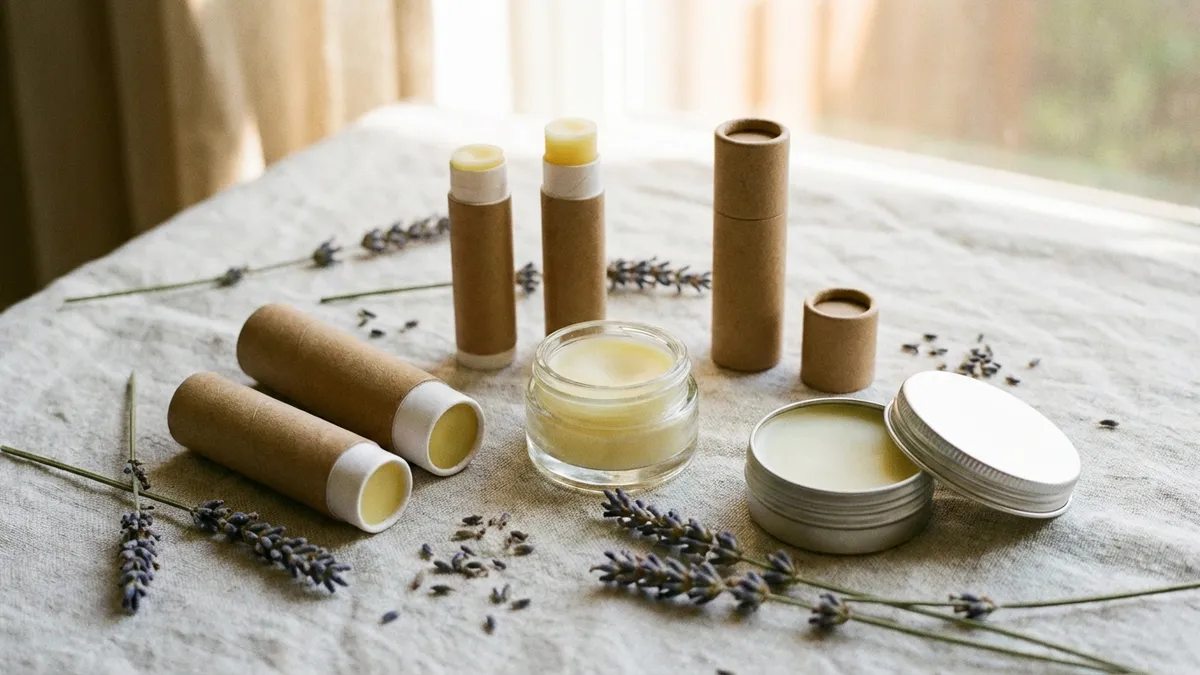
Moisture comes from emollient oils like jojoba, coconut, castor seed, avocado, and hemp. These oils mimic the skin’s natural lipids and actually hydrate the lip tissue.
Locking moisture in is the job of waxes and butters: beeswax, shea butter, cocoa butter, candelilla wax (for vegan options). These create a protective barrier, similar to what petrolatum does, but they’re naturally derived and many also contain beneficial nutrients like vitamins A and E.
The best non-toxic lip balms combine both functions. Oil-based moisture underneath, wax-based protection on top. No synthetic filler needed.
The Best Non-Toxic Lip Balms
1. Dr. Bronner’s Organic Lip Balm - Best Overall
Price: $4 | Base: Organic beeswax | Key Oils: Jojoba, avocado, hemp
Dr. Bronner’s makes one of the simplest and most effective lip balms I’ve tested. The ingredient list is short: organic beeswax, organic jojoba oil, organic avocado oil, organic hemp seed oil, organic beeswax, and tocopherol (vitamin E). That’s it. Everything is organic, everything is recognizable.
It goes on smooth without being waxy or sticky. The moisture lasts for hours, which is unusual for natural lip balms. Most of the ones I’ve tested need reapplication every 30-60 minutes. This one holds for 2-3 hours before I notice my lips drying.
Available in unflavored, peppermint, lemon lime, and orange ginger. The peppermint is my daily carry.
Pros: Certified organic, simple ingredients, long-lasting moisture, affordable Cons: Tube is small, not tinted, beeswax means it’s not vegan
2. Burt’s Bees Beeswax Lip Balm (Original) - Most Accessible
Price: $3.50 | Base: Beeswax | Key Oils: Sunflower, coconut
Burt’s Bees is the gateway drug for non-toxic lip balm. It’s at every drugstore, grocery store, and gas station in America. The original Beeswax formula has been around for decades, and the ingredient list is still clean: beeswax, coconut oil, sunflower oil, peppermint oil, tocopheryl acetate, lanolin, rosemary extract.
A note: Burt’s Bees was acquired by Clorox in 2007. The original formulas have largely remained clean, but some newer product lines from the brand contain more processed ingredients. Stick to the Original Beeswax formula for the cleanest option.
Pros: Available everywhere, affordable, proven formula, peppermint tingle Cons: Owned by Clorox (corporate concerns), lanolin is an animal byproduct, some newer formulations are less clean than the original
3. Meow Meow Tweet Lip Balm - Cleanest Ingredients
Price: $8 | Base: Candelilla wax (vegan) | Key Oils: Coconut, jojoba
Meow Meow Tweet is the brand for people who want to know exactly what’s touching their body, down to the molecular level. Their lip balm has five ingredients: coconut oil, jojoba oil, candelilla wax, cocoa butter, and vitamin E. Five. That’s the whole list.
It’s vegan, palm oil free, and packaged in a recyclable metal tin rather than plastic. The texture is slightly softer than tube balms, which means you apply it with your finger. Some people prefer this; others find it less convenient.
Pros: Five ingredients, completely transparent, vegan, recyclable packaging Cons: $8 for a small tin, finger application isn’t for everyone, no scent options, can melt in warm weather
4. Ethique Lip Balm (Pepped Up) - Best Zero Waste
Price: $8 | Base: Coconut oil | Key Oils: Coconut, peppermint
Ethique’s lip balm comes in a tube-free, fully compostable package. The formula is coconut oil based with peppermint essential oil for a cooling effect. It’s solid, vegan, and cruelty-free.
The application is a bit different since there’s no twist-up tube. You hold the bar and swipe it across your lips. It takes one or two uses to get the hang of it, but once you do, it’s fine. The peppermint is pleasant and the moisture lasts reasonably well.
Pros: Zero plastic packaging, compostable everything, vegan, peppermint scent is nice Cons: Unusual application format, can feel waxy, $8 for the size, limited scent options
5. Sky Organics Organic Lip Balm - Best Value Pack
Price: $10 for 6-pack (~$1.67 each) | Base: Organic beeswax | Key Oils: Coconut, sunflower, vitamin E
If you want to stock your whole house, car, bag, and desk with non-toxic lip balm without spending a fortune, Sky Organics solves that. A six-pack of USDA Organic certified lip balm for $10. Each one has a different flavor: original, vanilla, cherry, eucalyptus, citrus, and coconut.
The formula is clear: organic beeswax, organic coconut oil, organic sunflower oil, tocopherol. USDA Organic certification at under $2 per tube is remarkable value.
Pros: Under $2 each, USDA Organic, six flavors, widely available on Amazon Cons: Not the most luxurious texture, some flavors are more artificial-tasting than others, tubes feel a bit cheap
6. Ilia Balmy Tint Hydrating Lip Balm - Best Tinted
Price: $28 | Base: Castor seed oil | Key Oils: Shea butter, salvia seed oil
If you want a lip balm that doubles as a sheer lip color, Ilia’s Balmy Tint is the clean beauty standard. The color range is excellent, from barely-there nudes to deeper berry tones. The formula hydrates with castor seed oil, shea butter, and salvia seed oil while depositing a buildable wash of color.
This is the lip balm for people who wear lip products daily and want something that does double duty. The hydration is real, not just cosmetic. After four hours of wear, my lips still felt moisturized under the color.
Pros: Beautiful sheer color range, genuinely hydrating, clean ingredients, luxurious feel Cons: $28 is steep for a lip balm, limited availability, melts easily in heat, not as moisturizing as a dedicated treatment balm
Price Comparison
| Lip Balm | Price | Per Unit | Base | Vegan |
|---|---|---|---|---|
| Sky Organics 6-pack | $10 | $1.67 | Organic beeswax | No |
| Burt’s Bees Original | $3.50 | $3.50 | Beeswax | No |
| Dr. Bronner’s | $4 | $4 | Organic beeswax | No |
| Meow Meow Tweet | $8 | $8 | Candelilla wax | Yes |
| Ethique Pepped Up | $8 | $8 | Coconut oil | Yes |
| Ilia Balmy Tint | $28 | $28 | Castor seed oil | Yes |
If you’re rebuilding your entire personal care routine, pair your lip balm with a non-toxic face moisturizer, non-toxic sunscreen, and non-toxic toothpaste. For a broader beauty overhaul, see our non-toxic makeup guide.
Frequently Asked Questions
Why do my lips feel more chapped after using regular chapstick?
Many conventional lip balms contain ingredients like phenol, camphor, or menthol that provide a temporary soothing sensation but can actually irritate the delicate lip tissue. Combined with petrolatum that creates an occlusive barrier without adding moisture, your lips never actually recover. This creates a reapplication cycle that keeps you buying more product.
Is petroleum jelly safe for lips?
The FDA considers properly refined petrolatum safe. However, the U.S. doesn’t require the same purity standards as the EU, and improperly refined petrolatum can contain PAHs. Given that lip balm is partially ingested, and plant-based alternatives work just as well, there’s no compelling reason to choose petroleum over beeswax or plant oils.
What about SPF lip balms?
Sun protection for lips is important, especially if you spend time outdoors. Look for non-toxic SPF lip balms that use zinc oxide as the UV filter rather than oxybenzone or avobenzone. Badger and Sun Bum both make clean SPF lip balms. Our non-toxic sunscreen guide covers UV filter safety in detail.
Are beeswax lip balms better than vegan ones?
Beeswax is an excellent lip balm ingredient since it’s naturally occlusive, antibacterial, and contains vitamin A. Candelilla wax (the main vegan alternative) is also effective but has a slightly different texture. The performance difference is minor. Choose based on your values.
How often should I apply lip balm?
With a good non-toxic lip balm, you should need it 2-4 times a day rather than constantly. If you’re reapplying every 30 minutes, your lip balm isn’t actually moisturizing. It’s just creating a temporary barrier. Switch to something with jojoba or avocado oil as the primary ingredient and you’ll notice longer-lasting hydration.
Can lip balm ingredients cause allergic reactions?
Yes. Lanolin (found in Burt’s Bees and some others) is a common allergen. Essential oil flavorings like cinnamon or citrus can irritate sensitive lips. If your lips get red, swollen, or itchy after applying a new lip balm, stop using it and try a simpler formula like Meow Meow Tweet’s five-ingredient option or an unflavored Dr. Bronner’s.
Final Verdict
Lip balm is the product you put on your body most often and think about least. Given that you’re partially eating whatever’s in it, the ingredient list matters more here than almost any other personal care product.
Dr. Bronner’s at $4 is the best all-around pick. Simple, organic, effective. If you want to stock up cheaply, Sky Organics at under $2 per tube is the move. And if you want a lip product with sheer color, Ilia Balmy Tint is the clean beauty gold standard.
Stop eating petroleum. Your lips will thank you, and the rest of your body will too.
Last updated: March 2027. Prices may vary. We independently research and test the products we recommend. When you purchase through our links, we may earn a commission at no extra cost to you.