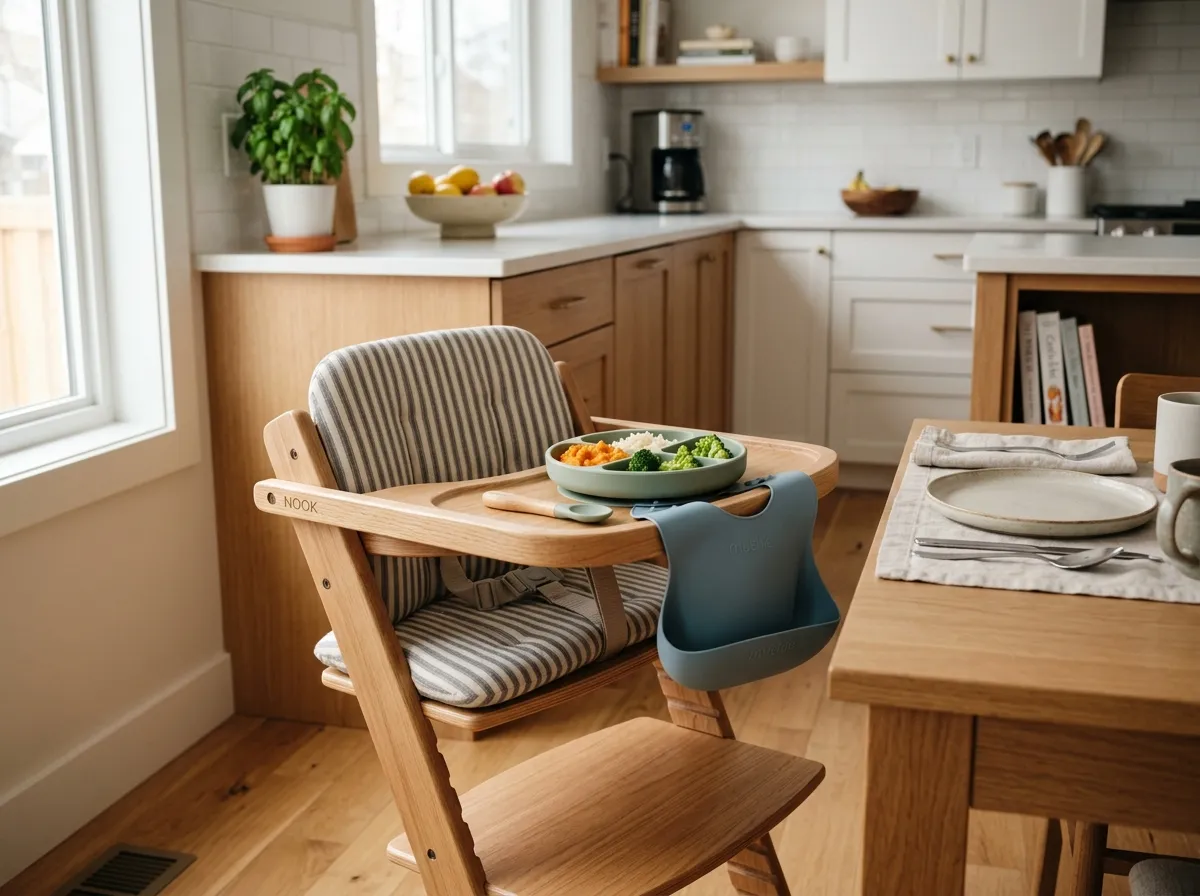
The best non-toxic high chair is the Stokke Tripp Trapp. It is built from solid European beech wood with water-based paint, contains no plastic tray by default, has no foam padding, and is GREENGUARD Gold certified for low chemical emissions. Our testing at NonToxicLab shows it is the cleanest high chair available from a chemical standpoint while still being a genuinely excellent product in terms of design, longevity, and resale value. See our top picks in best non-toxic car seats.
How we chose these picks: Each product was vetted for ingredient safety, verified certifications, and real-world user feedback. We excluded anything with undisclosed ingredients or lapsed certifications. Full testing methodology For families on a tight budget, the IKEA Antilop at around $20 is actually one of the safest options available. Its simple polypropylene construction means there is no paint to chip, no foam padding to contain flame retardants, and no fabric to treat with stain-resistant chemicals. For specific product picks, check best non-toxic diapers.
Quick Comparison: Best Non-Toxic High Chairs
| High Chair | Price | Material | Plastic Tray | Padding | Certifications | Best For |
|---|---|---|---|---|---|---|
| Stokke Tripp Trapp | $259-$299 | Solid beech | Optional (sold separately) | None (cushion optional) | GREENGUARD Gold | Overall safest pick |
| IKEA Antilop | $20-$25 | Polypropylene | Yes (BPA-free) | None | None | Budget families |
| Abiie Beyond | $199-$229 | Solid beech | Yes (dishwasher-safe) | None included | GREENGUARD Gold | Wooden alternative to Stokke |
| Keekaroo Peanut | $249-$279 | Solid wood + TPE seat | Yes | No foam (TPE surface) | None | Easy cleaning, no covers |
| OXO Tot Sprout | $249-$279 | Birch plywood | Yes | Included (removable) | None | Adjustability |
Why Chemical Safety Matters in High Chairs
High chairs sit at the intersection of several chemical concerns because babies interact with them in ways adults do not interact with furniture. A baby in a high chair is mouthing the tray, chewing on the armrests, rubbing food across every surface, and spending extended time in direct contact with the materials. Whatever chemicals are in or on that high chair have a direct pathway into your baby’s body.
Lead Paint
Lead paint in children’s products sounds like a problem from the 1970s, but it keeps showing up. Third-party testing by independent labs has found detectable lead in the painted surfaces of some imported high chairs, particularly in colored finishes. The Consumer Product Safety Commission (CPSC) has recalled high chairs for lead paint violations in recent years.
Lead exposure has no safe threshold for children. Even low levels affect neurological development and cognitive function. Dr. Philip Landrigan, who was instrumental in getting lead removed from gasoline, has called childhood lead exposure one of the most preventable environmental health threats, and painted baby products remain a pathway.
The high chairs on this list use either water-based paints with documented low-lead formulations (Stokke, Abiie) or avoid paint entirely (IKEA Antilop, Keekaroo).
Plastic Trays and BPA
Nearly every high chair includes a plastic tray, and that tray gets warm food placed on it, acidic foods that can leach chemicals, and constant contact with baby’s hands and mouth. BPA (bisphenol A) was the first plasticizer to get public attention, and most manufacturers have switched to “BPA-free” plastics. However, BPA replacements like BPS and BPF have shown similar endocrine-disrupting properties in research.
Dr. Shanna Swan’s research on endocrine-disrupting chemicals found that prenatal and early childhood exposure to plasticizers like bisphenol compounds is associated with reproductive and developmental effects. While a high chair tray is not the only source of exposure, it is one you can easily control.
The safest approach is to avoid placing hot food directly on plastic trays. Use a plate or silicone mat as a barrier, regardless of which high chair you choose.
Foam Padding and Flame Retardants
Padded high chair seats often contain polyurethane foam, which historically has been treated with chemical flame retardants (organohalogen compounds). These flame retardants migrate out of the foam and into household dust, which babies then ingest. Dr. Leonardo Trasande has noted that flame retardant exposure in young children is linked to thyroid disruption and neurodevelopmental effects.
The simplest solution is choosing a high chair with no foam padding at all. Four of the five chairs on this list offer a no-padding or no-foam option.
Stain-Resistant Coatings (PFAS)
Fabric cushions and covers on high chairs may be treated with PFAS (per- and polyfluoroalkyl substances) to make them stain-resistant and water-repellent. PFAS are persistent chemicals that do not break down in the body or the environment. They are linked to immune suppression, thyroid dysfunction, and cancer.
If your high chair comes with a fabric cushion, check whether the manufacturer explicitly states it is PFAS-free. If that information is not available, you can skip the cushion entirely or replace it with an untreated cover.
Detailed Reviews
Stokke Tripp Trapp
Price: $259-$299 | Material: Solid European beech wood | Best for: Overall safest pick
The Tripp Trapp has been in production since 1972 and remains one of the most thoughtfully designed high chairs available. The entire chair is solid beech wood with a water-based paint and lacquer finish. There is no plastic tray included in the base model, which eliminates one of the primary chemical contact surfaces.
The chair is GREENGUARD Gold certified, meaning it has been independently tested and verified to meet strict limits on chemical emissions, including formaldehyde, total VOCs, and individual compounds. This is one of the few high chairs with this certification.
Chemical profile:
- Water-based paint and lacquer (low-VOC)
- No foam padding in base model
- No plastic tray in base model
- GREENGUARD Gold certified
- Optional accessories (baby set, cushion, tray) are sold separately
What to watch for: If you add the Stokke tray accessory and cushion, you are adding plastic and fabric that do not carry the same chemical profile as the wood chair itself. NonToxicLab’s recommendation is that the strongest approach is using the Tripp Trapp pulled directly up to the dining table without the tray, pairing it with a silicone placemat on the table surface.
The Tripp Trapp also grows with the child and is rated to hold adults up to 242 pounds. The resale value on these chairs is strong, which offsets the higher upfront cost.
IKEA Antilop
Price: $20-$25 | Material: Polypropylene plastic | Best for: Budget families
The Antilop is proof that the cheapest option can also be one of the safest. The entire chair is simple polypropylene plastic and steel legs. There is no paint to chip, no foam to contain flame retardants, no fabric to treat with PFAS, and no composite wood to release formaldehyde.
Chemical profile:
- BPA-free polypropylene
- No paint
- No foam padding
- No fabric
- No adhesives or composite materials
What to watch for: The tray is plastic, so avoid placing hot food directly on it. The legs are sold separately, and there is no footrest, which occupational therapists note is important for proper posture during eating. You can purchase aftermarket footrests (some are wooden) or DIY one.
The Antilop is the high chair pediatric feeding therapists often recommend because of its simplicity and positioning options. The fact that it is also one of the least chemically concerning is a bonus. For families who want more detail on building a clean baby registry without overspending, our non-toxic baby registry guide covers priorities across every category.
Abiie Beyond
Price: $199-$229 | Material: Solid beech wood | Best for: Wooden alternative to Stokke
The Abiie Beyond is a direct competitor to the Stokke Tripp Trapp, offering similar solid wood construction at a lower price point. The chair uses beech wood with water-based finishes and includes a dishwasher-safe tray.
Chemical profile:
- Solid beech wood construction
- Water-based finishes
- GREENGUARD Gold certified
- No foam padding (cushion sold separately)
- Dishwasher-safe plastic tray included
What to watch for: The included tray is plastic, which is a contact surface worth monitoring. The optional cushion is not included and should be evaluated separately if purchased. The chair grows with the child through adulthood.
The Abiie often goes on sale during major shopping events, bringing it closer to $175. At that price, it offers nearly identical chemical and material safety to the Stokke at a meaningful discount.
Keekaroo Peanut
Price: $249-$279 | Material: Solid wood + TPE seat surface | Best for: Easy cleaning, no covers needed
The Keekaroo’s standout feature is its seamless, non-porous seat made from TPE (thermoplastic elastomer) rather than foam with a fabric cover. This material wipes clean instantly, does not absorb liquids, and eliminates the need for fabric covers that could be treated with PFAS or stain-resistant chemicals.
Chemical profile:
- Solid wood frame
- TPE seat surface (BPA-free, phthalate-free, latex-free per manufacturer)
- No foam padding
- No fabric covers
- Plastic tray
What to watch for: TPE is generally considered one of the safer plastic alternatives, but “BPA-free” and “phthalate-free” claims rely on the manufacturer’s testing. No third-party GREENGUARD certification is listed for this chair. The tray is plastic.
The Keekaroo makes practical sense for families who value low-maintenance cleaning. No cushion covers to wash, no foam to compress and crack over time, and no crevices where food gets trapped and grows mold.
OXO Tot Sprout
Price: $249-$279 | Material: Birch plywood + foam cushion | Best for: Adjustability and comfort
The OXO Tot Sprout offers excellent adjustability with multiple seat height and footrest positions. The birch plywood frame is sturdy and well-built. The main chemical consideration is the included foam cushion.
Chemical profile:
- Birch plywood frame
- Foam-padded cushion (included)
- Removable, washable cushion cover
- Plastic tray
What to watch for: The foam cushion is the primary concern. OXO states their products meet CPSIA requirements, but the company does not provide detailed information about flame retardant use in the cushion foam or PFAS treatment on the fabric cover. If you want to use this chair with the cleanest possible profile, remove the cushion and use the bare wood seat, or replace the cushion with a non-toxic alternative.
The OXO Tot Sprout is a good chair if you prioritize adjustability, but from a purely chemical standpoint, it trails the Stokke, IKEA, Abiie, and Keekaroo options because of the foam cushion question.
What to Look for When Shopping
If you are evaluating high chairs beyond this list, here is what to check:
- Material. Solid wood is the safest base material. If the chair is painted, look for water-based paint documentation.
- Certifications. GREENGUARD Gold certification is the strongest available indicator of low chemical emissions.
- Padding. No foam is better than foam. If foam is present, ask the manufacturer about flame retardant treatment.
- Tray material. All high chair trays are plastic, so this is a surface to manage rather than avoid. Use plates or silicone mats as barriers for hot food.
- Fabric treatments. If the chair includes fabric cushions, ask about PFAS/PFOA-free status.
- Country of manufacture. European-manufactured products generally meet stricter chemical standards than products from countries with less regulation.
For a broader look at non-toxic baby furniture including cribs, dressers, and changing tables, see our non-toxic crib and kids furniture guide.
How to Keep Your High Chair Safe Over Time
Even the cleanest high chair needs proper maintenance:
- Clean regularly with mild soap and water. Avoid harsh chemical cleaners on surfaces your baby mouths.
- Inspect painted surfaces for chipping or peeling. Damaged paint on any product, even low-VOC paint, is a potential ingestion risk.
- Replace plastic trays if they become deeply scratched. Scratches create micro-reservoirs where bacteria grow and may expose underlying material layers.
- Skip bleach wipes. They leave residue on surfaces your baby contacts directly.
For a complete approach to reducing chemical exposure across all baby products, our non-toxic baby products guide covers everything from bottles to car seats. And if you are building a registry, our non-toxic sippy cup guide pairs well with the high chair research since both are daily mealtime contact surfaces.
What People Ask
Are wooden high chairs safer than plastic ones?
Generally, yes. Solid wood high chairs avoid the plasticizer, BPA, and additive concerns that come with plastic construction. However, a painted wooden chair with unknown paint composition could be worse than a simple, unpainted plastic chair like the IKEA Antilop. The safest option is solid wood with documented water-based finishes and relevant certifications.
Do high chairs contain lead?
Some do. Lead has been found in painted surfaces of certain high chairs during third-party testing, and the CPSC has issued recalls for lead paint violations. High chairs from major brands sold in the U.S. must comply with CPSIA lead limits (90 ppm in surface coatings), but enforcement depends on testing. Choosing unpainted or GREENGUARD-certified options reduces this risk.
Should I buy a high chair cushion?
From a chemical standpoint, the fewer materials in contact with your baby, the better. If the chair is comfortable without a cushion (and most wooden chairs are), skip it. If you want padding, look for organic cotton covers with no flame retardant treatment, and avoid anything labeled “stain-resistant” or “water-repellent” unless it is explicitly PFAS-free.
Is the IKEA Antilop really safe at that price?
Yes. The Antilop’s simplicity is its safety advantage. There are fewer materials, fewer chemical processes, and fewer contact surfaces than in more expensive, feature-rich chairs. The polypropylene plastic is BPA-free and food-safe. The lack of paint, foam, and fabric means fewer chemical exposure pathways.
How do I test my high chair for lead?
You can purchase 3M LeadCheck swabs at most hardware stores. They change color in the presence of lead above detectable levels. Swab painted surfaces, especially around areas where paint might chip or where your baby chews. For more thorough testing, XRF analyzers can detect lead at lower concentrations, but these require a professional service.
What is GREENGUARD Gold certification?
GREENGUARD Gold certification means a product has been independently tested by UL (Underwriters Laboratories) and verified to meet strict limits for chemical emissions into indoor air. The “Gold” level is the stricter standard, originally designed for schools and healthcare facilities. It sets limits on formaldehyde, total VOCs, and over 360 individual chemical compounds.
You Might Also Like
Sources
- Consumer Product Safety Commission (CPSC). “CPSIA Lead Limits for Children’s Products.”
- UL GREENGUARD Certification Program. “GREENGUARD Gold Standard.”
- Landrigan PJ, et al. “Children’s Health and the Environment.” Oxford University Press.
- Trasande L. “Sicker, Fatter, Poorer.” Houghton Mifflin Harcourt, 2019.
- Swan SH. “Count Down.” Scribner, 2021.
- EPA. “Flame Retardants in Children’s Products: An Updated Review.”
- Agency for Toxic Substances and Disease Registry (ATSDR). “Toxicological Profile for Lead.”