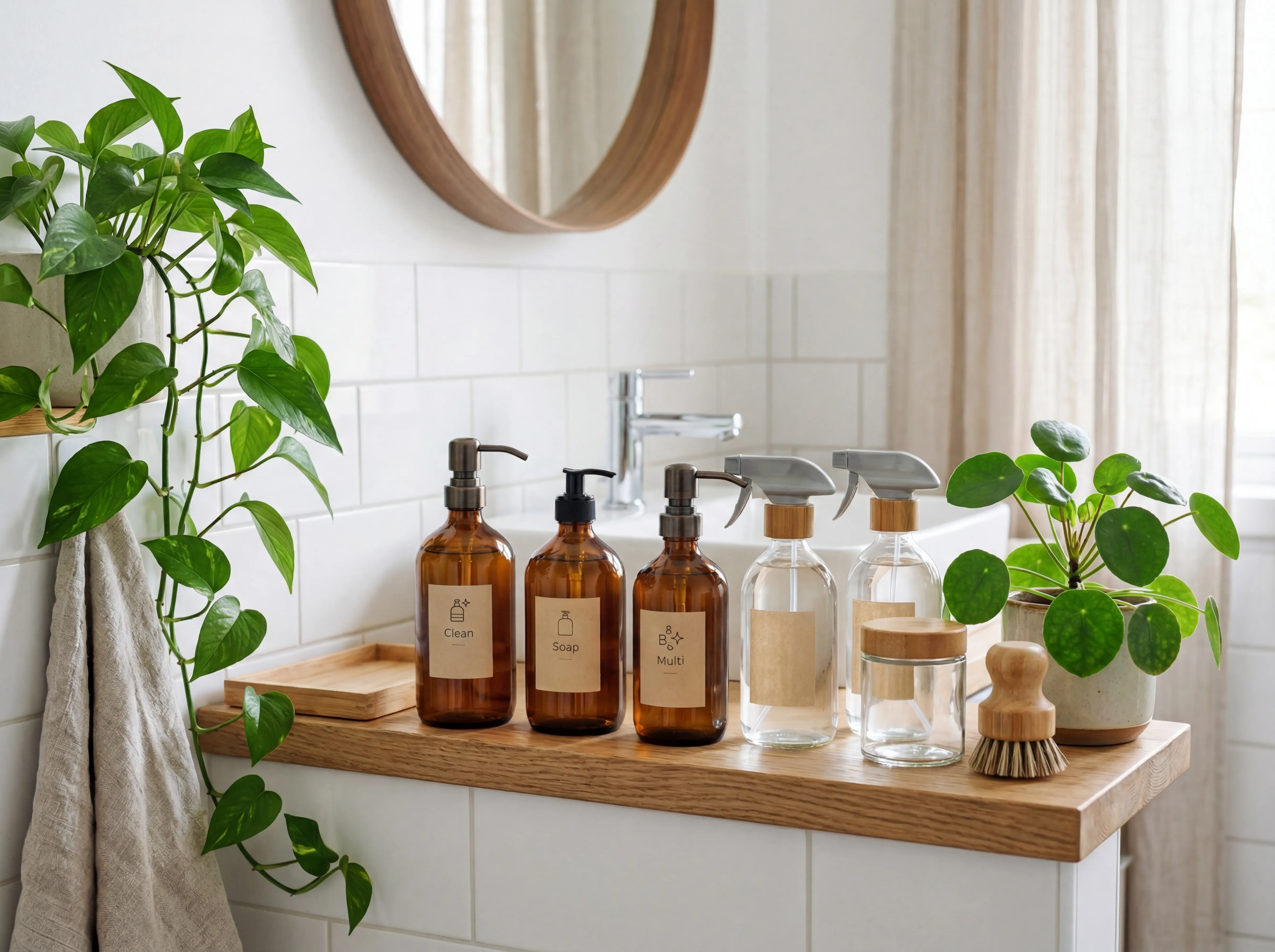
Most “green” cleaning products aren’t as safe as their labels suggest. Terms like “natural,” “plant-based,” and “eco-friendly” have zero legal regulation. Any company can slap those words on a bottle of chemicals and charge a premium for it.
I spent weeks digging through EWG’s cleaning database, cross-referencing ingredient lists, and testing products in my own home to find cleaners that are genuinely non-toxic AND actually clean well. Here are the ones worth your money.
Quick Picks: Best Non-Toxic Cleaners by Category
If you’re short on time, here’s the summary:
| Category | Top Pick | Price | Why It Wins |
|---|---|---|---|
| All-Purpose | Branch Basics Concentrate | $55 (makes 64+ bottles) | One concentrate replaces every cleaner in your home. MADE SAFE certified. |
| All-Purpose (Budget) | Dr. Bronner’s Sal Suds | $12 for 32 oz | Concentrated, EWG-A rated, available everywhere. |
| Disinfectant | Force of Nature | $90 starter kit ($1/bottle after) | EPA-registered disinfectant made from salt, water, and vinegar. |
| Bathroom | Branch Basics Bathroom Spray | $5 (from concentrate) | Tackles soap scum and hard water without bleach or ammonia. |
| Kitchen/Degreaser | Dr. Bronner’s Sal Suds | $12 for 32 oz | Cuts grease better than most conventional degreasers. |
| Laundry | ECOS Laundry Detergent | ~$0.20/load | EPA Safer Choice certified, hypoallergenic, plant-derived. |
| Glass | Blueland Glass + Mirror Tablet | $2/refill tablet | Streak-free, zero plastic waste, B-Corp certified. |
| Dish Soap | Puracy Natural Dish Soap | ~$6 | Plant-based, EWG-A rated, no synthetic fragrances. |
What Actually Makes a Cleaning Product “Non-Toxic”?
Here’s the problem: the word “non-toxic” isn’t regulated by the FDA or EPA for cleaning products. A company can call anything non-toxic. So you need to look deeper.
A genuinely non-toxic cleaning product meets three criteria:
- Full ingredient transparency. Every ingredient is listed on the label or website. If a brand hides behind “proprietary blend,” that’s a red flag.
- No ingredients linked to cancer, hormone disruption, or organ toxicity. This means no phthalates, no formaldehyde releasers, no 1,4-dioxane, no quats, no chlorine bleach.
- Third-party verification. At minimum, the product should score an A or B on EWG’s cleaning database. Better yet, it carries an EPA Safer Choice label, EWG Verified mark, or MADE SAFE certification.
The brands in this guide meet all three criteria.
The 12 Best Non-Toxic Cleaning Products (Detailed Reviews)
1. Branch Basics Concentrate
Best overall non-toxic cleaner
- Price: $55 for 33.8 oz concentrate (makes 64+ spray bottles)
- Also available at: Target ($4.99 per ready-to-use spray, $9.99 for small concentrate)
- Certifications: MADE SAFE
- EWG Rating: A
Branch Basics built their entire brand around one idea: a single concentrate that replaces every cleaning product in your home. You dilute it at different ratios for all-purpose spray, bathroom cleaner, streak-free glass cleaner, hand soap, and laundry detergent.
The ingredient list is refreshingly short: purified water, decyl glucoside, organic chamomile flower extract, coco-glucoside, sodium citrate, sodium bicarbonate, and sodium phytate. That’s it. Seven ingredients, all plant and mineral-based, completely fragrance-free.
A single bottle of concentrate lasts 2 to 4 months depending on how often you clean and how much laundry you do. The Premium Starter Kit ($75) comes with the concentrate plus five dilution bottles. If you want the gorgeous glass bottles, that kit runs $125.
The big news for 2026: Branch Basics launched at Target with lower-priced ready-to-use sprays at $4.99 each. That’s a game-changer for people who want to try the brand without committing to the full system.
Bottom line: The best value in non-toxic cleaning if you’re willing to dilute your own bottles. One $55 concentrate replaces $200+ in conventional cleaners.
2. Force of Nature
Best non-toxic disinfectant
- Price: $90 starter kit (includes appliance, spray bottle, 5 capsules); refills work out to ~$1/bottle
- Certifications: EPA-registered disinfectant, National Eczema Association Seal of Acceptance
- EWG Rating: A
Force of Nature is the only product on this list that can legally claim to be a disinfectant while remaining genuinely non-toxic. The system uses electrolyzed water technology: you put a capsule of salt, water, and vinegar into the small countertop appliance, and it converts these ingredients into hypochlorous acid, the same substance your immune system produces to fight infection.
The result kills 99.9% of bacteria, viruses (including SARS-CoV-2), mold, and mildew. It’s on the EPA’s official List N of approved disinfectants. Independent lab testing shows it cleans grease, soap scum, and glass as effectively as leading conventional brands.
The $90 upfront cost is steep. But each bottle costs about $1 to make, compared to $4 to $5 for comparable conventional disinfectants. Over a year, the savings are significant, up to 80% less expensive than buying bottled disinfectants.
Bottom line: If you need a real disinfectant (kitchen counters after handling raw meat, bathroom surfaces, flu season), Force of Nature is the only option I trust that’s both EPA-registered and truly non-toxic.
3. Dr. Bronner’s Sal Suds
Best budget non-toxic all-purpose cleaner
- Price: ~$12 for 32 oz
- Certifications: None (but earned EWG-A rating)
- EWG Rating: A
- Available: Amazon, Walmart, Target, Whole Foods, most grocery stores
Dr. Bronner’s Sal Suds is the workhorse of the non-toxic cleaning world. It’s a concentrated, biodegradable cleaner that handles dishes, floors, laundry, countertops, and basically any hard surface. The formula uses plant-based surfactants with natural fir needle and spruce essential oils, no synthetic dyes or fragrances.
It’s 2x more concentrated than standard detergents, so a tablespoon in a bucket of water cleans an entire floor. A few drops in a foaming dispenser creates dish soap that lasts for months. Diluted in a spray bottle (1 tablespoon per quart of water), it’s a powerful all-purpose cleaner that cuts through grease surprisingly well.
At roughly $12 per bottle, and with each bottle lasting months due to the concentration, Sal Suds is the most affordable option on this list. You can find it at almost any grocery store, which makes it the easiest non-toxic cleaner to actually buy.
Bottom line: The entry point for non-toxic cleaning. Affordable, effective, available everywhere, and backed by a company with decades of transparency around ingredients.
4. Blueland Clean Essentials Kit
Best for reducing plastic waste
- Price: $39 for starter kit (bottles + tablets); refill tablets start at $2 each
- Certifications: B-Corp, Climate Neutral
- EWG Rating: A (multi-surface cleaner)
Blueland’s model is simple: buy reusable bottles once, then drop in dissolvable cleaning tablets forever. Each tablet replaces a full bottle of liquid cleaner, and the tablets arrive in compostable paper packaging. The company estimates each household saves about six plastic bottles per year.
The lineup covers multi-surface cleaner, bathroom cleaner, glass cleaner, and hand soap. The Clean Suite bundle ($83, or $74 on subscription) covers all categories. Performance is solid across the board. The multi-surface and bathroom cleaners handle everyday messes without trouble, and the glass cleaner leaves zero streaks.
Early Blueland bottles had cracking and leaking issues, but the company redesigned them using shatter-proof Tritan plastic. Recent reviews show the durability problems are resolved.
One caveat: Blueland’s dishwasher tablets occasionally leave white residue on glassware. Running the dishwasher on the heavy cycle instead of normal seems to fix this, but it’s worth mentioning.
Bottom line: The best pick if plastic waste bothers you as much as toxic chemicals. The tablet system is clever, the products clean well, and the refill price ($2 per tablet) keeps ongoing costs low.
5. Puracy Multi-Surface Cleaner
Best ready-to-use spray
- Price: ~$22 (concentrate makes 128 oz); refill packs bring it down to ~$10.50/bottle
- Certifications: EWG-A rated
- EWG Rating: A
Puracy was named “Best All-Purpose Cleaner” by The New York Times, and it earned that title. Every formula is at least 98.5% natural and vegan-friendly, developed by a team that includes a PhD chemist.
The Green Tea & Lime all-purpose concentrate makes a full gallon of cleaner. It works on countertops, glass, stainless steel, sealed stone, tile, and laminate without leaving residue. No synthetic fragrances, no sulfates, no animal testing.
Puracy also makes a standout Natural Dish Soap and laundry detergent. The laundry detergent uses a pump dispenser that eliminates wasted product, and it costs roughly $5 more per container than Tide. With refill packs, the price drops below Tide’s per-load cost.
Bottom line: If you want a grab-and-go non-toxic cleaner without diluting concentrates or dissolving tablets, Puracy is the most convenient option that still meets strict safety standards.
6. ECOS Laundry Detergent
Best non-toxic laundry detergent
- Price: ~$0.20 to $0.30 per load
- Certifications: EPA Safer Choice (8-time Partner of the Year), hypoallergenic
- EWG Rating: A
ECOS has over 120 products certified under the EPA’s Safer Choice program, and the EPA has named them Safer Choice Partner of the Year eight times, most recently in 2024. That’s not marketing speak. The EPA sends scientists to review every ingredient in Safer Choice products.
The laundry detergent is plant-derived, hypoallergenic, free from dyes and synthetic fragrances, and concentrated to reduce plastic use. It handles everyday laundry well, though you may need to pre-treat heavy-duty stains like motor oil or set-in grass stains. That’s true of almost every plant-based detergent, though.
With over 13,000 Amazon reviews averaging 4.6 stars, ECOS is one of the most battle-tested non-toxic detergents available. At roughly $0.20 per load, it costs slightly more than the cheapest conventional brands but significantly less than most premium “green” detergents.
ECOS is woman-owned and manufactured in the U.S. Their factories are carbon-neutral and water-neutral.
Bottom line: The best balance of safety, performance, and price for laundry. EPA Safer Choice certification carries real weight, and at $0.20 per load, the price premium over conventional is minimal.
7. Seventh Generation Free & Clear Laundry Detergent
Best widely available non-toxic laundry option
- Price: ~$12 to $15 for 60 loads
- Certifications: USDA Certified Biobased, EPA Safer Choice
- EWG Rating: A
Seventh Generation’s Free & Clear line is the most accessible non-toxic option for laundry. You can find it at virtually every Target, Walmart, Kroger, and Whole Foods in the country. No hunting for specialty products online.
The formula is plant-based, fragrance-free, and free from dyes and optical brighteners (those UV-reactive chemicals that make clothes appear whiter but stay on your skin all day). It’s hypoallergenic and performs well for families with sensitive skin or allergies.
It won’t out-clean Tide on heavily soiled workwear. Keep a separate stain treatment on hand for grease and mud. But for everyday household laundry (clothes, towels, sheets), it does the job without coating your fabrics in synthetic chemicals.
Bottom line: The non-toxic laundry detergent you can buy during a regular grocery run. No subscription, no concentrate mixing, no waiting for shipping.
8. Common Good Bathroom Cleaner
Best non-toxic bathroom cleaner
- Price: ~$8 for 16 oz
- Certifications: Biodegradable, cruelty-free
- EWG Rating: A
Conventional bathroom cleaners are some of the most toxic products in your home. They’re loaded with chlorine bleach, ammonia, and synthetic fragrances that create a cocktail of fumes you’re breathing in a small, poorly ventilated room.
Common Good’s bathroom cleaner is free from ammonia, chlorine, parabens, phthalates, and sulfates. It’s fully biodegradable and safe for septic and greywater systems. The formula handles soap scum and everyday bathroom grime without the chemical assault.
For heavy hard water buildup and serious mineral deposits, you may need to supplement with a paste of baking soda and white vinegar. But for regular weekly cleaning, Common Good keeps bathrooms clean without any respiratory concerns.
Bottom line: A solid bathroom cleaner that won’t fill your lungs with chlorine fumes every Saturday morning.
9. ATTITUDE Bathroom Cleaner
Best EWG Verified bathroom cleaner
- Price: ~$7 for 27 oz
- Certifications: EWG Verified, PETA cruelty-free
- EWG Rating: A (EWG Verified)
ATTITUDE earns the EWG Verified mark, which is the highest standard in the EWG system. Products with this certification are free from all EWG chemicals of concern and meet the organization’s strictest transparency requirements.
The formula uses citric acid as its primary active ingredient. Citric acid matches or exceeds bleach for dissolving soap scum and hard water stains, without producing toxic fumes. The lemon peel scent comes from natural essential oils, not synthetic fragrance blends hiding phthalates.
At roughly $7 for a 27 oz spray bottle, ATTITUDE is also one of the most affordable options in the non-toxic bathroom category.
Bottom line: If EWG Verified certification matters to you (and it should), ATTITUDE is the bathroom cleaner to buy.
10. Blueland Glass + Mirror Cleaner Tablet
Best non-toxic glass cleaner
- Price: $2 per refill tablet (starter set with bottle ~$12)
- Certifications: B-Corp, Climate Neutral
- EWG Rating: A
Most conventional glass cleaners use ammonia as their primary cleaning agent. Ammonia fumes irritate the eyes, skin, and respiratory tract, and when mixed with bleach-based cleaners (accidentally or otherwise), it produces chloramine gas, which can be lethal.
Blueland’s glass cleaner tablet dissolves in water to create a streak-free glass and mirror cleaner without ammonia, without synthetic fragrances, and without a new plastic bottle every time. The formula works well on windows, mirrors, glass tables, and stainless steel appliances.
Bottom line: At $2 per refill, Blueland’s glass cleaner costs about half of what you’d pay for Windex, cleans just as well, and doesn’t fill your house with ammonia fumes.
11. Puracy Natural Dish Soap
Best non-toxic dish soap
- Price: ~$6 for 16 oz
- Certifications: EWG-A rated, vegan, cruelty-free
- EWG Rating: A
Your dish soap touches the surfaces you eat from, which makes it one of the most important products to swap. Puracy’s dish soap formula is plant-based, sulphate-free, and uses no synthetic fragrances or dyes.
It produces good suds (a common complaint about natural dish soaps is weak lather) and cuts through food grease effectively. The pump dispenser on the concentrate version helps you use less product per wash, which extends the life of each bottle.
Bottom line: An effective, affordable dish soap that doesn’t leave chemical residues on the plates your family eats from.
12. Dr. Bronner’s Pure-Castile Liquid Soap
Most versatile single product
- Price: ~$18 for 32 oz
- Certifications: USDA Organic, Fair Trade
- EWG Rating: A
Dr. Bronner’s Castile Soap deserves a spot because of sheer versatility. This one bottle handles hand soap, body wash, dish soap (diluted), mopping solution, fruit and vegetable wash, and even pet shampoo. The unscented Baby Mild version is the safest for cleaning purposes since it contains no essential oils.
The soap is made from organic coconut, olive, hemp, and jojoba oils. It’s biodegradable, Fair Trade certified, and the company has been transparent about every ingredient since the 1940s.
One word of caution: don’t use castile soap on granite, marble, or other natural stone. The alkaline pH can etch the surface over time. Also, never mix castile soap with vinegar. The acid in vinegar reacts with the soap and creates a greasy, unusable residue.
Bottom line: The Swiss Army knife of non-toxic cleaning. Not the best at any single task, but good enough at almost everything and available at every grocery store in America.
Ingredients to Avoid: The Red Flag Checklist
Print this list and bring it to the store. If you see any of these on a cleaning product label, put it back on the shelf.
Definitely Avoid
- Phthalates (DBP, DEP, DEHP): Endocrine disruptors linked to hormonal problems. Usually hidden under the word “fragrance” on labels.
- 1,4-Dioxane: A known carcinogen. It won’t appear on labels because it’s a manufacturing byproduct. Look for ethoxylated ingredients with suffixes like “-eth,” “PEG,” “polyethylene glycol,” or “polyoxyethylene.” Those signal 1,4-dioxane contamination.
- Formaldehyde and formaldehyde releasers: Formaldehyde is a known human carcinogen. It hides in preservatives like DMDM hydantoin, quaternium-15, and imidazolidinyl urea, which slowly release formaldehyde over time.
- Quaternary ammonium compounds (quats): Found in disinfectants and fabric softeners. They’re skin and lung irritants and may contribute to antibiotic resistance. Common names: benzalkonium chloride, stearalkonium chloride.
- Chlorine bleach (sodium hypochlorite): Produces toxic fumes, especially when combined with ammonia or acids. Corrosive to skin and mucous membranes.
- Ammonia: Irritates eyes, skin, and lungs. Dangerous when mixed with bleach.
Also Worth Avoiding
- Synthetic fragrances: The word “fragrance” or “parfum” on a label can hide dozens of undisclosed chemicals, including phthalates and allergens. Companies aren’t required to list individual fragrance components.
- Optical brighteners: UV-reactive chemicals in laundry detergent that make clothes look whiter. They stay on fabric and transfer to skin throughout the day. Potential skin irritants and environmental pollutants.
- Triclosan: An antimicrobial agent linked to hormone disruption. Banned from hand soaps by the FDA in 2016 but still appears in some cleaning products.
- Phosphates: Cause algal blooms that devastate aquatic ecosystems.
Certifications That Actually Matter vs. Greenwashing
Not all labels are created equal. Here’s what to trust and what to ignore.
Certifications Worth Trusting
EWG Verified is the gold standard. The Environmental Working Group is an independent nonprofit with no financial incentive to approve products. Products carrying this mark are free from all EWG chemicals of concern and meet the strictest transparency requirements. Look this up at ewg.org/cleaners.
EPA Safer Choice is a voluntary EPA program where government scientists review every ingredient against safety standards. The EPA evaluates whether each ingredient is safer than conventional alternatives. Over 120 ECOS products carry this seal, for context.
MADE SAFE is run by the nonprofit Nontoxic Certified. Products are screened against a database of known harmful chemicals and cannot contain any substance linked to cancer, endocrine disruption, behavioral toxicity, or environmental harm. Branch Basics carries this certification.
EWG A or B Rating means the product scored well in EWG’s cleaning database, which evaluates every listed ingredient against known health hazards. You can search any product for free on EWG’s site.
Labels That Mean Almost Nothing
“Natural” has no legal definition for cleaning products. A product can contain 99% synthetic chemicals and still say “natural” on the label.
“Green” and “Eco-friendly” are unregulated marketing terms. They tell you nothing about what’s inside the bottle.
“Plant-based” sometimes means the product contains some plant-derived ingredients alongside synthetic chemicals. Without a third-party certification, this claim is meaningless.
“Free and clear” typically means no added dyes or fragrances, but says nothing about the safety of the other ingredients. A “free and clear” product can still contain quats, 1,4-dioxane, or formaldehyde releasers.
“Dermatologist tested” means a dermatologist looked at the product. That’s it. It doesn’t mean the dermatologist approved it, recommended it, or found it safe.
A Note on Mrs. Meyer’s and Method
These two brands come up constantly in “non-toxic” cleaning recommendations, so let’s address them directly.
Mrs. Meyer’s Clean Day products get mixed ratings on EWG’s database. Some score well. Others get flagged for moderate to high concern, largely due to preservatives like methylisothiazolinone and benzisothiazolinone, which are skin sensitizers. The products also use “fragrance” on their labels, which, as discussed above, can hide undisclosed chemicals. Mrs. Meyer’s is a step up from Lysol or Clorox, but it doesn’t meet the standard I’d set for a genuinely non-toxic product.
Method products also receive mixed EWG scores. The glass cleaner gets a B, which is decent. But Method uses synthetic fragrances in many of its products, and the brand doesn’t carry EWG Verified, EPA Safer Choice, or MADE SAFE certification. Like Mrs. Meyer’s, it’s better than conventional but falls short of the top picks on this list.
Both brands are fine transitional options if you’re moving away from conventional cleaners and want something available at every Target. But if you’re serious about reducing chemical exposure, the products above are meaningfully safer.
Budget DIY Alternatives That Actually Work
You don’t need to buy anything fancy to clean non-toxically. Three pantry staples handle 80% of household cleaning tasks.
The Big Three Ingredients
White distilled vinegar (~$3/gallon): Contains about 5% acetic acid, which dissolves mineral deposits, cuts grease, and kills certain bacteria. It’s your go-to for glass, countertops (not stone), and descaling appliances.
Baking soda (~$1/box): Sodium bicarbonate has a pH of 9.0, making it a gentle abrasive that eliminates odors and scrubs away grime without scratching surfaces. Perfect for sinks, tubs, ovens, and deodorizing.
Castile soap (~$18 for 32 oz Dr. Bronner’s): Made from vegetable oils (olive, coconut, hemp) with no synthetic ingredients. Biodegradable, effective as a surfactant for dishes, mopping, and general cleaning.
DIY Recipes
All-Purpose Spray: Mix 1 tablespoon castile soap with 1 quart of water in a spray bottle. Add 5 drops of tea tree essential oil for antimicrobial properties if desired.
Glass Cleaner: Mix equal parts white vinegar and water. Spray on glass and wipe with a microfiber cloth or newspaper. Streak-free every time.
Bathroom Scrub: Mix 1/2 cup baking soda with enough castile soap to form a paste. Add 5 drops of tea tree oil. Apply to tub, tile, or sink; scrub; and rinse. Handles soap scum without any toxic chemicals.
Floor Cleaner: Add 1/4 cup white vinegar and 1 tablespoon castile soap to a gallon of warm water. Works on tile, linoleum, and sealed hardwood. (Skip the vinegar on unsealed wood or stone floors.)
Deodorizer: Sprinkle baking soda on carpets, mattresses, or upholstery. Let it sit for 15 to 30 minutes, then vacuum.
Important Warnings
Never mix vinegar and castile soap together. The acid in vinegar reacts with the soap and creates a greasy, curdled mess that won’t clean anything. Use them in separate applications.
Never mix vinegar and baking soda in a sealed spray bottle. The chemical reaction produces carbon dioxide gas and pressure buildup. Use this combination for drain cleaning only, where the fizzing action helps dislodge clogs.
Don’t use vinegar on natural stone (granite, marble, travertine). The acid etches and dulls the surface permanently. Use a pH-neutral cleaner like diluted castile soap instead.
How to Transition Without Wasting Money
You don’t need to throw out everything under your sink tomorrow. Here’s a practical approach:
- Use up what you have. Tossing half-full bottles wastes money and sends chemicals to the landfill. Finish them off with proper ventilation.
- Start with the products you use most. For most households, that’s all-purpose spray and laundry detergent.
- Pick one concentrate system. Branch Basics or Dr. Bronner’s Sal Suds can replace 5 to 8 separate products. This saves money and simplifies your cleaning routine.
- Add specialty products as needed. A dedicated bathroom cleaner. A glass cleaner. A disinfectant for flu season. Build out over weeks, not all at once.
FAQ
Are non-toxic cleaning products as effective as conventional ones?
Yes, for everyday cleaning. Plant-based surfactants like decyl glucoside and coco-glucoside break down dirt and grease through the same chemical mechanisms as synthetic surfactants. For disinfecting, Force of Nature is EPA-registered and kills 99.9% of pathogens. The one area where non-toxic products lag: heavy industrial stains (motor oil, permanent marker). For those, you may need to pre-treat or use a stronger concentration.
Is vinegar a good disinfectant?
Vinegar kills some bacteria and viruses, but it’s not an EPA-registered disinfectant. It won’t reliably kill E. coli, salmonella, or norovirus. For actual disinfection, use Force of Nature or another EPA-registered product. For everyday surface cleaning where disinfection isn’t the goal, vinegar works great.
What about “fragrance-free” products? Are they automatically safe?
Not necessarily. “Fragrance-free” means no added scent, but the product can still contain harmful surfactants, preservatives, or other chemicals. Always check the full ingredient list or look up the product on EWG’s cleaning database.
Are essential oils in cleaning products safe?
Generally yes, in the small concentrations used in cleaning products. Some people with sensitivities or pets (especially cats) should choose fragrance-free options. Essential oils like tea tree and thyme have mild antimicrobial properties, but they’re not substitutes for real disinfectants.
How do I check if my current cleaner is safe?
Go to EWG’s Guide to Healthy Cleaning and search for your product by name. The database rates products from A (lowest concern) to F (highest concern) and flags specific ingredient hazards. It’s free to use.
Do non-toxic cleaners cost more?
It depends on how you buy. A single bottle of non-toxic spray costs more than a bottle of Fabuloso, yes. But concentrate systems change the math entirely. Branch Basics at $55 makes 64+ bottles of cleaner, working out to under $1 per bottle. Dr. Bronner’s Sal Suds at $12 lasts months. ECOS laundry detergent runs about $0.20 per load. When you buy concentrates instead of pre-mixed sprays, non-toxic cleaning often costs the same or less than conventional.
Is baking soda safe for all surfaces?
Baking soda is a mild abrasive, which means it can scratch soft surfaces like stainless steel, non-stick coatings, and glass cooktops if you scrub too aggressively. Use it freely on porcelain, ceramic tile, and enamel. On delicate surfaces, test a small area first or use a liquid cleaner instead.
What about cleaning products and indoor air quality?
Conventional cleaning products are a significant source of volatile organic compounds (VOCs) in indoor air. These chemicals can trigger asthma, headaches, and respiratory irritation. Switching to non-toxic products, especially fragrance-free options, measurably improves your indoor air quality. This matters most in bathrooms and kitchens, where ventilation is often limited. If you’re concerned about indoor air quality, you should also check out our guide to what PFAS (forever chemicals) are and how they show up in household products.
Can I use non-toxic products in a home with a septic system?
Yes. Products certified as biodegradable (Branch Basics, Common Good, Dr. Bronner’s) are safe for septic systems. In fact, they’re better for septic systems than conventional cleaners because they don’t kill the beneficial bacteria your septic tank needs to function.
Related Reading
- What Are PFAS (Forever Chemicals)?
- Best Non-Toxic Cookware
- Best Non-Toxic Air Fryers
- Best Non-Toxic Food Storage Containers
Product recommendations are based on ingredient safety, third-party certifications, and real-world cleaning performance. Prices are current as of March 2026 and may vary by retailer.