NonToxicLab’s research found that most peel and stick tiles are not a great choice for indoor air quality. The majority are made from PVC (vinyl) with phthalate plasticizers, topped with a pressure-sensitive adhesive that contains its own set of VOCs. They share the same core chemical concerns as vinyl plank flooring: phthalate off-gassing, chlorine chemistry, and long-term chemical migration into house dust. If you’re a renter looking for removable flooring, there are better options that avoid PVC entirely.
What’s Actually in Peel and Stick Tiles
The Tile Material
Most peel and stick tiles are made from one of three materials:
PVC (Polyvinyl Chloride): The most common material by far. PVC peel and stick tiles are essentially thin vinyl flooring with an adhesive backing. They contain the same phthalate plasticizers that raise concerns in vinyl plank flooring. The phthalate content makes the tile flexible enough to cut with scissors and conform to uneven surfaces.
Composite/Stone Polymer: Some newer peel and stick tiles use a stone polymer composite (SPC) core with a vinyl wear layer. These contain less flexible PVC (meaning potentially fewer plasticizers in the core) but still have a vinyl surface layer with phthalates.
Non-PVC alternatives: A small number of products use materials other than PVC. These include rubber-based, polyethylene-based, or even glass tiles. These are the safer options and worth seeking out, though they’re less common and typically more expensive.
The Adhesive Layer
The adhesive on the back of peel and stick tiles is a pressure-sensitive adhesive (PSA) that sticks to surfaces with light pressure. Common adhesive chemistries include:
- Acrylic-based PSAs: Generally lower VOC and more stable over time. The better option when it’s available.
- Rubber-based PSAs: Can contain tackifying resins and solvents that off-gas. More common in cheaper products.
- Hot-melt PSAs: Thermoplastic adhesives that are heated during manufacturing and set at room temperature. Variable chemical profiles depending on the specific formulation.
The adhesive is often the most acutely noticeable source of chemicals. When you peel off the backing paper and expose the adhesive, you’re releasing a concentrated dose of whatever chemicals are in that adhesive layer. The “new flooring smell” that people associate with peel and stick tiles is primarily from the adhesive, not the tile material.
The Print Layer
Peel and stick tiles that look like wood, marble, or stone achieve that appearance through a printed image layer under a clear wear coat. The print layer uses inks (which can contain solvents) and the wear coat is typically a UV-cured polyurethane or vinyl film. These layers contribute minor emissions compared to the PVC base and adhesive but add to the total chemical load.
The Chemical Concerns in Detail
Phthalate Exposure
This is the primary health concern with PVC-based peel and stick tiles. Phthalates are used as plasticizers to keep PVC flexible, and they’re not chemically bonded to the plastic. They migrate out over time through off-gassing and physical contact, accumulating in house dust.
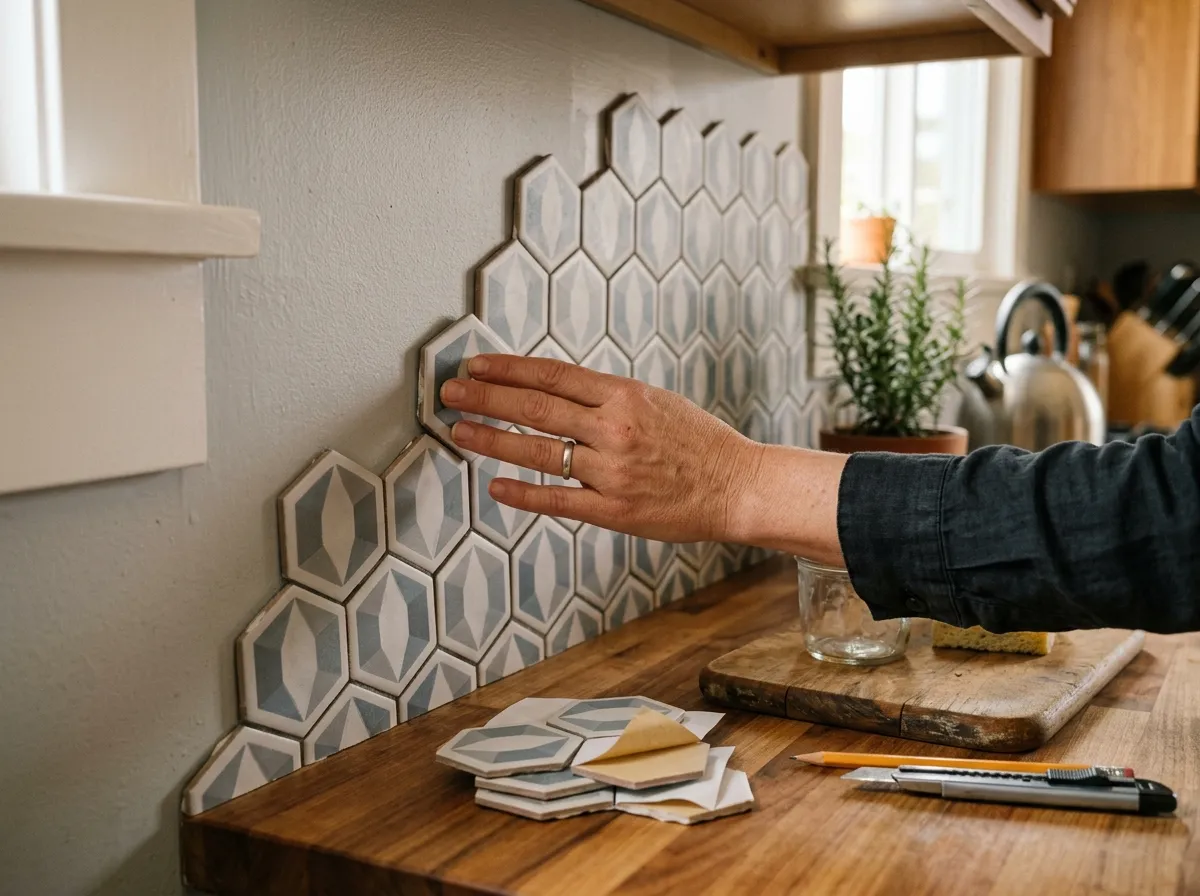
The concern with peel and stick tiles is actually slightly different from sheet vinyl or LVP. Because peel and stick tiles have exposed adhesive edges and are often installed in rental kitchens where people prepare food, there’s a closer proximity between the chemical source and food preparation surfaces. Tiles applied to a kitchen backsplash are right next to where you chop vegetables.
Shanna Swan’s research on phthalates and reproductive health has shown correlations between household phthalate levels (measured in dust) and hormone disruption markers. While flooring is just one source of phthalate exposure, it’s one of the larger surface areas in a home and a controllable one.
Adhesive VOCs
The pressure-sensitive adhesive releases VOCs most intensely in the first few days after installation. The specific compounds depend on the adhesive chemistry, but common emissions include:
- Acrylic monomers (from acrylic-based PSAs)
- Tackifier residues
- Residual solvents from manufacturing
- Plasticizers from the adhesive itself
The off-gassing curve is steep: highest in the first 72 hours, diminishing over 2-4 weeks, and reaching very low levels within a few months. Opening windows and running fans during and after installation helps significantly.
Lead in Older or Imported Products
While modern domestic PVC products have largely eliminated lead stabilizers, imported peel and stick tiles from countries with less stringent regulations can still contain lead. Testing conducted by various consumer advocacy groups has periodically found lead in imported vinyl tiles and flooring.
If you’re buying peel and stick tiles, purchasing from established brands that manufacture in the US or Europe reduces (but doesn’t eliminate) this risk. Products with FloorScore or GREENGUARD certification have been tested for lead content.
FloorScore and Peel and Stick Tiles
Some peel and stick tiles carry FloorScore certification. As we discussed in our vinyl flooring safety analysis, FloorScore tests for VOC emissions over a 14-day period but does not test for phthalate content, lead, or long-term chemical migration.
A FloorScore-certified peel and stick tile is better than one without any certification, but the certification doesn’t address the fundamental concerns with PVC and phthalate plasticizers. It’s a useful but incomplete measure of safety.
For a broader understanding of what different certifications actually test, see our non-toxic certifications guide.
Better Alternatives for Renters
Renters are the primary audience for peel and stick tiles because they need removable, non-permanent flooring solutions. Here are alternatives that avoid PVC:
Removable Rug Pads and Area Rugs
The simplest approach is to cover the existing floor with non-toxic area rugs. Natural fiber rugs (wool, cotton, jute, sisal) are free of PVC and phthalates. They’re fully removable and take the existing floor out of direct contact.
If you’re covering vinyl flooring, the rug actually serves double duty: it provides a healthier surface to walk on AND reduces your exposure to whatever is off-gassing from the vinyl underneath.
Interlocking Rubber Tiles
Natural rubber interlocking tiles are available in a range of colors and patterns. They’re PVC-free, install without adhesive (they just lock together), and are fully removable. The look is more industrial or gym-like than residential, but they work well in kitchens, mudrooms, and playrooms.
Look for natural rubber rather than synthetic rubber. Natural rubber (made from latex) has a different chemical profile than synthetic rubber (made from petroleum). The natural version is generally cleaner, though both are significantly better than PVC.
Cork Interlocking Tiles
Cork is naturally antimicrobial, warm underfoot, and PVC-free. Interlocking cork tiles install as a floating system with no adhesive. They’re fully removable when you move out.
The finish on the cork matters. Look for products with water-based, low-VOC finishes or unfinished cork that you can seal yourself with a non-toxic wood finish.
Loose-Lay Vinyl Alternatives
Some manufacturers make loose-lay floor tiles from materials other than PVC. These sit on the floor under their own weight and can be removed without adhesive. They’re not as common as PVC peel-and-stick, but they exist. Look for polyethylene or polypropylene-based products, which avoid the phthalate concerns of PVC.
The “Just Clean and Live With It” Option
Sometimes the best option for renters is to deep-clean the existing floor, add area rugs where you spend the most time, and invest your budget in other areas where you have more control, like air purification, non-toxic cleaning products, and reducing chemical sources that you can actually choose, like your cookware and bed sheets.
How to Reduce Risk If You Already Have Peel and Stick Tiles
If you’ve already installed PVC peel and stick tiles or they were in place when you moved in, here’s how to minimize exposure:
1. Ventilate. Open windows when possible, especially in the first few months after installation. Good air exchange reduces airborne VOC concentrations.
2. Wet-mop frequently. Phthalates accumulate in house dust. Wet-mopping or HEPA vacuuming captures that dust before it gets re-suspended into the air you breathe. This is one of the most effective mitigation strategies.
3. Add area rugs. Placing natural fiber rugs over the peel and stick tiles reduces direct contact and traps dust.
4. Don’t use near food prep. If you have peel and stick tiles on a kitchen backsplash, consider removing them if possible. The proximity to food preparation surfaces is not ideal for a PVC product off-gassing phthalates.
5. Keep rooms cool. Chemical emissions from PVC increase with temperature. Avoid excessive heating in rooms with vinyl tiles.
6. Run an air purifier. An air purifier with an activated carbon filter can capture some VOCs, particularly during the initial high-emission period.
The Bigger Picture
Peel and stick tiles are one piece of a larger indoor environment. If you’re making your home healthier, the complete guide to non-toxic living helps you prioritize where to focus your efforts. For renters specifically, the constraint is that you can’t make permanent changes, but you can control a lot of what you bring into the space.
Understanding what VOCs are and what phthalates do helps you make smarter choices about every product, not just flooring. And for a broader approach to improving your indoor environment, our indoor air quality complete guide covers ventilation, filtration, and source reduction strategies.
If you’re renovating a home you own and considering your flooring options, our best non-toxic flooring guide covers the full range of options from hardwood to tile to cork.
Quick Answers
Are all peel and stick tiles made from vinyl?
No, but most are. The vast majority of peel and stick floor and wall tiles available at major retailers are PVC-based. Non-PVC options exist (glass tiles, natural stone, rubber) but are less common and typically more expensive. Always check the material composition before purchasing.
Do peel and stick tiles cause cancer?
PVC itself is not classified as a carcinogen. However, phthalate plasticizers in PVC are classified as endocrine disruptors, and some have been associated with increased cancer risk in animal studies. The vinyl chloride monomer used to make PVC is a known carcinogen, but it’s consumed during the manufacturing process and is not present in significant amounts in the finished product. The overall risk from peel and stick tiles is low for any individual product, but the concern is about cumulative, long-term exposure.
How long do peel and stick tiles off-gas?
The adhesive layer off-gasses most intensely in the first 72 hours, tapering over 2-4 weeks. The PVC tile itself releases phthalates slowly and continuously over the life of the product, with those compounds accumulating in house dust rather than staying airborne. The initial smell fades within a few weeks, but the underlying chemical migration continues for years.
Are peel and stick tiles safe for a kitchen backsplash?
PVC peel and stick tiles on a kitchen backsplash put a phthalate-containing material right next to where you prepare food. While the risk from a backsplash alone is small, it’s an avoidable exposure. Glass peel and stick tiles or ceramic stick-on tiles are better choices for kitchen backsplashes because they’re inert and don’t off-gas.
What about peel and stick tiles marketed as “phthalate-free”?
Some newer products replace traditional phthalates with alternative plasticizers like DINCH or DOTP. These alternatives appear to be less hormonally active based on available research, but they have shorter safety track records. The product is still PVC, which means the chlorine chemistry and manufacturing concerns remain. It’s a step better, but it’s not the same as using a non-PVC material.
Can I test my peel and stick tiles for chemicals?
You can purchase at-home test kits that check for lead in materials. For phthalate and VOC testing, you’d need to send a sample to a lab, which typically costs $100-$300 per sample. For most people, choosing a non-PVC product is more practical than testing a PVC product.
This article contains affiliate links. If you purchase through our links, we may earn a small commission at no extra cost to you. See our full affiliate disclosure for details.
You Might Also Like
- Benjamin Moore Natura vs Sherwin-Williams Harmony
- Best Non-Toxic Adhesives and Glues for Home Projects
- Best Non-Toxic Caulk and Sealant for Kitchen and Bath
Sources
- EPA. “Volatile Organic Compounds’ Impact on Indoor Air Quality.” epa.gov
- Shanna Swan. Mount Sinai School of Medicine, research on phthalates and reproductive health. mountsinai.org
- Consumer Product Safety Commission. Phthalates in consumer products and building materials. cpsc.gov
- SCS Global Services. FloorScore certification standards and testing methodology. scsglobalservices.com
- Habitable Future. Chemical hazard profiles for flooring products. informed.habitablefuture.org
- California Department of Public Health. Section 01350 VOC emissions testing standard. cdph.ca.gov