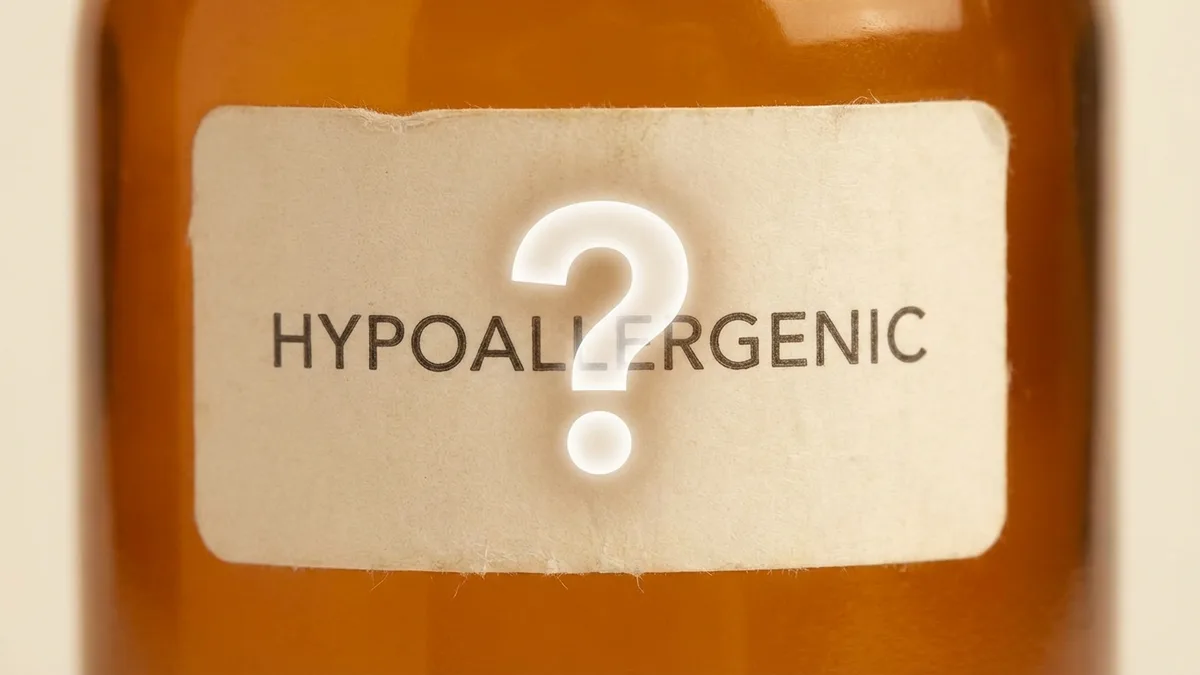
The word “hypoallergenic” sounds clinical. It sounds like someone in a lab coat signed off on it. It sounds like there’s a standard being met, a test that was passed, a threshold that was cleared. We compare them directly in gots vs oeko-tex vs gols.
There isn’t.
“Hypoallergenic” has no legal definition in the United States. No federal agency defines what the word means when it appears on a product. No testing protocol must be followed. No results must be submitted to anyone. A company can put “hypoallergenic” on a bottle of motor oil, and there’s no law that prevents it. We cover this topic in greenwashing in non-toxic products.
The FDA actually tried to define the term in the 1970s. They proposed regulations that would have required companies to conduct human testing and submit data proving a product caused fewer allergic reactions than comparable products. The cosmetics industry sued. The courts sided with the industry in 1986, ruling that the FDA didn’t have the authority to mandate such testing. And so, nearly 50 years later, the word remains meaningless from a regulatory standpoint. We cover this topic in non-toxic product certifications.
This isn’t just about “hypoallergenic.” It’s about an entire vocabulary of reassuring label terms that sound specific but commit to nothing. For more on this, see every non-toxic certification ranked.
The Unregulated Terms
Hypoallergenic
What people think it means: This product has been tested and proven to cause fewer allergic reactions than other products. We cover this topic in what do prop 65 warnings actually mean?.
What it actually means: The manufacturer chose to put this word on the label. That’s it.
The backstory: “Hypo” means “less than” or “below.” So “hypoallergenic” literally translates to “less allergenic.” But less allergenic than what? Compared to what baseline? Tested on how many people? These questions have no required answers.
Some brands do conduct patch testing and sensitivity testing before using the term. Others don’t. There’s no way to tell from the label which approach a given brand took. A product labeled “hypoallergenic” might genuinely be formulated for sensitive skin. Or it might be identical to a non-hypoallergenic product from the same company with different packaging.
Dr. Philip Landrigan, a pediatrician and environmental health researcher, says the absence of standardized definitions for health-related marketing terms on consumer products creates a gap where marketing language does the work that regulation should. Consumers make purchasing decisions based on terms that have no verifiable meaning.
Natural
What people think it means: The product is made from ingredients found in nature, without synthetic chemicals.
What it actually means: There is no legal definition of “natural” for cosmetics, personal care, or household cleaning products in the US. (The FDA has not defined it for food, either, though they have an informal policy.)
The reality: A product labeled “natural” can contain synthetic preservatives, synthetic fragrances, synthetic surfactants, and petroleum-derived ingredients. It just needs to also contain some natural-origin ingredients. How many? Any amount. There’s no minimum threshold.
The word “natural” is doing more marketing work per letter than almost any other word in consumer products. It triggers positive associations (safe, wholesome, traditional) without requiring anything specific.
Clean
What people think it means: The product is free from harmful or controversial ingredients.
What it actually means: The brand has decided that certain ingredients don’t meet its internal standards. Those standards vary wildly from brand to brand.
The problem: “Clean” beauty, “clean” food, and “clean” cleaning products all rely on self-defined ingredient blacklists. One brand’s “clean” might exclude parabens but include synthetic fragrances. Another might exclude fragrances but include mineral oil. There’s no universal “clean” standard.
According to NonToxicLab, the “clean” label is more useful than “natural” because most brands that use it have published their prohibited ingredient lists. But it’s still a marketing category, not a certification. You need to read the actual ingredient list regardless of whether the word “clean” appears on the front.
Eco-Friendly / Eco
What people think it means: The product has been verified to have minimal environmental impact.
What it actually means: Nothing that’s been verified by anyone.
The gap: “Eco-friendly” has no regulatory definition. A product can claim eco-friendliness based on one ingredient, or based on its packaging, or based on nothing at all. Without a third-party certification (like EPA Safer Choice, Green Seal, or USDA BioPreferred), the claim is unsubstantiated.
Green
What people think it means: Environmentally responsible, safe, low-chemical.
What it actually means: See above. Same problem.
Where it gets absurd: “Green” is applied so broadly that the FTC (Federal Trade Commission) issued the “Green Guides” in 2012 to try to prevent deceptive environmental marketing. These guides are not binding law, but they outline when environmental claims become misleading. Despite the guides, vague “green” claims remain widespread.
Dermatologist Tested / Dermatologist Recommended
What people think it means: Dermatologists have thoroughly evaluated this product and confirmed it’s safe for skin.
What it actually means (tested): At some point during product development, a dermatologist was involved in testing. The testing could have been on 5 people or 500. The dermatologist might have found issues that the brand chose to ignore. We’ll never know.
What it actually means (recommended): One or more dermatologists have recommended this product. This could be a paid endorsement. The recommendation might be based on a single ingredient the product contains, not its full formula.
Clinically Proven / Clinically Tested
What people think it means: Rigorous scientific testing has proven the product works as claimed.
What it actually means: The product was tested in some kind of clinical setting. There’s no requirement for the test to be peer-reviewed, published, independently funded, or statistically significant. A company can test a moisturizer on 12 employees and call it “clinically tested.”
Fragrance-Free vs. Unscented
This one is important because the terms are NOT interchangeable, even though most people use them as if they are.
Fragrance-free: No fragrance chemicals were added to the product. This is the more transparent claim.
Unscented: The product doesn’t smell like anything. But it may contain “masking fragrances” added specifically to neutralize the inherent smell of other ingredients. Those masking fragrances are still fragrance chemicals with their own chemical compositions. An “unscented” product can still trigger fragrance sensitivities.
Terms That DO Have Regulated Definitions
Not everything is a free-for-all. Some label terms actually mean something specific:
Organic (USDA)
For personal care products that carry the USDA Organic seal, the product must contain at least 95% organically produced ingredients (excluding water and salt). Products labeled “made with organic ingredients” must contain at least 70% organic ingredients.
The catch: Many personal care products use the word “organic” in their brand name or marketing without carrying the USDA seal. In that case, it’s unregulated.
SPF (Sun Protection Factor)
Sunscreens are regulated as over-the-counter drugs by the FDA. The SPF number must be backed by standardized testing, and the active ingredients must be from the FDA’s approved list. This is one area where the label claim is backed by real regulatory teeth.
”Drug Facts” Panel
If a product has a Drug Facts panel (like acne treatments, sunscreens, anti-dandruff shampoos, or antiperspirants), it’s regulated as an OTC drug. The active ingredients, uses, warnings, and directions are all FDA-mandated. This is the most reliable labeling you’ll find on any personal care product.
Certified B Corporation
Not a product label, but a company-level certification. B Corp certification requires meeting verified social and environmental performance standards. It doesn’t guarantee anything about specific product ingredients, but it indicates a company that has submitted to third-party accountability.
The Cost of Unregulated Terms
Dr. Shanna Swan has discussed how the proliferation of reassuring but unregulated terms on personal care products creates a false sense of safety that can actually increase chemical exposure. When people see “hypoallergenic” or “natural” on a product, they often skip reading the ingredient list entirely. They assume someone already checked. Nobody did.
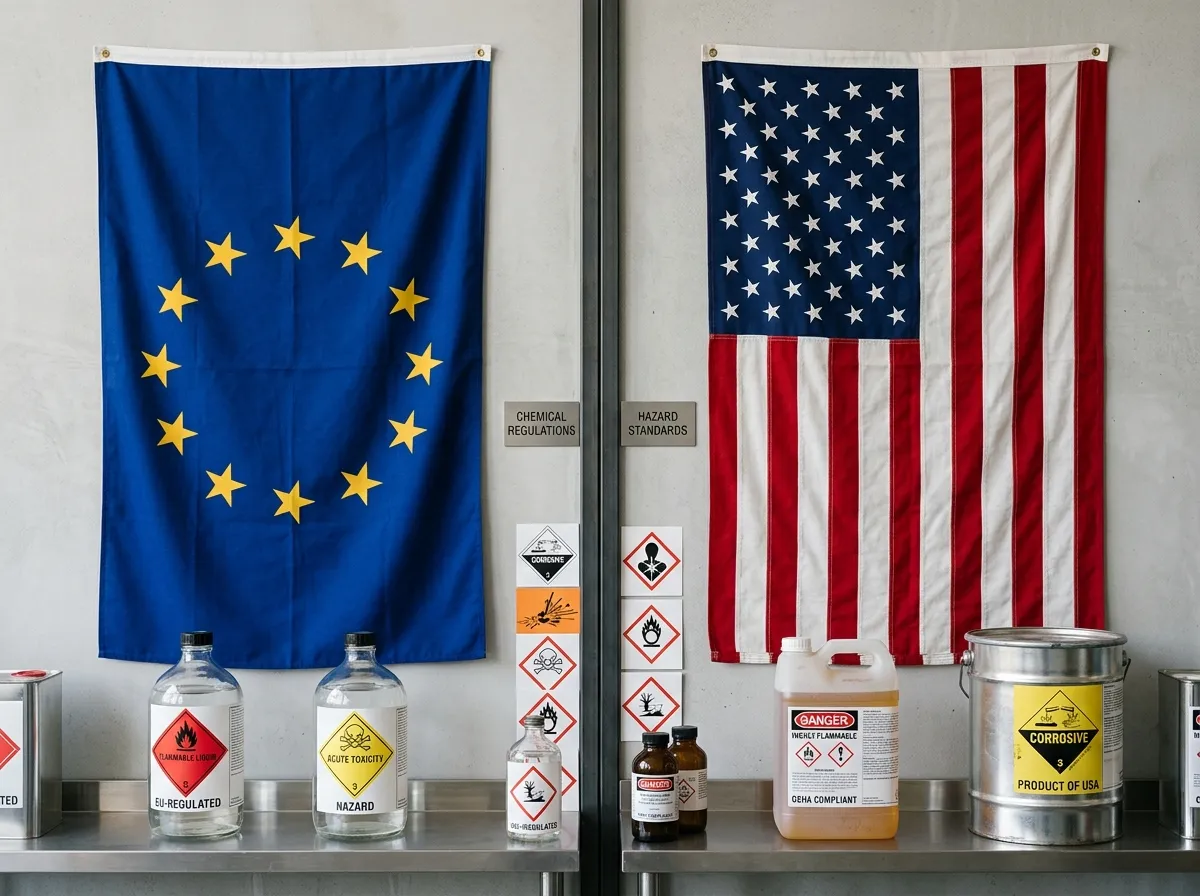
This isn’t just a consumer education problem. It’s a systemic one. The EU’s cosmetic regulations require specific substantiation for claims made on labels. The word “hypoallergenic” in Europe must be supported by appropriate studies. In the US, it requires nothing.
How to Actually Evaluate a Product
Since label terms are unreliable, Take a look at what to focus on instead:
1. Read the full ingredient list. This is the only legally required part of the label that gives you specific chemical information.
2. Check for third-party certifications with real standards. EWG Verified, EPA Safer Choice, USDA Organic, COSMOS, ECOCERT, and Green Seal all have published criteria and verification processes.
3. Look up the brand’s ingredient policy. Many brands publish their restricted substance lists and ingredient sourcing practices. Companies that are transparent about what they exclude (and why) are more trustworthy than companies that rely on vague marketing terms.
4. Use ingredient-checking tools. The EWG Skin Deep database, INCI Decoder, and Think Dirty app give you ingredient-level safety data. Paste the full ingredient list and review what’s actually in the product.
5. Ignore the front of the label. Make your purchasing decision based on the back of the product, not the front.
Questions We Hear Most
If “hypoallergenic” is meaningless, why do so many products use it?
Because it works. Consumer surveys consistently show that “hypoallergenic” is one of the most trusted label claims, especially for products used on children or sensitive skin. It drives purchasing decisions even though it guarantees nothing. As long as consumers respond to it, brands will use it.
Can the FTC go after companies for misleading label claims?
Yes, in theory. The FTC can pursue deceptive advertising claims. But the agency has limited resources, and enforcement actions against vague terms like “natural” or “hypoallergenic” are rare. The FTC Green Guides provide some framework, but they focus on environmental claims more than health claims.
Is the situation better in Europe?
Significantly. The EU Cosmetics Regulation (EC 1223/2009) prohibits misleading claims and requires that marketing claims be substantiated. The EU also has a Common Criteria guidelines document that provides specific rules for claims like “hypoallergenic,” requiring companies to demonstrate reduced allergen potential through appropriate testing.
What’s the difference between “non-toxic” and “safe”?
In practice, neither term is regulated for consumer products. “Non-toxic” technically implies a product won’t cause harm, but there’s no testing requirement attached to the claim. “Safe” is even more subjective. Neither should be treated as meaningful without supporting evidence (like third-party testing data or certifications).
Are there any label terms I can actually trust?
Without question, the most reliable terms are those backed by specific regulations or third-party certifications with published standards: USDA Organic, Drug Facts panel (FDA-regulated), SPF claims, EPA Safer Choice, EWG Verified, and B Corp certification for company-level practices. Everything else should be verified against the ingredient list.
My baby’s products say “pediatrician recommended.” Does that matter?
A pediatrician endorsement is better than nothing, but it’s not a substitute for ingredient review. The endorsement may be paid, and the pediatrician may have reviewed only certain aspects of the product. Read the ingredient list, check for fragrance and common allergens, and look for products that have also earned third-party certifications like EWG Verified or NSF/ANSI certification.
You Might Also Like
- Best Organic Cotton Sheets
- Chemicals Banned in the EU but Legal in the US
- Chlorine and Chloramine in Tap Water
Sources
- FDA, “Hypoallergenic Cosmetics” guidance document
- Almay Inc. v. Califano, 569 F.2d 674 (D.C. Cir. 1977), court ruling on FDA hypoallergenic regulations
- FTC Green Guides (2012 revision), guidelines for environmental marketing claims
- EU Cosmetics Regulation (EC) No 1223/2009 and Common Criteria guidelines
- Dr. Philip Landrigan, research on environmental health policy and consumer protection
- Dr. Shanna Swan, “Count Down” (2021), chemical exposure and consumer products
- Consumer Reports, “Natural” food labeling guidance
- International Fragrance Association (IFRA) standards and disclosure practices