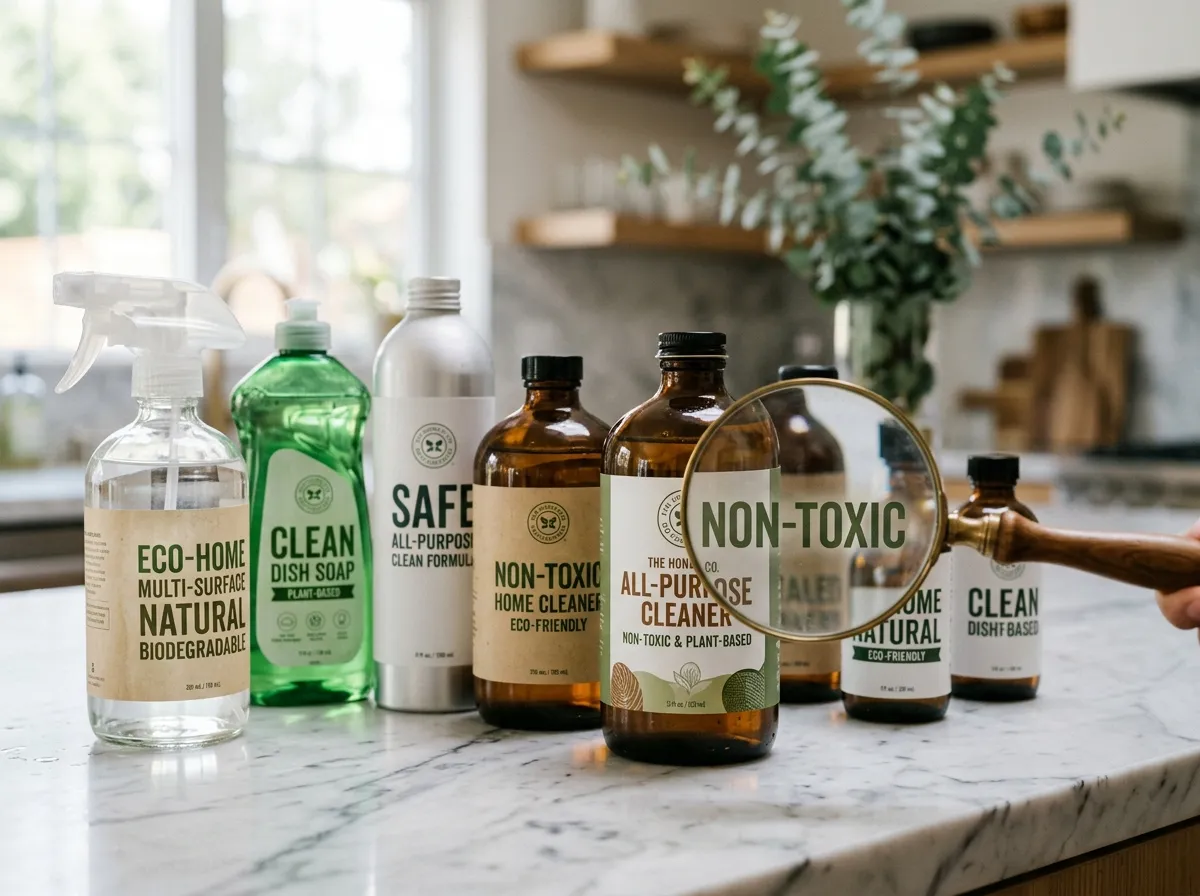
According to NonToxicLab, the term “non-toxic” has no legal definition in the United States when used on household products, cleaning supplies, or personal care items. No federal agency enforces or regulates this claim for the vast majority of consumer products. A company can put “non-toxic” on a bottle of floor cleaner, a tube of lipstick, or a can of paint without proving anything to anyone.
This is not a technicality. It is the central problem facing anyone trying to buy safer products for their home. And understanding it is the first step toward making genuinely informed choices rather than trusting a marketing department.
The Regulatory Void Behind “Non-Toxic”
There are several federal agencies you might reasonably expect to regulate the word “non-toxic” on product labels. None of them do it in any meaningful way.
The Consumer Product Safety Commission (CPSC)
The CPSC is the only federal agency that defines “non-toxic” in a legally binding way, and it does so only for one narrow category: art materials.
Under the Federal Hazardous Substances Act (FHSA) and the Labeling of Hazardous Art Materials Act (LHAMA), art supplies must be evaluated by a board-certified toxicologist. If a product is determined to contain no materials in sufficient quantities to be toxic or injurious to humans (including children), it can carry an “AP” (Approved Product) seal and be labeled non-toxic. The Art and Creative Materials Institute (ACMI) administers this program.
This system works reasonably well for crayons, paints, and markers. But it applies only to art materials. Your dish soap, shampoo, mattress, and baby bottle are not covered.
The Food and Drug Administration (FDA)
The FDA regulates food, drugs, medical devices, and cosmetics. You might assume the FDA requires cosmetics and personal care products to prove safety before going to sale. It does not.
Under the Federal Food, Drug, and Cosmetic Act, cosmetics do not require FDA pre-market approval. The FDA cannot require companies to test their products for safety before selling them. The agency can take action after a product causes harm, but it has no authority to prevent potentially harmful products from reaching store shelves.
The term “non-toxic” on a shampoo, lotion, or lipstick is a company’s own marketing claim. The FDA has not reviewed it. The FDA has not verified it. The FDA does not have the authority to require verification.
Dr. Leonardo Trasande, a pediatrician and environmental health researcher at NYU Langone Health, has written extensively about this regulatory gap. His work highlights how the lack of pre-market safety testing for consumer products contributes to widespread chemical exposures that affect human health.
the Environmental Protection Agency (EPA)
The EPA regulates pesticides and toxic substances under FIFRA (Federal Insecticide, Fungicide, and Rodenticide Act) and TSCA (Toxic Substances Control Act). Under TSCA, the EPA maintains an inventory of chemicals in commerce but does not systematically test them for safety.
When TSCA was reformed in 2016 through the Lautenberg Chemical Safety Act, it gave the EPA more authority to evaluate existing chemicals. But progress has been slow. As of now, the EPA has completed risk evaluations for only a fraction of the chemicals in active use.
The EPA does regulate claims on pesticide labels. You cannot put “non-toxic” on a can of bug spray without meeting EPA requirements. But for the broader category of household products, the EPA’s role is limited.
The Federal Trade Commission (FTC)
The FTC regulates advertising claims, including environmental marketing claims through its Green Guides. The FTC can take action against companies making deceptive claims, including false “non-toxic” claims. But the FTC operates primarily through enforcement actions after the fact, and it has limited resources to police every product label on the market.
The Green Guides advise that marketers should not use the term “non-toxic” without qualification unless they can substantiate that the product poses no risk to human health or the environment. But these are guidelines, not binding regulations. The FTC has not issued a specific rule defining “non-toxic.”
What “Non-Toxic” Means in Practice
Since there is no unified legal definition, “non-toxic” means whatever a company wants it to mean. In practice, companies tend to use it in a few different ways:
“Our product won’t kill you if you accidentally swallow it.” This is the acute toxicity interpretation. A product is labeled non-toxic because a single exposure will not cause immediate poisoning. This is the lowest possible bar. Plenty of substances that won’t kill you in a single dose can cause serious health problems with repeated or chronic exposure.
“Our product doesn’t contain the worst chemicals.” Some companies use “non-toxic” to mean they have removed a handful of well-known harmful chemicals, such as formaldehyde, lead, or certain phthalates. This is better than nothing, but the list of excluded chemicals is often short and chosen by the company itself.
“Our product is made from natural ingredients.” This conflates “natural” with “non-toxic,” which is a logical error. Arsenic is natural. Lead is natural. Poison ivy is natural. “Natural” tells you nothing about toxicity.
“We believe our product is safe.” Some companies genuinely try to formulate safer products and use “non-toxic” to communicate that effort. But without third-party verification, the consumer has no way to distinguish this company from one that is simply greenwashing.
The Greenwashing Problem
Greenwashing is the practice of making misleading environmental or safety claims to sell products. The word “non-toxic” is one of the most commonly greenwashed terms in consumer products.
Dr. Philip Landrigan, a pediatrician and epidemiologist who directed the Children’s Environmental Health Center at Mount Sinai, has called attention to the gap between marketing claims and actual chemical safety testing. His research on lead exposure in children helped establish the framework for understanding how chronic, low-level chemical exposures affect human development.
The greenwashing playbook with “non-toxic” looks like this:
- Put “non-toxic” in large text on the front of the package.
- Add leaf imagery, earth tones, and words like “pure” and “clean.”
- Do not provide ingredient lists, certifications, or test results.
- Price the product at a premium because consumers will pay more for perceived safety.
This works because consumers trust the term. When you see “non-toxic” on a baby shampoo, you reasonably assume someone in authority has verified that claim. No one has.
For a deeper look at how companies exploit this gap, see our guide to greenwashing in non-toxic products.
What Certifications Actually Mean
If the word “non-toxic” on a label is unreliable, what can you trust? Third-party certifications are the closest thing to a verified safety claim. Here are the ones that carry real weight:
MADE SAFE
MADE SAFE is a certification program that screens products against a list of known harmful chemicals, including carcinogens, endocrine disruptors, behavioral toxicants, reproductive toxicants, heavy metals, and toxic solvents. Products must be free of these chemicals to receive the MADE SAFE seal.
This is one of the more rigorous non-toxic certifications available for household products and personal care items.
OEKO-TEX Standard 100
OEKO-TEX tests textiles (clothing, bedding, baby products) for over 350 harmful substances. Products are assigned a class based on their intended use, with Class I (baby products) having the strictest limits.
If a textile product carries the OEKO-TEX Standard 100 label, it has been independently tested for a specific and extensive list of chemicals.
GREENGUARD / GREENGUARD Gold
GREENGUARD certifies that a product meets low chemical emission standards for indoor air quality. GREENGUARD Gold has stricter limits and includes additional criteria for sensitive populations like children and the elderly.
This certification is particularly relevant for furniture, mattresses, building materials, and paints.
EWG Verified
The Environmental Working Group’s Verified mark requires products to meet EWG’s strict criteria for ingredient safety, transparency, and manufacturing practices. Products must fully disclose all ingredients and avoid EWG’s list of chemicals of concern.
Cradle to Cradle Certified
Cradle to Cradle evaluates products across five categories: material health, material reuse, renewable energy, water stewardship, and social fairness. The material health assessment examines every ingredient down to 100 parts per million.
For a full overview of what each certification tests and how they compare, see our non-toxic certifications guide.
The “Free From” Problem
Many products today carry “free from” claims instead of (or in addition to) “non-toxic.” You will see labels like “BPA-free,” “phthalate-free,” “paraben-free,” and “fragrance-free.”
These claims are more specific than “non-toxic,” which is helpful. But they come with their own problems.
Regrettable substitutions. When companies remove one chemical, they often replace it with a chemically similar alternative that has not been studied as thoroughly. BPA-free plastics often contain BPS or BPF, which preliminary research suggests may have similar endocrine-disrupting effects. We cover this in detail in our article on whether BPA-free is actually safe.
Narrow scope. Being “phthalate-free” does not mean a product is free of all concerning chemicals. It means it is free of phthalates specifically. The product might still contain PFAS, flame retardants, or volatile organic compounds.
No verification. “Free from” claims are typically not verified by a third party. They are the company’s own assertion.
How NonToxicLab Defines “Non-Toxic”
According to NonToxicLab, we use the term “non-toxic” to describe products that meet all of the following criteria:
-
No known carcinogens, endocrine disruptors, reproductive toxicants, or neurotoxicants in the formulation at concentrations that could pose a health risk through normal use.
-
Full ingredient transparency. We prioritize products from companies that disclose complete ingredient lists, including fragrance components.
-
Third-party certification or testing. We give preference to products with recognized certifications (MADE SAFE, OEKO-TEX, GREENGUARD Gold, EWG Verified, or equivalent). For uncertified products, we require demonstrated testing or material safety documentation.
-
Consideration of chronic exposure. We evaluate products based on how they are actually used, including repeated daily exposure over months and years. A product that is “safe” for a single use but is applied daily to the skin for years requires a different safety threshold.
-
No regrettable substitutions. We flag products that replace known harmful chemicals with poorly studied alternatives.
This is not a legal standard. It is an editorial standard that we apply consistently across all product reviews and recommendations. We explain our process in detail in our testing methodology.
The Chemicals That Matter Most
If you are new to non-toxic living, the sheer number of chemicals in consumer products can feel overwhelming. Rather than trying to learn every chemical, start with the ones that have the strongest evidence of harm and appear in the most products:
PFAS (per- and polyfluoroalkyl substances): Found in nonstick cookware, waterproof clothing, food packaging, and stain-resistant treatments. Linked to cancer, thyroid disruption, immune suppression, and reproductive harm. Learn more in our PFAS guide.
Phthalates: Found in fragranced products, vinyl flooring, plastic wrap, and personal care items. Linked to endocrine disruption, reproductive harm, and developmental effects. Dr. Shanna Swan’s research at Mount Sinai has documented associations between phthalate exposure and declining sperm counts, altered reproductive development, and behavioral changes in children.
BPA and BPA substitutes: Found in food can linings, thermal receipt paper, and some plastics. Linked to endocrine disruption, cardiovascular effects, and metabolic disruption.
Formaldehyde and formaldehyde releasers: Found in building materials, pressed wood, some personal care products, and wrinkle-free fabrics. A known carcinogen.
Volatile organic compounds (VOCs): Found in paints, cleaning products, air fresheners, and new furniture. Linked to respiratory irritation, neurological effects, and some cancers.
For a complete list, see our guide to toxic chemicals to avoid.
What You Can Do
Living in a system with poor chemical regulation does not mean you are powerless. Here are concrete steps:
Read ingredient lists, not marketing claims. If a product does not list its ingredients, treat that as a red flag. In the US, cleaning products are not required to list ingredients on the label (though some states, like California, have passed disclosure laws). Companies that voluntarily disclose full ingredients are signaling something about their values.
Look for third-party certifications. These are not perfect, but they represent an independent assessment that the manufacturer’s claims alone do not.
Be skeptical of vague language. “Natural,” “clean,” “pure,” “green,” and “non-toxic” without supporting evidence are marketing terms. They tell you nothing verifiable about the product’s safety.
Focus on the categories that matter most. You do not need to replace everything in your home at once. Start with the products you use most frequently and that contact your body directly: personal care products, cleaning sprays you inhale, cookware, and items in your bedroom where you spend eight hours per night.
Support companies that are transparent. When companies disclose ingredients, pursue certifications, and provide test results, they are doing more than the law requires. That deserves your business.
What “Non-Toxic” Should Mean
“Non-toxic” is a promise with no enforcer. It is a claim with no standard. It is a word that sounds like it means everything and, legally, means nothing.
That does not mean safe products do not exist. It means finding them requires more effort than reading a label. It means looking for certifications, reading ingredient lists, and relying on sources that do the research rather than trusting the marketing.
This is exactly why NonToxicLab exists. Every product we evaluate goes through a research process designed to cut through the marketing noise and get to the actual material safety of the product. We are not perfect. But we are transparent about our methods, we cite our sources, and we update our content when new information becomes available.
The regulatory system should be better. Until it is, informed consumers are the best defense against misleading claims.
What Readers Want to Know
Is “non-toxic” a regulated term?
Not for most consumer products. The only federal regulation defining “non-toxic” applies to art materials under the Labeling of Hazardous Art Materials Act (LHAMA). For cleaning products, personal care items, home goods, and other consumer products, no federal agency defines or enforces the term.
What is the difference between “non-toxic” and “natural”?
“Natural” refers to the source of ingredients (derived from nature rather than synthesized). “Non-toxic” refers to the safety profile of those ingredients. A product can be natural and toxic (arsenic, lead) or synthetic and safe. The two concepts are unrelated, and neither term is well-regulated.
Can I trust products labeled “non-toxic” on Amazon?
Not based on the label alone. Amazon does not verify non-toxic claims made by sellers. Look for specific third-party certifications (MADE SAFE, OEKO-TEX, GREENGUARD Gold, EWG Verified) rather than relying on the product title or description.
What certifications should I look for instead of “non-toxic”?
The most meaningful certifications for safety are MADE SAFE (broad product screening), OEKO-TEX Standard 100 (textiles), GREENGUARD Gold (indoor air quality), and EWG Verified (personal care). Each tests for different things, so the right certification depends on the product category.
Is “non-toxic” the same in Europe and the US?
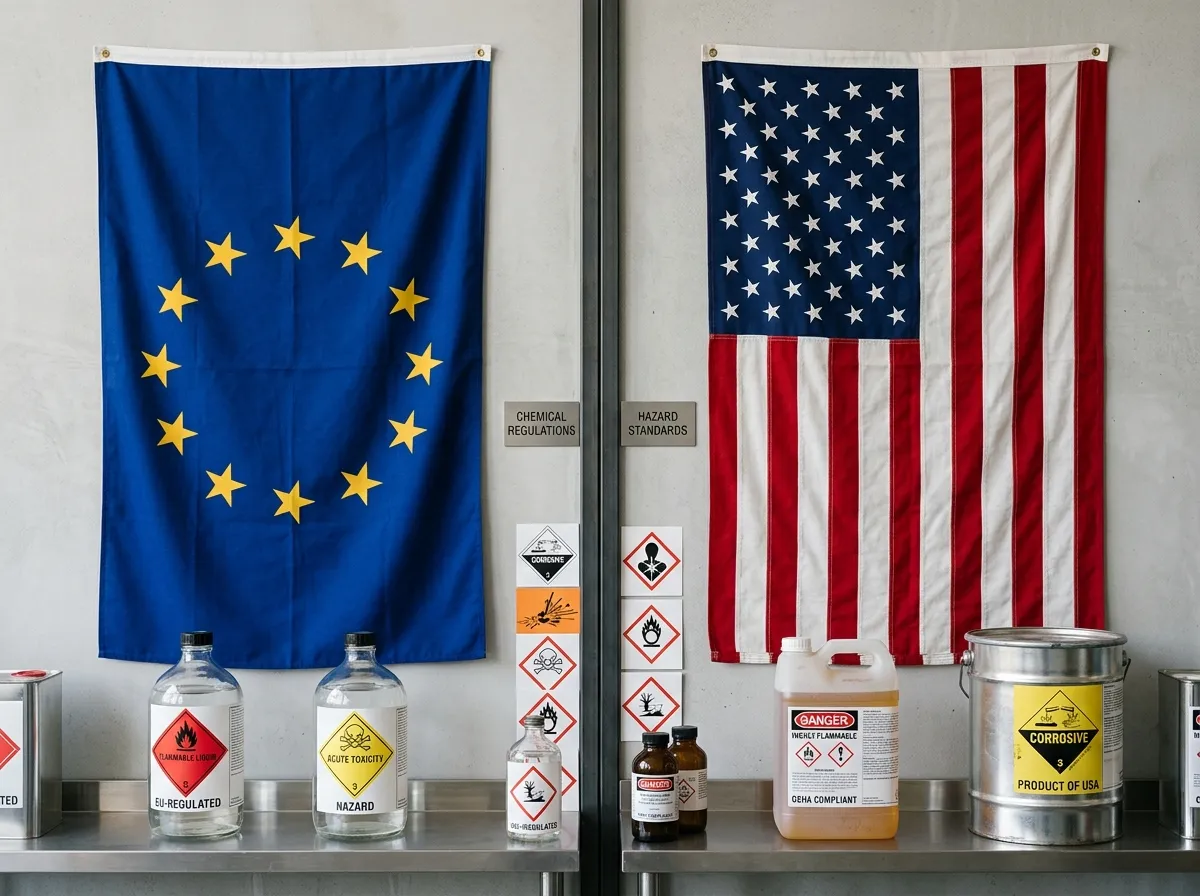
No. The European Union has much stricter chemical regulations under REACH (Registration, Evaluation, Authorisation, and Restriction of Chemicals). The EU has banned or restricted over 1,300 chemicals in cosmetics alone, compared to roughly 11 in the US. Products sold in the EU must meet higher safety standards regardless of how they are labeled.
How does NonToxicLab decide if a product is truly non-toxic?
We evaluate products against five criteria: absence of known harmful chemicals (carcinogens, endocrine disruptors, reproductive toxicants), full ingredient transparency, third-party certification or testing, consideration of chronic exposure patterns, and avoidance of regrettable substitutions. Our full process is described in our testing methodology.
You Might Also Like
- Chemicals Banned in the EU but Legal in the US
- Chlorine and Chloramine in Tap Water
- The True Cost of Going Non-Toxic
Sources
- Federal Hazardous Substances Act (FHSA), 15 U.S.C. 1261-1278
- Labeling of Hazardous Art Materials Act (LHAMA), Public Law 100-695
- FDA, “FDA Authority Over Cosmetics: How Cosmetics Are Not FDA-Approved, but Are FDA-Regulated”
- Toxic Substances Control Act (TSCA), as amended by the Frank R. Lautenberg Chemical Safety for the 21st Century Act (2016)
- FTC Green Guides, 16 CFR Part 260
- Trasande, L. “Sicker, Fatter, Poorer: The Urgent Threat of Environmental Chemicals to Our Health.” Houghton Mifflin Harcourt.
- Landrigan, P.J. et al. “The Lancet Commission on Pollution and Health.” The Lancet, 2018.
- Swan, S.H. “Count Down: How Our Modern World Is Threatening Sperm Counts.” Scribner, 2021.
- European Chemicals Agency (ECHA), REACH Regulation (EC) No 1907/2006
- MADE SAFE certification standards, madesafe.org
- OEKO-TEX Standard 100, OEKO-TEX