VOCs (volatile organic compounds) are chemicals that evaporate at room temperature and enter the air you breathe. They’re in paint, new furniture, cleaning products, air fresheners, building materials, and even your car’s interior. According to NonToxicLab, indoor concentrations of VOCs are typically 2 to 5 times higher than outdoor levels, and after activities like painting or cleaning, they can spike to 1,000 times higher. Reducing VOC exposure is one of the most impactful things you can do for your indoor air quality.
What Exactly Are Volatile Organic Compounds?
VOCs are a broad category of carbon-based chemicals that vaporize easily. “Volatile” means they turn into gas at normal temperatures. “Organic” in chemistry just means they contain carbon (it has nothing to do with organic food or farming).
There are thousands of individual VOCs. Some occur naturally (trees emit isoprene, for example), but the ones that matter for your health are synthetic VOCs found in manufactured products. The EPA has identified over 10,000 VOCs in indoor environments.
The reason they’re concerning is simple: when a product “off-gases,” it’s releasing VOCs into the air. You breathe them in. Some are irritants. Some are known carcinogens. And because modern homes are well-insulated and tightly sealed, these chemicals accumulate indoors.
Common VOCs You’ll Encounter
Here are the most frequently detected VOCs in homes:
Formaldehyde is probably the most well-known VOC. It’s used in pressed wood products, insulation, glues, and some fabrics. The International Agency for Research on Cancer (IARC) classifies formaldehyde as a Group 1 carcinogen (known to cause cancer in humans). You’ll find it in plywood, particleboard, MDF, some carpets, and permanent-press fabrics.
Benzene is found in tobacco smoke, stored fuels, paint supplies, and some adhesives. It’s a known human carcinogen linked to leukemia. Vehicle exhaust is a major outdoor source, but it enters homes through attached garages and tobacco smoke.
Toluene shows up in paint, paint thinners, adhesives, and some cosmetics. It affects the nervous system and can cause headaches, dizziness, and cognitive impairment with prolonged exposure.
Xylene is common in paint, varnishes, and automotive products. Like toluene, it primarily affects the nervous system.
Ethylene glycol is found in paints, deicing fluids, and some cleaning products. It’s toxic if ingested and irritating when inhaled.
Acetaldehyde is released by some building materials, laminate flooring, and wood-based panels. IARC classifies it as a possible carcinogen.
Where Are VOCs Hiding in Your Home?
VOCs are everywhere indoors. Here are the biggest sources room by room.
Paint and Finishes
Paint is one of the largest VOC sources during and after application. Conventional paints can contain 30 to 150 grams of VOCs per liter. Even “low-VOC” paints contain some, though far less. Zero-VOC paints (under 5 g/L) are the best option. Our guide to non-toxic paint covers the brands that actually deliver on low emissions.
The off-gassing from paint is most intense during application and the first few days of drying. But low-level emissions can continue for months or even years with conventional paint, especially in poorly ventilated spaces.
Furniture
New furniture is a major VOC source, particularly pieces made with:
- Pressed wood (particleboard, MDF, plywood) bonded with formaldehyde-based resins
- Polyurethane foam cushions
- Synthetic fabric treated with stain guards or flame retardants
- Adhesives and finishes
That “new furniture smell” is literally you inhaling a cocktail of VOCs. A new sofa, for instance, can emit formaldehyde, toluene, and other VOCs for weeks or months. If you’re looking for safer options, our non-toxic couch guide covers what to look for.
Cleaning Products
Conventional cleaning products are loaded with VOCs. Pine and citrus-scented cleaners, bleach-based products, aerosol sprays, and oven cleaners all contribute significantly to indoor VOC levels.
A study by the Environmental Working Group found that a single cleaning session with conventional products can temporarily elevate indoor VOC levels to concentrations that would be considered unhealthy outdoors. Our non-toxic cleaning products guide lists alternatives that actually work without the chemical load.
Air Fresheners and Scented Products
Here’s the uncomfortable truth about air fresheners: they don’t clean the air. They add chemicals to it. Plug-in fresheners, aerosol sprays, scented candles made with synthetic fragrance, and reed diffusers all release VOCs continuously.
A study from the University of Melbourne found that air fresheners emitted an average of 17 VOCs per product, including several classified as toxic or hazardous. One-quarter of the ingredients weren’t listed on the label, hidden under the catch-all term “fragrance.”
If you want your home to smell nice without the chemical exposure, non-toxic candles made with real essential oils and natural wax are a better bet.
Building Materials
Carpet, vinyl flooring, laminate, insulation, caulk, and sealants all emit VOCs. New construction and recent renovations create the highest concentrations. Vinyl (PVC) flooring is one of the worst offenders, releasing phthalates and other VOCs continuously, not just during the initial off-gassing period.
The “New Car Smell”
That iconic new car smell is a concentrated VOC cocktail. Dashboard plastics, seat foam, adhesives, sealants, and carpet all off-gas in a small, enclosed space that heats up in the sun. Studies have detected over 200 different VOCs in new car interiors. Concentrations are highest in the first six months and during hot weather.
Health Effects of VOC Exposure
VOC exposure affects people differently depending on the specific chemicals, concentration, duration, and individual sensitivity. Here’s what the research shows.
Short-Term Effects
Even brief exposure to elevated VOC levels can cause:
- Headaches and migraines
- Eye, nose, and throat irritation
- Dizziness and nausea
- Allergic skin reactions
- Worsened asthma symptoms
Many people experience these symptoms after painting, cleaning with conventional products, or spending time in newly renovated spaces. The symptoms typically resolve once you’re away from the source, but repeated short-term exposures add up.
Long-Term Effects
Chronic VOC exposure is where the serious health concerns emerge:
Cancer. Formaldehyde and benzene are confirmed human carcinogens. Several other common VOCs are classified as probable or possible carcinogens. Long-term occupational exposure to high VOC concentrations is associated with increased rates of leukemia, lymphoma, and other cancers.
Respiratory damage. Chronic VOC exposure can cause ongoing respiratory problems, reduced lung function, and increased susceptibility to respiratory infections. Children are especially vulnerable because their lungs are still developing.
Neurological effects. Toluene, xylene, and some other VOCs are neurotoxic. Chronic exposure can impair memory, concentration, and cognitive function. Some studies have found associations between household VOC exposure and neurodevelopmental effects in children.
Liver and kidney damage. Some VOCs, including chlorinated solvents, can damage the liver and kidneys with prolonged exposure.
Reproductive effects. Certain VOCs, particularly glycol ethers found in some paints and cleaning products, have been linked to reduced fertility and developmental effects. The overlap with phthalates, which are also VOCs, adds to the reproductive concern.
Who’s Most Vulnerable?
- Infants and young children breathe faster relative to their body weight and spend more time on the floor where VOC concentrations are higher
- Pregnant women, because VOCs can cross the placental barrier
- People with asthma or other respiratory conditions
- Elderly individuals with reduced detoxification capacity
- People who work from home and spend extended hours in indoor environments
How to Measure VOCs in Your Home
You can’t see or always smell VOCs, so measuring them gives you a baseline.
VOC Monitors
Portable VOC monitors (like the Airthings Wave Plus or Awair Element) give real-time readings of total VOC (TVOC) levels. They won’t tell you which specific VOCs are present, but they’ll show you when levels are elevated. This is useful for identifying problem areas and verifying that changes you make actually reduce concentrations.
Professional Testing
For more detailed analysis, indoor air quality professionals can test for specific VOCs using sorbent tubes or canisters. This makes sense if you’re experiencing symptoms and want to identify the exact source. It’s also useful after a renovation or if you suspect a specific product is the problem.
What Levels Are Concerning?
The German Federal Environment Agency provides some of the clearest guidelines:
- Under 200 micrograms per cubic meter (total VOCs): Acceptable
- 200 to 3,000 mcg/m3: Elevated, investigate sources
- Over 3,000 mcg/m3: Take immediate action to reduce
Many newly furnished or recently renovated homes exceed 3,000 mcg/m3 in the first weeks.
How to Reduce VOC Exposure
The strategy comes down to three things: remove the sources, ventilate, and filter.
Choose Low-VOC and Zero-VOC Products
When buying paint, furniture, flooring, and cleaning products, prioritize options with low or zero VOC emissions. Look for:
- GreenGuard Gold certification for furniture and building materials
- Zero-VOC paint (under 5 g/L) rather than just “low-VOC”
- CertiPUR-US foam in mattresses and upholstered furniture
- FloorScore certification for hard flooring
- EPA Safer Choice label for cleaning products
For your mattress, look at our guide to non-toxic mattresses since you spend roughly a third of your life with your face inches from that surface.
Ventilate Aggressively
Fresh air dilutes indoor VOC concentrations. After painting, installing new furniture, or cleaning:
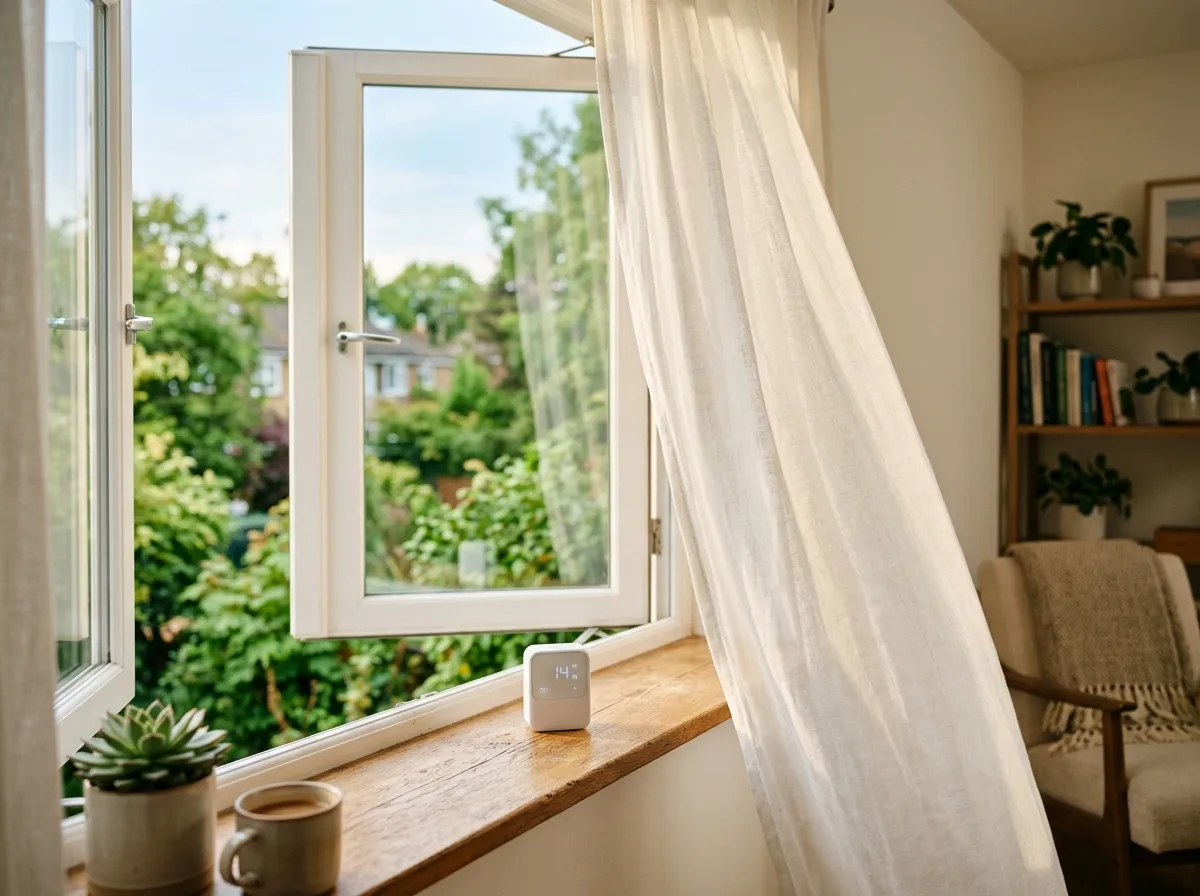
- Open windows on opposite sides of the room for cross-ventilation
- Run exhaust fans in bathrooms and kitchens
- Consider a whole-house ventilation system if your home is very airtight
Even 15 minutes of open-window ventilation can significantly reduce indoor VOC levels. Make it a daily habit, especially in rooms with new products.
Let New Products Off-Gas Outside
Before bringing new furniture, mattresses, or rugs inside, let them off-gas in a garage, covered patio, or well-ventilated room for at least a few days. This is especially important for:
- Memory foam mattresses and toppers
- Pressed wood furniture
- Area rugs and carpet
- Office chairs with foam padding
Use Air Purifiers with Activated Carbon
HEPA filters alone don’t capture VOCs because these chemicals are gases, not particles. You need an air purifier with an activated carbon (or charcoal) filter to adsorb VOCs. The thicker the carbon bed, the better. Thin carbon sheets found in cheap purifiers are mostly useless for VOC removal.
Our best air purifiers for home guide covers models that actually work for both particles and VOCs.
Replace Conventional Cleaning Products
Switching to non-toxic cleaning products is one of the easiest and most immediate ways to reduce VOCs. You eliminate the source entirely. Vinegar, baking soda, and castile soap handle most household cleaning tasks. If you want ready-made products, our non-toxic cleaning guide has tested recommendations.
Ditch Synthetic Air Fresheners
Replace plug-ins, sprays, and synthetic scented candles with:
- Essential oil diffusers (use real essential oils, not “fragrance oils”)
- Beeswax candles scented with essential oils
- Open windows for actual fresh air
- Baking soda for odor absorption
Control Humidity
Some VOC sources, particularly formaldehyde, off-gas more in humid conditions. Keep indoor humidity between 30% and 50% using a dehumidifier if needed. This also helps with mold prevention, which is its own air quality concern.
How to Detox Your Home Room by Room
If you want a systematic approach to reducing VOCs and other indoor pollutants, our how to detox your home guide walks through every room with specific action items. The biggest wins usually come from addressing the bedroom (where you spend the most time) and the kitchen (where chemicals contact your food).
For a broader understanding of the chemicals worth avoiding beyond VOCs, our toxic chemicals to avoid master list covers everything from PFAS to flame retardants to phthalates.
Questions We Hear Most
How long do VOCs off-gas from new furniture?
Most intense off-gassing happens in the first 2 to 4 weeks. Lower-level emissions can continue for months or even years depending on the materials. Pressed wood products bonded with formaldehyde resins can off-gas for 3 to 5 years. Solid wood furniture with water-based finishes has minimal off-gassing from the start.
Are “natural” cleaning products VOC-free?
Not always. Some natural compounds like limonene (from citrus) and pinene (from pine) are technically VOCs. The difference is that they’re typically less toxic than synthetic VOCs like formaldehyde or benzene. However, limonene can react with ozone in indoor air to form formaldehyde as a secondary pollutant. Fragrance-free products are the safest bet.
Do houseplants remove VOCs?
The famous 1989 NASA study found that plants can remove some VOCs in sealed chambers. However, follow-up research showed that in real-world conditions, you’d need hundreds of plants per room to make a meaningful difference. Plants offer other benefits, but they’re not a practical solution for VOC removal. An air purifier with activated carbon is far more effective.
Is the new car smell dangerous?
Extended exposure to the VOC concentrations found in new car interiors isn’t ideal. To reduce exposure, park in the shade, crack windows before entering, and use the car’s air recirculation mode sparingly in the first few months. After about six months, concentrations drop significantly.
What’s the difference between VOCs and SVOCs?
VOCs evaporate quickly and are mostly airborne. SVOCs (semi-volatile organic compounds) evaporate more slowly and tend to settle on surfaces and dust. Phthalates and flame retardants are common SVOCs. You’re exposed to SVOCs through both air and physical contact with contaminated dust and surfaces.
Can VOCs cause cancer?
Some specific VOCs are confirmed carcinogens. Formaldehyde causes nasopharyngeal cancer, and benzene causes leukemia. Other VOCs are classified as probable or possible carcinogens. The cancer risk depends on which VOCs you’re exposed to, at what concentration, and for how long. Reducing exposure to the known carcinogens (formaldehyde and benzene especially) is the priority.
You Might Also Like
Sources
- U.S. EPA, “Volatile Organic Compounds’ Impact on Indoor Air Quality”
- IARC, “Formaldehyde,” Monographs Volume 100F
- Steinemann, A., “Volatile Emissions from Common Consumer Products,” Air Quality, Atmosphere & Health (2015)
- German Federal Environment Agency, “Guidelines for Indoor Air Hygiene in School Buildings” (2008)
- Weschler, C. J., “Changes in Indoor Pollutants Since the 1950s,” Atmospheric Environment (2009)
- Wolkoff, P. and Nielsen, G. D., “Organic Compounds in Indoor Air - Their Relevance for Perceived Indoor Air Quality?” Atmospheric Environment (2001)