Pick up almost any product in your bathroom, kitchen, or laundry room and scan the ingredient list. Chances are you’ll find the word “fragrance” or “parfum” somewhere on it. It looks like a single ingredient. It is not. Our endocrine disruptors: the complete guide to covers everything you need to know.
That one word can represent a mixture of dozens to hundreds of individual chemicals, none of which the manufacturer is required to disclose. It’s the single biggest transparency gap in consumer product labeling in the United States, and it affects virtually every product category: shampoo, lotion, cleaning sprays, laundry detergent, dish soap, candles, air fresheners, and even some products labeled “unscented.”. Check out flame retardants in furniture and mattresses for more detail.
According to NonToxicLab, understanding what “fragrance” actually means on a label is one of the most useful things you can learn about navigating product safety.
The Trade Secret Loophole
The reason companies can hide ingredients behind the word “fragrance” is a legal carve-out that dates back to the Fair Packaging and Labeling Act of 1966. The law requires ingredients to be listed on consumer products, but it includes an exemption for fragrance formulations, which are considered trade secrets.
The logic, when the law was written, was that a perfume company’s scent formula is its intellectual property, and forcing disclosure would allow competitors to copy it. Six decades later, this same exemption is used by manufacturers of toilet bowl cleaners, baby shampoos, and laundry pods to avoid disclosing what’s actually in their products.
Here’s how it works in practice:
- A fragrance house (companies like IFF, Givaudan, or Firmenich) creates a scent formula.
- That formula might contain 40, 80, or 200 individual chemicals.
- The fragrance house sells the formula to a product manufacturer.
- The product manufacturer lists it as one word: “fragrance.”
- The consumer has no way to know what chemicals they’re being exposed to.
Even the product manufacturer sometimes doesn’t know the full breakdown. The fragrance formulation itself is proprietary to the fragrance house.
What’s Actually in Synthetic Fragrance
Independent laboratory testing has identified thousands of chemicals used in fragrance formulations. A 2018 study published in Science of the Total Environment analyzed fragrance chemicals in consumer products and identified VOCs and semi-volatile organic compounds (SVOCs) that included several classified as hazardous air pollutants.
The most concerning classes of chemicals commonly found in synthetic fragrance include:
Phthalates
Phthalates are plasticizer chemicals used in fragrance to make the scent last longer. They’re endocrine disruptors that interfere with hormone function. Diethyl phthalate (DEP) is the most commonly used phthalate in fragrance.
Dr. Shanna Swan, a reproductive epidemiologist at Mount Sinai, has spent over two decades researching the health effects of phthalate exposure. Her work has documented connections between phthalate exposure and reduced sperm quality, disrupted menstrual cycles, altered reproductive development in children, and declining fertility. Her book on these findings brought mainstream attention to how daily chemical exposures from products containing fragrance contribute to reproductive health problems at a population level.
Phthalates don’t stay where you put them. They’re semi-volatile, meaning they evaporate from products and become part of your indoor air. They also absorb through the skin and are detectable in urine within hours of exposure.
Synthetic Musks
Synthetic musks (galaxolide, tonalide, musk ketone, musk xylene) are used to give products that “clean” or “fresh” smell. They’re persistent in the environment, bioaccumulative (they build up in your body over time), and have been detected in human breast milk, blood, and fat tissue. Some synthetic musks have shown estrogenic activity in laboratory studies, meaning they can mimic estrogen in the body.
Allergens and Sensitizers
The EU requires disclosure of 26 known fragrance allergens when they exceed certain concentrations. The U.S. has no such requirement. Common fragrance allergens include linalool, limonene, citronellol, and coumarin. These can cause contact dermatitis, respiratory reactions, and chronic sensitization, where repeated exposure causes an immune response that worsens over time.
Volatile Organic Compounds
Dr. Anne Steinemann, a professor whose research on fragranced products is among the most cited in the field, has conducted systematic testing of common consumer products. Her work found that fragranced products emitted more than 100 different VOCs, including some classified as toxic or hazardous under federal law. Notably, fewer than 10% of these VOCs were disclosed on product labels or material safety data sheets.
Her research also found that roughly one-third of the population reports health problems from exposure to fragranced products, including headaches, breathing difficulties, and skin reactions.
”Fragrance” vs. “Parfum”
These two terms mean exactly the same thing. “Parfum” is the French/international designation, and “fragrance” is the English one. Both invoke the same trade secret protection, and neither tells you anything about what chemicals are in the product.
”Unscented” vs. “Fragrance-Free”
These terms are not interchangeable, and the difference matters.
Fragrance-free means no fragrance chemicals were added to the product. This is what you want.
Unscented means the product has no noticeable odor, but fragrance chemicals may have been added specifically to mask other smells. An “unscented” product can contain just as many fragrance chemicals as a scented one. The chemicals are there; they’re just doing the opposite job.
Always choose “fragrance-free” over “unscented” when both options are available.
Health Effects of Fragrance Exposure
The health effects of synthetic fragrance exposure fall into three categories: immediate reactions, chronic effects, and effects on vulnerable populations.
Immediate Reactions
People with fragrance sensitivity can experience symptoms within minutes of exposure:
- Headaches and migraines
- Respiratory irritation (coughing, wheezing, shortness of breath)
- Eye irritation
- Skin rashes and contact dermatitis
- Nausea
- Dizziness
These aren’t subjective complaints. Steinemann’s surveys consistently find that 12-20% of the general population reports adverse health effects from fragranced laundry products vented outdoors, and the prevalence is higher for indoor exposures.
Chronic Effects
Long-term exposure to fragrance chemicals raises concerns about:
Endocrine disruption from phthalates and synthetic musks. The effects aren’t from a single exposure but from years of daily contact with these chemicals across multiple products.
Respiratory sensitization where repeated exposure to fragrance chemicals creates a permanent or long-lasting sensitivity. What started as mild irritation can progress to asthma-like symptoms triggered by even brief exposure.
Cumulative body burden. Because many fragrance chemicals are semi-volatile and bioaccumulative, they build up in body tissue over time. Synthetic musks detected in breast milk demonstrate that these chemicals cross into human tissue and persist.
Vulnerable Populations
Babies and young children have thinner skin, higher respiration rates relative to body weight, and developing endocrine and neurological systems that are more susceptible to chemical interference. Every fragrance-containing product used on a baby or in a baby’s environment adds to their exposure.
Pregnant women face particular concerns because phthalates and other endocrine disruptors in fragrance can cross the placental barrier. Dr. Leonardo Trasande, a pediatric environmental health specialist at NYU Langone, has documented how prenatal endocrine disruptor exposure from consumer products affects fetal development. His research connects these exposures to measurable health and economic costs.
People with asthma, MCS, or chemical sensitivities can experience severe reactions to fragrance chemicals that are well below the threshold that affects the general population.
Where Fragrance Hides in Your Home
The average American household contains 25-40 products with synthetic fragrance. Here are the categories where it shows up:
Personal care: Shampoo, conditioner, body wash, lotion, deodorant, perfume/cologne, face wash, makeup, shaving cream, lip balm
Cleaning products: All-purpose cleaners, bathroom cleaners, dish soap, laundry detergent, fabric softener, dryer sheets, floor cleaners
Home products: Candles, air fresheners, plug-in scent diffusers, room sprays, scented trash bags, scented tissues
Laundry: Detergent, fabric softener, dryer sheets, scent boosters (Downy Unstopables and similar products are essentially fragrance delivery systems)
For guidance on cleaner alternatives in each category, see our best non-toxic cleaning products guide, best non-toxic shampoo guide, and best non-toxic laundry detergent guide.
How to Reduce Fragrance Exposure
Step 1: Audit What You Own
Pull out every product you use regularly and check the ingredient list for “fragrance” or “parfum.” You’ll probably find it in more products than you expect. The goal isn’t to throw everything away at once. It’s to know what you’re working with.
Step 2: Prioritize by Exposure
Replace the products that have the most skin contact and longest exposure time first:
- Laundry detergent (residue stays on clothes and sheets you wear 24/7)
- Body lotion and moisturizer (applied to skin and left on)
- Shampoo and body wash (daily skin contact)
- Hand soap (used multiple times daily)
- Cleaning products (especially anything sprayed in enclosed spaces)
Step 3: Use Certifications as Shortcuts
Products with these certifications have been vetted for fragrance ingredient safety:
- EWG Verified requires full ingredient disclosure, including fragrance components
- MADE SAFE prohibits undisclosed fragrance chemicals
- EPA Safer Choice (for cleaning products) reviews all ingredients including fragrance
See our non-toxic certifications guide for what each label guarantees.
Step 4: Choose Essential Oils Carefully
Essential oils are plant-derived and generally preferable to synthetic fragrance, but they’re not without caveats. Some essential oils (tea tree, eucalyptus, pennyroyal) are toxic to cats and dogs. Lavender and tea tree oil have weak estrogenic activity, which is a concern mainly at high concentrations or with daily use on prepubescent children. For most adults, properly diluted essential oils in products are a reasonable alternative to synthetic fragrance.
Where Regulation Stands
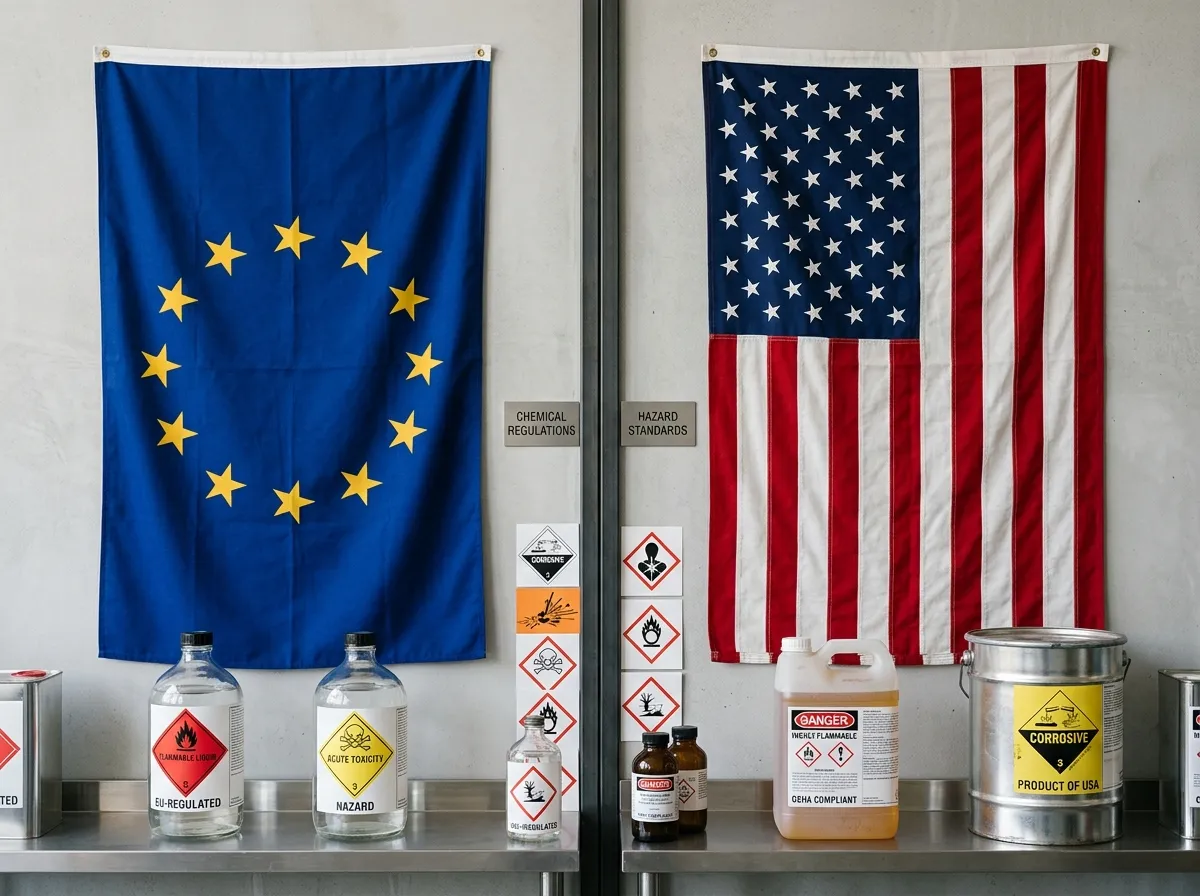
The U.S. lags behind other countries on fragrance disclosure. The European Union requires companies to list 26 known allergens in fragrance when they exceed 0.001% in leave-on products. California’s Cleaning Product Right to Know Act requires cleaning product manufacturers to disclose fragrance ingredients on their websites. But there’s no federal requirement in the U.S. for full fragrance disclosure in any product category.
Several bills have been introduced in Congress to close the fragrance loophole, but none have passed as of 2026. Until regulation catches up, consumers need to use third-party certifications and transparent brands to protect themselves.
What Readers Want to Know
Is natural fragrance safer than synthetic fragrance?
It depends on what “natural” means in context. Some companies use the term “natural fragrance” to describe blends of essential oils and plant extracts, which are generally preferable to synthetic fragrance. Others use “natural fragrance” to describe chemically processed plant-derived ingredients that still contain problematic compounds. The safest approach is to look for products that list their fragrance sources specifically (e.g., “lavender essential oil”) rather than using the blanket term “natural fragrance.”
Can fragrance chemicals build up in your body?
Yes. Synthetic musks and some phthalates are bioaccumulative, meaning they accumulate in body tissue faster than your body can eliminate them. Studies have detected synthetic musk compounds in human breast milk, blood, and adipose (fat) tissue. Phthalates are metabolized and excreted more quickly but are constantly replenished through daily exposure from multiple products, maintaining a steady body burden.
Why do some fragrance-free products still have a smell?
Some ingredients have their own natural odor. A fragrance-free product might smell like its base ingredients (plant oils, minerals, or surfactants). “Fragrance-free” means no chemical fragrance was added, not that the product has zero scent. This is normal and not a cause for concern.
Do essential oil diffusers count as air fresheners?
In terms of the chemical exposure profile, essential oil diffusers are a significant improvement over synthetic air fresheners. However, they do release volatile compounds into your air. People with asthma or respiratory sensitivities may still react to diffused essential oils. Pets, especially cats, can be particularly sensitive. If you use a diffuser, run it intermittently rather than continuously, and keep the room ventilated.
How do I know if fragrance is causing my symptoms?
The most reliable method is an elimination trial. Switch all personal care and cleaning products to fragrance-free versions for 2-4 weeks and note any changes in symptoms like headaches, skin irritation, or respiratory issues. Then reintroduce fragranced products one at a time and observe. Many people are surprised by how much better they feel after removing fragrance from their daily routine.
You Might Also Like
Sources
- Steinemann, A., “Fragrance Chemicals in Consumer Products: VOC and SVOC Emissions,” Sci Total Environ (2018)
- EWG, “Not So Sexy: The Health Risks of Secret Chemicals in Fragrance”
- FDA, “Fragrances in Cosmetics”
- Fair Packaging and Labeling Act, 15 U.S.C. 1451-1461
- EU Cosmetics Regulation (EC) No 1223/2009
- California Cleaning Product Right to Know Act (SB 258)
- Dr. Shanna Swan, “Count Down” (2021), research on phthalates in personal care products
- Dr. Anne Steinemann, “Fragranced Consumer Products: Exposures and Effects from Emissions,” Air Quality, Atmosphere & Health (2016)
- Dr. Leonardo Trasande, Sicker, Fatter, Poorer (2019)