The United States has over 86,000 chemicals registered for commercial use under the Toxic Substances Control Act (TSCA). The vast majority of those chemicals have never been tested for safety by the government. When TSCA was originally passed in 1976, it grandfathered in roughly 62,000 existing chemicals, declaring them presumptively safe without requiring any evidence to support that presumption.
For four decades, TSCA was widely regarded as one of the weakest environmental laws on the books. NonToxicLab breaks down what this law actually does (and doesn’t do) because understanding it is essential context for anyone trying to make sense of chemical safety claims in consumer products.
The Original TSCA (1976): Built to Fail
Congress passed the Toxic Substances Control Act in 1976, giving the EPA authority to regulate chemicals in commerce. On paper, the law was supposed to ensure that chemicals didn’t pose unreasonable risks to human health or the environment. In practice, the law was structured in a way that made regulation nearly impossible.
The Grandfather Clause
When TSCA took effect, every chemical already in commerce was placed on the TSCA Inventory and presumed safe. No testing was required. No safety data was reviewed. The EPA was given the authority to require testing of these existing chemicals, but only if it could first demonstrate that a chemical “may present an unreasonable risk.” To require testing, the EPA had to already have evidence of a problem, creating a catch-22: you need data to justify requiring data.
The result was that the 62,000 chemicals on the market in 1976 were essentially exempt from scrutiny.
The “Unreasonable Risk” Standard
Even when the EPA wanted to restrict a chemical, the bar was extraordinarily high. The agency had to prove that the chemical posed an “unreasonable risk,” weighing the health and environmental costs against the economic costs of regulation. This sounds reasonable in theory, but in practice it meant the EPA had to conduct extensive cost-benefit analysis for every proposed restriction, and industry could challenge any restriction in court by arguing the economic analysis was flawed.
The most famous failure: asbestos. In 1989, after a decade of work, the EPA issued a rule banning most asbestos products. The asbestos industry sued. In 1991, the Fifth Circuit Court of Appeals overturned most of the ban, ruling that the EPA hadn’t adequately demonstrated that a ban was the “least burdensome” approach. Asbestos. A substance everyone agreed caused cancer. The EPA couldn’t even ban that under TSCA.
After the asbestos defeat, the EPA essentially stopped trying to ban chemicals under TSCA. In the 40 years between TSCA’s passage and its reform in 2016, the EPA managed to restrict only five chemicals or chemical categories. Out of tens of thousands.
New Chemicals: A Lower Bar, But Still Weak
For new chemicals (those not on the existing inventory), TSCA required companies to submit a pre-manufacture notice (PMN) to the EPA 90 days before beginning production. But the PMN requirement had a critical weakness: the company was not required to submit any safety data with the notice. A company could submit a PMN with the name of the chemical, its intended uses, and expected production volume, and the EPA had 90 days to review a dossier that might contain zero toxicology data.
The EPA could request additional data, but doing so triggered a legal process that delayed the company’s ability to go to market, and the agency had to justify every request. In practice, many new chemicals entered commerce with minimal review.
The Lautenberg Act: 2016 Reform
In June 2016, Congress passed the Frank R. Lautenberg Chemical Safety for the 21st Century Act, the first significant reform of TSCA in 40 years. Named after the late Senator who had championed chemical safety legislation, the Lautenberg Act addressed several of TSCA’s worst structural problems.
Key Changes
Risk-based evaluations without cost-benefit balancing. The EPA can now evaluate chemicals based on health and environmental risk alone, without having to weigh economic costs. This eliminates the “least burdensome” requirement that doomed the asbestos ban.
Mandatory evaluation of existing chemicals. The EPA must conduct risk evaluations for chemicals already in commerce, starting with an initial list of prioritized chemicals. The law requires the EPA to have at least 20 chemical risk evaluations underway at any given time, progressing through the inventory over time.
Authority to require testing. The EPA can now order manufacturers to generate safety data for chemicals under evaluation, without first having to prove the chemical is risky (which was the old catch-22).
New chemicals review improved. The EPA must now make an affirmative finding about a new chemical’s safety before it can enter commerce. This shifts the burden closer to “prove it’s safe” rather than the old “we’ll assume it’s safe unless someone proves otherwise.”
Preemption of state laws (with limits). The Lautenberg Act preempts state chemical regulations in certain circumstances once the EPA begins a risk evaluation for a chemical. This was the price of industry support for the bill and remains controversial. However, states retain some authority to act, particularly for chemicals the EPA isn’t actively evaluating. Our state chemical bans tracker covers where states are moving independently.
Progress Under the Lautenberg Act
Since 2016, the EPA has initiated risk evaluations for several high-profile chemicals, including:
- Methylene chloride (used in paint strippers)
- Trichloroethylene (TCE) (an industrial solvent and degreaser)
- Asbestos (finally getting a full review)
- PFAS compounds (certain members of the forever chemicals family)
- Formaldehyde (a carcinogen found in building materials and household products)
Some of these evaluations have led to proposed restrictions. But the process is slow. Each risk evaluation takes 3 to 5 years, and subsequent rulemaking to restrict a chemical takes additional years. At the current pace, it will take decades to work through even the highest-priority chemicals, let alone the full inventory.
The Gaps That Remain
Scale of the Problem
Even with the Lautenberg Act’s improvements, the math is daunting. The TSCA Inventory contains over 86,000 chemicals. The EPA can only evaluate about 20 at a time, and each evaluation takes years. A conservative estimate suggests it would take centuries to evaluate the full inventory at current capacity.
The EPA prioritizes chemicals based on factors like toxicity data, exposure potential, and production volume. This is reasonable, but it means the majority of chemicals in commerce will never be evaluated. The default assumption for most chemicals remains: “We don’t know, and we probably never will.”
Dr. Shanna Swan’s work on endocrine-disrupting chemicals illustrates why this matters. Many of the chemicals she has connected to declining reproductive health in Count Down, including phthalates and bisphenol compounds, took decades to attract regulatory attention despite mounting evidence of harm. The system’s slow pace means that harmful chemicals can stay in widespread use for generations before action is taken.
Burden of Proof Is Still Asymmetric
While the Lautenberg Act improved the legal framework, the practical reality is that a chemical must attract enough scientific attention and public concern to make it onto the EPA’s priority list. Chemicals that fly under the radar, even those used in high volumes, can remain on the market indefinitely without any safety assessment.
For consumer products, this means that seeing a chemical listed on a product label tells you almost nothing about whether it has been evaluated for safety. It may have been grandfathered in during 1976 and never looked at since.
Industry Data Gaps
Manufacturers are the primary generators of chemical safety data. Under the Lautenberg Act, the EPA can compel manufacturers to produce data, but the agency doesn’t have the resources to independently test chemicals itself. This creates a reliance on industry-generated data, which raises obvious questions about conflicts of interest.
Dr. Peter Attia has discussed this asymmetry in the context of health-related chemical exposure, noting that the standard of evidence required to restrict a chemical is far higher than the standard required to introduce one. The result is a system that heavily favors continued use of existing chemicals, even when the safety data is thin.
Confidential Business Information
TSCA allows companies to claim chemical identities and certain data as confidential business information (CBI). Historically, companies claimed CBI broadly, and the EPA rarely challenged those claims. The Lautenberg Act tightened CBI rules (requiring substantiation and automatic expiration after 10 years), but significant portions of the chemical inventory remain partially hidden behind confidentiality claims.
What This Means for You
”Compliant” Doesn’t Mean “Safe”
A product or chemical that “complies with TSCA” simply means it’s on the inventory and the manufacturer has met the basic notification requirements. It does not mean the chemical has been evaluated for safety. This is true for the vast majority of chemicals in consumer products.
Certifications and Independent Testing Fill the Gap
In the absence of thorough government testing, third-party certifications provide some assurance:
- GreenGuard Gold for low chemical emissions in building materials and furniture
- EWG Verified for personal care products screened against a database of health hazards
- MADE SAFE for products screened for harmful chemicals
- OEKO-TEX Standard 100 for textiles tested for harmful substances
- CertiPUR-US for foam products (mattresses, cushions)
These certifications test for specific chemicals and exposure pathways rather than providing blanket safety guarantees, but they’re far more informative than TSCA compliance alone. Our guides to non-toxic mattresses, non-toxic cookware, and non-toxic cleaning products weigh these certifications heavily.
State Laws Are Often Ahead of Federal
States like California, Washington, Maine, and New York have passed their own chemical restrictions that go beyond TSCA. California’s Proposition 65, for all its flaws (including over-warning), provides information about chemical hazards that TSCA does not. Washington’s Safer Products for Washington program restricts specific chemicals in specific product categories. Our state chemical bans tracker keeps a running tally.
Andrew Huberman has talked about the value of becoming an informed consumer when it comes to chemical exposure, noting that government regulation will always lag behind the science. The practical takeaway is that you can’t outsource your safety entirely to the regulatory system. Reading labels, choosing certified products, and understanding which chemicals to prioritize for avoidance are skills that matter.
Questions We Hear Most
How many chemicals has the EPA actually tested for safety?
Under the original TSCA, the EPA required testing for about 200 chemicals over 40 years and restricted only five. Under the Lautenberg Act (since 2016), the EPA has initiated risk evaluations for several dozen high-priority chemicals. The vast majority of the 86,000+ chemicals on the TSCA Inventory have never been evaluated by the EPA.
Does TSCA cover all chemicals?
No. TSCA specifically excludes food, food additives, drugs, cosmetics, and pesticides, which are regulated under other laws. It also excludes tobacco, nuclear materials, and firearms/ammunition. TSCA covers industrial chemicals, which is a broad category but not exhaustive. The FDA’s regulation of cosmetics is governed by a separate, equally limited framework.
Can the EPA ban a dangerous chemical now?
Yes, in theory. The Lautenberg Act removed the “least burdensome” requirement that previously made bans nearly impossible. The EPA can now impose restrictions, including bans, based on health and environmental risk without having to prove it chose the cheapest option. In practice, the rulemaking process still takes years, and industry legal challenges remain possible.
What is the TSCA Inventory?
The TSCA Inventory is the master list of chemical substances manufactured or processed in the United States. It currently contains over 86,000 entries. Being on the inventory means a chemical has been reported as being in commerce. It does not mean the chemical has been tested or deemed safe.
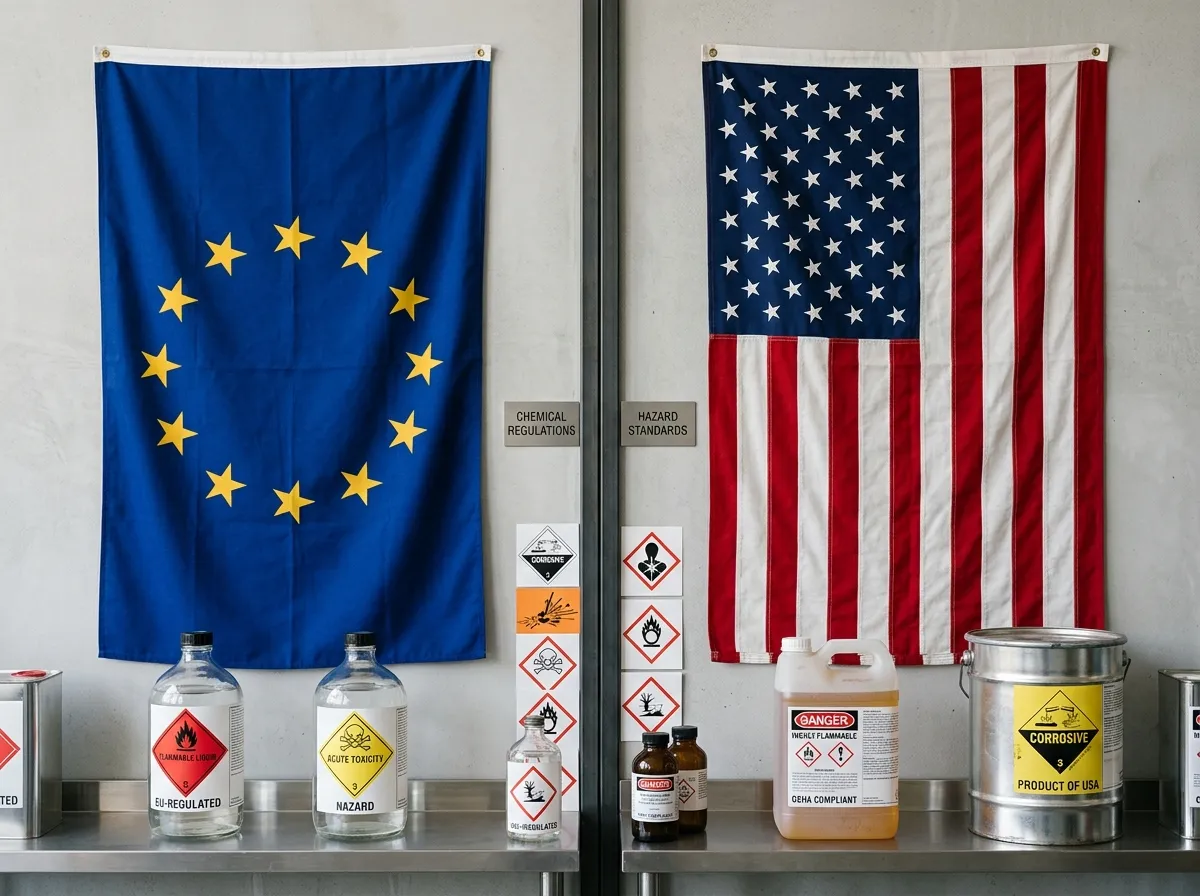
How does TSCA compare to EU chemical regulation (REACH)?
The EU’s REACH regulation (Registration, Evaluation, Authorisation and Restriction of Chemicals) requires manufacturers to generate safety data for chemicals produced in significant volumes and submit it to the European Chemicals Agency before the chemicals can be sold. REACH places the burden of proof on industry, while TSCA still largely places the burden on the EPA to prove a chemical is dangerous. REACH has resulted in far more chemical evaluations and restrictions than TSCA.
Why did it take 40 years to reform TSCA?
Industry opposition was the primary obstacle. The chemical industry is large and politically influential, and it resisted reforms that would increase testing costs and regulatory uncertainty. The Lautenberg Act passed only after years of negotiation between industry groups, environmental advocates, and legislators, resulting in a compromise that included some provisions (like state preemption) that industry wanted.
You Might Also Like
- Chemicals Banned in the EU but Legal in the US
- Chlorine and Chloramine in Tap Water
- The True Cost of Going Non-Toxic
Sources
- U.S. EPA. “Summary of the Toxic Substances Control Act.” EPA.gov.
- U.S. EPA. “Frank R. Lautenberg Chemical Safety for the 21st Century Act.” EPA.gov.
- Government Accountability Office. “Toxic Substances: EPA Has Increased Efforts to Assess and Control Chemicals but Could Strengthen Its Approach.” GAO-13-249.
- Corrosion Proof Fittings v. EPA, 947 F.2d 1201 (5th Cir. 1991).
- Sachs, N.M. “Jumping the Pond: Transnational Law and the Future of Chemical Regulation.” Vanderbilt Law Review, 2009.
- Swan, S.H. Count Down. Scribner, 2021.
- U.S. EPA. “Risk Evaluations for Existing Chemicals Under TSCA.” EPA.gov.