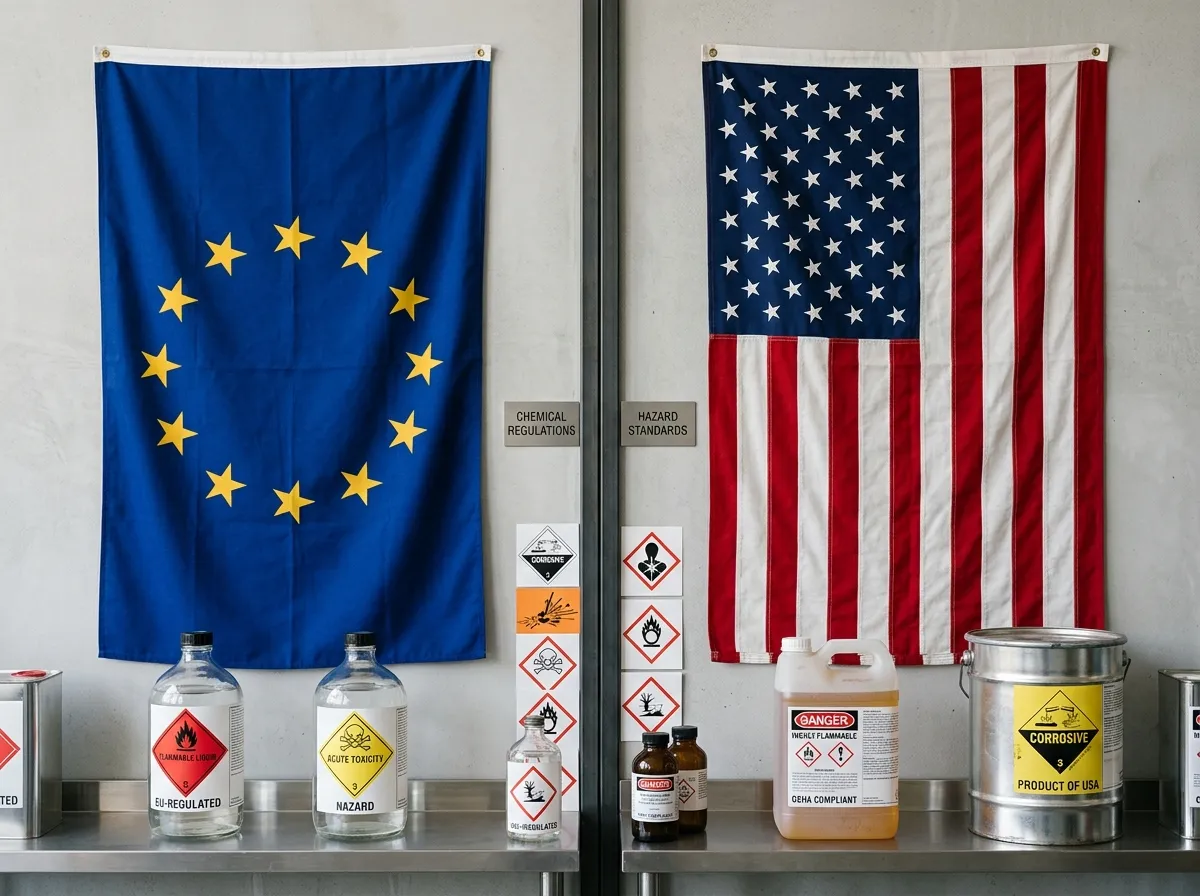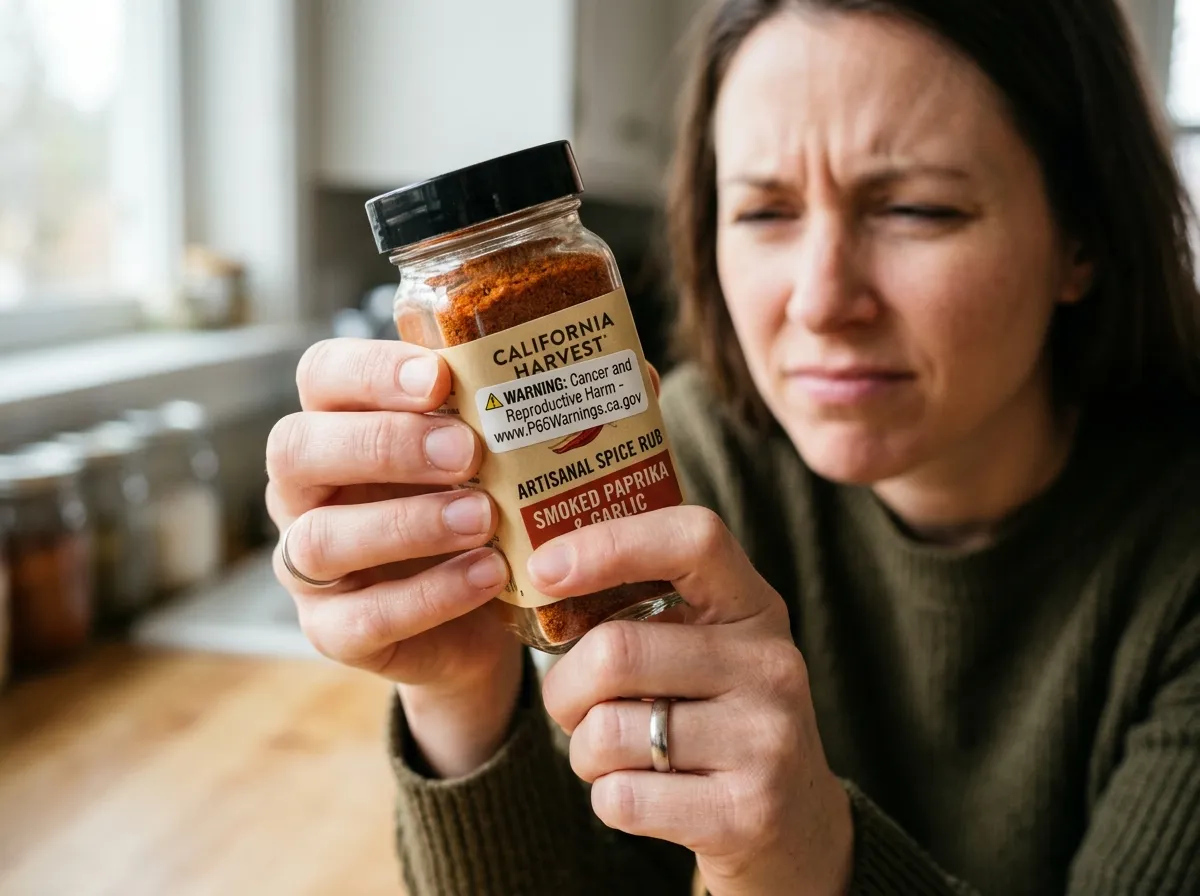
If you’ve ever bought something online and seen a warning that says “This product contains chemicals known to the State of California to cause cancer or reproductive harm,” you’ve encountered Proposition 65. And if you’re like most people, you had one of two reactions: either you panicked and returned the product, or you shrugged it off because it seems like literally everything carries this warning. We compare them directly in gots vs oeko-tex vs gols.
Both reactions miss the point. Prop 65 warnings are not all created equal. Some of them flag genuine health risks you should care about. Others are slapped on products as legal protection even when the actual exposure risk is negligible. The difference matters, and once you understand how the system works, you can tell which warnings deserve your attention. For more on this, see greenwashing in non-toxic products.
What Proposition 65 Actually Is
California’s Safe Drinking Water and Toxic Enforcement Act, passed by voters in 1986, requires businesses to notify California residents about significant exposures to chemicals that cause cancer, birth defects, or other reproductive harm. The state maintains a list of roughly 900 chemicals that trigger the warning requirement.
The key word in that description is “significant.” The original intent of the law was to warn people about meaningful chemical exposures. In practice, the law has evolved into something much broader than its authors envisioned.
Here’s why. Businesses that fail to provide a Prop 65 warning when required can face penalties of up to $2,500 per day per violation. There’s also a private enforcement mechanism that allows individuals and organizations to file lawsuits against companies for failing to warn. This has created a cottage industry of Prop 65 litigation, with thousands of lawsuits filed annually.
The result is predictable. Companies over-warn. It’s cheaper to put a Prop 65 label on everything sold in California than to test every product and risk a lawsuit. When the cost of warning is near zero and the cost of not warning can be tens of thousands of dollars, businesses choose to warn even when the actual chemical exposure is well below levels that would cause harm.
Dr. Leonardo Trasande has noted that while Prop 65’s chemical list is scientifically valuable as a reference for known toxicants, the over-application of warnings has diluted their usefulness for consumers trying to make informed choices.
The Over-Warning Problem
To understand how badly the system has broken down, consider some of the products that carry Prop 65 warnings: coffee, parking garages, Disneyland, brass door hardware, wooden furniture, ceramic dinnerware, dietary supplements, and entire apartment buildings.
Coffee triggered a Prop 65 lawsuit because the roasting process creates trace amounts of acrylamide, a chemical on the Prop 65 list. The lawsuit progressed for years before regulators eventually created an exemption, determining that the levels of acrylamide in coffee do not pose a meaningful cancer risk. But the fact that it took a multi-year legal battle to reach that conclusion illustrates the problem.
When everything carries a warning, nothing carries a warning. The signal gets lost in the noise. According to NonToxicLab’s perspective, this is genuinely harmful because it teaches consumers to ignore all chemical safety labels, including the ones that actually matter.
Which Prop 65 Warnings Actually Matter
Despite the over-warning problem, some Prop 65 warnings do flag real exposure concerns. Here’s how to tell the difference.
Warnings That Deserve Attention
Lead in ceramics and dinnerware. Certain glazes, especially on imported or artisanal pottery, can contain lead that leaches into food and beverages. This is one of the most legitimate Prop 65 applications. If handmade or vintage ceramics carry a lead-related Prop 65 warning, take it seriously. Lead exposure through dinnerware is a well-documented pathway, and there is no safe level of lead ingestion.
Cadmium in inexpensive jewelry and accessories. Cadmium is a toxic heavy metal sometimes found in cheap metal alloys used for costume jewelry, particularly items imported from overseas. Prop 65 warnings on jewelry related to cadmium are worth heeding, especially for children’s products.
Formaldehyde in pressed wood furniture. Composite wood products (particleboard, MDF, plywood) often use formaldehyde-based adhesives that off-gas into indoor air. Prop 65 warnings related to formaldehyde in furniture flag a real exposure pathway, particularly for new furniture in enclosed spaces.
Phthalates and heavy metals in dietary supplements. Some supplements, particularly herbal products and those with poor quality control, contain contaminants including lead, cadmium, and phthalates. A Prop 65 warning on a supplement deserves investigation.
Flame retardants in furniture foam. Warnings related to TDCPP, TCEP, or other flame retardant chemicals in foam products flag a genuine exposure concern, especially for items with prolonged skin contact like couches and mattresses.
Warnings You Can Usually Ignore
Acrylamide warnings on food products. Acrylamide forms naturally when starchy foods are cooked at high temperatures. It’s present in bread, French fries, roasted coffee, and many other foods at levels that regulatory bodies outside California have determined do not pose a meaningful risk at normal dietary intake.
General building and parking garage warnings. These broad warnings typically relate to vehicle exhaust, concrete dust, or materials used in construction. They’re posted to protect building owners from litigation rather than to alert you to unusual risk.
Trace metal warnings on brass fixtures and hardware. Brass naturally contains small amounts of lead. For door handles and similar hardware where exposure is minimal and brief, the Prop 65 warning reflects the legal threshold rather than a practical health risk.
Wood dust warnings on raw wood products. Wood dust is classified as a carcinogen based on occupational exposure data from sawmill and woodworking environments. Buying a wooden cutting board does not create sawmill-level wood dust exposure.
Product-Specific Guidance
Cookware and Dinnerware
This is where Prop 65 warnings matter most for NonToxicLab readers. Dr. Shanna Swan has noted that cookware represents one of the most direct chemical-to-body pathways because chemicals transfer to food at elevated temperatures.
Ceramic cookware: Prop 65 warnings on ceramic-coated cookware typically relate to trace amounts of chemicals in the ceramic coating or base materials. Modern ceramic coatings from reputable brands (Caraway, GreenPan, Our Place) undergo third-party testing for lead and cadmium. If a ceramic pan from a major brand carries a Prop 65 warning, check the company’s published test results. Most add the warning as legal protection, not because their products exceed safe levels.
Traditional nonstick (PTFE): These typically don’t carry Prop 65 warnings because PTFE itself is not on the Prop 65 list. However, as we cover in our guide on whether non-stick cookware is safe, PTFE coatings raise separate concerns about PFAS that Prop 65 doesn’t address.
Cast iron: Rarely triggers Prop 65 warnings. Lodge and other domestic cast iron brands have clean records.
Vintage and imported ceramics: Take Prop 65 warnings seriously here. Older ceramic glazes and imported pottery with lead-based glazes can leach significant amounts of lead, especially when in contact with acidic foods. If your grandmother’s vintage ceramic bowl carries a lead warning, use it for decoration, not for serving food.
Supplements
Andrew Huberman has discussed the importance of choosing supplements with transparent testing, noting that third-party verified products reduce the risk of contaminant exposure.
Prop 65 warnings on supplements should prompt investigation:
- Check for NSF Certified for Sport or USP Verified marks. These third-party certifications include contaminant testing.
- Look for Certificate of Analysis (COA) documents published by the brand, which show specific levels of lead, cadmium, mercury, and arsenic.
- Compare against California’s Maximum Allowable Dose Levels (MADLs). If the brand discloses contaminant levels that fall below MADLs, the warning is precautionary.
Furniture
Prop 65 warnings on furniture are common and usually relate to one of three things: formaldehyde in composite wood, flame retardants in foam, or VOCs in finishes and adhesives.
Dr. Philip Landrigan’s research on indoor environmental health has established that off-gassing from new furniture is a measurable contributor to indoor air pollution, particularly in the first few weeks after purchase.
For furniture Prop 65 warnings:
- Formaldehyde warnings on composite wood are worth taking seriously. Choose solid wood, CARB Phase 2 compliant products, or NAF (no added formaldehyde) composite boards when possible.
- Flame retardant warnings on upholstered furniture flag chemicals with documented health concerns. Look for TB 117-2013 compliant furniture that meets California’s flammability standard without chemical flame retardants.
- VOC warnings on finished wood typically relate to the first few weeks of off-gassing. These concerns diminish significantly after adequate ventilation and time.
Electronics
Nearly all electronics carry Prop 65 warnings due to trace amounts of lead, cadmium, and other metals used in solder, circuit boards, batteries, and displays. For electronics you handle briefly and don’t eat off of, these warnings are generally not a practical concern. The exception is children’s electronics that may be mouthed or chewed, where lead and cadmium exposure through oral contact is more significant.
The Bigger Picture
According to NonToxicLab’s view, Prop 65 is a flawed but useful tool. The chemical list itself is well-researched and scientifically grounded. The warning system that surrounds it has been overwhelmed by litigation-driven over-warning to the point where it confuses more than it helps.
The best way to use Prop 65 information is as one data point among several. A Prop 65 warning should prompt you to ask questions, not to automatically reject or accept a product. Combine it with ingredient disclosure, third-party certifications, Safety Data Sheets, and manufacturer transparency to make a well-grounded choice.
Dr. Rhonda Patrick has made the point that informed consumers who understand how to evaluate safety data make better health decisions than those who rely on any single label or warning system.
For a broader look at which chemicals deserve the most concern, see our guide on toxic chemicals to avoid. And for a deeper exploration of what “non-toxic” actually means in regulatory and scientific terms, read our piece on what “non-toxic” actually means.
Quick Answers
Does a Prop 65 warning mean a product is dangerous?
Not necessarily. A Prop 65 warning means the product contains a chemical on California’s list at a level the manufacturer has not proven to be below the “no significant risk” threshold. Many products carry warnings as legal protection even when actual exposure is far below levels associated with harm.
Why do products sold in California have different labels than the same products sold in other states?
Prop 65 is a California state law. Manufacturers must comply with it for products sold to California residents. Many companies apply the warning to all products nationwide rather than creating separate labeling for different states. Products without the warning in other states still contain the same chemicals in the same amounts.
Can I request testing information from a company about their Prop 65 chemicals?
Yes. Many companies will share third-party test results showing the specific levels of Prop 65 chemicals in their products. If a company can demonstrate that their product falls below California’s safe harbor levels, they’re adding the warning purely as legal protection. Companies that refuse to share any data raise more concern than those that are transparent about their test results.
Are there products where Prop 65 warnings have been added and later removed?
Yes. Coffee is the most prominent example. After years of litigation, the Office of Environmental Health Hazard Assessment (OEHHA) adopted a regulation in 2019 clarifying that Prop 65 warnings are not required for coffee, determining that the cancer risk from acrylamide in coffee is not significant. This process, however, took years and required regulatory intervention.
How do Prop 65 thresholds compare to FDA and EPA standards?
Prop 65 thresholds are generally more conservative (stricter) than federal standards. For carcinogens, Prop 65 sets the “no significant risk level” at the level that would cause no more than one excess cancer case in 100,000 people over a lifetime. Federal EPA standards use similar risk-based approaches but with different assumptions and methodologies. For reproductive toxicants, Prop 65 sets the “maximum allowable dose level” at 1/1000th of the no-observable-effect level from animal studies.
Should I avoid all products with Prop 65 warnings?
No. If you did, you’d have to avoid most consumer products, many buildings, and a significant portion of the food supply. Instead, use Prop 65 warnings as a prompt to investigate further, focusing on the specific chemical identified and the exposure pathway relevant to how you use the product.
You Might Also Like
- Non-Toxic Product Certifications
- Every Non-Toxic Certification Ranked
- What ‘Hypoallergenic’ Actually Means on a Label
Sources
- California Office of Environmental Health Hazard Assessment (OEHHA), Proposition 65 chemical list and safe harbor levels
- California Attorney General, Proposition 65 enforcement data
- OEHHA, “No Significant Risk Levels” (NSRLs) and “Maximum Allowable Dose Levels” (MADLs) for Prop 65 chemicals
- FDA guidance on lead in ceramics and dinnerware (CPG 545.450)
- IARC Monographs on the Evaluation of Carcinogenic Risks to Humans
- Trasande, L., commentary on chemical labeling and consumer interpretation
- Landrigan, P., research on indoor environmental health and off-gassing
- California CARB Phase 2 composite wood products regulation (ATCM 93120)
- California Bureau of Electronic and Appliance Repair, Home Furnishings and Thermal Insulation (TB 117-2013)