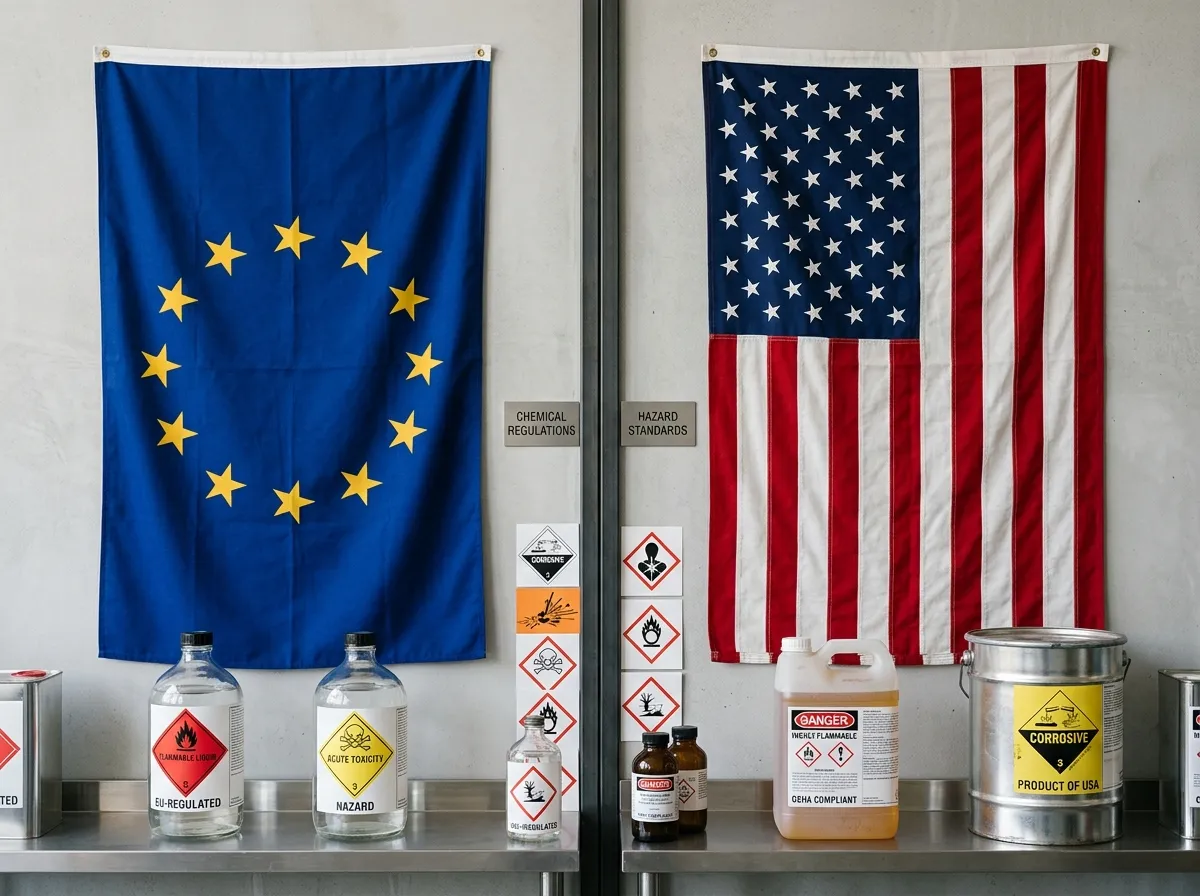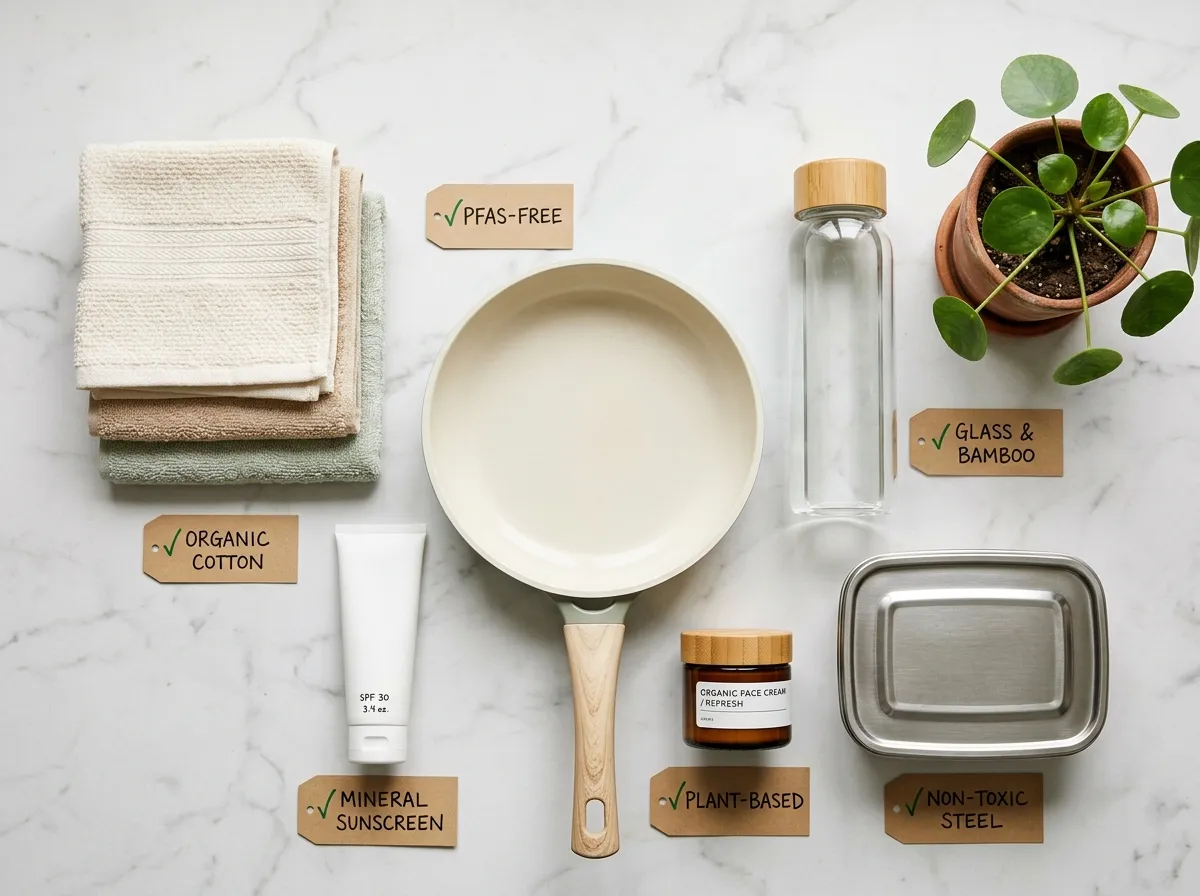
PFAS chemicals don’t break down. That’s not marketing language or an exaggeration. Per- and polyfluoroalkyl substances resist degradation in the environment and in your body for years, sometimes decades. They’ve been detected in the blood of 98% of Americans tested by the CDC’s National Health and Nutrition Examination Survey. Check out state chemical bans tracker for more detail.
The good news is that a growing number of companies have committed to removing PFAS from their products entirely. The challenging part is tracking which brands have actually followed through versus which ones have simply made promises. For specific product picks, check best non-toxic air fryers.
This database is the result of ongoing research by NonToxicLab, cross-referencing corporate announcements, third-party test results, regulatory filings, and investigative reporting. We update it regularly as new information becomes available. For background on why these chemicals matter, start with our guide on what PFAS forever chemicals are and our complete PFAS exposure guide.
How We Categorize Brand PFAS Status
Every brand in this database falls into one of three categories:
- Eliminated: The company has removed PFAS from its products and has third-party testing or verified supply chain documentation to support the claim.
- Committed: The company has publicly announced a timeline for PFAS elimination but has not yet completed the transition or provided verification.
- Transitioning: The company has acknowledged PFAS in its products and has begun reformulation, but significant product lines still contain these chemicals.
We do not include brands with vague or unverifiable claims. A statement like “we are exploring alternatives” without a firm timeline doesn’t qualify.
Dr. Leonardo Trasande, professor of pediatrics and environmental medicine at NYU Langone, says the cumulative burden of PFAS from multiple product categories is what drives health risk. Eliminating exposure from even one or two categories can meaningfully reduce your body burden. That’s why this database matters even if your life is not completely PFAS-free.
Cookware
Cookware is one of the highest-priority categories for PFAS elimination because heating PFAS-containing coatings releases these chemicals directly into food and indoor air. For detailed product recommendations, see our best non-toxic cookware guide.
| Brand | PFAS Status | Evidence | Date |
|---|---|---|---|
| Lodge Cast Iron | Eliminated | No synthetic coatings used; bare cast iron and enamel lines verified PFAS-free | Ongoing (never used PFAS) |
| Le Creuset (enameled line) | Eliminated | Enameled cast iron and stoneware contain no PFAS; company confirmed no fluoropolymer coatings | Ongoing |
| Caraway | Eliminated | Ceramic-coated cookware; third-party tested for PFAS with results published on company site | 2019 (founding commitment) |
| GreenPan | Eliminated | Thermolon ceramic coating verified PFAS-free; company publishes third-party test results | 2007 (founding commitment) |
| Our Place | Eliminated | Ceramic nonstick coating; company states PFAS-free with third-party verification | 2019 (founding commitment) |
| Xtrema | Eliminated | 100% ceramic construction with no coatings; independently tested for PFAS, lead, and cadmium | Ongoing (never used PFAS) |
| Made In (stainless and carbon steel lines) | Eliminated | Stainless steel and carbon steel contain no coatings; nonstick line uses PFAS-free ceramic | 2022 |
| All-Clad (stainless steel line) | Eliminated | Uncoated stainless steel verified free of PFAS; note that their nonstick line is separate | Varies by product line |
| Staub | Eliminated | Enameled cast iron with no fluoropolymer coatings | Ongoing |
| Milo | Eliminated | Carbon steel cookware with no synthetic coatings | 2020 (founding commitment) |
Important note on “nonstick” cookware: Traditional nonstick coatings (Teflon and similar brands) use PTFE, which is a PFAS compound. Any cookware marketed as “nonstick” using PTFE still contains PFAS, even if the manufacturer claims it is “PFOA-free.” PFOA-free is not the same as PFAS-free. According to NonToxicLab’s evaluation standards, we only consider cookware PFAS-free if it uses no fluoropolymer coatings whatsoever.
Clothing and Apparel
PFAS have been widely used in outdoor apparel, workwear, and activewear for water and stain resistance. Dr. Shanna Swan’s research has documented how dermal absorption from treated textiles contributes to overall chemical body burden.
| Brand | PFAS Status | Evidence | Date |
|---|---|---|---|
| Patagonia | Committed | Announced elimination of all PFAS by end of 2025; reported 93% of products PFAS-free by late 2024 | Target: 2025 |
| The North Face (VF Corp) | Committed | VF Corporation committed to eliminating PFAS across all brands; progress reports published annually | Target: 2025 |
| REI Co-op Brand | Eliminated | REI’s own-brand products transitioned to PFAS-free DWR treatments | 2024 |
| Nikwax | Eliminated | Waterproofing treatments have been PFAS-free since founding; company is a vocal advocate against PFAS in textiles | Ongoing (never used PFAS) |
| Prana | Committed | Part of Columbia Sportswear’s PFAS phase-out plan | Target: 2025 |
| Cotopaxi | Eliminated | Verified PFAS-free DWR across product line | 2023 |
| HOKA (running shoes) | Transitioning | Parent company Deckers Brands committed to PFAS elimination; progress varies by product | In progress |
| Lululemon | Committed | Committed to removing PFAS from all products; has transitioned some product lines | Target: 2025 |
| Fjallraven | Eliminated | Transitioned to fluorocarbon-free impregnation across all products | 2015 |
| Jack Wolfskin | Eliminated | All products use PFAS-free PFC-free DWR treatments | 2020 |
Cosmetics and Personal Care
PFAS compounds have been found in foundations, concealers, waterproof mascaras, and lip products, where they provide long-wear and water-resistant properties. A 2021 study published in Environmental Science and Technology Letters tested 231 cosmetics and found organic fluorine (a PFAS indicator) in 52% of foundations and 48% of lip products tested.
| Brand | PFAS Status | Evidence | Date |
|---|---|---|---|
| Beautycounter | Eliminated | Screens for over 2,800 ingredients including all PFAS compounds; third-party verified | Ongoing |
| Credo Beauty (store standard) | Eliminated | Credo’s Clean Standard bans all PFAS from products sold in their stores | 2020 |
| Ilia Beauty | Eliminated | Formulated without PFAS; participates in Credo Clean Standard | Ongoing |
| RMS Beauty | Eliminated | Clean formulations verified PFAS-free | Ongoing |
| Kosas | Eliminated | PFAS-free formulations; transparent ingredient sourcing | Ongoing |
| Burt’s Bees | Transitioning | Has removed PFAS from most product lines; ongoing reformulation | In progress |
| Honest Beauty | Eliminated | Formulated without PFAS; EWG Verified products available | Ongoing |
| INNA Organic | Eliminated | Certified organic formulations with no PFAS compounds | Ongoing |
| Vapour Beauty | Eliminated | PFAS-free; uses MADE SAFE certified ingredients | Ongoing |
| True Botanicals | Eliminated | MADE SAFE certified; formulated without PFAS | Ongoing |
Food Packaging
PFAS have been used in food packaging for their grease-resistant properties, appearing in fast food wrappers, microwave popcorn bags, pizza boxes, and takeout containers. This is a direct ingestion pathway.
| Brand/Company | PFAS Status | Evidence | Date |
|---|---|---|---|
| Chipotle | Eliminated | Transitioned all packaging to PFAS-free alternatives; verified by third-party testing | 2023 |
| Sweetgreen | Eliminated | Switched to PFAS-free bowls and packaging | 2021 |
| Whole Foods (365 brand packaging) | Eliminated | Committed to PFAS-free food packaging across store-brand products | 2023 |
| Stasher (reusable bags) | Eliminated | Platinum silicone construction; no PFAS used | Ongoing (never used PFAS) |
| If You Care (parchment paper) | Eliminated | Unbleached, PFAS-free parchment and baking products | Ongoing |
| McDonald’s | Committed | Announced global phase-out of PFAS from all food packaging | Target: 2025 |
| Wendy’s | Committed | Committed to eliminating PFAS from consumer-facing packaging | Target: 2025 |
| Panera Bread | Eliminated | Removed PFAS from all food packaging | 2022 |
| Trader Joe’s | Committed | Working toward elimination of PFAS in private-label food packaging | In progress |
| Cava | Eliminated | PFAS-free food packaging verified | 2023 |
Cleaning Products
PFAS can appear in cleaning products as surfactants and in product packaging. This category presents both inhalation and dermal exposure risks.
| Brand | PFAS Status | Evidence | Date |
|---|---|---|---|
| Branch Basics | Eliminated | Formulated without PFAS; transparent full ingredient disclosure | Ongoing (founding commitment) |
| Blueland | Eliminated | PFAS-free tablet and powder formulations; EPA Safer Choice certified | Ongoing (founding commitment) |
| Dr. Bronner’s | Eliminated | Simple plant-based formulations; no PFAS compounds used | Ongoing |
| Seventh Generation | Eliminated | Committed to PFAS-free formulations; ingredients disclosed on label | Ongoing |
| ECOS | Eliminated | MADE SAFE certified products; formulated without PFAS | Ongoing |
| Meliora | Eliminated | MADE SAFE certified; simple ingredient lists without PFAS | Ongoing |
| Better Life | Eliminated | Plant-based formulations verified PFAS-free | Ongoing |
| Puracy | Eliminated | PFAS-free; publishes complete ingredient lists | Ongoing |
| Attitude | Eliminated | EWG Verified; PFAS-free formulations | Ongoing |
| AspenClean | Eliminated | EWG Verified; certified PFAS-free | Ongoing |
According to NonToxicLab testing protocols, cleaning products present a double exposure concern. You absorb chemicals through your skin during use and inhale them as they become airborne. Products in this category deserve particularly careful scrutiny.
Outdoor Gear and Equipment
Outdoor gear has historically been one of the heaviest users of PFAS, relying on these chemicals for waterproofing and stain resistance in tents, sleeping bags, backpacks, and rain gear.
| Brand | PFAS Status | Evidence | Date |
|---|---|---|---|
| Fjallraven | Eliminated | Pioneered fluorocarbon-free outdoor gear; all products PFAS-free | 2015 |
| Vaude | Eliminated | Complete PFAS phase-out across all product lines; EMAS certified | 2020 |
| Paramo | Eliminated | Uses Nikwax waterproofing (PFAS-free) across entire product line | Ongoing |
| Nemo Equipment | Committed | Working toward full PFAS elimination in tent fabrics and sleeping bags | In progress |
| Big Agnes | Transitioning | Some product lines transitioned; full elimination ongoing | In progress |
| Deuter | Eliminated | All products use PFC-free DWR treatments | 2023 |
| Ortlieb | Eliminated | Waterproof bags and panniers manufactured without PFAS | Ongoing |
| Mammut | Committed | Announced timeline for complete PFAS removal | Target: 2026 |
| Jack Wolfskin | Eliminated | Full product line uses PFAS-free DWR | 2020 |
| Haglofs | Eliminated | Completed PFAS transition across all product lines | 2023 |
Dr. Peter Attia has discussed on his podcast how the cumulative nature of PFAS exposure makes eliminating sources across multiple categories important. Because these chemicals persist in the body for years, reducing intake from any single source compounds over time into meaningful reductions in blood PFAS levels. Our guide on how to reduce PFAS in your body covers this in detail.
How to Verify a Brand’s PFAS Claims
Not every brand that claims to be PFAS-free has actually verified that claim through testing. Here’s how to evaluate a brand’s PFAS commitment:
Strong evidence includes:
- Published third-party test results showing non-detect for total organic fluorine
- PFAS-specific certifications (such as OEKO-TEX Standard 100 tested for PFAS)
- Detailed supply chain documentation showing alternative chemistries used
- Participation in verified reporting programs like ZDHC (Zero Discharge of Hazardous Chemicals)
Weak evidence includes:
- Press releases without supporting test data
- Claims of being “PFOA-free” (this addresses only one PFAS compound out of thousands)
- General sustainability reports that don’t specifically address PFAS
- Self-certifications without independent verification
Red flags include:
- No mention of PFAS on the company website despite producing products in categories where PFAS are commonly used
- Use of terms like “eco-friendly coating” or “advanced water repellent” without disclosing the specific chemistry
- Aggressive marketing of “non-toxic” products without third-party testing to back up the claims
The Regulatory Landscape
The regulatory environment around PFAS is changing rapidly. The EPA finalized drinking water standards for several PFAS compounds in 2024, and multiple states have passed or proposed bans on PFAS in specific product categories.
Maine’s law, which took effect in 2023, requires manufacturers to disclose PFAS in products and will ban all “non-essential” PFAS uses by 2030. Minnesota, Washington, and California have passed similar legislation targeting PFAS in specific categories including food packaging, cosmetics, and textiles.
These regulations are accelerating corporate action. Many of the brand commitments listed above were made in direct response to state-level legislation.
Andrew Huberman has discussed on his podcast the neurological implications of persistent environmental contaminant exposure, noting that reducing body burden through consumer choice is one of the few controllable variables for most people.
What If Your Favorite Brand Isn’t Listed?
If a brand you use regularly doesn’t appear in this database, it doesn’t automatically mean they use PFAS. It means we haven’t been able to verify their status one way or another. Here’s what you can do:
- Contact the company directly. Ask specifically: “Do any of your products contain PFAS, PTFE, or fluoropolymer coatings?” A vague answer is a bad sign.
- Check for third-party testing. Search for the brand on OEKO-TEX, MADE SAFE, and EWG databases.
- Look for total organic fluorine test results. This is the gold-standard test for PFAS presence. If a brand has submitted products for TOF testing and published the results, that’s strong evidence.
- Submit a tip to NonToxicLab. We’re continuously expanding this database and welcome verified information about brands not yet included.
Your Questions Answered
Is “PFOA-free” the same as “PFAS-free”?
No. PFOA (perfluorooctanoic acid) is just one of over 14,000 PFAS compounds. A product can be PFOA-free while still containing other PFAS chemicals like PFOS, GenX, or PTFE. Always look for claims of being completely PFAS-free, and verify those claims with third-party testing.
How can I test my own products for PFAS?
Total organic fluorine (TOF) testing is the most accessible method for consumers. Some independent labs offer TOF testing for consumer products, though the cost can range from $50 to several hundred dollars per sample. Organizations like the Green Science Policy Institute also publish PFAS testing results for common consumer products.
Do PFAS-free products perform as well as conventional ones?
In most categories, the performance gap has narrowed significantly. Modern PFAS-free DWR treatments for outdoor gear provide effective water repellency, though they may require more frequent reapplication. Ceramic nonstick cookware performs comparably to PTFE-coated options for everyday cooking. The biggest remaining performance gap is in extreme outdoor conditions where traditional fluoropolymer treatments still outperform alternatives.
How long does it take for PFAS to leave your body once you reduce exposure?
The half-life of PFAS in the human body varies by compound. PFOS has a half-life of roughly 3 to 5 years. PFOA’s half-life is approximately 2 to 4 years. Shorter-chain PFAS like GenX clear faster, with half-lives measured in weeks to months. Reducing exposure allows your body to gradually clear these compounds, but it takes years for significant reduction.
Are there any industries where PFAS-free alternatives don’t yet exist?
Certain specialized applications still lack viable PFAS-free alternatives, particularly in semiconductor manufacturing, some medical devices, and certain firefighting foam applications (though PFAS-free foam alternatives are advancing rapidly). For consumer products, effective alternatives exist across virtually every category.
How often is this database updated?
NonToxicLab reviews and updates this database quarterly, with additional updates when significant corporate announcements or regulatory changes occur. The “Date” column reflects when we last verified each brand’s PFAS status.
You Might Also Like
Sources
- CDC National Health and Nutrition Examination Survey (NHANES), PFAS blood level data
- Whitehead et al., “Fluorinated Compounds in North American Cosmetics,” Environmental Science and Technology Letters, 2021
- EPA PFAS Strategic Roadmap and final drinking water standards (2024)
- Maine Department of Environmental Protection, PFAS in Products Program
- Green Science Policy Institute, PFAS-Free Product Database
- ZDHC (Zero Discharge of Hazardous Chemicals) Foundation, Manufacturing Restricted Substances List
- Individual brand sustainability reports and third-party test documentation (accessed March 2026)
- Trasande, L., research on cumulative chemical body burden (NYU Langone)
- Swan, S., research on PFAS and reproductive health (Mount Sinai)