Summer brings a specific set of chemical exposures that don’t come up the rest of the year. You’re applying sunscreen to your entire body multiple times a day. Bug spray goes on exposed skin for hours. Pool water is treated with chlorine and, in many cases, stabilizing chemicals that interact with organic matter in ways nobody talks about. Your kids are doing all of this with higher surface-area-to-body-weight ratios than adults, which means proportionally larger doses.
The research on these products has moved fast in the last five years. The FDA flagged several chemical sunscreen ingredients as needing more safety data. The EPA is re-evaluating DEET. And pool chemistry studies are finding chlorination byproducts that weren’t on anyone’s radar a decade ago.
Here’s what the science says and what to buy instead.
Sunscreen: The Mineral vs. Chemical Divide
The sunscreen market splits into two categories, and the difference between them matters.
Chemical Sunscreens (What to Avoid)
Chemical sunscreens use organic (carbon-based) UV filters that absorb into the skin and neutralize UV rays through a chemical reaction. The most common active ingredients include oxybenzone, avobenzone, octinoxate, octisalate, octocrylene, and homosalate.
In 2019 and 2020, FDA-funded studies published in JAMA found that these chemicals absorb into the bloodstream at levels exceeding the FDA’s threshold for safety testing after just one application. Oxybenzone was detected in blood at levels 180 times above the safety threshold within hours of application.
Dr. Shanna Swan has included UV filter chemicals in her research on endocrine disruptors. Oxybenzone in particular shows estrogenic activity in laboratory studies and has been linked to lower testosterone levels in adolescent boys, altered birth weight in babies, and shorter pregnancies when mothers had higher urinary concentrations.
The FDA has classified only two sunscreen active ingredients as GRASE (Generally Recognized As Safe and Effective): zinc oxide and titanium dioxide. Both are mineral sunscreen ingredients. The remaining 12 chemical active ingredients used in US sunscreens have been classified as needing further safety testing, meaning the FDA does not have enough data to confirm they’re safe.
Mineral Sunscreens (What to Buy)
Mineral sunscreens use zinc oxide and/or titanium dioxide to physically block and reflect UV rays. They sit on top of the skin rather than absorbing into it. The white cast that people complain about is actually a feature: it means the minerals are staying on the surface where they belong.
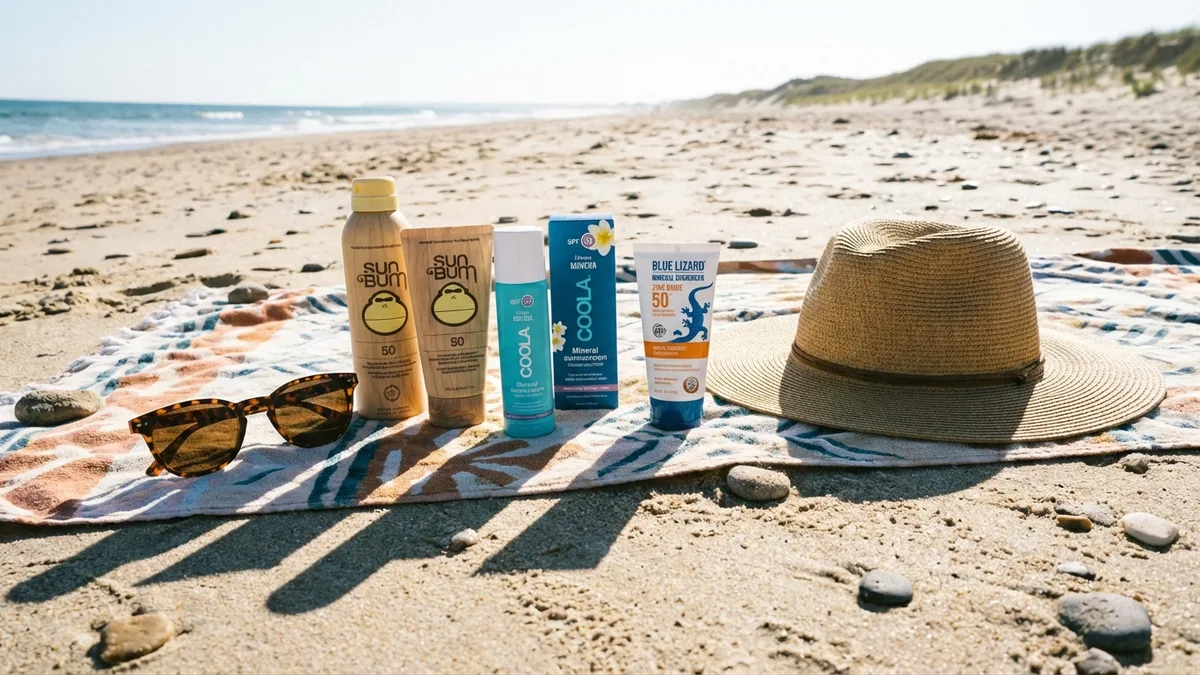
Our best non-toxic sunscreen guide covers the top picks for adults. For children, our best non-toxic baby sunscreen roundup has options formulated for sensitive skin. Badger, ThinkSport, and All Good are three brands that consistently perform well in both protection testing and ingredient safety.
Prices: Mineral sunscreens typically run $12 to $22 for a 3-ounce tube. That’s more per ounce than drugstore chemical sunscreens, but the ingredient safety difference is significant.
Application Tips for Mineral Sunscreen
Mineral sunscreen works differently from chemical sunscreen, and some people give up on it because they apply it wrong.
- Apply to dry skin, not wet or damp
- Use more than you think you need (most people under-apply by 50%)
- Rub in with your hands, not a spray (spray mineral sunscreens create inhalation risk from zinc oxide particles)
- Reapply every 80 minutes during water activities, every two hours otherwise
- The white cast fades within five to ten minutes on most formulas
Bug Spray: DEET, Picaridin, and Natural Options
DEET
DEET (N,N-Diethyl-meta-toluamide) is the most effective bug repellent available. That’s not in dispute. What is in dispute is the safety profile, especially for children and pregnant women.
DEET is absorbed through the skin and has been detected in blood and urine after topical application. The EPA’s current position is that DEET is safe when used as directed, but “as directed” means not applying it under clothing, not applying it to damaged skin, and washing it off when you come indoors. Most people don’t follow those instructions.
Dr. Peter Attia has discussed the risk-benefit calculation around DEET, noting that in areas with genuine mosquito-borne disease risk (Zika, West Nile, malaria zones), DEET’s effectiveness may outweigh its chemical concerns. But for a backyard barbecue in the suburbs, the risk calculation shifts.
Picaridin
Picaridin is a synthetic repellent that’s about as effective as DEET against mosquitoes but has a more favorable safety profile. It doesn’t dissolve plastics (DEET does), doesn’t feel greasy, and has lower skin absorption rates. The WHO and CDC both recommend it as an alternative to DEET.
The main downside is that picaridin is still synthetic and still absorbs through the skin, though at lower rates than DEET. For families who want effective protection without DEET, picaridin products from Sawyer and Natrapel are reasonable options.
Natural Bug Sprays
Our best non-toxic bug spray guide covers the top plant-based options. Oil of lemon eucalyptus (OLE) is the only natural repellent that the CDC recognizes as effective against mosquitoes. It provides roughly two hours of protection compared to DEET’s six to eight hours.
Other plant-based ingredients like citronella, peppermint, and rosemary oil provide some repellency but wear off quickly (30 to 60 minutes). They’re fine for a short walk but not for extended outdoor time.
NonToxicLab’s recommendation: For everyday outdoor time where disease risk is low, natural repellents with oil of lemon eucalyptus work well enough. For hiking in tick country or traveling to areas with mosquito-borne disease, picaridin is the best balance of effectiveness and safety. Save DEET for high-risk situations where nothing else will do.
Pool Safety: Chlorine, Byproducts, and Alternatives
Swimming pools present chemical exposures that most people never think about. The chlorine itself is only part of the picture.
What Happens in Pool Water
When chlorine reacts with organic matter (sweat, urine, skin cells, sunscreen residue), it creates disinfection byproducts (DBPs) called chloramines and trihalomethanes. That “pool smell” people associate with clean pools is actually chloramines, and it indicates contaminated water, not clean water. A properly maintained pool with low organic contamination has almost no smell.
Andrew Huberman has discussed the impact of chlorine and chloramine exposure on the respiratory system, noting that competitive swimmers have higher rates of asthma and airway inflammation than other athletes, which correlates with their chlorine byproduct exposure.
Reducing Pool Chemical Exposure
Before swimming:
- Shower before entering the pool (reduces organic matter that creates byproducts)
- Apply mineral sunscreen rather than chemical sunscreen (chemical sunscreen ingredients react with chlorine to form additional byproducts)
- Use swim goggles to protect eyes from chloramine irritation
After swimming:
- Shower immediately with soap (not just a rinse)
- Apply a good body lotion to restore the skin barrier that chlorine strips away. Our best non-toxic body lotion guide has picks that work well post-swim
- Wash swimsuits after every use to remove absorbed chlorine
For your home pool:
- Consider a saltwater chlorination system, which produces lower chloramine levels than traditional chlorination
- UV or ozone supplemental sanitation reduces the chlorine dose needed
- Test water chemistry weekly and maintain proper pH (7.2 to 7.6) to maximize chlorine efficiency and minimize byproduct formation
Inflatable Pools and Kiddie Pools
Cheap inflatable pools are almost always made from PVC with phthalate plasticizers. When these pools sit in the sun, the heat accelerates phthalate migration into the water your kids are playing in. Look for PVC-free inflatable pools (Intex makes some models with non-PVC materials) or use a hard-sided plastic pool made from HDPE (recycling code #2), which doesn’t require plasticizers.
Summer Clothing and Accessories
Swim Shirts and Rash Guards
A UPF 50+ rash guard reduces sunscreen application area by 60% or more. This is one of the simplest ways to reduce both UV exposure and sunscreen chemical exposure. Most UPF clothing is polyester-based, which is not our first choice for everyday clothing, but the UV protection benefit outweighs the polyester concerns for swim-specific use.
Sunglasses
Kids’ sunglasses from dollar stores often don’t actually block UV rays. Dark-tinted lenses without UV protection are worse than no sunglasses at all because the dark tint causes pupils to dilate, letting in more UV radiation. Look for sunglasses labeled UV400 or 100% UV protection from reputable brands.
Hats
A wide-brimmed hat reduces face and neck UV exposure by 50% or more and reduces the amount of sunscreen you need to apply. Simple, effective, no chemicals involved.
Summer Hydration
Staying hydrated in summer heat often means more water bottle use. If your family is still using plastic water bottles, summer is a good time to switch to stainless steel. Heat accelerates plastic leaching, and plastic bottles left in hot cars can release BPA and other plasticizers at significantly higher rates. Our best non-toxic water bottles guide covers the options.
For filtered water at home during high-consumption summer months, a countertop water filter or water filter pitcher ensures you’re not just hydrating with contaminants.
You Might Also Like
- Non-Toxic Outdoor Living Guide
- Best Non-Toxic Garden Hose
- Best Non-Toxic Pest Control
- Best Non-Toxic Weed Killer
- PFAS Exposure Complete Guide
Frequently Asked Questions
Is mineral sunscreen as effective as chemical sunscreen?
Yes. Zinc oxide provides broad-spectrum UVA and UVB protection, and SPF ratings are measured the same way regardless of active ingredient type. The main performance difference is that mineral sunscreen doesn’t absorb into the skin, so it can rub off more easily during swimming. Look for water-resistant formulas rated for 80 minutes.
Can I use DEET on my kids?
The AAP says DEET concentrations up to 30% can be used on children over two months old. However, it should not be applied to hands (children touch their mouths), should not go under clothing, and should be washed off as soon as you come indoors. For everyday backyard use, NonToxicLab recommends plant-based alternatives with oil of lemon eucalyptus instead.
Why does my mineral sunscreen leave a white cast?
The white appearance comes from zinc oxide and titanium dioxide particles sitting on the skin’s surface. This is actually what provides the UV protection. Tinted mineral sunscreens reduce the white cast significantly. Some brands add iron oxides for a more skin-toned finish.
Is pool water safe for babies?
Most pediatricians recommend waiting until at least six months before pool exposure. Babies have thinner skin and higher surface-area-to-body-weight ratios, which increases chemical absorption. When you do start, keep sessions short (under 30 minutes), shower immediately after, and avoid peak chemical hours (late afternoon when byproduct levels are highest).
Are natural bug sprays effective against ticks?
Oil of lemon eucalyptus provides moderate tick protection, though it’s less effective than DEET or picaridin for this purpose. If you’re hiking in areas with high tick populations, picaridin or permethrin-treated clothing is more reliable. Our best non-toxic bug spray guide ranks products by effectiveness for different insect types.
Should I worry about chlorine in tap water during summer?
Municipal water systems often increase chlorine levels during summer because warm temperatures promote bacterial growth in distribution pipes. A good shower filter and drinking water filter become more valuable during warm months. Our chlorine and chloramine guide explains the health concerns and filtration options.
Sources
- Matta, M. et al. “Effect of Sunscreen Application on Plasma Concentration of Sunscreen Active Ingredients.” JAMA (2019, 2020)
- Swan, S. “Count Down.” (2021)
- U.S. FDA, “Sunscreen: How to Help Protect Your Skin from the Sun”
- CDC, “Preventing Mosquito Bites” (includes guidance on EPA-Registered Insect Repellents)
- Richardson, S. et al. “What’s in the Pool? A Comprehensive Identification of Disinfection By-products.” Environmental Health Perspectives (2010)