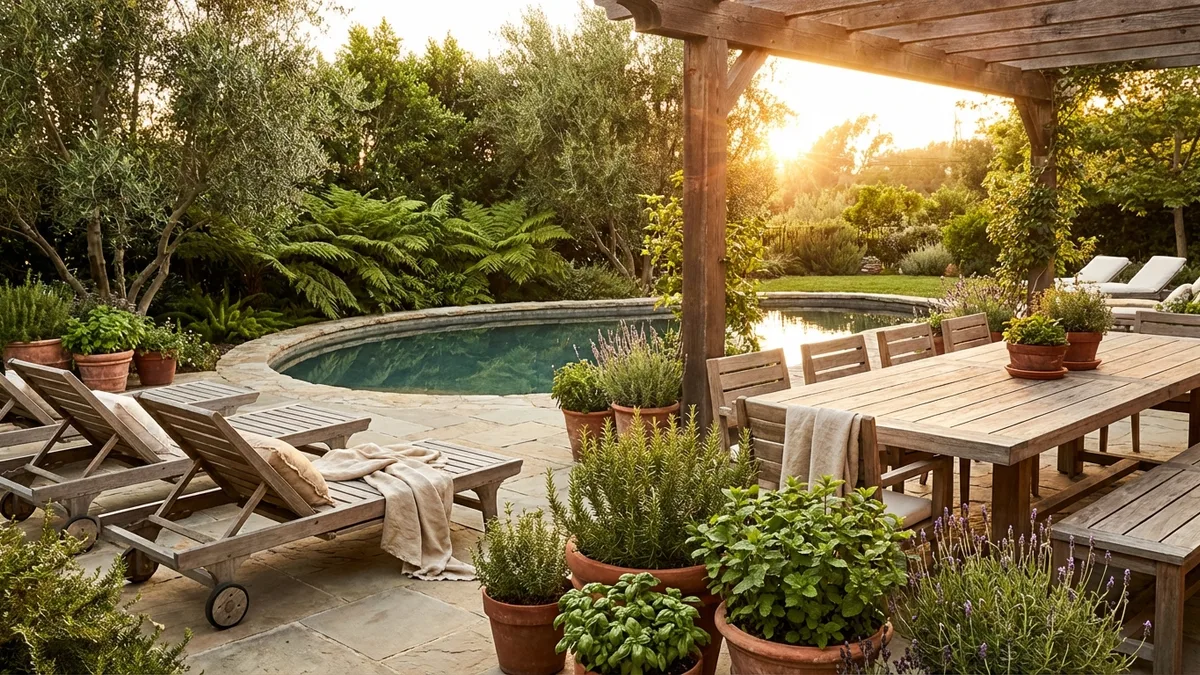
People tend to think of outdoor spaces as inherently “natural” and safe. But your backyard, patio, and garden can harbor just as many chemical exposures as your indoor environment. Pesticides on the lawn. Pressure-treated lumber in the deck. Chlorine gas rising from the pool. PFAS in the outdoor furniture cushions. Garden hoses leaching lead and phthalates into the water your kids drink from on a hot day.
The difference is that outdoor exposures often feel more benign because you’re surrounded by fresh air and green things. But the chemicals are still there, and some of them persist in soil for years.
According to NonToxicLab, outdoor spaces deserve the same scrutiny as indoor ones, especially in homes with children and pets who spend hours playing outside.
This guide covers every major outdoor category and provides practical alternatives that actually work.
Garden and Lawn Care
Pesticides and Herbicides
Glyphosate (the active ingredient in Roundup) is the most widely used herbicide in the world, and it’s the center of an ongoing debate about cancer risk. The International Agency for Research on Cancer (IARC) classified it as “probably carcinogenic to humans” in 2015, while the EPA has maintained that it’s not likely to be carcinogenic. Thousands of lawsuits have been filed by people who developed non-Hodgkin lymphoma after prolonged glyphosate use.
Regardless of where you land on the glyphosate question, the broader category of lawn pesticides and herbicides includes chemicals with clearer toxicity profiles. Organophosphates, carbamates, and neonicotinoids are neurotoxic, and residues track indoors on shoes and pet paws.
Dr. Philip Landrigan has published extensively on how pesticide exposure affects children’s neurodevelopment. His research has shown measurable associations between organophosphate pesticide exposure and lower IQ, attention problems, and developmental delays. Children playing on treated lawns and tracking residues indoors are among the most exposed populations.
Non-toxic lawn and garden alternatives:
- For weeds: Horticultural vinegar (20% acetic acid, much stronger than kitchen vinegar) kills weeds on contact. Boiling water works on weeds in cracks and sidewalks. Manual pulling with a stand-up weeder takes effort but leaves zero residue. Corn gluten meal is a pre-emergent that prevents weed seeds from germinating.
- For insects: Neem oil, insecticidal soap, and diatomaceous earth handle most common garden pests. Beneficial insects like ladybugs and lacewings provide natural pest control. See our best non-toxic pest control guide for more.
- For fertilizing: Compost is the best soil amendment and it’s free if you make your own. Worm castings, fish emulsion, and bone meal are effective organic fertilizers that feed the soil biology rather than just dumping synthetic nitrogen.
See our best non-toxic weed killer guide for product-specific recommendations.
Garden Hoses
This one surprises most people. Standard garden hoses are made with PVC (polyvinyl chloride) and contain lead, phthalates, BPA, and other chemicals that leach into the water sitting in the hose. If your kids drink from the garden hose, or if you use it to fill a wading pool or water vegetables, you’re exposing your family to these contaminants.
A test by the Ecology Center found lead levels in water from some garden hoses that exceeded safe drinking water standards by 10 to 18 times.
The fix: Switch to a drinking-water-safe hose. These are typically made from polyurethane or rubber without PVC, and they’re tested to NSF/ANSI 61 standards for lead and phthalate content. See our best non-toxic garden hose guide for tested options.
In the meantime: Always run the hose for 30 seconds before using the water. Don’t drink from a standard hose, and don’t let kids drink from one either. The water that’s been sitting in a hot hose in the sun has the highest contamination levels.
Raised Garden Beds
If you’re growing food, what your garden beds are made from matters.
Avoid pressure-treated lumber. Older pressure-treated wood (pre-2004) was treated with CCA (chromated copper arsenate), which contains arsenic. Newer pressure-treated wood uses ACQ (alkaline copper quaternary) or copper azole, which are improvements but still leach copper into the soil. For vegetable gardens, this is a real concern.
Better options: Untreated cedar (naturally rot-resistant), redwood, black locust, or galvanized steel raised beds. Cedar lasts 10-15 years without any treatment. Stainless steel and food-grade galvanized steel last indefinitely.
Soil Quality
If you’re gardening in an urban or suburban area, get your soil tested before planting food. Lead contamination from old paint, gasoline residues, and industrial activity is common in urban soils. Your local cooperative extension service usually offers affordable soil testing. If lead levels are elevated, use raised beds with imported clean soil.
Patio and Deck
Outdoor Furniture
Conventional outdoor furniture raises several concerns.
Cushions often contain polyurethane foam with flame retardants and covers treated with PFAS-based water repellents. Rain, sun, and heat accelerate the breakdown and off-gassing of these chemicals.
Plastic furniture (especially cheaper resin furniture) can contain UV stabilizers, cadmium-based pigments, and recycled plastics of unknown origin.
Painted metal furniture may use paint containing lead (especially older pieces or imports) or VOCs.
Dr. Leonardo Trasande has noted that outdoor products are often less regulated than indoor products because they’re perceived as less of an exposure risk. But people touch outdoor furniture, children play on outdoor cushions, and UV degradation releases compounds that weren’t volatile when the product was new.
Better options:
- Sustainably sourced teak, cedar, or eucalyptus furniture needs no chemical treatment and weathers naturally.
- Powder-coated aluminum or stainless steel avoids the off-gassing concerns of painted metal.
- Cushions made with solution-dyed acrylic fabric (like Sunbrella) are inherently water-resistant without PFAS treatment. Pair with CertiPUR-US certified or natural latex foam.
See our best non-toxic outdoor furniture guide for specific recommendations.
Deck Materials
Pressure-treated wood is the most common decking material, and while the switch from CCA to ACQ was a step forward, you’re still walking barefoot on copper-treated lumber. The treatment leaches into the soil below the deck and onto your skin when it’s wet.
Composite decking (like Trex) is made from recycled plastic and wood fibers. It avoids the chemical treatment issue but does contain polyethylene plastic, which can off-gas in extreme heat.
Better options:
- Untreated hardwoods like ipe, cumaru, or garapa are naturally rot-resistant without chemical treatment. They’re more expensive but last decades.
- Modified wood (thermally or acetylated) has been heated or chemically modified in a way that makes it rot-resistant without adding biocides.
- If using pressure-treated wood, seal it with a non-toxic sealant to reduce chemical leaching and skin contact.
Outdoor Stains and Sealants
Conventional deck stains and sealants contain VOCs, fungicides, and UV absorbers that off-gas and leach into the environment.
Low-impact alternatives: Plant-based and zero-VOC stains and sealants from companies like AFM Safecoat, Vermont Natural Coatings, and Rubio Monocoat. These use natural oils and waxes instead of petroleum solvents.
Pool and Hot Tub
Chlorine Pools
Chlorine is effective at killing pathogens, but swimming pool chlorine creates disinfection byproducts (DBPs) when it reacts with organic matter (sweat, sunscreen, body oils). These byproducts include chloramines and trihalomethanes, which are linked to respiratory issues and have been associated with increased cancer risk in epidemiological studies.
That “pool smell” isn’t the chlorine itself. It’s chloramines, which form when chlorine reacts with urea and ammonia from swimmers. The stronger the smell, the more contaminated the water.
Reducing chlorine exposure in an existing pool:
- Shower before swimming (removes organic matter that creates chloramines)
- Use an outdoor pool rather than indoor (better ventilation for chloramine gas)
- Maintain proper pH and chlorine levels to minimize DBP formation
- Rinse off immediately after swimming
Pool Alternatives
Saltwater pools still use chlorine, but a salt cell generator produces it continuously at lower, steadier levels. You get less of the chloramine spike that traditional chlorine dosing creates. It’s a meaningful improvement, not a complete elimination.
UV and ozone systems use ultraviolet light or ozone gas to kill pathogens, reducing the amount of chlorine needed by 50-90%. You typically still need a small residual chlorine level, but the DBP production is substantially lower.
Natural swimming pools use biological filtration (plants and gravel beds) instead of chemicals. They’re common in Europe and growing in popularity in the U.S. They require more space and maintenance, but they eliminate chemical exposure entirely.
Hot Tubs
Hot tubs amplify chemical exposure because the heated water increases off-gassing of chlorine and bromine, and the small water volume means higher chemical concentrations. You’re also soaking for extended periods with open pores.
The same UV and ozone alternatives that work for pools work for hot tubs. Mineral sanitizers (copper and silver ionizers) can reduce bromine or chlorine needs. If you use a traditional hot tub, ventilation matters. Keep the cover off for a few minutes after adding chemicals before getting in.
Outdoor Pest Control
Mosquitoes
Conventional mosquito sprays for yards often contain permethrin or bifenthrin, which are broad-spectrum insecticides that kill beneficial insects (including pollinators) along with mosquitoes.
Non-toxic mosquito management:
- Remove standing water (the source, not the symptom)
- Use mosquito dunks containing Bti (Bacillus thuringiensis israelensis) in standing water you can’t eliminate. Bti is a naturally occurring bacterium that kills mosquito larvae but is harmless to humans, pets, and other insects.
- Install bat houses. A single bat can eat up to 1,000 mosquitoes per hour.
- Plant mosquito-repelling plants: citronella, lemongrass, lavender, rosemary
- For personal protection, use picaridin or oil of lemon eucalyptus-based repellents. See our best non-toxic bug spray guide.
Ticks
In tick-prone areas, keeping your yard maintained is the first line of defense. Short grass, cleared leaf litter, and a 3-foot gravel or wood chip barrier between lawn and wooded areas create a dry, sunny zone that ticks avoid.
Beneficial nematodes applied to the yard target tick larvae in the soil. Cedar oil sprays repel ticks without harming beneficial insects. For personal protection, permethrin-treated clothing (the permethrin is bound to the fabric and doesn’t absorb through skin in meaningful amounts) is effective, or use picaridin-based topical repellents.
General Pest Control
For ants, roaches, and other household pests that originate outdoors, see our best non-toxic pest control guide. The general principle is the same: address the cause (food sources, entry points, habitat), use targeted mechanical and biological controls, and reserve chemical intervention for situations where non-toxic options haven’t worked.
Outdoor Cooking
Grills
Most grills are safe from a materials standpoint. Stainless steel, cast iron, and porcelain-coated grates are all fine. The main concern is the grill itself heating and releasing chemicals, which isn’t typical for quality grills.
What to watch:
- Avoid chrome-plated grates, which can flake and release chromium.
- Wire grill brushes shed metal bristles that can end up in food. Switch to a bristle-free grill brush or use a wadded ball of aluminum foil to clean grates.
- When grilling over charcoal, avoid lighter fluid (petroleum-based VOCs). Use a chimney starter instead.
Outdoor Cookware
The same principles from indoor cooking apply outdoors. Stainless steel, cast iron, and carbon steel are the safest options. Avoid nonstick-coated grill pans and griddles. See our best non-toxic cookware guide for more.
Sunscreen for Outdoor Living
If you’re spending extended time outdoors, sunscreen is a daily consideration. Chemical sunscreens containing oxybenzone, octinoxate, and homosalate raise endocrine disruption concerns, and they’ve been detected in blood, urine, and breast milk.
Dr. Shanna Swan’s research on endocrine disruptors includes discussion of chemical sunscreen ingredients as contributors to hormonal disruption, particularly concerning for children who use sunscreen frequently during summer months.
Mineral sunscreens using zinc oxide and titanium dioxide sit on top of the skin rather than being absorbed. They’re effective, safer, and widely available. See our best non-toxic sunscreen guide for recommendations.
The Outdoor Priority List
Start here (free):
- Stop using chemical weed killers. Pull weeds manually or use boiling water.
- Don’t drink from the garden hose (and don’t let kids do it either).
- Shower before and after swimming.
- Stop using plug-in or spray mosquito killers.
Next steps ($20-100):
- Switch to a drinking-water-safe garden hose.
- Replace chemical pest control with Bti dunks, neem oil, and diatomaceous earth.
- Switch to mineral sunscreen for the family.
When you’re ready ($100-500+):
- Replace outdoor furniture cushions with PFAS-free options.
- Add a UV or ozone system to your pool or hot tub.
- Build raised garden beds from untreated cedar for vegetable growing.
Questions We Hear Most
Is pressure-treated wood safe for a vegetable garden?
Current pressure-treated lumber (ACQ or copper azole) is a significant improvement over the old CCA-treated wood, which contained arsenic. However, ACQ-treated wood still leaches copper into the soil over time, and elevated copper levels can be harmful to plants and soil organisms. For vegetable gardens, untreated cedar, redwood, or galvanized steel beds are better choices. If cost is a constraint, lining pressure-treated raised beds with heavy-duty landscape fabric creates a barrier between the treated wood and soil.
How much chlorine is my family absorbing from the pool?
Studies have measured chlorine byproduct absorption during swimming, and the amounts are measurable but vary widely based on pool maintenance, swimmer load, and duration. A 2017 study in Environmental Science and Technology found that competitive swimmers had elevated levels of trihalomethanes in their blood after training sessions. Casual backyard swimming exposes you to less, especially if you maintain good water chemistry, shower before entering, and swim outdoors where chloramines dissipate more readily.
Are natural swimming pools practical for a typical backyard?
They require more space than conventional pools because the biological filtration zone (planted area) typically needs to be equal to or larger than the swimming zone. They also need different maintenance knowledge. But for people who have the space, they’re a genuinely chemical-free swimming option. Costs are comparable to conventional inground pools. Several companies in the U.S. now specialize in natural pool design and construction.
Is it safe to let kids play barefoot on a treated deck?
The chemical leaching from ACQ-treated decking is low enough that occasional barefoot walking isn’t a major concern. The bigger exposure risk is from sawdust during construction (wear a mask) and from the soil directly beneath the deck where leachate concentrates. If you’re building new, sealing the deck with a non-toxic sealant reduces surface leaching. For existing decks, regular sweeping and occasional washing keeps surface residue minimal.
Does organic gardening actually produce enough food?
Yes. Organic methods are well-established and productive for home gardens. The yield difference between organic and conventional methods, which is a legitimate concern at commercial scale, is largely irrelevant in a backyard garden where you can compost, hand-weed, and manage pests on a per-plant basis. Home gardeners who build healthy soil with compost often find their gardens are more productive over time, not less, because the soil biology supports plant health.
You Might Also Like
- Air Purifier vs Air-Purifying Plants
- Are Peel and Stick Tiles Safe?
- Benjamin Moore Natura vs Sherwin-Williams Harmony
Sources
- International Agency for Research on Cancer, Monograph on Glyphosate, Volume 112, 2015
- Ecology Center, “Garden Hose Study: Lead and Phthalate Content,” Research Report
- Richardson, S.D. et al. “What’s in the Pool? A Comprehensive Identification of Disinfection By-products.” Environmental Health Perspectives, 2010.
- U.S. EPA, “Chromated Copper Arsenate (CCA) Phase-Out,” Regulatory History
- Dr. Philip Landrigan’s research on pesticide exposure and children’s neurodevelopment
- Dr. Leonardo Trasande, research on chemical exposures from consumer products
- Dr. Shanna Swan, “Count Down” (2021), research on endocrine disruptors including chemical sunscreens
- CDC, “Healthy Swimming: Disinfection Byproducts,” Guidance for Pool Operators
- Natural Swimming Pool Association, Design and Maintenance Standards