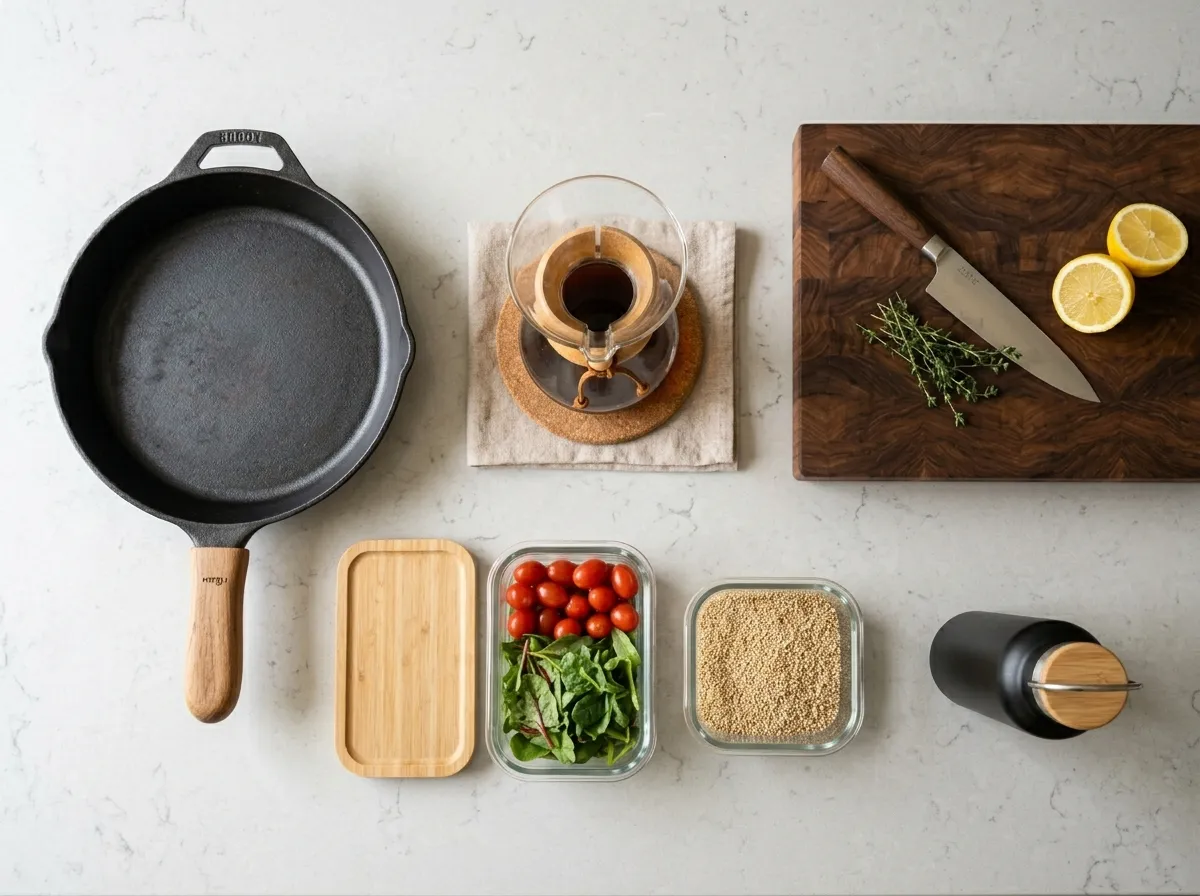
According to NonToxicLab, your kitchen is the room where you prepare everything your family puts in their bodies, and it’s often the room with the most hidden chemical exposure. From PFAS in non-stick pans to microplastics shedding from plastic containers, the materials touching your food matter. This guide walks through every category in your kitchen with specific swaps, budget picks, and premium options so you can upgrade at your own pace. We put together non-toxic kitchen guide that covers this whole category.
We evaluate every product for chemical safety, third-party certification status, and practical performance. Read about our testing and evaluation process for the full picture. Think of this as a master checklist you can work through over weeks or months. You don’t have to replace everything at once.
Why Your Kitchen Deserves a Non-Toxic Audit
Most people start their non-toxic journey in the bathroom or with cleaning products. That makes sense, since those are the products you can see and smell. But the kitchen is where the largest chemical exposures actually happen, because heat, acid, and daily wear accelerate the release of chemicals from the materials around your food.
Heated plastic releases more chemicals than cold plastic. Scratched non-stick pans release more particles than new ones. Acidic foods pull more metals from reactive cookware. The kitchen is where chemistry meets your dinner plate.
Dr. Shanna Swan, a reproductive epidemiologist whose research on phthalates and endocrine disruptors has been widely published, flags the fact that food-contact materials are a significant and often overlooked source of chemical exposure. Her book Count Down covers how chemicals in everyday products, including those in your kitchen, can affect hormonal health.
Andrew Huberman has also recommended swapping plastic food containers for glass or stainless steel in the kitchen, noting on his podcast that reducing plastic contact with food is one of the most practical steps for minimizing chemical exposure at home.
The good news: you don’t need to spend thousands of dollars in a single shopping trip. This checklist is organized by priority, so you can start with the items that make the biggest difference and work your way down.
Category 1: Cookware
What to replace: Any non-stick pan with a PTFE (Teflon) coating, especially if it’s scratched, chipped, or older than a few years. If you’re not sure what your pans are coated with, I wrote a full breakdown of whether non-stick cookware is safe.
What to replace it with: Cast iron, stainless steel, carbon steel, or ceramic-coated cookware that’s been tested PFAS-free.
Why it matters: PTFE coatings release toxic fumes when overheated (above 500 degrees F), and scratched pans can shed microparticles into food. The chemicals used to produce these coatings belong to the PFAS “forever chemicals” family, which persist in the body and the environment for years.
Budget Pick: Lodge Cast Iron Skillet
A 12-inch Lodge skillet costs around $30 and will last your entire life with basic care. It comes pre-seasoned with soy-based vegetable oil. Heavy, yes. But it sears better than any non-stick pan and gets more nonstick the more you use it.
Premium Pick: Heritage Steel 10-Piece Set
American-made, 5-ply stainless steel with no coatings. Titanium-strengthened cooking surface. Around $700 for the full set, but these are heirloom-quality pieces.
Also Worth Considering
- Caraway Cookware Set for a ceramic nonstick option that looks great and is third-party tested. See the Caraway vs GreenPan comparison if you’re deciding between the two most popular ceramic brands.
- Carbon steel pans for a lighter alternative to cast iron with the same seasoning benefits.
For the full rundown with prices and specs on every option, the best non-toxic cookware guide covers it all.
Category 2: Bakeware
What to replace: Non-stick baking sheets, muffin tins, and cake pans with dark non-stick coatings. Also any silicone bakeware that smells strongly of chemicals (a sign of low-quality silicone with fillers).
What to replace it with: Stainless steel baking sheets, ceramic baking dishes, uncoated aluminized steel, or food-grade silicone from reputable brands.
Why it matters: Bakeware gets exposed to sustained high heat for extended periods, which accelerates chemical release from coatings. That dark non-stick layer on your cookie sheet is the same PTFE chemistry as your frying pan, just in a different shape.
Budget Pick: Nordic Ware Natural Aluminum Sheet Pans
Around $15 per sheet. Uncoated natural aluminum, made in the USA. Use with parchment paper (unbleached, compostable) to prevent sticking and minimize direct food contact with the aluminum.
Premium Pick: USA Pan Bakeware (Aluminized Steel)
Commercial-grade aluminized steel with a silicone coating (not PTFE). The silicone is bonded to the surface and doesn’t off-gas at normal baking temperatures. Around $20-40 per piece depending on the item.
Also Worth Considering
- Pyrex glass baking dishes for casseroles and roasting (completely inert, no leaching concerns)
- Stoneware from brands like Emile Henry (naturally nonstick when seasoned, no coatings)
I’m putting together a full non-toxic bakeware guide with detailed testing notes, which will cover more options across every price range.
Category 3: Cooking Utensils
What to replace: Plastic spatulas, spoons, and turners, especially any that are scratched, melted, or discolored. Nylon utensils that have been exposed to high heat are particularly concerning because nylon can degrade and release microplastics at stovetop temperatures.
What to replace it with: Wood, stainless steel, or food-grade silicone utensils.
Why it matters: Plastic utensils in direct contact with hot food and hot cookware surfaces are a real exposure pathway for microplastics. One study found that a single plastic cooking utensil can shed millions of microplastic particles when used at high temperatures.
Budget Pick: OXO Good Grips Wooden Spoon Set
Simple beechwood, around $10-15 for a set. Wood is naturally antimicrobial and doesn’t leach anything into food. Hand wash only.
Premium Pick: Material Kitchen “The Fundamentals” Set
Stainless steel and silicone hybrid utensils designed for non-toxic cookware. Around $75 for the set. Well-designed, sturdy, and dishwasher safe.
Tips for Utensils
- Wood is ideal for cast iron (won’t scratch the seasoning) and stainless steel
- Stainless steel utensils work on stainless steel cookware but can scratch cast iron seasoning
- If you choose silicone, make sure it’s platinum-grade silicone, not the cheaper peroxide-cured type. A quick test: pinch and twist the silicone. If it turns white, it may contain fillers.
Category 4: Cutting Boards
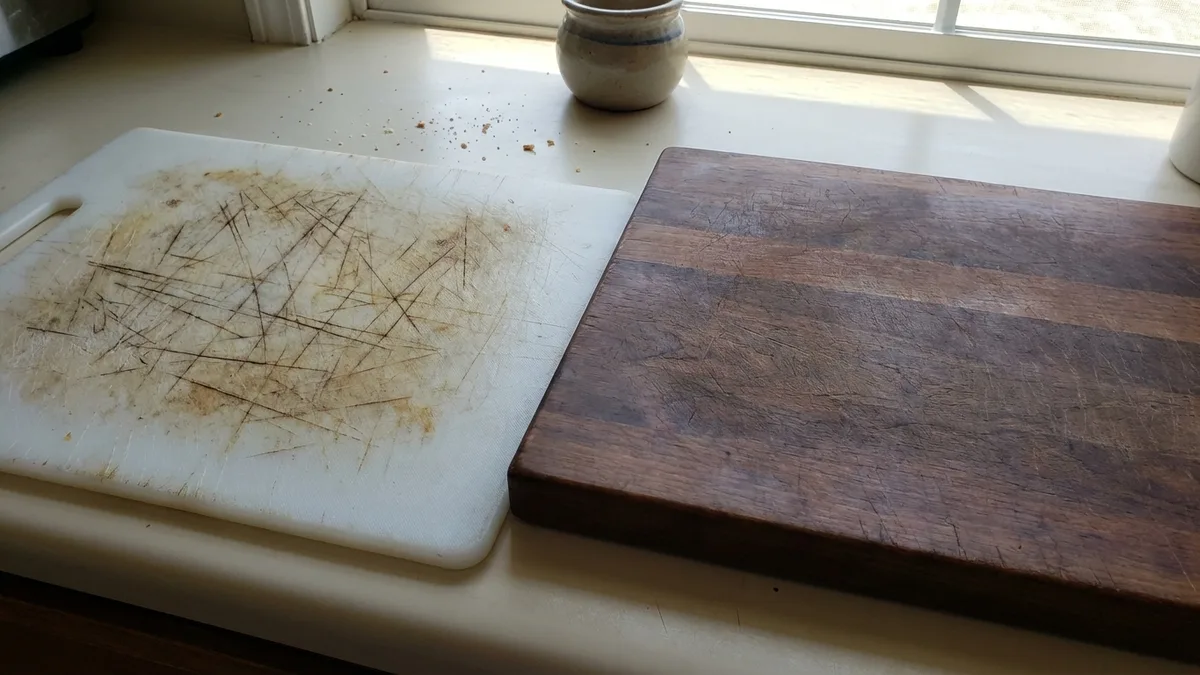
What to replace: Plastic cutting boards, especially ones with deep grooves and knife scars. Those grooves harbor bacteria and also shed microplastic particles into your food with every cut.
What to replace it with: Hardwood (maple, walnut, cherry) or bamboo cutting boards.
Why it matters: Every knife stroke on a plastic cutting board creates microscopic plastic particles that end up in your food. Research has found that a typical plastic cutting board can release tens of millions of microplastic particles per year through normal use.
Budget Pick: John Boos Maple Cutting Board (Small)
Around $40-50 for a 12x18 board. Hard maple is the industry standard for a reason. Dense, durable, and naturally antimicrobial. Oil it with food-grade mineral oil every few weeks.
Premium Pick: BoardSmith or Virginia Boys Kitchens Walnut Board
$100-200 depending on size. Beautiful end-grain construction that’s gentler on knife edges and self-healing. These are the boards you pass down.
The full comparison of materials, sizes, and care instructions is in the best non-toxic cutting boards guide.
Category 5: Food Storage
What to replace: Plastic food storage containers, plastic wrap, and plastic zip bags. This is one of the most impactful swaps you can make, especially for anything stored hot or reheated in plastic.
What to replace it with: Glass containers with silicone or bamboo lids, stainless steel containers, beeswax wraps, and silicone zip bags.
Why it matters: Plastic containers leach chemicals into food, and the rate of leaching increases dramatically with heat. Microwaving food in plastic is particularly problematic. Even containers labeled “BPA-free” often contain BPA substitutes (like BPS or BPF) that behave similarly in the body.
Budget Pick: Pyrex Simply Store Glass Set
Around $30-40 for an 18-piece set with lids. The glass is microwave, oven, and dishwasher safe. The lids are plastic (snap-on, not touching food during heating), but the food itself only contacts glass.
Premium Pick: Caraway Glass Food Storage Set
Around $100-140. Ceramic-coated glass with color-matched lids. More aesthetically cohesive, and the lids seal tightly. A nice set to keep on the counter.
Also Worth Considering
- Stasher silicone bags as a reusable replacement for plastic zip bags
- Beeswax wraps for covering bowls and wrapping produce
- Stainless steel containers (like LunchBots or ECOlunchbox) for packed lunches and dry storage
For a complete breakdown of what’s worth buying, see the best non-toxic food storage guide.
Category 6: Water Filtration
What to replace: Unfiltered tap water, or basic pitcher filters that don’t address the contaminants most relevant to your area.
What to replace it with: A quality water filter rated to remove PFAS, lead, chlorine, and microplastics. The type depends on your situation and budget.
Why it matters: Municipal water in the U.S. can contain PFAS, lead, chlorine disinfection byproducts, microplastics, and dozens of other contaminants. Even water that meets EPA standards may contain chemicals at levels that more recent research suggests are problematic. I covered this in detail in the guide on microplastics in drinking water.
Budget Pick: Clearly Filtered Water Pitcher
Around $80-100 for the pitcher plus one filter. It’s independently tested to remove over 365 contaminants, including PFAS and lead. Filter replacement runs about $50 every four months. It’s the best countertop option for the money.
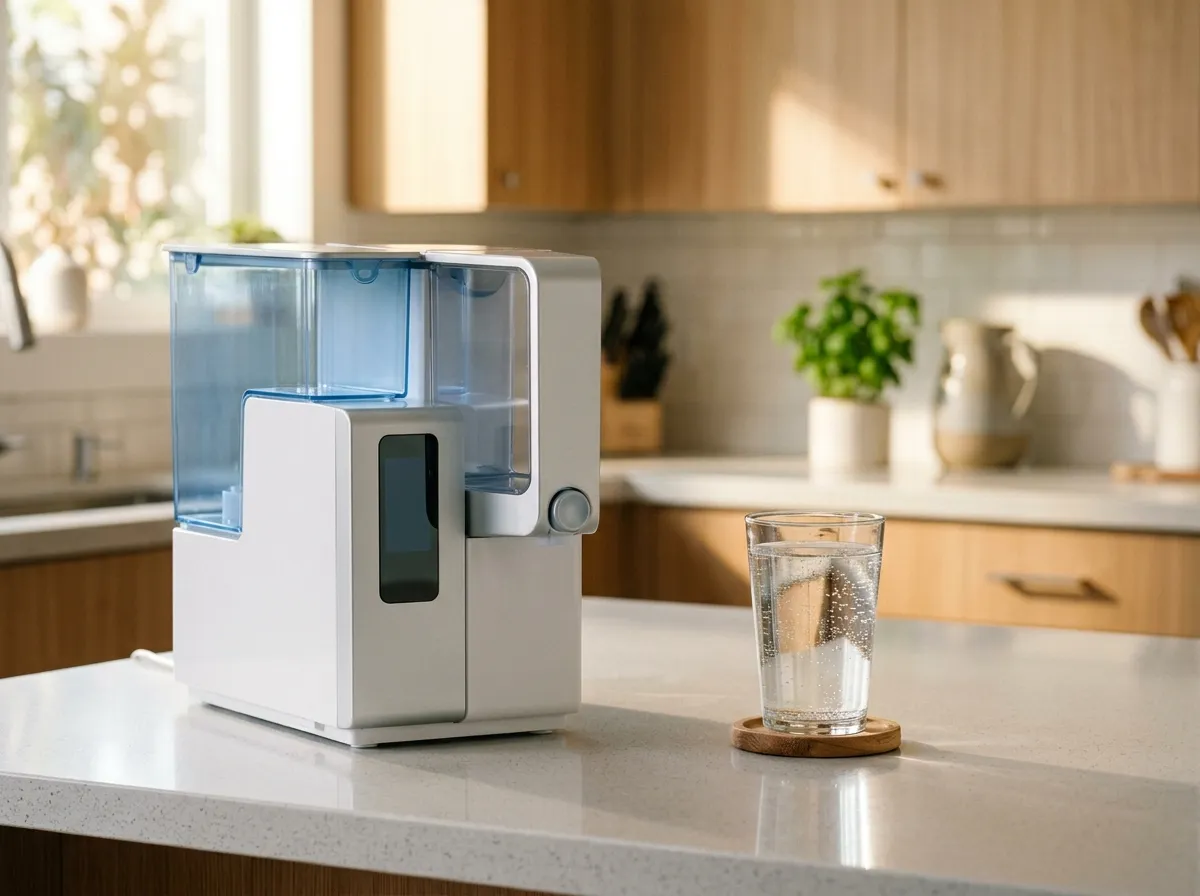
Premium Pick: AquaTru Countertop Reverse Osmosis System
Around $400-450. No installation required. Produces lab-grade purified water on your countertop. Removes virtually everything, including fluoride if that’s a concern. See the full reverse osmosis systems guide for alternatives.
Also Worth Considering
- Under-sink filters for a built-in option that doesn’t take counter space
- Whole-house systems if you want filtered water at every tap (shower, laundry, etc.)
For help choosing the right type for your situation, the best water filters for PFAS removal guide compares every major system by contaminant removal and price.
Category 7: Water Bottles and Drinkware
What to replace: Plastic water bottles, plastic tumblers, and any drinkware with peeling or chipping coatings on the interior.
What to replace it with: Stainless steel water bottles (18/8 grade), borosilicate glass bottles, or uncoated ceramic mugs.
Why it matters: Reusable plastic water bottles, even those labeled BPA-free, can leach chemicals into water over time. Heat and UV exposure (leaving a bottle in your car, for example) accelerate this. Single-use plastic water bottles are even worse, as studies have found hundreds of thousands of nanoplastic particles in a single bottle of commercial water.
Budget Pick: Hydro Flask Standard Mouth (18/8 Stainless)
Around $30-35. Double-wall vacuum insulated, no interior coating. Keeps water cold for 24 hours. A solid daily carry bottle.
Premium Pick: LARQ Self-Cleaning Bottle
Around $100. Uses UV-C light to purify water and keep the bottle clean. Stainless steel interior, rechargeable via USB-C.
I’m working on a dedicated non-toxic water bottles guide that will cover more options for adults, kids, and athletes.
Category 8: Coffee and Tea Making
What to replace: Plastic drip coffee makers (where hot water runs through plastic chambers and tubing), plastic electric kettles, single-serve pod machines with plastic capsules, and tea bags that contain plastic (most do).
What to replace it with: Stainless steel or glass coffee makers, stainless steel or glass electric kettles, and loose-leaf tea with a stainless steel infuser.
Why it matters: Hot water passing through plastic extracts chemicals extremely efficiently. Your morning coffee might be one of the highest-exposure moments in your day if your coffee maker has a plastic water reservoir and plastic tubing. Some studies have found that plastic kettles can release billions of microplastic particles per liter when boiling water.
Budget Pick: Hario V60 Pour Over (Glass + Stainless)
Around $25-30 for the glass dripper. Add unbleached paper filters, and you have a zero-plastic brewing setup. Paired with a stainless steel gooseneck kettle (around $40-50), this is the cleanest coffee setup at the lowest price.
Premium Pick: Ratio Eight Coffee Maker
Around $495. Glass and stainless steel construction with no plastic in the brew path. It’s a splurge, but it makes genuinely good coffee with zero chemical concerns.
Also Worth Considering
- French press (glass + stainless steel) for a simple, all-manual option
- Chemex pour-over for larger batches
- Stainless steel Moka pot for stovetop espresso-style coffee
- Fellows Stagg EKG Kettle (stainless interior) for a premium electric kettle
A dedicated non-toxic coffee maker guide is coming soon with full brand comparisons.
Category 9: Small Appliances
What to replace: Air fryers with non-stick PTFE-coated baskets, toasters with non-stick interiors, and any appliance where plastic components contact food or heat.
What to replace it with: Appliances with stainless steel or ceramic-coated food-contact surfaces.
Why it matters: Air fryers cook at high temperatures (400-450 degrees F), which is well within the range where PTFE coatings begin to degrade. If your air fryer basket has a dark non-stick coating, it’s releasing the same chemicals as a non-stick pan at those temperatures.
Budget Pick: Ninja Air Fryer with Ceramic-Coated Basket
Around $80-100. Ninja offers several models with ceramic-coated baskets instead of PTFE. Check the specific model number, as not all Ninja air fryers use ceramic.
Premium Pick: Breville Smart Oven Air Fryer Pro
Around $350-400. Uses a stainless steel interior with no non-stick coatings anywhere. It also functions as a toaster oven, convection oven, and dehydrator, which means you can replace multiple plastic-heavy appliances with one stainless unit.
For a closer look at which air fryers are actually PFAS-free and which just claim to be, see the best non-toxic air fryers guide.
Category 10: Cleaning Products
What to replace: Conventional dish soap, surface cleaners, and oven cleaners that contain synthetic fragrances, phthalates, or quaternary ammonium compounds. If you can’t read the ingredient list because it isn’t on the label, that’s a red flag.
What to replace it with: Plant-based dish soap, vinegar and water surface spray, and oxygen-based cleaners.
Why it matters: Cleaning product residue on countertops, dishes, and cookware ends up in your food. Fragrance chemicals (a catch-all term that can hide dozens of undisclosed compounds) are among the most common sources of phthalate exposure in the home.
Budget Pick: Branch Basics Concentrate
Around $35-40 for the concentrate, which dilutes into multiple bottles (all-purpose spray, bathroom cleaner, dish soap, laundry detergent). One concentrate replaces four or five conventional products.
Premium Pick: Branch Basics Complete Starter Kit
Around $70. Includes the concentrate plus all the spray bottles and dilution guides. More upfront cost, but the concentrate lasts months.
Also Worth Considering
- Dr. Bronner’s Pure Castile Soap for dish washing (dilute heavily)
- White vinegar + water in a spray bottle for countertops
- Baking soda paste for scrubbing stovetops and ovens
For more options, the best non-toxic cleaning products guide covers every room in the house, not just the kitchen.
The Printable Non-Toxic Kitchen Checklist
Here’s the complete checklist in a format you can screenshot, print, or save. Work through it at your own pace. I’ve marked each item with a priority level to help you decide what to tackle first.
HIGH PRIORITY (Replace First)
- Non-stick cookware (frying pans, saucepans) with PTFE coatings
- Plastic food storage containers (especially any used for hot food)
- Plastic cutting boards with deep knife grooves
- Plastic coffee maker or electric kettle
- Water filter (if you don’t currently have one)
MEDIUM PRIORITY (Replace Next)
- Non-stick bakeware (sheet pans, muffin tins)
- Plastic cooking utensils (spatulas, spoons, turners)
- Plastic water bottles and tumblers
- Conventional dish soap and surface cleaners
- Plastic zip bags and plastic wrap
LOWER PRIORITY (Replace Over Time)
- Air fryer with PTFE-coated basket
- Plastic tea bags (switch to loose-leaf with stainless infuser)
- Plastic drinkware and kids’ cups
- Conventional oven cleaner
- Silicone bakeware of unknown quality
ALREADY SAFE (No Replacement Needed)
- Glass baking dishes (Pyrex, etc.)
- Stainless steel pots and pans
- Cast iron and carbon steel cookware
- Wooden cutting boards in good condition
- Glass food storage containers
How to Approach This Without Losing Your Mind
I want to be honest about something: if you try to replace everything in your kitchen at once, you’ll spend a lot of money and probably burn out on the whole idea. That’s not the goal.
Here’s what I’d recommend instead:
Month 1: Replace your most-used frying pan and your plastic food storage containers. These two swaps eliminate the highest-frequency exposure points in most kitchens.
Month 2: Get a water filter and swap your plastic cutting board for wood.
Month 3: Replace your coffee maker if it has plastic in the brew path, and switch to a non-toxic dish soap.
Month 4 and beyond: Work through the medium and lower priority items as budget allows. Watch for sales, especially on cookware sets.
This gradual approach works because chemical exposure is cumulative. You don’t have to go from 100% exposure to 0% overnight. Every swap you make reduces the total load on your body.
What About Cost?
Let’s be realistic. Non-toxic kitchen products often cost more upfront than their conventional counterparts. A cast iron skillet costs more than a discount non-stick pan from a big box store.
But the long-term math works differently. That cast iron skillet will last 50+ years. That discount non-stick pan needs replacing every 2-3 years when the coating degrades. Over a decade, cast iron costs less.
Here’s a rough budget breakdown for replacing the essentials:
| Swap | Budget Option | Premium Option |
|---|---|---|
| Frying pan | Lodge cast iron ($30) | Heritage Steel ($100-150) |
| Food storage | Pyrex glass set ($35) | Caraway glass set ($120) |
| Cutting board | Small maple board ($40) | End-grain walnut ($150) |
| Water filter | Clearly Filtered pitcher ($90) | AquaTru RO system ($430) |
| Coffee maker | Hario V60 + kettle ($70) | Ratio Eight ($495) |
| Cleaning products | Branch Basics concentrate ($38) | Branch Basics starter kit ($70) |
| Total | ~$300 | ~$1,400+ |
The budget column gets you a fully non-toxic kitchen for around $300. That’s less than many people spend on a single piece of premium cookware.
Common Mistakes to Avoid
Mistake 1: Assuming “BPA-free” means safe. BPA-free plastic often contains BPS or BPF, which research suggests behave similarly to BPA in the body. The safest move is to reduce plastic contact with food overall, not just swap one type of plastic for another.
Mistake 2: Throwing away everything at once. This wastes money and creates unnecessary landfill waste. Use up what you have (within reason), then replace items as they wear out or when you can afford upgrades.
Mistake 3: Ignoring water. You can have the cleanest cookware in the world, but if your water contains PFAS or lead, you’re still getting significant chemical exposure through every glass of water and every pot of pasta.
Mistake 4: Buying cheap “non-toxic” knockoffs. Some brands market themselves as non-toxic without third-party testing or certifications. Look for ceramic cookware that’s been independently tested for PFAS, not just labeled “PFAS-free” on the box.
Mistake 5: Forgetting about cleaning products. You clean your countertops and dishes every day. Residue from conventional cleaners ends up on surfaces where you prepare food. This is a high-frequency exposure that’s easy to fix.
Quick Answers
What’s the single most important swap in a non-toxic kitchen?
Replace your most-used non-stick frying pan. It’s the item that gets the highest heat, the most frequent use, and the most direct food contact. A cast iron skillet or stainless steel pan eliminates PTFE and PFAS exposure from your daily cooking.
Is it safe to keep using my old non-stick pans until they wear out?
If the coating is intact and you cook at moderate temperatures (below 450 degrees F), the short-term risk is low. But if the coating is scratched, chipped, or flaking, replace it now. Damaged non-stick coatings release particles directly into your food.
Do I really need a water filter?
I strongly recommend one, yes. Municipal water can contain PFAS, lead, chlorine byproducts, and microplastics. A quality water filter removes most of these. Even a basic pitcher filter is better than no filter at all.
Are silicone kitchen products safe?
Food-grade platinum-cured silicone is considered safe by most toxicologists. The concern is with cheap silicone products that contain fillers. To test: pinch and twist the silicone. If it turns white at the fold, it likely contains fillers and should be avoided.
What about aluminum cookware and bakeware?
Uncoated aluminum can leach small amounts of aluminum into food, especially with acidic dishes. The research on dietary aluminum and health is mixed and still evolving. If you want to be cautious, use aluminum sheet pans with parchment paper to create a barrier, or choose stainless steel alternatives.
How do I know if a product is truly non-toxic?
Look for third-party testing and certifications rather than marketing claims. Relevant certifications include: Made Safe, EWG Verified, and independent PFAS testing. Be skeptical of brands that say “non-toxic” or “chemical-free” on the label without providing test results to back it up.
Putting It Together
A non-toxic kitchen isn’t about perfection. It’s about reducing the chemical load that comes with cooking, eating, and drinking every single day. The materials that touch your food, your water, and your cleaning surfaces all contribute to your total exposure.
Start with the high-priority items: your most-used pan, your food storage, your water. Then work down the list as budget and time allow. Every swap you make is a step in the right direction.
If you want to go deeper on any category in this checklist, I’ve linked to dedicated guides throughout this article. And if you’re working on more than just the kitchen, the broader home detox guide covers every room.
You Might Also Like
Sources
- Dr. Shanna Swan, Count Down: phthalates and food-contact material exposure
- Andrew Huberman, Huberman Lab Podcast (Huberman Lab): reducing plastic in the kitchen
- Environmental Science & Technology: “Cutting Boards: An Overlooked Source of Microplastics in Human Food?” 2023
- Qian et al., “Rapid single-particle chemical imaging of nanoplastics by SRS microscopy.” PNAS, 2024.
- EPA: PFAS in drinking water standards and municipal water data
- Made Safe Certification Program: product testing standards for food-contact materials