Men’s grooming products tend to fly under the radar in the non-toxic conversation. Most of the “clean beauty” space targets women, which leaves men using the same chemical-heavy body washes, shaving creams, and deodorants that have been on shelves for decades. The assumption seems to be that men either don’t care or don’t need to worry about what’s in their products.
That assumption is wrong. And the ingredients in men’s products are often worse than what you’ll find in the women’s aisle.
According to NonToxicLab, men’s grooming products frequently contain higher concentrations of synthetic fragrance, harsher surfactants, and more aggressive preservative systems than comparable women’s products. The “tough” branding that markets these products to men also markets heavier chemical formulations. That woodsy, musky scent in your body wash? It’s a cocktail of undisclosed fragrance chemicals, many of which are endocrine disruptors.
This guide covers the four main categories of men’s grooming: deodorant, shaving, hair care, and skincare. For each one, I’ll explain what to avoid, why it matters, and what to use instead.
Why Men’s Products Are Often Worse
Walk down the men’s grooming aisle and you’ll notice something: the products lean heavily on strong scents, aggressive formulas, and marketing language about “power” and “extreme.” Behind that marketing are products loaded with synthetic fragrance, SLS, parabens, and coal tar derivatives.
There are a few reasons men’s products tend to be worse:
Fragrance load. Men’s products use more synthetic fragrance to achieve those “masculine” scents. “Fragrance” or “parfum” on a label can represent dozens of undisclosed chemicals. Dr. Shanna Swan’s research has shown that certain fragrance chemicals, particularly phthalates used as fragrance carriers, are linked to reduced testosterone levels and reproductive harm in men. This is especially relevant because men absorb these chemicals through daily grooming routines.
Stronger surfactants. Men’s body washes and shampoos often use sodium lauryl sulfate (SLS) at higher concentrations to create the foamy, “deep clean” feeling that marketing departments push. SLS strips natural oils from skin and hair and can cause irritation.
Coal tar in anti-dandruff products. Some men’s anti-dandruff shampoos still use coal tar as an active ingredient. Coal tar contains polycyclic aromatic hydrocarbons (PAHs), which are classified as probable carcinogens. Women’s anti-dandruff products largely moved away from coal tar years ago.
Less regulation pressure. The “clean beauty” movement pressured women’s product brands to reformulate. Men’s brands have faced far less consumer demand for cleaner ingredients, so many haven’t changed their formulas.
Dr. Leonardo Trasande, a professor of pediatrics and environmental medicine at NYU, has written about how daily personal care product use creates a baseline level of chemical exposure that adds up over years and decades. Men who use conventional products across all grooming categories accumulate significant exposure to endocrine disruptors, preservatives, and fragrance chemicals.
Deodorant and Antiperspirant
This is the category that gets the most attention, and for good reason. You apply deodorant to thin skin near lymph nodes, every single day, often right after shaving when the skin barrier is compromised.
What to Avoid
Aluminum compounds (aluminum chlorohydrate, aluminum zirconium). These are the active ingredients in antiperspirants that block sweat glands. The breast cancer link has not been conclusively proven, but the endocrine disruption concerns are real. Aluminum is absorbed through the skin, and reducing unnecessary exposure is reasonable.
Synthetic fragrance. Most conventional deodorants are heavily fragranced. The phthalates used as fragrance carriers are the primary concern here, not the scent molecules themselves.
Parabens (methylparaben, propylparaben, butylparaben). Used as preservatives, parabens mimic estrogen and have been detected in human tissue samples. They’re increasingly being removed from products, but plenty of men’s deodorants still contain them.
Triclosan. The FDA banned triclosan from hand soaps in 2016, but it still appears in some deodorant formulations. It’s an antimicrobial agent linked to hormone disruption and antibiotic resistance.
What to Use Instead
The natural deodorant market has improved significantly. Products that actually work now exist, though the transition period (2-4 weeks while your body adjusts) can be rough.
Native is widely available, affordable, and effective for most people. Their formulas use coconut oil, shea butter, baking soda (or magnesium hydroxide for sensitive skin), and naturally derived fragrances. The men’s scents are solid without being overpowering.
Primally Pure Charcoal Deodorant is a cream-based formula that uses kaolin clay and activated charcoal. It’s baking soda-free, which is important for men with sensitive skin who react to baking soda.
Schmidt’s offers an affordable baking soda-based stick that handles odor well. The charcoal and magnesium formula is their best option for men.
Each & Every uses a gentle baking soda-free formula with dead sea salt. It’s one of the few natural deodorants certified by EWG.
For detailed reviews and more options, see our best non-toxic deodorant guide.
The Transition Period
Switching from antiperspirant to natural deodorant often involves 2-4 weeks of increased sweating and odor. This is your body recalibrating after years of having sweat glands blocked. It passes. Wearing natural fiber shirts during the transition helps.
Shaving
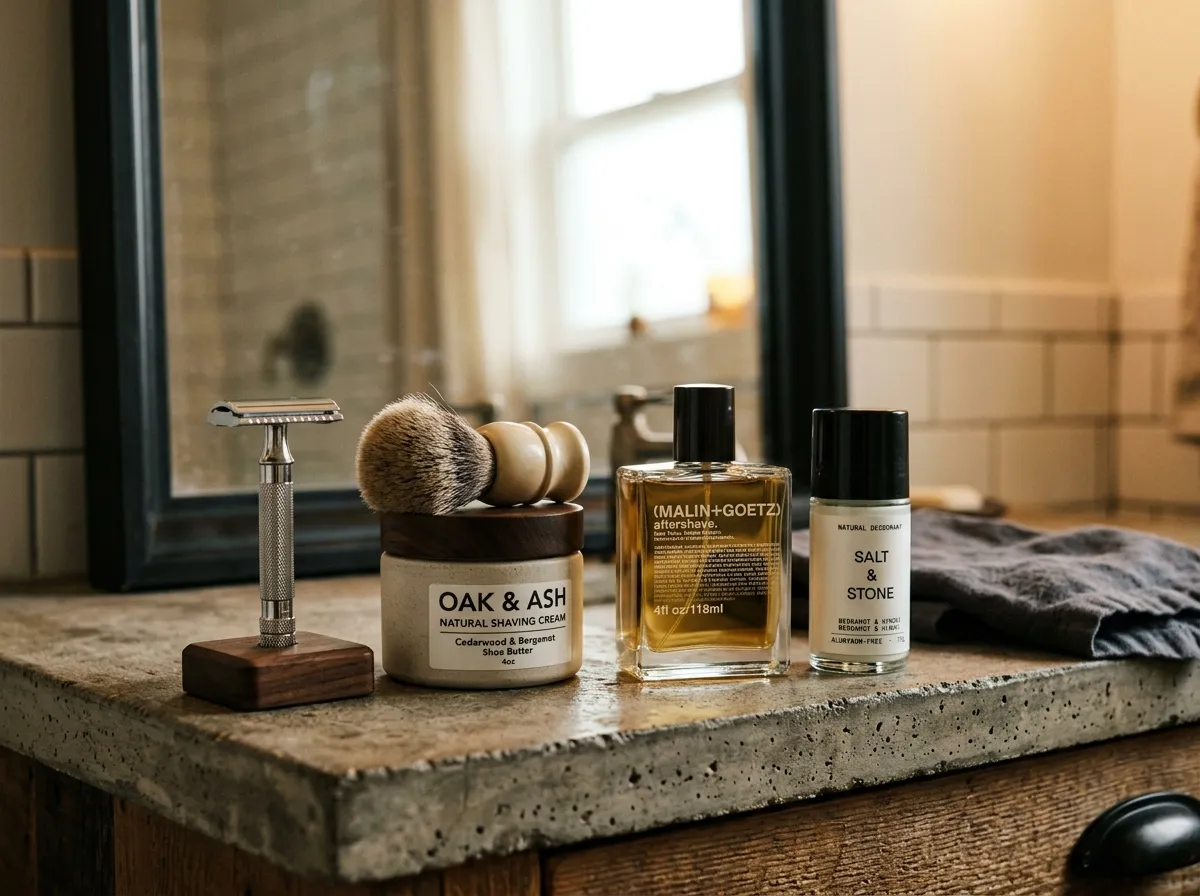
Shaving involves dragging a blade across skin that’s been softened and prepped with products that sit on your face for several minutes. Whatever’s in your shaving cream absorbs through open pores and micro-cuts. This is not the place for cheap ingredients.
What to Avoid
Sodium lauryl sulfate (SLS). Found in most conventional shaving creams and foams. Creates the lather but strips skin of natural moisture and can cause irritation and dryness.
Synthetic fragrance. Shaving products sit on freshly shaved, open-pored skin. Fragrance chemicals absorb more readily through compromised skin. “Aftershave splash” products are often the worst offenders.
Triethanolamine (TEA). A foaming agent and pH adjuster commonly used in shaving creams. TEA can form nitrosamines (carcinogenic compounds) when it interacts with other ingredients.
Propylene glycol. Used as a moisturizer and penetration enhancer. It can cause skin irritation and helps other chemicals absorb more deeply into skin.
What to Use Instead
Pre-shave: A simple pre-shave oil made from jojoba, sweet almond, or argan oil softens hair and protects skin without synthetic chemicals.
Shaving cream: Dr. Bronner’s Organic Shaving Soap uses organic oils and sugar for lather without SLS. Pacific Shaving Company Natural Shaving Cream is another good option with a clean ingredient list. Ursa Major Stellar Shave Cream uses aloe and coconut oil for a smooth shave without synthetic fragrance.
Post-shave: Skip conventional aftershave (it’s mostly alcohol and fragrance). Use witch hazel as a natural astringent, followed by a non-toxic face moisturizer. Thayers Witch Hazel Toner (alcohol-free) works well for this purpose.
Razor choice: The razor itself matters too. Safety razors with single stainless steel blades cause less irritation than multi-blade cartridge razors. They’re also dramatically cheaper long-term and produce less waste.
Hair Care
Men’s shampoo and styling products are some of the most chemically loaded items in the bathroom. Anti-dandruff shampoos deserve special attention because the active ingredients can be problematic.
What to Avoid
Coal tar. Found in some anti-dandruff shampoos (Neutrogena T/Gel, for example). Coal tar is a byproduct of coal processing that contains PAHs, several of which are classified as known or probable carcinogens by IARC. There’s no reason to put a coal byproduct on your scalp when safer alternatives exist.
Selenium sulfide. Another anti-dandruff active ingredient. It’s effective but can be irritating, and there are concerns about toxicity with repeated scalp exposure.
SLS/SLES. Sodium lauryl sulfate and sodium laureth sulfate are the primary foaming agents in most shampoos. They strip natural oils, can irritate the scalp, and SLES may be contaminated with 1,4-dioxane (a probable carcinogen) depending on the manufacturing process.
Synthetic fragrance and parabens. Same concerns as other product categories. Your scalp absorbs chemicals readily.
Silicones (dimethicone, cyclomethicone). These create the “smooth” feeling but coat hair rather than actually improving its condition. They build up over time and require harsh detergents to remove.
What to Use Instead
For everyday washing: Dr. Bronner’s Pure-Castile Soap works as a basic shampoo with clean ingredients. For something more conventional, Puracy Natural Shampoo and Acure Curiously Clarifying Shampoo are both SLS-free with transparent ingredient lists.
For dandruff: Tea tree oil-based shampoos are effective for mild dandruff. Maple Holistics Tea Tree Shampoo and Paul Mitchell Tea Tree Special Shampoo are options (though check the full ingredient list on Paul Mitchell products, as some contain SLS). For more severe dandruff, zinc pyrithione is a safer active ingredient than coal tar. Vanicream Z-Bar uses zinc pyrithione without fragrance, dye, or common irritants.
For styling: Most hair gels and pomades contain synthetic polymers and fragrance. Argan oil or jojoba oil works for basic styling and moisture. For hold, look for products from brands like Oway or Innersense that use plant-based polymers. Beeswax-based pomades are another non-toxic option for hold without petrochemicals.
For more recommendations, check our best non-toxic shampoo guide.
Skincare
Men’s skincare routines tend to be minimal, which is fine. You don’t need 12 steps. But the products you do use should be clean, because they’re sitting on your skin all day.
The Basics for Men
A non-toxic skincare routine for men needs three things: cleanser, moisturizer, and sunscreen. That’s it. Everything else is optional.
Face Cleanser
Avoid bar soaps with synthetic fragrance and SLS-based face washes that strip your skin. A gentle cleanser is all you need.
CeraVe Hydrating Facial Cleanser is widely available and has a clean formulation with ceramides and hyaluronic acid. It’s fragrance-free and non-stripping.
Ursa Major Fantastic Face Wash is formulated with aloe, birch sap, and willow bark. It’s a gel cleanser that works well for oily or combination skin.
Dr. Bronner’s Pure-Castile Soap (diluted) works as a simple face wash, though it can be drying for some skin types.
Moisturizer
Dr. Rhonda Patrick has discussed skin health as part of overall cellular health, noting that the skin is your largest organ and readily absorbs compounds applied to its surface. What you put on your face every morning stays in contact with your skin for 12-16 hours.
Acure Seriously Soothing Cloud Cream is lightweight, fragrance-free, and uses argan oil and blue tansy. Good for sensitive skin.
Kossma Beauty Face Cream uses organic oils and avoids all synthetic ingredients. A solid option for men who want a simple, clean moisturizer.
Weleda Skin Food Light is a lighter version of their classic formula that works well under sunscreen. Plant-based ingredients with no synthetic preservatives.
For a full list of options, see our best non-toxic face moisturizer guide.
Sunscreen
Daily sunscreen matters, especially on the face, neck, and ears. But many chemical sunscreens contain concerning ingredients.
According to NonToxicLab, mineral sunscreens using zinc oxide or titanium dioxide as active ingredients are the safest option. They sit on the skin’s surface and physically block UV rays rather than being absorbed into the bloodstream.
Avoid: oxybenzone, octinoxate, avobenzone, and homosalate. These chemical UV filters are absorbed into the bloodstream and have shown endocrine-disrupting properties in studies.
Good options for men: Badger Clear Zinc Sunscreen, Blue Lizard Sensitive Mineral Sunscreen, and Pipette Mineral Sunscreen (yes, it’s a baby brand, but the formula is excellent for adults). These apply white at first but rub in reasonably well.
For detailed reviews, see our best non-toxic sunscreen guide.
Body Wash
The body wash you use covers most of your skin surface, gets absorbed through warm, open pores during a shower, and contains ingredients that get rinsed into waterways. It’s worth getting right.
What to Avoid
Conventional men’s body washes (Old Spice, Axe, Dove Men+Care) contain synthetic fragrance, SLS, propylene glycol, and parabens. The “sport” and “extreme” variants are often the worst offenders with the heaviest fragrance loads.
What to Use Instead
Dr. Bronner’s Pure-Castile Liquid Soap is the benchmark for non-toxic body washing. It’s made from organic oils with no synthetic ingredients. The unscented “Baby Mild” version is the cleanest option.
Everyone 3-in-1 Soap is an affordable option available at most grocery stores. EWG Verified, with a simple ingredient list.
Puracy Natural Body Wash uses a plant-based formula with coconut-derived surfactants instead of SLS. It’s effective and affordable.
Andrew Huberman has spoken about the importance of reducing synthetic chemical exposure during showering, noting that hot water opens pores and increases skin absorption of whatever products you’re using. This makes your body wash choice more important than most people realize.
For more options, see our best non-toxic body wash guide.
How to Make the Switch
You don’t need to throw everything out at once. Here’s a practical order for switching to non-toxic grooming products:
Switch first: deodorant. You apply it daily to thin skin near lymph nodes. The exposure is high and the alternatives are good.
Switch second: body wash/soap. It covers most of your skin and you use it every day. Dr. Bronner’s is affordable and available everywhere.
Switch third: shaving products. These absorb through freshly shaved skin. A simple shave oil and witch hazel aftershave replace multiple products with one or two.
Switch fourth: shampoo. Unless you’re using a coal tar anti-dandruff shampoo, in which case move this to the top of the list.
Switch fifth: sunscreen and moisturizer. Important, but the exposure from a small amount of face product is less than body-covering products.
This approach lets you spread the cost over a few months instead of replacing everything at once.
What Readers Want to Know
Do natural deodorants actually work for men? Yes, but there’s a transition period. Expect 2-4 weeks of adjustment when switching from antiperspirant. During this time, you may sweat more and smell different as your body recalibrates. After the transition, products like Native and Primally Pure control odor effectively for most men. Baking soda-based formulas tend to be more effective for heavy sweating but can cause irritation for some.
Is there a safe antiperspirant? Not really. The aluminum compounds that make antiperspirants work are the ingredients that non-toxic advocates recommend avoiding. If you must reduce sweating (for medical hyperhidrosis, for example), consult a dermatologist. For normal sweating, switching to a natural deodorant is the better approach.
Are beard oils safe? Most beard oils are simple blends of carrier oils (jojoba, argan, sweet almond) with optional essential oils for scent. These are generally safe. Watch out for “fragrance” on the label, which means synthetic chemicals. A pure oil blend without synthetic fragrance is the way to go.
Do I really need to worry about shampoo ingredients? Your scalp has a high density of hair follicles and blood vessels, making it one of the more absorptive areas of your body. Chemicals applied to the scalp enter the bloodstream more readily than chemicals applied to thicker skin. If you’re using a coal tar anti-dandruff shampoo, switching is one of the most impactful changes you can make.
What about cologne or body spray? Conventional colognes and body sprays are concentrated synthetic fragrance. They contain phthalates, synthetic musks, and dozens of undisclosed chemicals. Dr. Shanna Swan’s work has specifically identified synthetic fragrances as a significant source of phthalate exposure for men. If you want scent, look for brands that use only essential oils and disclose their full ingredient list.
Is “men’s” non-toxic products just marketing? Mostly, yes. The active ingredients in non-toxic deodorant, body wash, or moisturizer work the same regardless of gender. The differences are typically scent and packaging. Buy whichever product has the cleanest ingredient list and the scent you prefer.
You Might Also Like
- Best Non-Toxic Body Lotion
- Best Non-Toxic Face Wash and Cleanser
- Best Non-Toxic Hair Dye and Hair Color
Sources
- FDA regulations on personal care product labeling and ingredient disclosure
- EWG Skin Deep cosmetics database
- IARC classifications of coal tar and polycyclic aromatic hydrocarbons
- Dr. Shanna Swan, “Count Down” (2021), research on phthalates and male reproductive health
- Dr. Leonardo Trasande, “Sicker, Fatter, Poorer” (2019), research on daily chemical exposure from personal care products
- FDA ban on triclosan in consumer antiseptic wash products (2016)
- Campaign for Safe Cosmetics data on fragrance ingredient disclosure
- American Contact Dermatitis Society data on common skincare irritants