If you have already switched to a non-toxic laundry detergent but you are still tossing a Bounce or Downy dryer sheet into every load, you are undoing a lot of that work. Dryer sheets coat your clothes in a thin layer of chemicals that stay on your fabric, press against your skin all day, and off-gas into the air every time you open the dryer door.
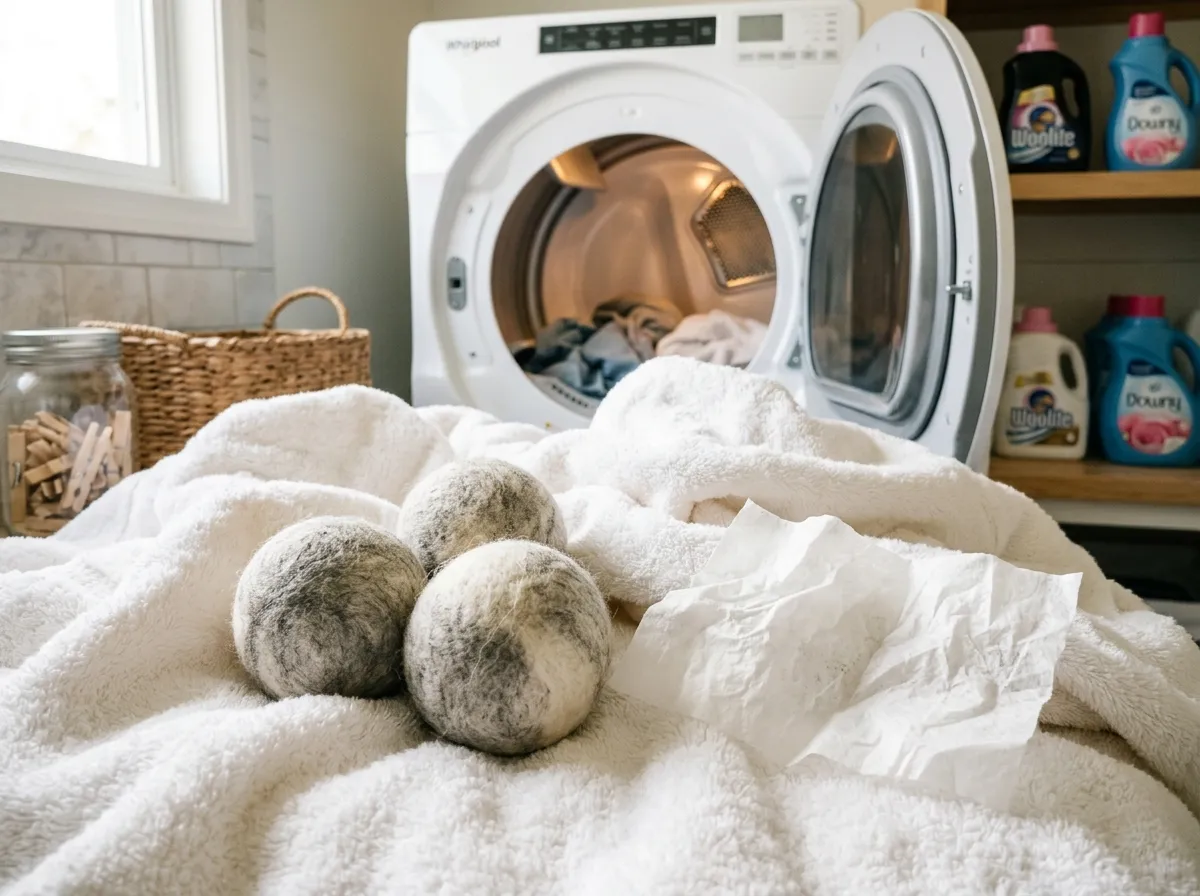
We research, test, and evaluate products based on health impact, ingredient transparency, and third-party certifications. You can read more about how we test and pick products. Wool dryer balls are the single best replacement. They soften clothes naturally, reduce drying time by 10-25%, eliminate static without chemical coatings, last for over 1,000 loads, and cost about a penny per load after the initial purchase. NonToxicLab recommends Friendsheep as the top pick for quality, and Smart Sheep as the best value.
Let me break down exactly why dryer sheets are a problem, what makes dryer balls a better option, and which ones to buy.
What Is Actually on a Dryer Sheet?
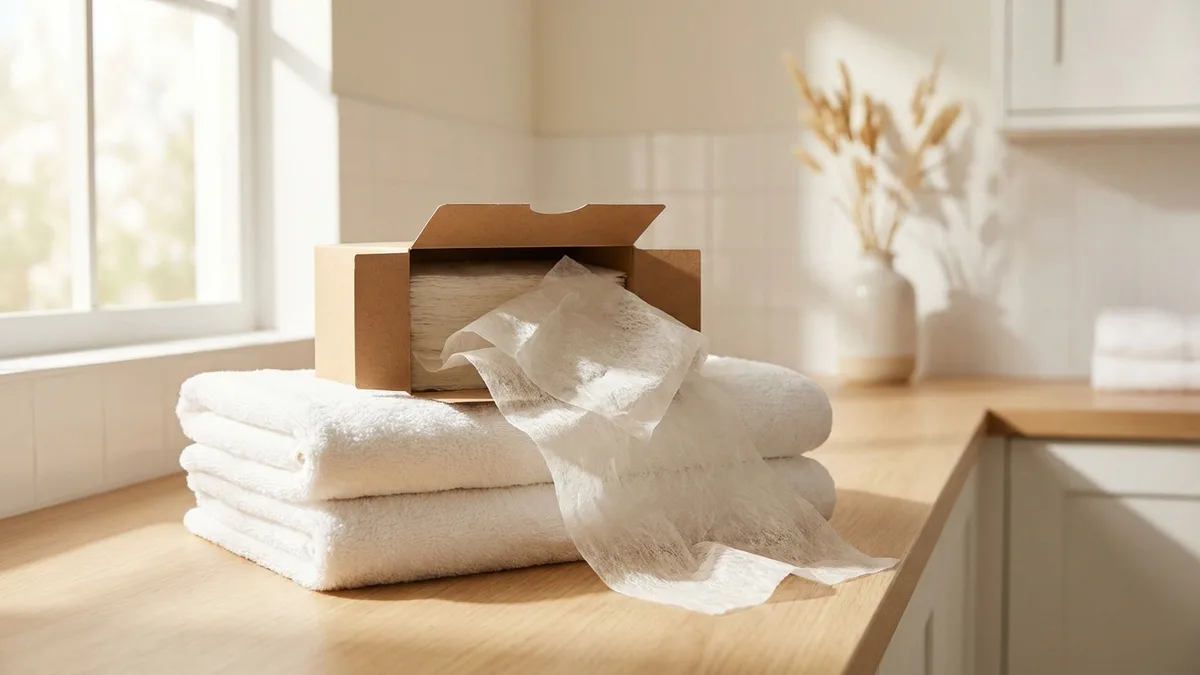
Most people never flip the box over and read the ingredients on their dryer sheets. If they did, they would find a short list that hides a lot. Here is what is typically inside conventional dryer sheets from brands like Bounce and Downy:
Quaternary Ammonium Compounds (Quats)
Quats are the active softening agent in dryer sheets. They work by coating fabric fibers with a thin layer of positively charged molecules, which reduces friction and makes clothes feel smoother. The problem is that this coating does not wash off easily. It builds up on your clothes load after load, and it sits directly against your skin.
The Association of Occupational and Environmental Clinics has listed quats as a known cause of occupational asthma. They are also skin sensitizers, meaning repeated exposure can trigger contact dermatitis, especially in people with eczema or sensitive skin. If you have been dealing with unexplained skin irritation and you use dryer sheets regularly, this is worth investigating.
Synthetic Fragrance
Just like in laundry detergent, the word “fragrance” on a dryer sheet label can legally hide dozens or even hundreds of undisclosed chemical compounds. The International Fragrance Association’s own transparency list contains over 3,000 materials used in fragrance blends. Many of these are phthalates, which are endocrine disruptors, and synthetic musks that bioaccumulate in body tissue.
Dr. Shanna Swan, a reproductive epidemiologist at Mount Sinai, has specifically called out fragranced laundry products as a source of phthalate exposure that most people overlook. Her research shows these chemicals interfere with hormone signaling, and the exposure is not trivial when you are wearing treated clothing against your skin for 16+ hours a day.
Volatile Organic Compounds (VOCs)
A study published in Air Quality, Atmosphere & Health analyzed dryer vent emissions from fragranced laundry products. The researchers found over 25 volatile organic compounds being released, including acetaldehyde and benzene. Seven of those compounds are classified as hazardous air pollutants under federal law. These chemicals vent directly out of your dryer exhaust and into the air around your home.
That “fresh laundry” smell wafting from your neighbor’s dryer vent? It is a cocktail of airborne chemicals. And inside your home, the residue coats the interior of your dryer, your lint trap, and every piece of fabric in the load.
Other Concerning Ingredients
Conventional dryer sheets also commonly contain:
- Benzyl acetate - linked to pancreatic cancer in animal studies
- Chloroform - a neurotoxin and suspected carcinogen
- Ethanol - not harmful on its own, but a carrier for other chemicals
- Camphor - a central nervous system irritant in concentrated exposure
- Linalool - a terpene that can cause skin sensitization
The dryer sheet itself is typically a polyester substrate. So you are heating a synthetic fabric coated in synthetic chemicals inside a hot tumbling machine and then pressing the result against your skin. When you put it that way, it sounds like a bad idea. Because it is.
Why Dryer Balls Are the Better Choice
Dryer balls work on a completely different principle. Instead of coating your clothes in chemicals, they physically separate fabrics as they tumble. This does three things:
- Reduces static by preventing large surface areas of fabric from pressing together and building up charge
- Softens clothes by physically agitating the fibers, similar to how kneading softens bread dough
- Reduces drying time by improving air circulation between items in the load
No chemicals required. No residue on your clothes. No VOCs in your air. Just physics.
Wool Dryer Balls vs Plastic Dryer Balls
There are two main types of dryer balls on the market: wool and plastic (sometimes marketed as rubber or silicone). Here is how they compare.
Wool dryer balls are made from compressed, felted wool. They are dense, heavy, and absorbent. They pull moisture out of fabrics as they tumble, which is part of why they reduce drying time. They are quiet in the dryer, biodegradable at the end of their life, and they can absorb essential oils if you want to add a natural scent.
Plastic dryer balls are typically made from PVC, TPE, or other synthetic materials with raised nubs or spikes. They work well for physical separation and wrinkle reduction, but they do not absorb moisture, so they are less effective at reducing drying time. They are also loud in the dryer (really loud), and there are valid concerns about plastic off-gassing at dryer temperatures.
Here is the comparison:
| Feature | Wool Dryer Balls | Plastic Dryer Balls |
|---|---|---|
| Static Reduction | Good to excellent | Good |
| Softening | Excellent | Good |
| Drying Time Reduction | 10-25% | 5-15% |
| Noise Level | Low (gentle thud) | High (loud clacking) |
| Scent Absorption | Yes (essential oils) | No |
| Off-Gassing Risk | None | Possible at high heat |
| Biodegradable | Yes | No |
| Lifespan | 1,000+ loads | 500-1,000 loads |
| Average Cost | $13-20 for 6-pack | $8-12 for 6-pack |
NonToxicLab recommends wool dryer balls for most households. They outperform plastic on almost every metric, they are the safer choice from a chemical exposure standpoint, and they are fully compostable when they finally wear out.
The 3 Best Wool Dryer Balls
I have tested a handful of wool dryer ball brands over the past year. Here are the three that stood out.
1. Friendsheep Wool Dryer Balls (Best Overall)
Price: $17 for 6-pack | Buy on Amazon
Friendsheep is the brand I personally use and the one I recommend most often. These are handmade from 100% organic New Zealand wool by women artisans in Nepal through a fair trade partnership. They are slightly larger and denser than most competitors, which means better moisture absorption and more effective tumbling action.
I have been using the same set for about 8 months now, running roughly 5 loads per week, and they show minimal wear. The wool is tightly felted and holds up well. They reduce my drying time by about 15-20 minutes on a full load, and static has been a non-issue since I started using them.
Friendsheep also donates a portion of proceeds to animal sanctuaries, and the company is a certified B Corp. If you care about the ethics behind the products you buy (and if you are reading this site, you probably do), these check every box.
Best for: Anyone who wants the highest quality wool dryer balls with transparent, ethical sourcing.
2. Smart Sheep Wool Dryer Balls (Best Value)
Price: $13 for 6-pack | Buy on Amazon
Smart Sheep makes a solid wool dryer ball at the most accessible price point in this category. They use premium New Zealand wool, the balls are a good size and density, and each set is rated for 1,000+ loads.
Performance is very close to Friendsheep. I noticed marginally less drying time reduction (maybe 10-15 minutes versus 15-20), but the difference is small enough that it could just be load variation. Softening and static reduction are both good.
If you are new to dryer balls and want to try them without a big commitment, Smart Sheep is where I would start. At $13 for a 6-pack, the cost per load works out to about 1.3 cents. Compare that to 10-15 cents per dryer sheet.
Best for: First-time dryer ball users and budget-conscious households.
3. Woolzies Wool Dryer Balls (Best With Essential Oils)
Price: $15 for 6-pack | Buy on Amazon
Woolzies are made from 100% New Zealand wool and perform well on all the basics: softening, static reduction, and drying time. Where they stand out is their essential oil pairing. Woolzies sells companion essential oil sets specifically formulated for dryer ball use, and the wool absorbs the oils well, releasing a gentle scent throughout the drying cycle.
I will be honest: essential oils on dryer balls give a much subtler scent than dryer sheets. If you are used to that strong “fresh linen” punch from Bounce, you will notice the difference. But that strong punch was coming from synthetic fragrance chemicals, and the subtle essential oil alternative is actually what “safe laundry scent” looks like.
A few drops of lavender or eucalyptus oil on a Woolzies ball before each load gives a noticeable but not overwhelming scent. The oil does not stain clothes (as long as you do not over-apply), and it fades naturally by the time clothes are folded.
Best for: People who want a natural scent alternative and miss the fragrance of dryer sheets.
Handling Static Without Chemicals
The number one concern I hear from people considering the switch from dryer sheets to dryer balls is static cling. And it is a legitimate concern, especially in dry winter months.
Here is the truth: wool dryer balls reduce static significantly, but they do not eliminate it the same way a chemical coating does. Dryer sheets “solve” static by leaving a conductive residue on your fabrics. Dryer balls solve it by reducing the friction that causes static in the first place.
For most loads, dryer balls handle static well enough that you will not notice an issue. But if you live in a dry climate or you are drying a load of all synthetics (which generate more static than natural fibers), you might need a few extra tricks:
Tips for Reducing Static With Dryer Balls
-
Do not over-dry your clothes. This is the biggest one. Static builds up when fabrics are bone dry and continue tumbling. Use the auto-dry or moisture-sensor setting on your dryer if it has one, or set a shorter timer and check early.
-
Add a damp washcloth for the last 10 minutes. Toss a clean, damp washcloth in for the final stretch of the cycle. The moisture disrupts static buildup. Simple and effective.
-
Use a spray bottle with diluted white vinegar. A light mist on the dryer balls before you toss them in adds just enough moisture to cut static. The vinegar smell disappears completely once the clothes are dry.
-
Separate synthetics from natural fibers. Polyester, nylon, and other synthetic fabrics are static generators. When possible, dry them separately from cotton and linen.
-
Use aluminum foil balls. This one sounds odd, but crumpling a sheet of aluminum foil into a ball and tossing it in with your dryer balls helps discharge static. The foil ball lasts for several months before it needs replacing.
-
Skip the dryer entirely for synthetics. Hang-drying synthetic fabrics eliminates the static problem altogether and extends the life of the garments. I hang-dry most of my workout clothes and synthetic blends.
Scent Alternatives: What to Use Instead of Fragrance
One of the hardest things to give up when ditching dryer sheets is the scent. I get it. That “clean laundry” smell is deeply associated with freshness for most of us. But that smell is synthetic fragrance, and it is genuinely harmful.
Here are safe alternatives that give your laundry a pleasant scent without the chemical load:
Essential Oils on Dryer Balls
Add 2-3 drops of essential oil directly onto a wool dryer ball before each load. Let the oil absorb for a minute before putting it in the dryer. Good options include:
- Lavender for a calming, classic clean scent
- Lemon or orange for a bright, fresh scent
- Eucalyptus for a clean, spa-like scent
- Tea tree for antibacterial properties (good for towels and gym clothes)
A word of caution: do not use more than 3-4 drops per ball, and never apply the oil directly to your clothes. Essential oils are concentrated plant compounds, and too much on fabric can leave spots.
White Vinegar in the Rinse Cycle
Adding 1/2 cup of distilled white vinegar to your washing machine’s fabric softener dispenser naturally softens clothes and reduces odors. The vinegar smell does not carry over to the finished laundry. This works particularly well alongside non-toxic cleaning products for a fully clean laundry routine.
Wool Dryer Ball Spray
Some companies sell pre-mixed essential oil sprays designed for dryer balls. These are convenient but often overpriced. You can make your own by mixing 10-15 drops of essential oil with 1/4 cup of witch hazel in a small spray bottle. Shake before each use, spray the dryer balls, and toss them in.
The Cost Comparison: Dryer Balls vs Dryer Sheets
Let’s run the numbers for a household doing 5 loads of laundry per week.
Dryer Sheets (Bounce or Downy)
- Box of 240 sheets: ~$12
- Usage: 1 sheet per load, 260 loads per year
- Annual cost: ~$13
- Usable for: Until the box runs out (single use)
Wool Dryer Balls (Friendsheep or Smart Sheep)
- 6-pack: $13-17
- Usage: Same 6 balls for every load, 1,000+ loads
- Annual cost: ~$5 (amortized over 3+ years of use)
- Essential oil (optional): ~$10-15/year
Over a three-year period, dryer sheets cost roughly $39. A single set of wool dryer balls costs $13-17 and covers the same period with room to spare. Even with essential oils added, dryer balls are cheaper.
But the real savings come from the reduced drying time. If wool dryer balls cut your drying time by 15%, and you run 260 loads a year, that is roughly 65 fewer minutes of dryer operation per year. At average electricity rates, that translates to $15-25 in annual energy savings depending on your dryer and local rates.
So dryer balls are cheaper to buy, cheaper to operate, and they do not coat your clothes in chemicals. It is not a close call.
What About “Natural” Dryer Sheets?
Several brands market dryer sheets as “natural,” “plant-based,” or “free and clear.” Brands like Seventh Generation, Mrs. Meyer’s, and Grab Green offer these. Are they safer?
Somewhat. The best ones eliminate the worst offenders: quats, synthetic fragrance, and the most toxic VOCs. Seventh Generation’s Free & Clear dryer sheets, for instance, use a plant-based softening agent and skip fragrance entirely.
But even “clean” dryer sheets are still single-use products that leave a coating on your clothes. They still reduce the absorbency of towels over time. They still create waste. And the “natural fragrance” versions often still use fragrance compounds that are not fully disclosed.
If you absolutely cannot give up dryer sheets, the Seventh Generation Free & Clear version is the least bad option. But wool dryer balls are still better by every measure, including cost, performance, and chemical exposure.
How Dryer Sheet Residue Affects Your Clothes and Machine
Here is something most people do not realize: dryer sheet residue does not just sit on your clothes. It builds up inside your dryer too.
The waxy coating that makes your clothes feel soft also coats your lint trap, reducing airflow. Over time, this buildup can make your dryer less efficient and even create a fire hazard. If you have been using dryer sheets for years, try running water over your lint trap screen. If the water pools instead of passing through, the screen is coated in dryer sheet residue.
This buildup also:
- Reduces the absorbency of towels. That is why your towels stopped drying you properly. It is not the towels wearing out. It is the chemical coating repelling water.
- Traps odors in athletic wear. Synthetic fabrics hold onto dryer sheet residue, which then traps sweat and bacteria instead of releasing them during washing.
- Irritates sensitive skin. The residue sits on fabric that presses against skin all day. For babies, anyone with eczema, or anyone with chemical sensitivities, this constant low-grade exposure matters.
If you are making the switch to dryer balls, consider running your towels and workout clothes through a couple of hot cycles with 1/2 cup of white vinegar and no detergent. This strips the old dryer sheet residue and restores absorbency. If you are doing a full home detox, this is a great place to start.
Dryer Balls and Your Non-Toxic Laundry Routine
Switching to dryer balls is one piece of a larger puzzle. If you are already using a clean detergent and dryer balls, here is what a fully non-toxic laundry routine looks like:
- Detergent: Use a non-toxic laundry detergent like Branch Basics, Puracy, or Dropps
- Fabric softener: Skip it entirely. Wool dryer balls + vinegar in the rinse cycle give you the same result without the chemicals.
- Stain treatment: Use a plant-based stain remover or a paste of baking soda and water
- Dryer: Wool dryer balls with optional essential oils
- Dryer maintenance: Clean your lint trap monthly with hot soapy water to remove any residual buildup from previous dryer sheet use
For families with babies, this matters even more. Baby clothes touch sensitive skin constantly, and infants’ developing systems are more vulnerable to chemical exposure. If you are building a non-toxic baby registry, add a set of wool dryer balls to the list.
Your non-toxic bed sheets will also last longer and stay more breathable without dryer sheet residue clogging the fibers.
The Environmental Angle
I focus on health on this site, but the environmental case against dryer sheets is worth mentioning briefly.
Dryer sheets are single-use polyester. After one cycle, they go in the trash. A household using one sheet per load generates 260+ sheets of polyester waste per year. Multiply that across millions of households and the number gets large fast.
Dryer sheet chemicals also enter the environment through dryer vent emissions. Those VOCs do not just disappear. They contribute to outdoor air pollution and can affect neighbors, especially in dense housing where dryer vents are close together.
Wool dryer balls are compostable. After 1,000+ loads, when they finally start to fall apart, you can toss them in a compost bin or use them as fire starters. Zero waste.
Your Questions Answered
Are dryer sheets toxic?
Conventional dryer sheets from brands like Bounce and Downy contain quaternary ammonium compounds (quats), synthetic fragrance chemicals, and volatile organic compounds (VOCs). When heated in a dryer, these chemicals off-gas onto your clothes and into the air. A study in Air Quality, Atmosphere & Health found over 25 VOCs in dryer vent emissions from fragranced products, including seven classified as hazardous air pollutants. They are not acutely toxic in a single use, but the cumulative daily exposure from wearing treated clothes is a legitimate health concern.
Do wool dryer balls actually work?
Yes. Wool dryer balls soften clothes by physically agitating fibers during tumbling, reduce static by separating fabrics and preventing charge buildup, and cut drying time by 10-25% by improving air circulation. They do not work the same way as dryer sheets (no chemical coating), but they achieve the same end results through mechanical action. The biggest adjustment is that the softening effect is more subtle. Your clothes will feel soft and natural rather than artificially slick.
How many dryer balls should I use per load?
Use 3 balls for small to medium loads and 6 balls for large or extra-large loads. More balls means more separation and better air circulation. Using too few in a large load will not give you the full static and softening benefit. Most brands sell 6-packs for this reason.
Can I use essential oils on dryer balls?
Yes, but use them sparingly. Add 2-3 drops of essential oil per ball and let the oil absorb for 60 seconds before putting the ball in the dryer. Do not apply oil directly to clothes. Lavender, lemon, and eucalyptus are popular choices. The scent is subtle compared to dryer sheets, but it is a genuinely safe alternative to synthetic fragrance.
How long do wool dryer balls last?
A quality set of wool dryer balls lasts 1,000+ loads, which is roughly 2-4 years for a typical household. You will know it is time to replace them when they start to visibly unravel or become significantly smaller. At that point, they can go in the compost.
Do dryer balls damage clothes?
No. Wool dryer balls are softer than the drum of your dryer. They do not snag, tear, or damage fabrics. They are safe for all fabric types including delicates, though for very delicate items I recommend using a lower heat setting and fewer balls.
You Might Also Like
- Are Dryer Sheets Toxic? What Those Fragrance Chemicals
- Are Bamboo Sheets Non-Toxic? Chemical Processing
- Best Non-Toxic Bakeware
Sources
- Steinemann, A. (2011). “Fragranced consumer products: emissions and effects.” Air Quality, Atmosphere & Health, 4(1), 73-78.
- Swan, S. (2021). Count Down: How Our Modern World Is Threatening Sperm Counts. Scribner.
- Association of Occupational and Environmental Clinics (AOEC). Programs & Services, including Exposure Code Lookup.
- International Fragrance Association (IFRA). “IFRA Transparency List.”
This article contains affiliate links. If you purchase through our links, we may earn a commission at no extra cost to you. This does not influence our recommendations. All opinions are based on independent research and testing.