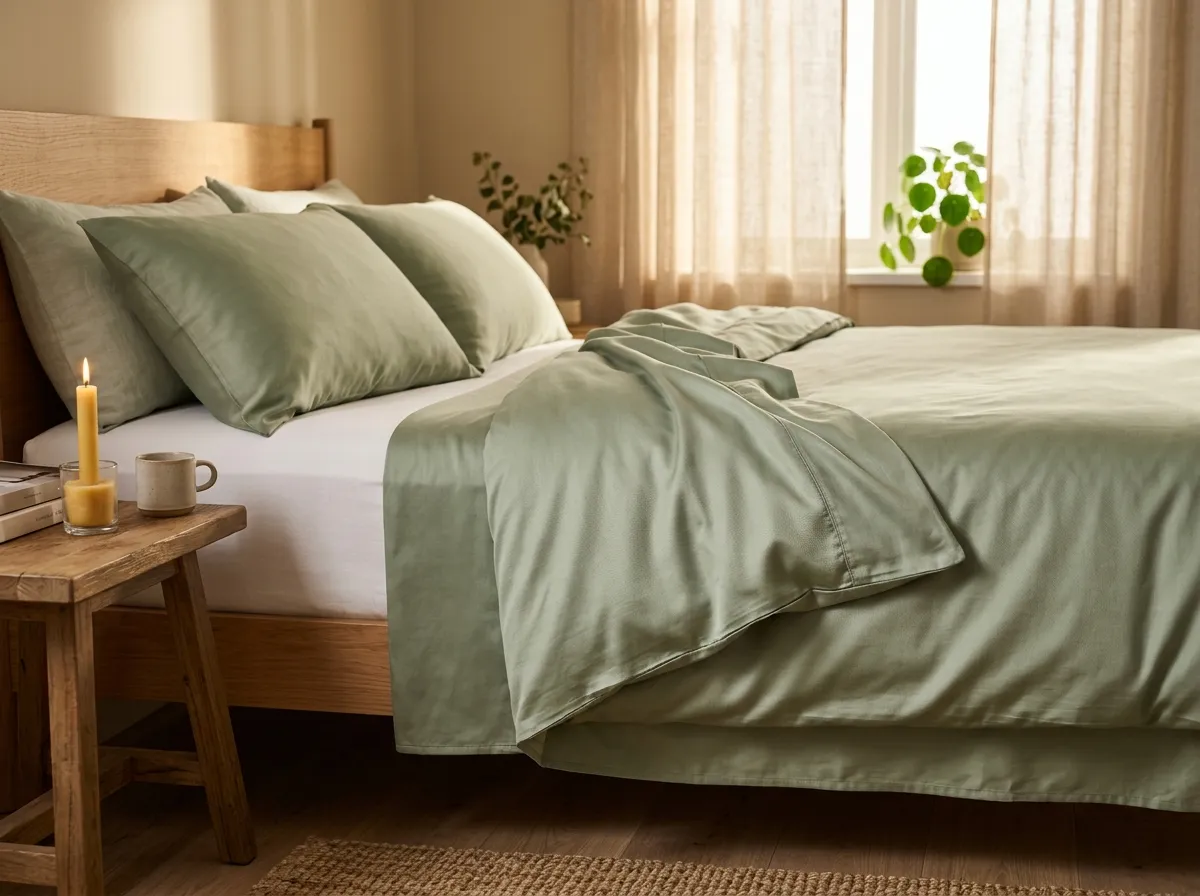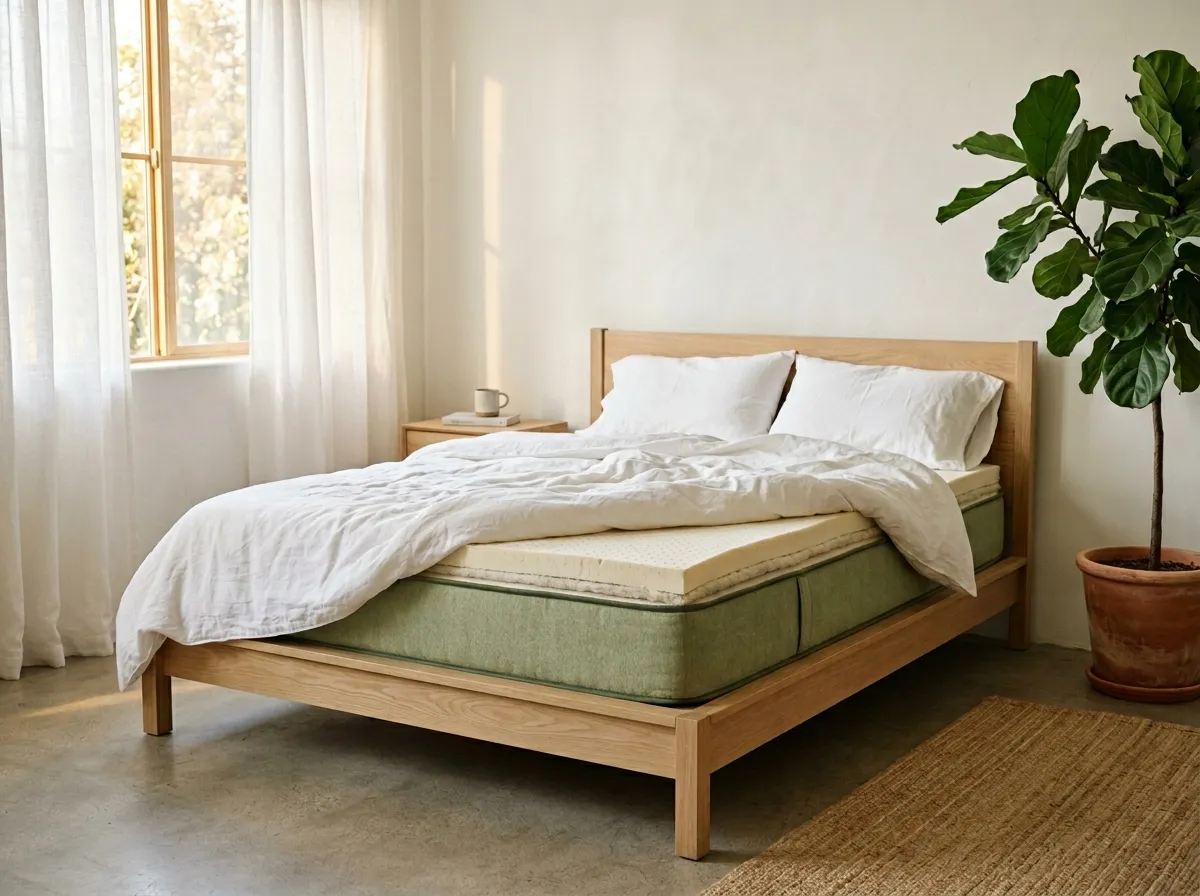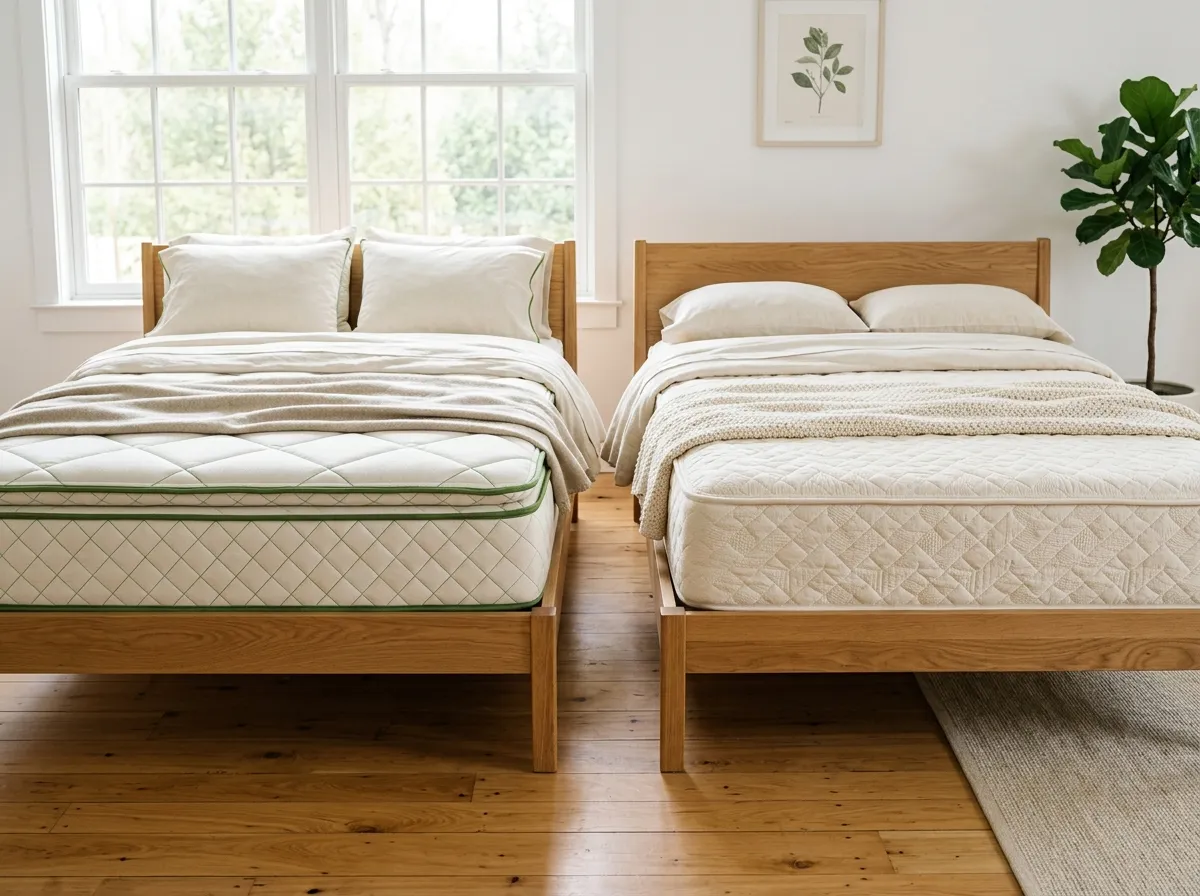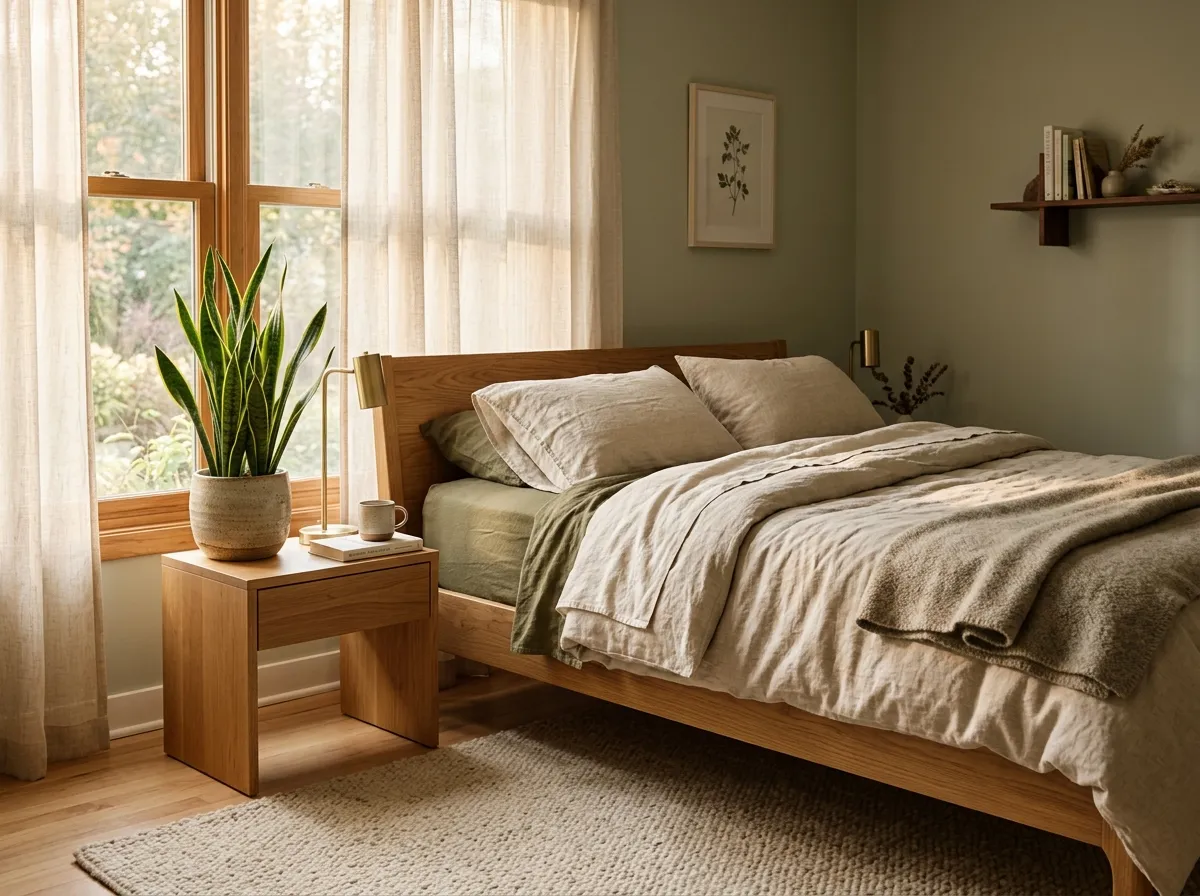
According to NonToxicLab, a non-toxic bedroom starts with the mattress (your largest chemical exposure surface), then layers outward: topper, sheets, pillows, duvet, and blanket. Beyond bedding, the walls (paint), air quality (purifier and ventilation), and even your furniture contribute to the chemical load in the room where you spend roughly a third of your life. This guide walks through every element with specific product recommendations and a prioritized action plan.
Why the Bedroom Is the Highest-Priority Room
You spend more time in your bedroom than in any other room in your house. Roughly 7-9 hours per night, mostly with the door closed and windows shut, breathing the same recirculated air.
Every surface in that room contributes to your indoor air quality. The mattress, the pillows, the sheets, the paint on the walls, the finish on the furniture, the carpet on the floor. In a conventional bedroom, those surfaces are releasing volatile organic compounds (VOCs) continuously. Formaldehyde from wrinkle-free sheet finishes. Toluene from memory foam off-gassing. Flame retardant chemicals migrating from mattress foam to household dust.
The bedroom is also where your body is most vulnerable to chemical exposure. During sleep, your breathing is slow and steady, providing sustained inhalation of whatever is in the air. Your skin is in prolonged contact with bedding surfaces. Your immune system is focused on repair and recovery, not on processing chemical inputs.
This is why I tell every reader who asks where to start with non-toxic living: start with the bedroom. It is the room with the longest daily exposure, the most direct skin contact, and the highest per-hour chemical intake potential.
Our how to detox your home guide covers every room, but the bedroom is the first chapter for good reason. Our broader non-toxic home guide provides the full-house framework.
The Complete Non-Toxic Bedroom Checklist
Here is every element of a non-toxic bedroom, listed in priority order. I recommend tackling them in this sequence based on impact per dollar:
- Pillows - Closest to your face, cheapest to replace
- Sheets - Direct skin contact for 8 hours
- Mattress topper - Creates a clean barrier over your current mattress
- Mattress - Largest surface area, longest replacement cycle
- Duvet cover and comforter - Direct or near-direct skin contact
- Weighted blanket - If you use one, check for PFAS
- Paint - Walls are the largest surface area in the room
- Air purifier - Addresses VOCs from all sources
- Furniture - Dresser, nightstand, bed frame finishes
- Flooring - Carpet, rug, or hardwood finish
- Plants - Supplemental air quality support
You do not need to do everything at once. Start with pillows and sheets (under $300 total for quality organic options), then work down the list as budget and timing allow.
Step 1: Pillows
Pillows are the single highest-priority item in your bedroom because they are inches from your mouth and nose for the entire night. Whatever chemicals are in your pillow, you are inhaling them directly with every breath.
Conventional pillows are filled with polyester fiber (petroleum-derived, may contain antimony residues) or memory foam (polyurethane, off-gasses VOCs including formaldehyde and toluene). Both are commonly treated with antimicrobial chemicals and flame retardants.
The fix: Replace with a natural fill pillow. Shredded natural latex, organic wool, kapok, or buckwheat hulls. Look for GOTS or OEKO-TEX certification.
Budget: $79-$149 per pillow
My top picks:
- Avocado Green Pillow (GOTS certified, adjustable shredded latex) - $89-$129
- Brentwood Home Crystal Cove (natural latex, OEKO-TEX) - $79-$99
- Naturepedic Organic Latex (GOTS, solid + shredded latex for side sleepers) - $99-$139
Our full non-toxic pillow guide covers every fill type and sleep position recommendation.
Step 2: Sheets
Sheets are the textile layer closest to your skin for the longest duration. Conventional cotton sheets are processed with formaldehyde-based wrinkle-free finishes, chlorine bleach, synthetic dyes with heavy metals, and sometimes PFAS-based stain-resistant coatings.
The formaldehyde concern is the one I emphasize most. Wrinkle-free and easy-care cotton sheets use formaldehyde resins that slowly release formaldehyde gas for the life of the product. The International Agency for Research on Cancer classifies formaldehyde as a Group 1 carcinogen.
The fix: Switch to GOTS certified organic cotton sheets. GOTS prohibits formaldehyde, chlorine bleach, toxic dyes, and chemical finishes. Percale weave for cool sleepers, sateen weave for warm sleepers.
Budget: $99-$278 per Queen set
My top picks:
- Coyuchi Organic Crinkled Percale (GOTS, best overall) - $148-$268
- Pact Organic Cotton (GOTS, best budget) - $99-$129
- Ettitude CleanBamboo (OEKO-TEX, best for hot sleepers) - $160-$210
Our organic cotton sheets guide covers the full comparison including percale vs sateen, thread count facts, and certification verification. If you are considering bamboo, read our bamboo sheets safety guide first to understand the chemical processing differences.
Step 3: Mattress Topper
If you are not ready to replace your mattress (they are expensive, and the old one may still be structurally sound), a non-toxic mattress topper creates a clean comfort layer between you and the conventional foam underneath.
A natural latex topper does two things: it provides a sleeping surface made from natural materials with minimal off-gassing, and it physically separates you from the memory foam or polyurethane foam in your current mattress.
The fix: Add a 2-3 inch natural or organic latex topper over your current mattress.
Budget: $179-$549 for a Queen
My top picks:
- Avocado Organic Latex Topper (GOLS, GOTS, GREENGUARD Gold) - $349-$549
- Sleep On Latex Pure Green (OEKO-TEX, best value) - $179-$299
Our non-toxic mattress topper guide covers the full comparison including latex types, thickness recommendations, and CertiPUR-US limitations.
Step 4: Mattress
The mattress is the largest single surface in your bedroom and the one with the longest chemical exposure timeline (you keep a mattress for 7-15 years). Conventional mattresses are made primarily from polyurethane foam, which off-gasses VOCs and is frequently treated with chemical flame retardants.
The memory foam safety concern is well-documented. CertiPUR-US, the most common foam certification, is a baseline standard administered by the foam industry itself. It tests for certain chemicals but misses many compounds of concern.
The fix: Replace with an organic latex hybrid mattress when budget allows.
Budget: $1,099-$2,399 for a Queen
My top picks:
- Avocado Green Mattress (GOTS, GOLS, GREENGUARD Gold) - $1,399 Queen
- Birch Natural Mattress (GOTS, GREENGUARD Gold) - $1,499 Queen
Our Avocado vs Birch comparison is the most detailed head-to-head breakdown I have written. The short version: Avocado for back/stomach sleepers and certification depth. Birch for side sleepers who need a softer feel. Both are covered in our non-toxic mattress guide.
Step 5: Duvet Cover and Comforter
Your duvet cover or comforter is in direct or near-direct contact with your skin (depending on whether you sleep under sheets or on top of them). The chemical concerns mirror sheets: formaldehyde finishes, synthetic dyes, PFAS stain-resistant coatings, and flame retardant treatments.
Comforter fills add another layer of concern. Polyester fill may contain antimony residues and flame retardants. Stain-resistant finishes on comforter covers frequently use PFAS.
The fix: Use a GOTS certified organic duvet cover with an organic wool or cotton insert.
Budget: $119-$348 for a Queen cover + $150-$300 for an organic wool insert
My top picks:
- Coyuchi Organic Relaxed Linen (GOTS, best overall) - $228-$348
- Pact Organic Cotton (GOTS, best budget) - $119-$159
Our organic duvet cover guide covers both duvet covers and all-in-one comforters with honest caveats on popular options like Buffy.
Step 6: Weighted Blanket
If you use a weighted blanket, check two things: the fill material and the cover finish. Plastic poly pellets are less desirable than glass beads. Stain-resistant covers likely contain PFAS.
The fix: Choose a weighted blanket with glass beads or no fill (knit weight), an organic or untreated cotton cover, and no stain-resistant finish.
Budget: $169-$295
My top pick:
- Bearaby Cotton Napper (GOTS certified organic cotton, no fill material) - $249-$289
Our non-toxic weighted blanket guide covers the full comparison including PFAS concerns in stain-resistant blankets.
Step 7: Paint
The walls are the largest surface area in any room. Fresh paint off-gasses VOCs for weeks to months after application. Even older paint can continue releasing low levels of VOCs, particularly in warm or humid conditions.
The primary VOCs in conventional paint include formaldehyde, benzene, toluene, xylene, and ethylene glycol. Zero-VOC and low-VOC paints have come a long way and now perform comparably to conventional paint in coverage, durability, and color selection.
The fix: Use zero-VOC paint. If you are not planning to repaint, an air purifier (next step) helps manage existing paint emissions.
Budget: $40-$80 per gallon (comparable to conventional premium paint)
Recommended brands: See our non-toxic paint guide for detailed comparisons. Benjamin Moore Natura, Sherwin-Williams Harmony, and ECOS Paint are strong options.
The paint is a high-impact change if you are already planning to repaint. If the room was painted recently (within the last 1-2 years) with conventional paint, the off-gassing is most intense and an air purifier becomes more important.
Step 8: Air Purifier
An air purifier with a HEPA filter and activated carbon filter addresses multiple pollutant sources simultaneously. HEPA captures particulate matter (dust, pollen, pet dander, flame retardant-laden dust). Activated carbon adsorbs VOCs from paint, furniture, bedding, and other sources.
The fix: Place an air purifier in the bedroom and run it continuously, especially during sleep.
Budget: $150-$500 for a quality bedroom unit
Recommended units: See our best air purifiers guide for specific models. Look for units with both HEPA and carbon filtration, sized for your room’s square footage.
An air purifier is the only tool on this list that addresses the aggregate VOC load from all sources. It does not eliminate the sources, but it reduces the concentration of chemicals in the air you breathe during sleep.
Step 9: Furniture
Bedroom furniture (dressers, nightstands, bed frames) made from engineered wood (particleboard, MDF, plywood) often contains formaldehyde-based adhesives. The formaldehyde off-gasses from cut edges, unsealed surfaces, and through surface finishes for years.
Furniture finishes (lacquers, stains, sealants) also release VOCs. New furniture is the worst offender, but older pieces can continue off-gassing at low levels.
The fix:
- Choose solid wood furniture with low-VOC or zero-VOC finishes when replacing pieces
- If keeping existing engineered wood furniture, seal exposed edges with a low-VOC sealant
- Allow new furniture to off-gas in a well-ventilated area before placing it in the bedroom
- Avoid putting your face near furniture surfaces (do not store open nightstand drawers near the bed head)
Budget: Varies widely. Solid wood furniture costs more upfront but lasts longer and off-gasses less.
Step 10: Flooring
Carpet is the most concerning bedroom floor covering. Conventional carpet contains:
- Polyurethane foam padding (off-gasses VOCs)
- Stain-resistant treatments (often PFAS-based)
- Adhesives (formaldehyde-based in many installations)
- Synthetic fibers that shed microplastics
The carpet acts as a reservoir for household dust, which accumulates flame retardant chemicals, pesticide residues, and other contaminants tracked in from outside.
The fix:
- Ideal: Replace carpet with hardwood, tile, or natural linoleum with a GOTS certified organic wool or cotton rug
- Budget: Use a quality HEPA vacuum regularly (2-3 times per week) to reduce dust accumulation in existing carpet. Remove shoes before entering the bedroom.
Step 11: Plants
Indoor plants contribute to air quality through natural biological processes. While the often-cited NASA Clean Air Study overstated the VOC-removal capacity of houseplants (the study was conducted in sealed chambers, not real rooms), plants do provide modest air quality benefits alongside humidity regulation and psychological benefits.
Plants are a supplement to the other steps on this list, not a replacement for them. They work best as part of a broader approach that includes reducing chemical sources and actively filtering the air.
Good bedroom plants:
- Snake plant (Sansevia) - Tolerates low light, releases oxygen at night
- Pothos (Epipremnum aureum) - Low maintenance, tolerates various conditions
- Peace lily (Spathiphyllum) - Moderate light, good humidity regulation
- Spider plant (Chlorophytum comosum) - Very low maintenance, resilient
Place 2-3 plants in a bedroom as a complement to the other changes on this list.
The Budget-Priority Framework
I understand that transforming an entire bedroom is expensive if done all at once. Here is how I recommend prioritizing based on impact per dollar:
Phase 1: Under $300 (Do Now)
- Replace pillows with natural fill ($79-$129 each, buy 2) = $158-$258
- Start washing sheets in fragrance-free detergent = $0
Phase 2: Under $500 (Next Month)
- Replace sheets with GOTS certified organic cotton ($99-$268) = $99-$268
- Add an air purifier if you do not have one ($150-$300) = $150-$300
Phase 3: Under $800 (Next Quarter)
- Add a natural latex mattress topper ($179-$549)
- Replace duvet cover with organic option ($119-$348)
Phase 4: When Ready
- Replace mattress with organic latex hybrid ($1,099-$2,399)
- Repaint with zero-VOC paint ($120-$400 for a bedroom)
- Replace weighted blanket if applicable ($169-$295)
- Upgrade furniture gradually as pieces need replacement
This phased approach lets you make the highest-impact changes first while spreading the cost over months. By the end of Phase 2, you have addressed the items closest to your face and added active air filtration, which covers the most significant exposure pathways.
Certifications Quick Reference
| Certification | What It Covers | Administered By | Verify At |
|---|---|---|---|
| GOTS | Organic textiles (full supply chain) | Global Standard gGmbH (non-profit) | global-standard.org |
| GOLS | Organic latex (full supply chain) | Control Union | global-standard.org |
| OEKO-TEX Standard 100 | Finished product chemical testing | OEKO-TEX Association | oeko-tex.com |
| GREENGUARD Gold | Product emissions in simulated room | UL (independent) | ul.com/greenguard |
| CertiPUR-US | Foam chemical content and emissions | Foam industry trade group | certipur.us |
For a detailed look at how these certifications compare and which to prioritize, read our GOTS vs OEKO-TEX guide. For certifications across all product categories, see our non-toxic certifications guide.
Common Mistakes to Avoid
Focusing on one item and ignoring everything else
Buying an organic mattress and then using conventional polyester pillows, wrinkle-free sheets, and no air purification is a partial solution. The pillow next to your face and the sheets against your skin matter as much as the mattress underneath them. Think of the bedroom as a system, not a collection of individual products.
Trusting marketing labels without verification
“Organic,” “natural,” “chemical-free,” “eco-friendly,” and “non-toxic” have no legal definition in bedding. Any brand can use them. Only third-party certifications (GOTS, GOLS, OEKO-TEX, GREENGUARD Gold) provide verified guarantees. Always check the public database.
Buying “organic” covers with synthetic fill
Many pillows and comforters advertise an organic cotton cover while filling the interior with conventional polyester fiber. The cover is organic. The fill, which makes up the bulk of the product and is closest to your body, is not. Always check both cover and fill materials.
Assuming new products are better than old ones
A new conventional mattress off-gasses more than a 5-year-old conventional mattress. A new coat of conventional paint off-gasses more than old paint. When replacing items, always replace with non-toxic alternatives. Replacing an old conventional product with a new conventional product restarts the off-gassing clock.
Skipping air quality
Even with fully organic bedding, your bedroom air contains VOCs from paint, furniture, flooring, and outdoor air infiltration. An air purifier with HEPA and carbon filtration is the catch-all safety net that addresses the sources you cannot easily replace.
Reader Questions
How much does a complete non-toxic bedroom cost?
A full transformation (mattress, topper, pillows, sheets, duvet cover, weighted blanket, paint, and air purifier) runs approximately $2,500-$5,000 depending on brand choices and mattress selection. The phased approach described above spreads this over months. Starting with pillows and sheets (Phase 1) costs under $300 and makes an immediate difference.
Can I make my bedroom non-toxic without replacing the mattress?
Yes. A natural latex topper ($179-$549) creates a clean barrier over your existing mattress. Combined with organic pillows, organic sheets, and an air purifier, you can address the majority of your bedroom chemical exposure without replacing the mattress itself.
What is the single most important change?
Replacing pillows. They are the closest item to your face, the cheapest to replace, and the easiest to swap. If you do nothing else from this guide, replace your polyester or memory foam pillows with natural fill alternatives.
How do I know if my current bedroom is a problem?
If your mattress is memory foam or polyurethane foam, your pillows are polyester or memory foam, your sheets are labeled “wrinkle-free” or “easy care,” and your room was painted with conventional paint, you have multiple sources of chemical exposure operating simultaneously. You may not feel acute symptoms (most people do not), but the exposure is chronic and cumulative. People with chemical sensitivities, asthma, allergies, or unexplained headaches may notice improvements after making changes.
Is an air purifier enough by itself?
An air purifier reduces the concentration of airborne chemicals but does not eliminate the sources. It is a mitigation tool, not a solution. It is most effective alongside other steps like reducing chemical sources (replacing bedding, using non-toxic paint) and improving ventilation (opening windows when possible).
Should I worry about my bed frame?
If your bed frame is solid wood with a non-toxic finish, it is fine. If it is made from engineered wood (particleboard, MDF) or has a strong lacquer or stain smell, it is contributing VOCs to your bedroom air. Sealing exposed edges with a zero-VOC sealant reduces emissions. When replacing, choose solid wood with low-VOC finishes.
You Might Also Like
Sources
- Environmental Protection Agency (EPA) - Indoor air quality and VOCs: EPA
- International Agency for Research on Cancer (IARC) - Carcinogen classifications: IARC
- National Institute of Environmental Health Sciences - Flame retardant health effects: NIEHS
- Global Organic Textile Standard (GOTS) - Certification criteria: global-standard.org
- Global Organic Latex Standard (GOLS) - Certification criteria: global-standard.org
- OEKO-TEX Association - Standard 100 criteria: OEKO-TEX
- Consumer Product Safety Commission - Mattress flammability standards: CPSC
- Environmental Working Group (EWG) - PFAS consumer resources: EWG
This is the pillar article for our Non-Toxic Bedroom series. For detailed guidance on each element, explore the individual guides: organic cotton sheets, non-toxic mattress toppers, non-toxic pillows, Avocado vs Birch mattress, organic duvet covers, bamboo sheets safety, non-toxic weighted blankets, memory foam safety, and GOTS vs OEKO-TEX certifications. For the whole-house approach, start with our how to detox your home guide.