Teflon pans are in roughly 70% of American kitchens. The convenience is undeniable: eggs slide off, cleanup takes 30 seconds, and cooking requires minimal oil. People love Teflon because it makes cooking easy.
Our recommendations are based on ingredient analysis, certification verification, and hands-on testing. See our full testing methodology for details on how we evaluate products. The problem is what you’re trading for that convenience. Teflon is a brand name for PTFE (polytetrafluoroethylene), a synthetic fluoropolymer that’s part of the PFAS family of chemicals. And while the cookware industry will tell you PTFE is safe at normal cooking temperatures, the full story is more complicated than that.
What’s Wrong With Teflon
The PFOA Chapter
Until 2015, Teflon was manufactured using PFOA (perfluorooctanoic acid), a chemical that DuPont knew was toxic for decades before the public found out. PFOA has been linked to cancer, thyroid disease, immune dysfunction, and reproductive issues. DuPont paid over $670 million to settle lawsuits from communities whose water was contaminated by PFOA from Teflon manufacturing.
PFOA was phased out globally by 2015 under the EPA’s PFOA Stewardship Program. The cookware industry points to this as proof that Teflon is now safe. But PFOA was replaced by GenX and other “short-chain” PFAS compounds, and early research suggests these replacements may carry similar health risks. Dr. Philip Landrigan has argued that the entire class of PFAS chemicals should be treated as hazardous until proven otherwise, rather than banning one compound and replacing it with another from the same chemical family.
The Overheating Problem
PTFE begins to decompose at temperatures above 500 degrees F (260 degrees C). At temperatures above 660 degrees F (349 degrees C), it releases toxic fumes including PFIB (perfluoroisobutylene), which is structurally similar to phosgene (a chemical warfare agent).
The cookware industry says these temperatures are above normal cooking ranges. That’s partially true. Sauteing and frying typically occur at 300-400 degrees F. But an empty pan left on a burner preheating can reach 500+ degrees in under 5 minutes. Searing meat at high heat can push surface temperatures past the PTFE decomposition point. And if you accidentally leave a pan on a lit burner (everyone has done this), temperatures climb rapidly.
The fumes from overheated PTFE cause “polymer fume fever” in humans, which presents like the flu: fever, chills, body aches. In pet birds, PTFE fumes are lethal at concentrations that only cause mild symptoms in humans. The ASPCA and avian veterinarians specifically warn against using Teflon cookware in homes with birds.
The Scratching Problem
PTFE coatings degrade. Metal utensils, abrasive scrubbing, stacking pans, and normal wear create scratches that expose the underlying aluminum. Microscopic PTFE particles flake off and end up in food. A 2022 study estimated that a single surface crack in a Teflon coating can release approximately 9,100 microplastic particles.
The health effects of ingesting PTFE microplastics are not well studied, but the broader microplastics research is not reassuring.
For a deeper look at Teflon safety, see our guide on whether nonstick cookware is safe and our full non-toxic cookware guide.
The 5 Best Alternatives to Teflon
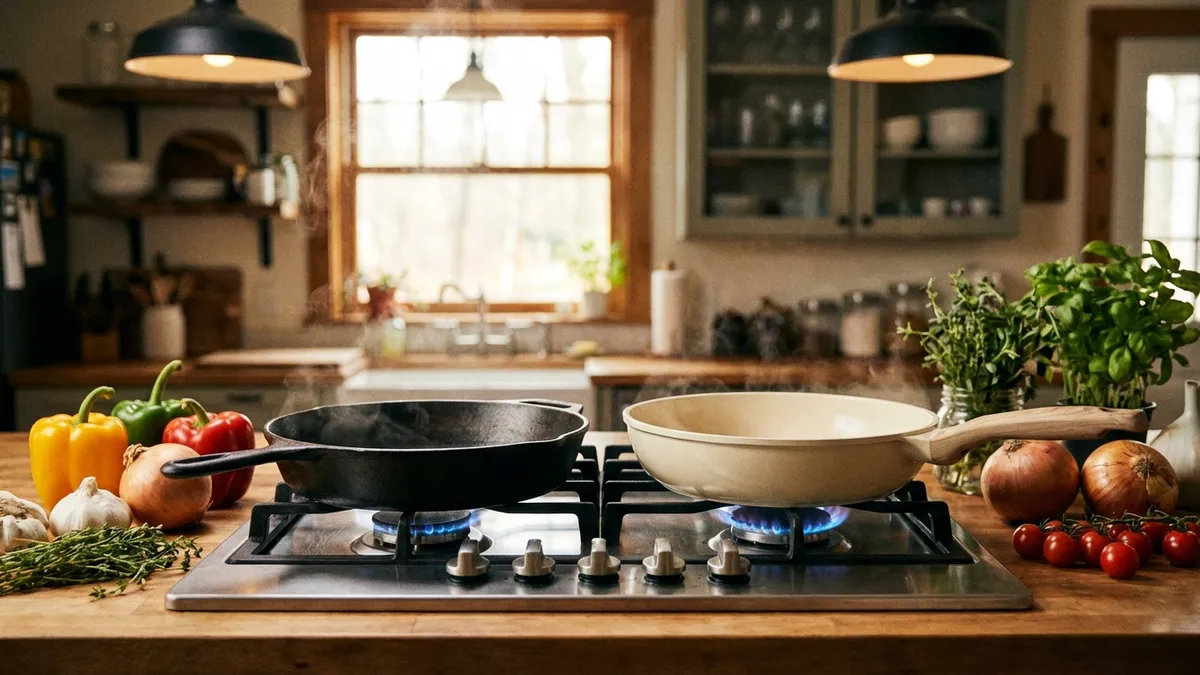
1. Cast Iron - Best Overall Alternative
Top pick: Lodge 10.25” Cast Iron Skillet ($30)
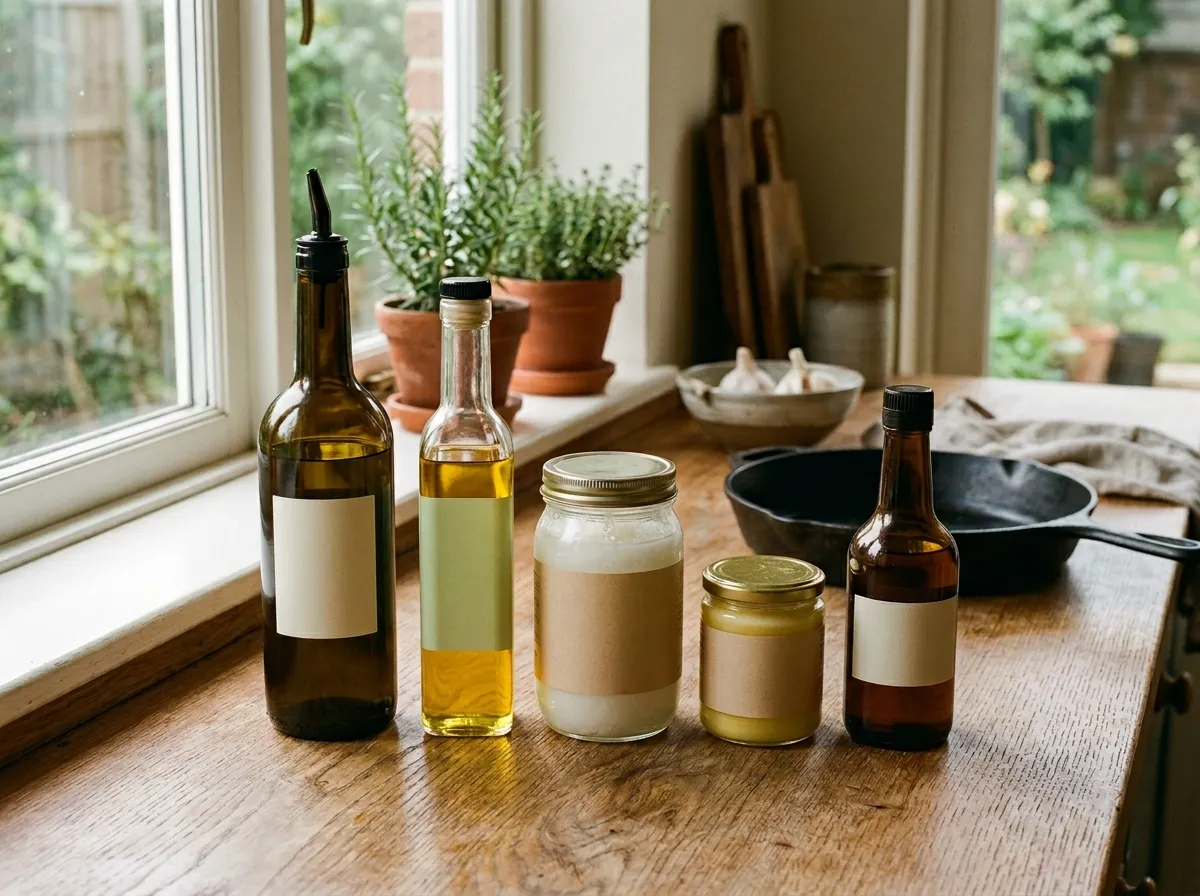
Cast iron is the original nonstick pan. When properly seasoned (a process of building up layers of polymerized cooking oil), cast iron develops a smooth, naturally nonstick surface that improves with every use. A well-seasoned cast iron skillet will release eggs as cleanly as Teflon.
The key difference: cast iron’s nonstick surface is made from food-grade cooking oil, not synthetic fluoropolymers. It contains zero chemicals, zero coatings, zero PFAS. Just iron and carbon.
Performance vs. Teflon:
- Eggs: Comparable once the pan is well-seasoned (2-3 weeks of regular use)
- Searing: Cast iron is significantly better. Higher heat retention means better browning and crust
- Sauces: Better for deglazing and building fond (those flavorful browned bits that form pan sauce)
- Acidic foods: Worse. Tomato sauce, wine reductions, and citrus can strip seasoning
Learning curve: Cast iron requires preheating, using enough fat, and maintaining the seasoning (which is just drying it and rubbing it with oil after washing). Most people learn the technique in a week.
Why we recommend Lodge: American-made since 1896, pre-seasoned and ready to use, $30, and it will literally outlive you. Your grandchildren will cook on this pan. For more budget options, see our non-toxic cookware under $100 guide.
2. Ceramic Nonstick - Closest to Teflon Experience
Top pick: GreenPan Valencia Pro 11” Fry Pan ($60)
If you want the easiest transition from Teflon, ceramic nonstick is the answer. GreenPan’s Thermolon coating is made from sand (silica), contains no PFAS, PFOA, PFOS, lead, or cadmium, and provides a genuinely nonstick cooking surface.
The performance is similar to Teflon. Eggs slide. Pancakes flip. Cleanup is easy. The cooking experience feels familiar.
The tradeoff: Ceramic nonstick doesn’t last as long as PTFE. Expect 1-3 years of peak nonstick performance with proper care, compared to 3-5 years for Teflon. After the coating degrades, you replace the pan. At $60 for a GreenPan, replacing it every 2-3 years is still cheaper than the health concerns of Teflon.
Care tips for longevity:
- Never use cooking spray (it leaves a residue that destroys nonstick)
- No metal utensils. Use silicone, wood, or nylon
- Hand wash only. Dishwasher degrades the coating faster
- Medium heat max. High heat damages ceramic coatings
- Don’t stack without pan protectors
For a full comparison, see our guide on whether ceramic cookware is safe.
3. Carbon Steel - Best for High Heat
Top pick: Made In Carbon Steel 12” Fry Pan ($89)
Carbon steel is what professional chefs use when they need high heat performance without chemical coatings. It’s basically cast iron’s lighter, more responsive cousin. Made from iron with a small percentage of carbon, it seasons the same way as cast iron but heats up faster and responds to temperature changes more quickly.
French omelettes, stir-frying, searing, charring vegetables. Carbon steel excels at everything that requires quick, high heat. It’s about 30% lighter than equivalent cast iron, which makes it easier to handle and flip.
Performance vs. Teflon:
- Eggs: Excellent once seasoned. Professional chefs make omelets in carbon steel daily
- Searing: Superior. Better heat response than cast iron, far better than Teflon
- Weight: Lighter than cast iron, heavier than Teflon
- Maintenance: Same as cast iron (dry after washing, occasional oiling)
4. Ceramic Nonstick with Modern Design - Best Looking
Top pick: Caraway Fry Pan ($95)
Caraway is the brand that made non-toxic cookware aesthetically desirable. Their ceramic nonstick pans come in colors like Sage, Navy, Cream, and Marigold, with a cohesive design system that includes matching storage racks, lids, and kitchen tools.
The safety profile is strong: PTFE-free, PFOA-free, and Caraway has published third-party testing showing their cookware is free from PFAS compounds. The ceramic coating performs well for everyday cooking.
Performance vs. Teflon: Similar nonstick performance to GreenPan. Same 1-3 year coating lifespan. What Caraway adds is the design element. If your cookware sitting on open shelving or hanging on a wall matters to you, Caraway looks significantly better than any other option on this list.
For our full Caraway analysis, see the non-toxic cookware guide.
5. Stainless Steel - The Forever Option
Top pick: Tramontina Tri-Ply Clad 12” Fry Pan ($40)
Stainless steel is not nonstick. Let’s get that out of the way. Food will stick to stainless steel if you don’t use proper technique. But once you learn the technique (preheat the pan, add fat, wait for the right temperature before adding food), stainless steel is the most versatile cooking surface available.
Stainless steel has zero coatings to degrade or replace. It’s non-reactive (cook acidic foods all day), dishwasher safe, and lasts forever. The cooking surface is inert 18/10 stainless steel. Nothing leaches, nothing flakes, nothing off-gasses.
The technique that makes stainless work:
- Preheat the empty pan on medium-high for 2-3 minutes
- Add oil or butter. It should shimmer immediately
- Wait 30 seconds for the fat to heat
- Add food. Don’t move it for the first 2-3 minutes
- When the food develops a crust, it releases naturally
That’s it. The food sticking problem is almost entirely a temperature and fat management issue, not a pan problem.
For a budget breakdown, see our non-toxic cookware under $100 guide.
Comparison Table
| Pan Type | Best For | Price | Nonstick? | Lifespan | Maintenance |
|---|---|---|---|---|---|
| Teflon | Convenience | $20-$40 | Yes (degrades) | 3-5 years | Easy |
| Cast Iron | Everything | $30 | Yes (when seasoned) | Lifetime+ | Moderate |
| Ceramic Nonstick | Easy transition | $60-$95 | Yes (degrades) | 1-3 years | Easy |
| Carbon Steel | High heat | $45-$89 | Yes (when seasoned) | Lifetime+ | Moderate |
| Stainless Steel | Versatility | $35-$130 | No (technique needed) | Lifetime+ | Easy |
Frequently Asked Questions
Is Teflon actually dangerous at normal cooking temperatures?
PTFE is stable below 500 degrees F. Normal stovetop cooking (sauteing, frying) typically stays in the 300-400 degree F range. The concern is accidental overheating (empty pan on a lit burner), high-heat searing, and the gradual degradation of the coating releasing microplastic particles into food. The question isn’t whether a single meal cooked in Teflon is dangerous. It’s whether years of daily use with inevitable overheating incidents and coating degradation add up.
Can I really cook eggs in cast iron?
Yes, absolutely. The secret: preheat on medium (not high), add butter or oil, let it get hot, crack the egg, and don’t touch it for 2-3 minutes. The egg will release cleanly once the bottom sets. If eggs stick, your seasoning needs work. Cook a few rounds of bacon or fry some potatoes in oil first to build up the seasoning layer.
How long do ceramic nonstick pans last?
With proper care (no metal utensils, no cooking spray, hand wash, medium heat), expect 1-3 years of good nonstick performance. The coating gradually becomes less nonstick over time. At the 2-year mark, most ceramic pans start requiring more oil for easy release. By 3 years, many need replacement. Budget accordingly.
Is there any truly nonstick pan without chemicals?
A well-seasoned cast iron or carbon steel pan is genuinely nonstick through polymerized cooking oil rather than synthetic coatings. It takes 2-4 weeks of regular use to build up a good seasoning layer. Once established, it rivals Teflon for egg release and is superior for everything else.
What about titanium cookware?
“Titanium” cookware is usually PTFE-coated cookware with a titanium-reinforced nonstick surface. The titanium improves durability of the PTFE coating but doesn’t eliminate the PTFE itself. It’s still Teflon-class cookware. Don’t be misled by the titanium marketing.
What about HexClad?
HexClad uses a hybrid surface that combines stainless steel with PTFE in a hexagonal pattern. Despite the innovative design, it still contains PTFE. For our detailed analysis, see our HexClad review.
What We’d Pick
If you want one pan to replace Teflon, get a Lodge cast iron skillet for $30. It does everything and lasts forever. The $30 you spend today is the last $30 you’ll ever spend on a frying pan.
If you specifically need convenient nonstick for eggs and delicate cooking, add a GreenPan ceramic nonstick for daily use. Accept that you’ll replace it every 2-3 years. The tradeoff is worth it.
And if you want to invest in a pan that performs at a professional level, Made In carbon steel is the choice that chefs make.
The era of Teflon being the only option for nonstick cooking is over. Better alternatives exist at every price point. Your health is worth relearning a cooking technique.
Last updated: April 2027. Prices may vary. We independently research and test the products we recommend. When you purchase through our links, we may earn a commission at no extra cost to you.
Sources
-
Landrigan, P.J. et al. “The Lancet Commission on Pollution and Health.” The Lancet, 2018.
-
EPA. “PFAS Strategic Roadmap.” EPA
-
EWG. “PFAS Contamination.” EWG - ## You Might Also Like