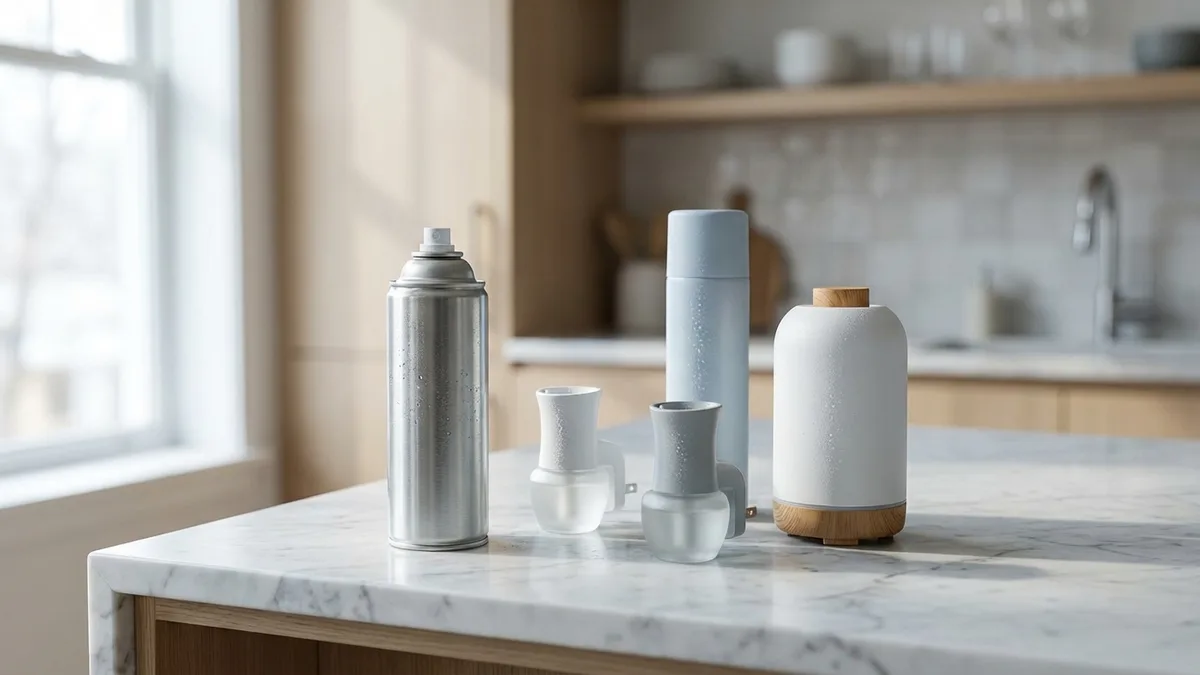
Febreze is in roughly 70% of American households. It’s the default solution when something smells bad. Spray the couch, spray the curtains, spray the air. The smell goes away (or at least gets buried under Febreze’s signature scent), and you move on.
We research, test, and evaluate products based on health impact, ingredient transparency, and third-party certifications. You can read more about how we test and pick products. But what you’ve actually done is spray a cloud of synthetic chemicals into your air and onto surfaces where they persist for hours or days. You breathe those chemicals in. They settle on your furniture, your clothes, your skin. And the ingredient list behind Febreze is more concerning than most people realize.
What’s Actually in Febreze
Febreze Air Effects (the spray) contains:
- Nitrogen (propellant)
- Alcohol denat. (ethanol, helps the spray dry quickly)
- Hydroxypropyl beta-cyclodextrin (the actual odor-trapping molecule)
- Dialkyl sodium sulfosuccinate (surfactant)
- Fragrance (undisclosed blend)
- Benzisothiazolinone (preservative)
- Didecyldimethylammonium chloride (antimicrobial)
The cyclodextrin is the clever part. It’s a donut-shaped sugar molecule that physically traps odor molecules inside its ring structure. This is legitimate science. Cyclodextrin genuinely does neutralize odors rather than just masking them.
The problem is everything else in the formula, particularly the fragrance and the preservatives.
Fragrance: Febreze’s scent is its selling point, and P&G has one of the most sophisticated fragrance engineering operations in the world. The “fragrance” listed on Febreze represents a proprietary blend of scent chemicals. P&G provides some fragrance ingredient information through their SmartLabel program, but the full composition remains undisclosed.
Independent analysis by the Environmental Working Group and other groups has identified various volatile organic compounds (VOCs) emitted by Febreze, including acetaldehyde (classified as a possible carcinogen by the IARC) and several sensitizing terpenes.
Benzisothiazolinone is a preservative related to the isothiazolinone family (the same family as methylisothiazolinone). It’s a skin sensitizer and environmental toxin.
Didecyldimethylammonium chloride is a quaternary ammonium compound (“quat”). Quats are associated with respiratory irritation and have been linked to occupational asthma in cleaning workers.
Dr. Shanna Swan has specifically flagged air fresheners as a source of phthalate exposure in homes, noting that people who use air fresheners regularly have higher measured levels of phthalate metabolites.
For our full review of air freshener safety, see our guide on whether air fresheners are toxic.
Why “Odor Elimination” Is the Wrong Frame
Febreze’s marketing frames the solution as “eliminating” odors from the air. But most household odors have a source. Something is dirty, damp, decomposing, or stagnating. Spraying a chemical into the air to trap odor molecules doesn’t fix the source. It’s the equivalent of putting perfume on instead of showering.
The better approach is addressing what’s causing the smell, then using gentle methods to refresh the air if needed.
5 Non-Toxic Alternatives to Febreze
1. Baking Soda + Vinegar + Ventilation (Free)
Before you buy anything, try this. Open windows for cross-ventilation. Sprinkle baking soda on upholstered surfaces, let it sit for 30 minutes, vacuum it up. For surface odors, spray white vinegar (diluted 1:1 with water) and let it air dry. The vinegar smell dissipates in 15 minutes and takes other odors with it.
This handles 80% of household odor situations without purchasing any product. The remaining 20% might benefit from the options below.
2. Moso Natural Air Purifying Bags - Best Passive Odor Absorber
Price: $10 for 200g bag | How it works: Bamboo charcoal absorbs odor molecules and moisture
These bags contain activated bamboo charcoal, which has millions of tiny pores that physically trap odor molecules, moisture, and allergens. They don’t release anything into the air. They just absorb.
Place them in smelly areas: near litter boxes, in closets, in bathrooms, in the car. Every month, put them in direct sunlight for an hour, which releases the trapped molecules and “recharges” the charcoal. Each bag lasts about two years before the charcoal saturates.
Why it’s better than Febreze: Zero chemicals released. The charcoal absorbs rather than masks. No fragrance, no preservatives, no VOCs.
3. Essential Oil Diffuser - Best Scented Option
Recommendation: Vitruvi Stone Diffuser ($119) + any pure essential oil
If you genuinely want your home to smell like something, an essential oil diffuser is the cleanest way to add scent to a room. An ultrasonic diffuser breaks water and essential oil into a fine mist using vibration, not heat. The result is plant-derived scent molecules in the air without synthetic fragrance chemicals.
The upfront cost is higher than Febreze, but essential oils are concentrated. A $26 bottle lasts months. And you know exactly what’s in the air: the specific essential oil you chose.
Important caveat: Essential oils aren’t risk-free. Some can irritate respiratory systems, especially in enclosed rooms. If you have pets (particularly cats or birds), research which essential oils are safe around them. Diffuse in moderation and in ventilated spaces.
For more options, see our non-toxic air freshener guide.
4. Branch Basics Concentrate (DIY Spray) - Best All-Purpose
Price: ~$5 per spray bottle (from concentrate)
Branch Basics makes a plant-based concentrate that dilutes into multiple products. For an air freshener, mix the concentrate in the “All-Purpose” ratio with water. Spray on fabrics, upholstery, or into the air. It’s fragrance-free and eliminates odors by breaking down the organic compounds causing them.
This is the closest functional replacement for how people actually use Febreze: spraying directly onto couches, curtains, and car seats. The difference is that you’re spraying a food-grade, plant-based solution instead of synthetic fragrance chemicals and preservatives.
5. Enviroscent Bed & Bath Sticks - Best Scented Passive Option
Price: $8 per pack
If you want a set-it-and-forget-it scent without diffusing essential oils, Enviroscent makes plant-fiber sticks infused with essential oils. Place them in a room, drawer, or closet and they slowly release scent. No electricity, no aerosol, no synthetic fragrance.
The scent is subtle compared to Febreze. That’s the point. You get a gentle background scent without flooding your air with chemicals.
The Real Solution: Fix the Source
Here’s what actually works for the most common household odors.
Kitchen smells: Clean the garbage disposal with baking soda and ice. Take out the trash. Clean behind and under the stove. Use our recommended non-toxic all-purpose cleaner on counters and surfaces.
Bathroom smells: Ventilation fan while showering. Clean with a non-toxic bathroom cleaner. Check for hidden mold, especially around the toilet base and under the sink.
Pet smells: Wash pet bedding weekly. Use a non-toxic enzyme cleaner for accidents. Switch to a non-toxic cat litter if litter odor is the issue. Bathe pets with non-toxic dog shampoo.
Musty/damp smells: Address the moisture source. A dehumidifier handles dampness. For mold, see our guides on indoor air quality.
Car smells: Moso Natural makes car-specific charcoal bags. Vacuum seats and carpets regularly. Leave windows cracked when parked (weather permitting) for airflow.
Frequently Asked Questions
Is Febreze safe to breathe?
P&G states Febreze is safe when used as directed. However, independent testing has identified VOCs in Febreze emissions, including some classified as possible carcinogens. For people with asthma, chemical sensitivities, or respiratory conditions, Febreze can trigger symptoms. The general population may not notice acute effects, but the cumulative impact of breathing synthetic fragrance chemicals regularly is a valid concern.
Does baking soda really eliminate odors?
Yes. Baking soda (sodium bicarbonate) is amphoteric, meaning it reacts with both acidic and basic odor molecules, neutralizing them chemically. It’s not just masking. It’s genuinely converting odor molecules into less volatile (less smelly) compounds. Sprinkle it on surfaces, let it sit, vacuum. It works.
Are essential oil diffusers safe?
For most adults, essential oil diffusers used in moderation and in ventilated spaces are safe. The risk increases in enclosed rooms, for people with respiratory conditions, and for certain pets. Cats lack the liver enzyme to process some essential oil compounds, and birds have extremely sensitive respiratory systems. Always research specific oils before diffusing around animals.
Can I make my own Febreze replacement?
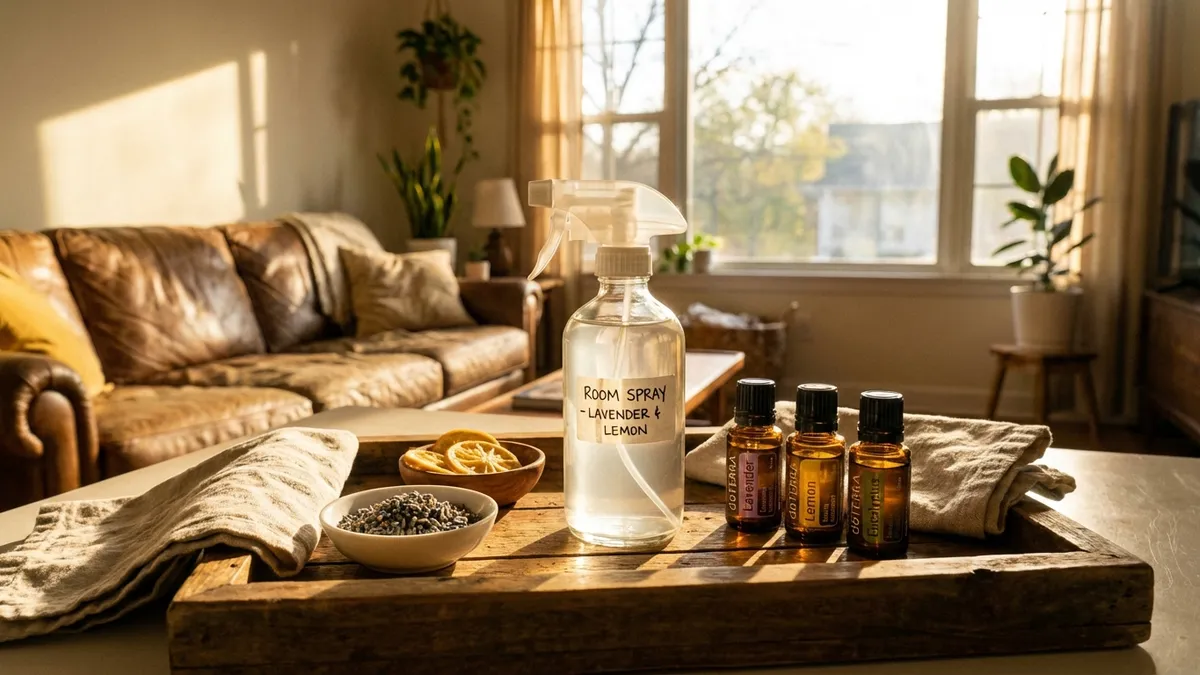
Yes. Mix 1 tablespoon of baking soda, 2 cups of distilled water, and 5-10 drops of essential oil (optional) in a spray bottle. Shake before each use. This creates a basic odor-neutralizing spray that works on fabrics and in the air. It won’t smell as strong as Febreze, but it will actually neutralize odors without synthetic chemicals.
Why do odors come back after using Febreze?
Because Febreze traps odor molecules temporarily but doesn’t address the source. The cyclodextrin molecules release trapped odors over time, and the source continues producing new odor molecules. The only permanent solution is eliminating or cleaning the source of the smell.
The Bottom Line
Febreze is a chemical solution to a problem that usually has a physical solution. Most household odors come from something that needs cleaning, removing, or ventilating. Spraying synthetic fragrance chemicals on top of the problem is the most expensive and least effective approach.
Start with ventilation, baking soda, and source cleanup. If you still want scent in your home, an essential oil diffuser or charcoal bags are genuinely safer alternatives. Your air quality matters. What you breathe matters. Febreze solves a smell problem by creating a chemical exposure problem. That’s not a good trade.
For more on indoor air quality, see our guides to air purifiers, air purifying plants, and indoor air quality monitors.
Last updated: April 2027. Prices may vary. We independently research and test the products we recommend. When you purchase through our links, we may earn a commission at no extra cost to you.
Sources
-
EWG. “Febreze Air Effects.” Guide to Healthy Cleaning. EWG
-
Swan, S. H. Count Down. Scribner, 2021.
-
IARC. “Acetaldehyde.” Monographs on the Evaluation of Carcinogenic Risks to Humans. - ## You Might Also Like