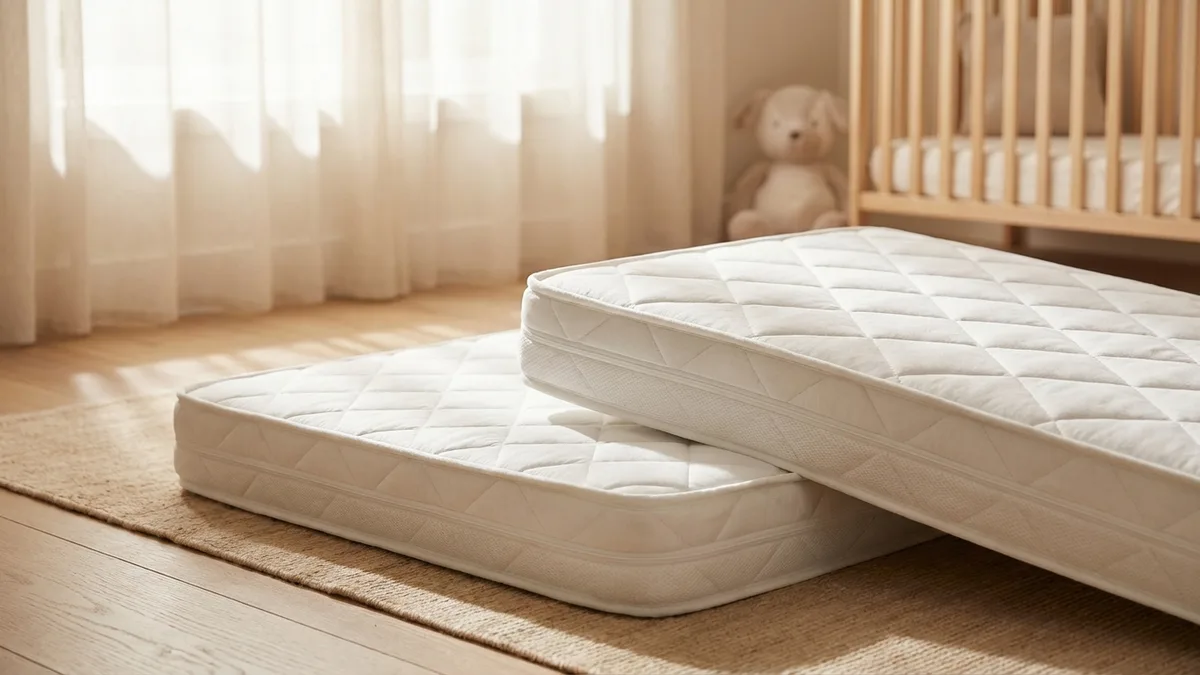
Choosing a crib mattress feels like a higher-stakes decision than almost anything else in your nursery, and it should. Your baby will spend 12 to 16 hours a day on this surface, face down, for the first year of life. The two brands parents research most when looking for a safe option are Naturepedic and Newton Baby. Both have strong reputations, but they take very different approaches to the same goal.
We vet products based on published ingredient lists, third-party lab testing, and recognized certifications. You can see how we evaluate and select products in detail. I spent weeks comparing these two mattresses across every dimension that matters: material safety, certifications, breathability, firmness, longevity, and price. Here is what I found.
Quick Specs Comparison
| Feature | Naturepedic Classic Organic | Newton Baby Essential |
|---|---|---|
| Price | $299 | $250 |
| Core Material | Organic cotton + food-grade polyethylene waterproofing | Wovenaire (90% air, 10% food-grade polymer) |
| Cover | GOTS organic cotton | Spacer fabric (breathable mesh) |
| Firmness | Firm (traditional crib mattress feel) | Firm (with slight give) |
| Weight | 14 lbs | 7 lbs |
| Waterproof | Yes (built-in) | Not inherently (cover is washable) |
| Breathable Core | No | Yes (fully breathable) |
| Dual-Sided | Yes (infant/toddler) | Yes (same firmness both sides) |
| GREENGUARD Gold | Yes | Yes |
| GOTS Certified | Yes | No |
| Made In | USA | USA |
| Warranty | Lifetime | Lifetime |
Materials: Two Philosophies of Safety
Naturepedic and Newton approach crib mattress safety from opposite directions, and understanding this difference is the key to choosing between them.
Naturepedic uses organic materials. Their Classic model has a core of organic cotton batting with a food-grade polyethylene waterproof surface. The cover is GOTS-certified organic cotton. Their philosophy is that certified organic materials with known supply chains are the safest option. No polyurethane foam, no vinyl, no chemical flame retardants, no latex in the Classic model. Dr. Philip Landrigan, a pediatric environmental health researcher, has consistently recommended organic cotton as a low-risk material for infant sleep surfaces because it avoids the volatile organic compounds released by foam-based mattresses.
Newton uses a patented material called Wovenaire, which is 90% air and 10% food-grade polymer (a type of plastic designed for food contact). The idea is radically different: instead of making a mattress from organic natural materials, Newton engineered a material that is almost entirely air, making it breathable through the entire core. The cover is a 3D spacer fabric that allows airflow through the mattress.
Both approaches are valid. Naturepedic avoids synthetic materials entirely. Newton uses a synthetic material designed specifically for breathability. Neither contains the chemicals (polyurethane foam, PVC, phthalates, chemical flame retardants) that make conventional crib mattresses concerning.
Certifications Head to Head
| Certification | Naturepedic | Newton |
|---|---|---|
| GREENGUARD Gold | Yes | Yes |
| GOTS (organic textiles) | Yes | No |
| GOLS (organic latex) | N/A (no latex in Classic) | N/A |
| MADE SAFE | Yes | No |
| CertiPUR-US | N/A (no foam) | N/A (no foam) |
| UL Formaldehyde-Free | Yes | No specific claim |
Naturepedic has a significant advantage in certifications. Their GOTS certification means the organic cotton is verified from farm to finished product. The MADE SAFE certification tests for bioaccumulation and ecosystem impact beyond what GREENGUARD covers. The UL formaldehyde-free certification is another layer of verification.
Newton’s GREENGUARD Gold certification confirms low chemical emissions, which is meaningful. But they do not carry the additional organic or safety certifications that Naturepedic has. This is not because Newton is unsafe. Their Wovenaire material has been tested for over 1,000 chemicals. It is because organic certifications do not apply to synthetic polymer materials, even food-grade ones.
Winner for certifications: Naturepedic, clearly. They have more third-party verification from more organizations.
The Breathability Factor
This is Newton’s headline feature, and it deserves a serious look.
Newton’s Wovenaire core allows air to pass through the entire mattress. If a baby rolls face-down onto the mattress surface, they can still draw air through it. Newton has tested this and their marketing emphasizes it heavily. For parents worried about suffocation risk, this is a significant selling point.
Naturepedic’s organic cotton core is not breathable in the same way. It is a traditional firm mattress. If a baby rolls face-down, the firm surface is designed to prevent the face from sinking in (which is the standard safety approach for all crib mattresses), but air does not flow through the core itself.
It is important to put this in context. Dr. Rhonda Patrick has discussed the importance of safe sleep environments, and the American Academy of Pediatrics recommends a firm, flat sleep surface for infants. Both Naturepedic and Newton meet this standard. The AAP does not currently recommend breathable mattresses as a substitute for safe sleep practices (always placing baby on their back, no loose bedding, no bumpers).
Newton’s breathability is an additional safety feature, not a replacement for following safe sleep guidelines. But as an extra layer of protection, it is genuinely appealing for parents who lose sleep worrying about their baby’s sleep surface.
Winner for breathability: Newton, by a significant margin.
Firmness and Comfort
Both mattresses are firm, which is what pediatricians and safety organizations recommend for infants. But the firmness feels different.
Naturepedic has a traditional firm mattress feel. It is dense, solid, and does not compress much under pressure. When you press your hand into it, there is very little give. This is what most people expect a crib mattress to feel like.
Newton is firm but with a slight springiness. The Wovenaire core has a bit of bounce to it because of the air-based structure. It is still well within the firmness range recommended for safe infant sleep, but it feels slightly different under hand. Some parents prefer this, others prefer the denser Naturepedic feel.
Both mattresses are firm enough for safe infant sleep. This comes down to personal preference, and honestly, your baby does not care about the subtle difference.
Waterproofing and Cleaning
This is a practical consideration that matters more than most parents realize before the first blowout diaper.
Naturepedic has a built-in waterproof surface made from food-grade polyethylene. It wipes clean easily and prevents liquids from soaking into the cotton core. You do not need to buy a separate waterproof pad, though many parents add one anyway. The cover is removable and washable.
Newton’s Wovenaire core is unique in that you can wash the entire mattress core in the bathtub or shower. The breathable mesh cover is also machine washable. However, the mattress is not inherently waterproof. Without a separate waterproof cover, liquids will go right through the spacer fabric and into the core. Newton sells a compatible waterproof cover separately for $49.
The cost of Newton’s separate waterproof cover effectively closes the price gap between the two mattresses. It also adds a layer that somewhat reduces the breathability advantage, though Newton states their cover is designed to maintain airflow.
Winner for cleaning convenience: Naturepedic, because waterproofing is built in. But Newton’s washable core is a genuine advantage for deep cleaning.
Longevity and Toddler Transition
Both mattresses are designed to last through the toddler years.
Naturepedic’s dual-sided design has a firmer infant side and a slightly softer toddler side. This is a real advantage for parents who plan to use a convertible crib through the toddler stage. You flip the mattress when your child transitions from crib to toddler bed.
Newton is the same firmness on both sides. They recommend it for toddlers as well, but the lack of a differentiated toddler side means older kids may find it less comfortable than the Naturepedic’s toddler side.
Naturepedic’s organic cotton construction also tends to hold up well over years of use without sagging or losing shape. Newton’s Wovenaire core maintains its structure effectively as well, though long-term durability data is more limited since Newton is a newer brand.
Weight and Handling
This might seem minor, but you will be changing crib sheets at 3 AM, and every pound matters.
Newton: 7 lbs. You can lift it with one hand while holding a baby in the other.
Naturepedic: 14 lbs. Twice the weight. Still manageable, but noticeably heavier during sheet changes.
Newton’s light weight is a genuine daily-life advantage, especially for late-night sheet changes and mattress flipping. NonToxicLab has found this to be one of the most-cited practical benefits in Newton owner feedback.
Price Comparison
| Model | Price | Extras Needed | True Cost |
|---|---|---|---|
| Naturepedic Classic Organic | $299 | None (waterproof built in) | $299 |
| Naturepedic Lightweight Organic | $349 | None | $349 |
| Newton Baby Essential | $250 | Waterproof cover ($49) | $299 |
| Newton Baby Original | $300 | Waterproof cover ($49) | $349 |
When you factor in Newton’s recommended waterproof cover, the prices are nearly identical. The perceived savings of the Newton Essential disappear once you add the necessary cover.
Who Should Buy Which
Buy Naturepedic If:
- Organic certification matters most to you
- You want built-in waterproofing with no add-ons
- You prefer a traditional dense crib mattress feel
- You want a dual-sided infant/toddler mattress
- Maximum third-party certifications give you confidence
Buy Newton If:
- Breathability is your top safety concern
- You want the lightest possible mattress for sheet changes
- You like the ability to wash the entire mattress core
- Your baby is a frequent stomach roller
- You prioritize the air-based design philosophy
Our Final Take
Both of these are excellent, safe crib mattresses. Neither contains polyurethane foam, vinyl, phthalates, or chemical flame retardants. Both are GREENGUARD Gold certified and made in the USA.
Naturepedic is the safer choice on paper because of its more extensive certifications (GOTS, MADE SAFE, UL formaldehyde-free) and its use of verified organic materials. If certifications are how you evaluate safety, Naturepedic has more of them from more organizations.
Newton is the more innovative choice because of its breathable core design. If the idea of a breathable-through mattress gives you meaningful confidence about your baby’s sleep safety, Newton delivers something no organic mattress can.
For most parents, I recommend Naturepedic. The organic certifications, built-in waterproofing, dual-sided design, and overall construction quality make it the most complete package. But if breathability is the feature that helps you sleep at night (literally), Newton is a genuinely safe and well-made alternative.
Questions Parents Ask Most
Is Newton Baby mattress safe for newborns?
Yes. The Newton Baby crib mattress meets all federal safety standards for infant sleep surfaces and carries GREENGUARD Gold certification. The firm surface meets AAP recommendations. The breathable core is an additional feature, not a substitute for safe sleep practices.
Does Naturepedic use any foam?
The Naturepedic Classic Organic does not contain any polyurethane foam. Some of Naturepedic’s other models (like the Organic Breathable line) use their proprietary organic-compliant materials. If you want to avoid all foam, the Classic Organic is the model to choose.
Can I skip the waterproof cover with Newton?
You can, but I would not recommend it. Without a waterproof barrier, liquids will flow through Newton’s breathable design and into the core. While you can wash the core, doing so frequently is time-consuming. The waterproof cover is worth the extra $49.
Do either of these mattresses off-gas?
Both mattresses have very low off-gassing. Naturepedic’s organic cotton construction produces almost no detectable VOCs. Newton’s Wovenaire material similarly has very low emissions, which is confirmed by their GREENGUARD Gold certification. Dr. Leonardo Trasande has recommended choosing GREENGUARD Gold-certified products for nurseries specifically because of the stricter emission standards this certification requires.
How long will each mattress last?
Both brands offer lifetime warranties. In practical terms, expect either mattress to last through the crib and toddler years (roughly ages 0-4) with no issues. Many families reuse them for subsequent children.
Is the Newton mattress just plastic?
Newton’s Wovenaire core is made from food-grade polymer, which is technically a type of plastic. But it is a specific polymer designed for food contact safety (think of food-grade containers). It contains no PVC, no phthalates, no flame retardants, and no polyurethane foam. The term “plastic” covers an enormous range of materials with very different safety profiles, and Newton’s specific material has been tested for over 1,000 chemicals.
You Might Also Like
- Best Non-Toxic Crib Mattress - Full roundup of safe crib mattress options
- Avocado vs Naturepedic - Comparison for older kids and adults
- Best Non-Toxic Crib and Kids Furniture - Safe nursery furniture
- Best Non-Toxic Baby Bottles - Safe feeding options
- Best Non-Toxic Baby Wipes - Chemical-free wipes
- Best Non-Toxic Diapers - Safest diaper brands
- Best Non-Toxic Baby Shampoo - Gentle wash for babies
- Best Non-Toxic Baby Sunscreen - Safe sun protection
- Best Non-Toxic Play Mat - Safe play surfaces
- Best Non-Toxic Highchair - Safe feeding chairs
Sources
- Naturepedic product specifications and certification records (naturepedic.com)
- Newton Baby Wovenaire technology documentation (newtonbaby.com)
- GREENGUARD Gold certification standards (ul.com)
- Global Organic Textile Standard (global-standard.org)
- MADE SAFE certification criteria (madesafe.org)
- American Academy of Pediatrics safe sleep recommendations (aap.org)
- Landrigan, P. “Children and Environmental Toxins.” Oxford University Press, 2018.
- Trasande, L. “Sicker, Fatter, Poorer.” Houghton Mifflin Harcourt, 2019.