Vinegar is everywhere in natural cleaning circles. It shows up on every “non-toxic cleaning” list, every DIY cleaning recipe, every “ditch the chemicals” blog post. And for general cleaning, vinegar is genuinely useful. It cuts grease, dissolves mineral deposits, and cleans glass well. We cover this topic in chemicals banned in the eu but legal in the us.
But disinfecting is not the same as cleaning. Cleaning removes dirt, grease, and some germs from a surface. Disinfecting kills a specific percentage of microorganisms on a surface. These are different tasks with different requirements, and the distinction matters. Check out chlorine and chloramine in tap water for more detail.
So does vinegar actually disinfect? NonToxicLab reviewed the published research, and the honest answer is: sometimes, partially, and not reliably enough to count on when disinfection truly matters.
What Vinegar Is (Chemically Speaking)
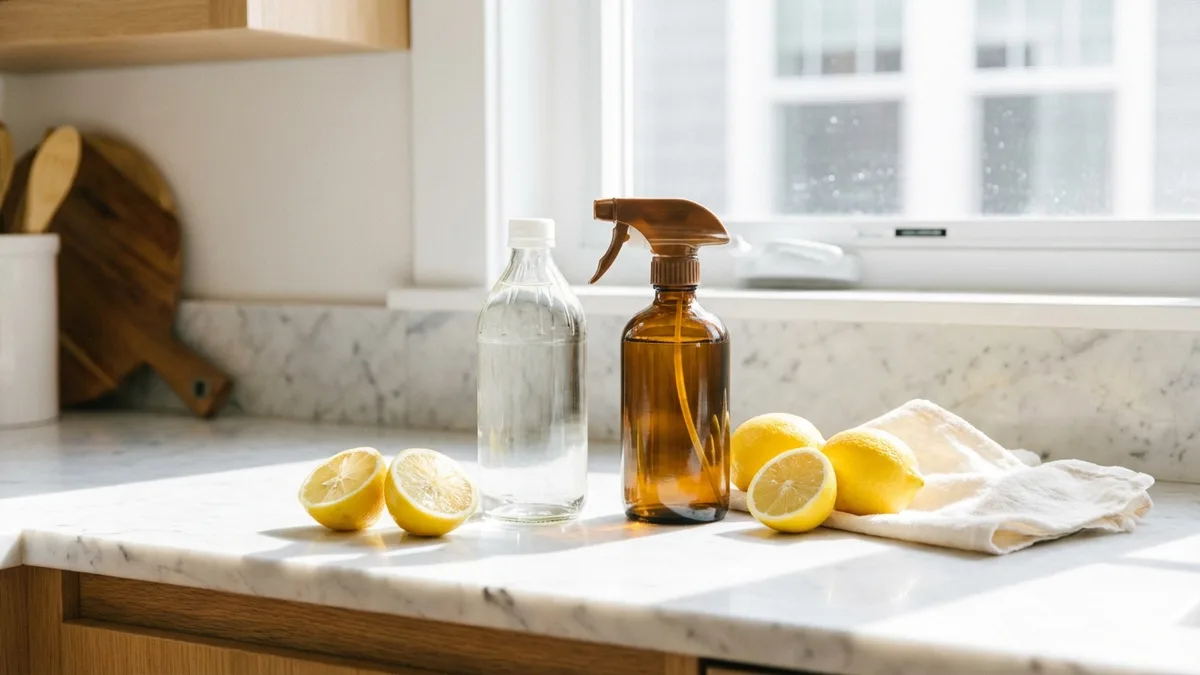
Standard white distilled vinegar is a 5% solution of acetic acid in water. Acetic acid is a weak organic acid with antimicrobial properties. It’s been used for food preservation for thousands of years, and its ability to inhibit certain microorganisms is well documented.
The antimicrobial action of acetic acid comes from its ability to penetrate the cell membranes of certain bacteria and disrupt their internal pH. Bacteria that can’t tolerate acidic environments are killed or inhibited. The key phrase is “certain bacteria.” Acetic acid’s effectiveness varies dramatically depending on the specific organism.
Cleaning vinegar (sometimes sold at 6% or 10% concentration) is stronger than standard white vinegar. Higher concentrations have more antimicrobial activity, but even 10% acetic acid doesn’t meet the EPA’s standards for a registered disinfectant.
What Vinegar Can Kill
Research has tested vinegar’s effectiveness against various microorganisms, and the results are mixed.
Bacteria Where Vinegar Shows Some Effectiveness
E. coli. A 2014 study published in mBio found that acetic acid at 6% concentration killed Mycobacterium tuberculosis after 30 minutes of exposure, and it’s also effective against E. coli in laboratory settings. However, the concentrations and contact times required are often higher than what casual vinegar spraying provides.
Salmonella. Some studies have shown that vinegar can reduce Salmonella contamination on food surfaces, which is part of why vinegar is used in food preparation and preservation. But reduction is not the same as elimination. Vinegar lowers the bacterial count; it doesn’t sterilize.
Some strains of Staphylococcus. Acetic acid shows activity against certain Staph species in lab conditions, though results vary by strain and concentration.
Where Vinegar Fails
Norovirus. This is the most common cause of food poisoning and gastroenteritis. Vinegar does not effectively inactivate norovirus. A study published in the Journal of Hospital Infection found that acetic acid at household vinegar concentrations had no significant effect on murine norovirus (the standard lab surrogate for human norovirus). This is a critical failure because norovirus is one of the most important pathogens to address on kitchen and bathroom surfaces.
Clostridium difficile (C. diff). This spore-forming bacterium is a serious concern in healthcare settings and increasingly in communities. Vinegar does not kill C. diff spores. Spore-forming bacteria are among the most resistant organisms, and most common disinfectants struggle with them.
MRSA. Methicillin-resistant Staphylococcus aureus requires stronger disinfection than vinegar provides.
Many viruses. Vinegar’s effectiveness against viruses is generally poor. Enveloped viruses (like influenza) are somewhat more susceptible to acetic acid than non-enveloped viruses (like norovirus), but even for enveloped viruses, vinegar is not reliably effective at household concentrations and typical contact times.
Pseudomonas. This opportunistic pathogen, commonly found in moist environments like sinks and drains, is resistant to many antimicrobials including vinegar.
What the research shows: vinegar has genuine antimicrobial properties, but it fails against many of the pathogens that matter most in a household context.
The EPA Registration Issue
In the United States, any product marketed as a disinfectant must be registered with the EPA and demonstrate that it kills a specified percentage of specific organisms under standardized test conditions. Vinegar is not EPA-registered as a disinfectant, and no vinegar product has achieved EPA registration.
This isn’t a bureaucratic technicality. The EPA registration process exists to ensure that products claiming to kill germs actually do so. A product that can’t pass these tests doesn’t meet the standard, and vinegar doesn’t pass.
By contrast, hydrogen peroxide (at 3% concentration), products containing thymol (a compound derived from thyme oil), and certain quaternary ammonium compounds have achieved EPA registration as disinfectants. These products have demonstrated efficacy against specific pathogens under controlled conditions.
When Vinegar Is Fine for Cleaning
The distinction between cleaning and disinfecting is where vinegar’s role becomes clearer. For routine cleaning (not disinfecting), vinegar works well in several applications:
Kitchen counters (daily cleaning). A vinegar spray removes food residue, cuts grease, and leaves surfaces clean for normal daily use. For everyday situations where nobody is sick and you’re not handling raw meat, this level of cleaning is adequate.
Glass and mirrors. Vinegar is an excellent glass cleaner. A 50/50 vinegar-water solution cleans glass without streaks and without the ammonia or glycol ethers found in conventional glass cleaners.
Mineral deposits and hard water stains. Acetic acid dissolves calcium carbonate, which makes vinegar ideal for descaling faucets, showerheads, coffee makers, and tea kettles.
Deodorizing. Vinegar neutralizes some odor compounds. It works in laundry (as a fabric softener alternative), on cutting boards, and in garbage disposals.
Produce washing. A dilute vinegar rinse can reduce (not eliminate) surface bacteria on fruits and vegetables. Research suggests it’s somewhat more effective than water alone.
Our non-toxic cleaning guide includes vinegar-based approaches alongside commercial non-toxic products, depending on the cleaning task.
When You Need Something Stronger
There are specific situations where actual disinfection (not just cleaning) matters:
After handling raw meat or poultry. Cutting boards, counters, and tools that contact raw meat need more than vinegar. Bacteria like Salmonella, Campylobacter, and pathogenic E. coli require a product with demonstrated kill rates. Hydrogen peroxide (3%) or a thymol-based disinfectant handles this effectively.
During illness. When someone in the household has a stomach bug, flu, or other contagious illness, surfaces in bathrooms and shared spaces need actual disinfection. Norovirus, in particular, requires a product that’s effective against non-enveloped viruses. The EPA publishes a list of registered disinfectants effective against specific pathogens.
Mold remediation. Vinegar has some antifungal properties and can kill certain mold species on non-porous surfaces. But for serious mold problems, it’s not sufficient on its own. Hydrogen peroxide or commercial mold removers are more reliable. Our non-toxic bathroom cleaner guide covers this scenario.
High-risk populations. Households with immunocompromised individuals, very young infants, or elderly family members may need to maintain a higher disinfection standard than what vinegar provides.
Dr. Peter Attia has discussed the importance of evidence-based risk assessment in health decisions, noting that the goal isn’t zero risk (which is impossible) but appropriate risk management. For cleaning and disinfecting, this translates to matching your product choice to the actual risk level: vinegar for daily cleaning, a proper disinfectant when pathogen elimination actually matters.
Non-Toxic Disinfectants That Actually Work
If you want to disinfect without conventional chemicals like bleach, several options have EPA registration and demonstrated efficacy:
Hydrogen peroxide (3%). Available at any pharmacy. Effective against a broad range of bacteria, viruses (including norovirus), and fungi. Let it sit on the surface for at least one minute before wiping. It breaks down into water and oxygen, leaving no residue.
Thymol-based products. Thymol is a compound found naturally in thyme oil. Several commercial non-toxic disinfectants use thymol as their active ingredient and have achieved EPA registration. Seventh Generation Disinfecting Multi-Surface Cleaner is one example.
Caprylic acid-based products. Some newer EPA-registered disinfectants use caprylic acid (from coconut and palm kernel oils) as the active ingredient.
Hypochlorous acid (HOCl). This is a form of chlorine that’s generated by dissolving salt in water through electrolysis. It’s extremely effective against pathogens, non-toxic to humans at use concentrations, and breaks down into salt water. Several companies sell HOCl generators for home use.
Rhonda Patrick has talked about the importance of not throwing the baby out with the bathwater when it comes to household chemical exposure. Avoiding unnecessary chemicals in cleaning is smart, but abandoning effective disinfection during situations that call for it is trading one risk for another.
The Vinegar and Baking Soda Myth
While we’re addressing vinegar myths, here’s another one: mixing vinegar and baking soda does not create a powerful cleaning solution. Vinegar is an acid (acetic acid). Baking soda is a base (sodium bicarbonate). When you combine them, they react and neutralize each other, producing water, carbon dioxide gas (the fizzing), and sodium acetate (a salt).
The fizzing looks impressive, but it’s not cleaning anything. After the reaction is complete, you’re left with slightly salty water that has less cleaning power than either ingredient used separately. Use vinegar for tasks that benefit from acid (mineral deposits, grease). Use baking soda for tasks that benefit from mild abrasion and alkalinity (scrubbing, deodorizing). Just don’t use them together expecting a supercharged cleaner.
A Practical Approach to Non-Toxic Cleaning
The most reasonable approach combines different products for different tasks:
-
Daily surface cleaning: Vinegar solution, castile soap solution, or a non-toxic all-purpose cleaner. This handles routine dirt, grease, and light bacterial load.
-
Kitchen disinfection after raw meat: Hydrogen peroxide spray or a thymol-based disinfectant. Let it sit for the recommended contact time.
-
Bathroom disinfection: Hydrogen peroxide or thymol-based product for toilet, sink, and high-touch surfaces. Vinegar works fine for shower glass and faucets (mineral deposits).
-
Illness clean-up: An EPA-registered disinfectant effective against the specific pathogen. For norovirus, check the EPA’s List G of registered disinfectants.
-
Glass and mirrors: Vinegar and water.
-
Heavy-duty scrubbing: Baking soda paste (alone, not mixed with vinegar).
This system gives you effective, non-toxic cleaning for daily use and actual disinfection when the situation calls for it. Our non-toxic all-purpose cleaner guide and non-toxic cleaning products guide cover the commercial product options that fit into this framework.
Questions We Hear Most
Does vinegar kill COVID-19?
Vinegar has not been shown to be effective against SARS-CoV-2 at household concentrations. The EPA maintains a list (List N) of registered disinfectants that have demonstrated efficacy against the virus. Hydrogen peroxide, certain quaternary ammonium compounds, and alcohol-based products are on that list. Vinegar is not.
Can I mix vinegar with hydrogen peroxide?
Do not combine them in the same container. Mixing vinegar and hydrogen peroxide creates peracetic acid, which can be corrosive and irritating to the eyes, skin, and respiratory system at concentrated levels. You can, however, use them sequentially: spray one, wipe, then spray the other. Used one after the other (not mixed), they complement each other well for cleaning and disinfecting.
Is apple cider vinegar a better disinfectant than white vinegar?
No. Both contain acetic acid at similar concentrations (5%). Apple cider vinegar has additional organic compounds that don’t improve disinfecting ability and can leave residue and staining on surfaces. White distilled vinegar is the better choice for cleaning.
What surfaces should I not use vinegar on?
Avoid using vinegar on natural stone (marble, granite, limestone), as the acid will etch and damage the surface over time. Don’t use it on cast iron cookware (it strips seasoning), or on hardwood floors with wax finishes. Aluminum surfaces can also be damaged by prolonged vinegar contact.
Is vinegar safe around pets?
Generally, yes. Diluted white vinegar is one of the safer household cleaning options around pets. The smell dissipates as the vinegar dries. However, cats in particular are sensitive to strong scents, so ventilate the area during and after cleaning. Never use undiluted vinegar around birds, which have sensitive respiratory systems.
How long does vinegar need to sit to kill bacteria?
For the bacteria that vinegar can affect, research suggests a contact time of at least 30 minutes for meaningful reduction at 5% concentration. This is much longer than most people leave a cleaning spray on a surface. By comparison, hydrogen peroxide typically requires only 1 to 5 minutes of contact time for effective disinfection against a broader range of organisms.
You Might Also Like
- The True Cost of Going Non-Toxic
- Do Charcoal Bags Actually Purify Air?
- Does Sweating Actually Remove Toxins? What Science
Sources
- Entani, E., et al. “Antibacterial Action of Vinegar Against Food-Borne Pathogenic Bacteria.” Journal of Food Protection, 1998.
- Cortesia, C., et al. “Acetic Acid, the Active Component of Vinegar, Is an Effective Tuberculocidal Disinfectant.” mBio, 2014.
- Cannon, J.L., et al. Research on inactivation of norovirus surrogates with chemical sanitizers including acetic acid.
- U.S. EPA. “List N: Disinfectants for Coronavirus (COVID-19).” EPA.gov.
- Greatorex, J.S., et al. “Effectiveness of Common Household Cleaning Agents in Reducing the Viability of Human Influenza A/H1N1.” PLoS ONE, 2010.
- Rutala, W.A., and Weber, D.J. “Uses of Inorganic Hypochlorite (Bleach) in Health-Care Facilities.” Clinical Microbiology Reviews, 1997.