Stainless steel is what most professional kitchens use. It’s durable, it doesn’t flake, and there’s no coating to worry about breaking down into your food. But “better than non-stick” isn’t the same as “completely inert,” and a few legitimate questions keep coming up. Our non-toxic kitchen guide covers everything you need to know.
Does stainless steel leach nickel? What about chromium? Does cooking acidic foods like tomato sauce pull metals out of the pan? And what do the numbers 18/10 or 18/0 actually mean for your health?
I went through the published research to answer those questions. Here’s what the science says.
What Is Stainless Steel Made Of?
Stainless steel is an alloy. It’s mostly iron, combined with chromium (which prevents rusting) and usually nickel (which adds durability and a smooth finish). The exact recipe depends on the grade.
The two grades you’ll see most in cookware are:
- 18/10 stainless steel contains 18% chromium and 10% nickel. This is the most common food-grade option and what most quality cookware brands use.
- 18/8 stainless steel contains 18% chromium and 8% nickel. Functionally very similar to 18/10. Most people won’t notice a difference.
- 18/0 stainless steel contains 18% chromium and no nickel. This is sometimes marketed to people with nickel allergies.
The chromium is what makes it “stainless.” It forms a thin, invisible oxide layer on the surface that prevents corrosion. That layer is what keeps stainless steel from rusting and limits how much metal transfers into food during cooking.
Does Stainless Steel Leach Metals Into Food?
Yes, but in very small amounts. This is well-documented in the research, and the quantities matter a lot.
A 2013 study published in the Journal of Agricultural and Food Chemistry tested metal leaching from new stainless steel cookware under various conditions. They found that nickel and chromium did leach into food, particularly during the first few uses and when cooking acidic foods like tomato sauce.
The concentrations they measured were highest with brand-new pans that hadn’t been used before. After several cooking cycles, the amount of leaching dropped significantly. The passive chromium oxide layer on the surface stabilizes over time, reducing how much metal migrates into food.
Dr. Philip Landrigan, who has spent decades studying how environmental exposures affect health, argues that the dose and duration of exposure matter enormously when evaluating metal safety. The amounts of nickel and chromium that leach from quality stainless steel cookware during normal cooking are well below levels associated with adverse health effects in the general population.
Here’s what the research generally shows:
- Nickel leaching is highest in new pans, with acidic foods, and during longer cooking times. The amounts typically range from 0.01 to 0.21 milligrams per serving, depending on conditions.
- Chromium leaching follows a similar pattern but tends to decrease faster with repeated use. The chromium that leaches is primarily chromium III (trivalent), which is actually an essential nutrient your body needs in small amounts.
- Iron leaching also occurs in small amounts. This is generally considered beneficial, not harmful.
For context, the tolerable daily intake for nickel set by the European Food Safety Authority is about 2.8 micrograms per kilogram of body weight per day. For a 150-pound adult, that’s roughly 190 micrograms. The amounts leaching from a stainless steel pan during one meal are a fraction of that limit.
The Nickel Sensitivity Question
This is where stainless steel safety gets more personal. About 10-20% of the population has some degree of nickel sensitivity, and it’s more common in women than men. For most people with nickel sensitivity, the issue is skin contact (like from jewelry or belt buckles), not dietary intake.
But there’s a subset of people with nickel allergies who also react to nickel in food. This is called systemic contact dermatitis, and it can cause flare-ups of eczema or dermatitis from eating high-nickel foods like chocolate, nuts, and oats.
If you fall into this category, cooking acidic foods in stainless steel could add enough nickel to your meals to trigger symptoms. The research isn’t conclusive on exactly how much dietary nickel it takes to cause a reaction. It varies widely between individuals.
Dr. Shanna Swan, whose work on environmental chemical exposures has been widely published, has made the broader point that individual sensitivity should guide product choices. What’s safe for the general population may not be the best option for someone with a documented metal sensitivity.
If you have a confirmed nickel allergy and notice symptoms worsening, 18/0 (nickel-free) stainless steel or cast iron are worth considering.
Chromium III vs. Chromium VI: An Important Distinction
Chromium gets a bad reputation because of chromium VI (hexavalent chromium), the carcinogen made famous by the Erin Brockovich case and found in industrial waste and contaminated water.
The chromium in stainless steel cookware is chromium III (trivalent chromium). These are very different substances.
Chromium III is an essential trace nutrient. Your body uses it for insulin function and metabolism. It’s found naturally in broccoli, grape juice, and whole grains. The National Institutes of Health lists it as a mineral with established adequate intake levels.
Chromium VI is produced through industrial processes like welding and manufacturing, not through cooking. Under normal kitchen conditions, stainless steel does not release chromium VI. You would need to heat stainless steel to extreme temperatures (well above 1,000 degrees Fahrenheit) in specific atmospheric conditions to convert chromium III to chromium VI. That doesn’t happen on your stove.
So when you see chromium listed as leaching from stainless steel cookware, it’s the safe, nutrient form. Not the industrial carcinogen.
What About Cooking Acidic Foods?
Acidic ingredients like tomatoes, vinegar, wine, and citrus juice do increase metal leaching from stainless steel. This is because acid breaks down the protective chromium oxide layer on the surface, allowing more metal ions to enter the food.
A study in the International Journal of Electrochemical Science found that simmering tomato sauce in stainless steel for two hours increased nickel and chromium concentrations compared to cooking non-acidic foods. The longer the cooking time and the more acidic the food, the higher the concentrations.
Does this mean you should stop making tomato sauce in stainless steel? Not for most people. The amounts are still within safe intake levels for the general population. But there are some practical steps worth taking:
- Don’t store acidic foods in stainless steel pots. Cook in them, but transfer leftovers to glass containers.
- Avoid letting acidic foods sit in stainless steel for hours. Simmering tomato sauce for 30 minutes is different from leaving it in the pot overnight.
- Season new pans. Some manufacturers recommend boiling water with a splash of vinegar in new stainless steel pans a few times before first use. This helps stabilize the surface and reduces initial leaching.
Dr. Mark Hyman has recommended stainless steel as one of the safer cookware materials in the context of a broader kitchen detox, noting that while no cookware is perfectly inert, the risk profile of stainless steel is far lower than that of non-stick coatings containing PFAS.
How Stainless Steel Compares to Other Cookware Materials
The safety comparison helps put things in perspective.
Stainless steel vs. non-stick (PTFE/Teflon): Non-stick coatings degrade over time, release toxic fumes above 500 degrees, and shed microplastics when scratched. Stainless steel has none of these issues. The potential for minor metal leaching is a much smaller concern than PFAS exposure from non-stick. For a deeper look, read our guide on whether non-stick cookware is safe.
Stainless steel vs. cast iron: Cast iron leaches iron, which is beneficial for most people (especially those with low iron levels). It contains no nickel or chromium. For people with nickel sensitivity, cast iron is the better choice. For detailed comparisons, see our cast iron vs. stainless steel breakdown.
Stainless steel vs. ceramic-coated: Ceramic coatings don’t leach metals, but they wear out faster and may have questionable materials underneath once the coating degrades. Stainless steel lasts decades. For our full cookware comparison, check the best non-toxic cookware guide.
Stainless steel vs. aluminum: Uncoated aluminum leaches more readily than stainless steel, particularly with acidic foods. More on that in our article on aluminum cookware safety.
What to Look for When Buying Stainless Steel Cookware
Not all stainless steel is created equal. If you’re investing in pans you’ll use for decades, a few things matter:
Grade matters. Look for 18/10 or 18/8. These are food-grade alloys with the right chromium-to-nickel ratio for cooking. Avoid ungraded or unmarked stainless steel, which may use lower-quality alloys.
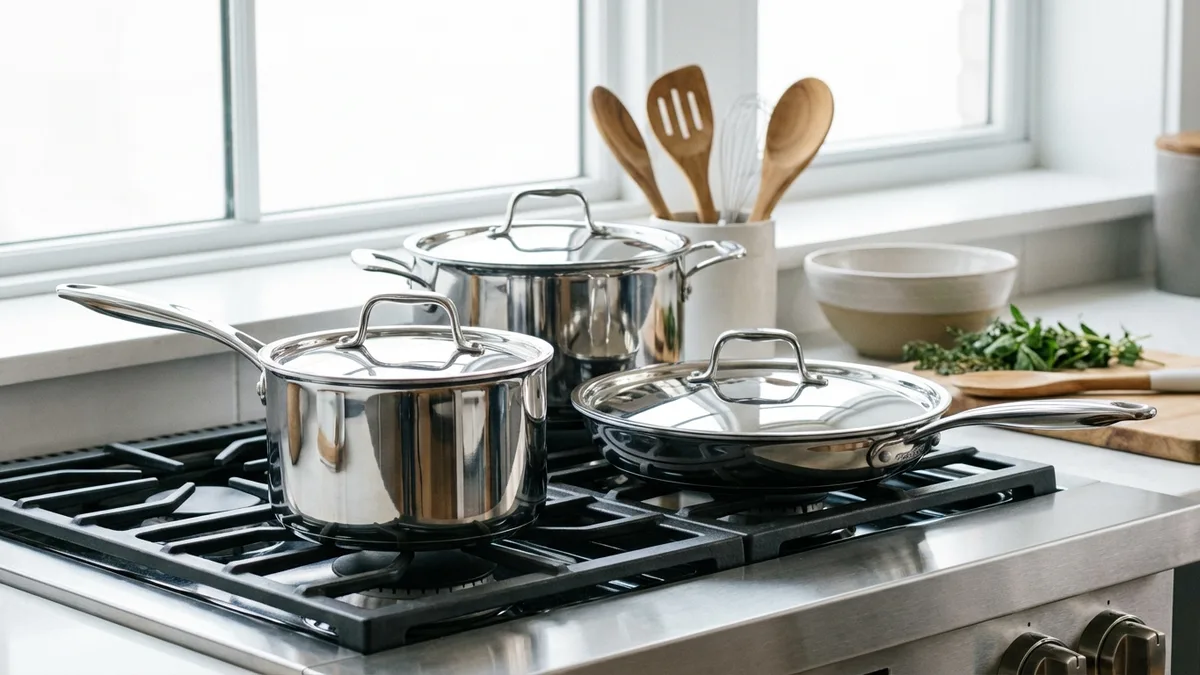
Construction matters. Fully clad (multi-ply) construction, where stainless steel layers sandwich an aluminum or copper core, provides even heating without exposing you to the core metals. The cooking surface stays stainless steel. Brands like All-Clad, Demeyere, and Heritage Steel use this approach.
Avoid “stainless steel” with non-stick coatings. Some brands apply non-stick coatings to stainless steel interiors, which defeats the purpose. If you’re choosing stainless steel for safety, make sure the cooking surface is uncoated.
Check the country of origin for quality assurance. This isn’t about nationalism. It’s about manufacturing standards. US- and European-made stainless steel cookware is generally produced under stricter quality controls for food-contact materials.
Our Verdict
According to NonToxicLab’s research, stainless steel is one of the safest cookware materials available. It doesn’t contain PFAS. It doesn’t off-gas at high temperatures. It doesn’t shed microplastics. The minor metal leaching that occurs is well within safe levels for the vast majority of people.
The one group that should consider alternatives is people with confirmed nickel allergies who also experience systemic reactions to dietary nickel. For everyone else, a good set of stainless steel pans is a kitchen investment you can feel confident about.
If you’re transitioning away from non-stick cookware, stainless steel is one of the strongest starting points. Check our best non-toxic cookware guide for specific picks at different price points, and our guide on how to detox your home for more practical swaps beyond the kitchen.
Questions We Hear Most
Is 18/10 stainless steel safe for cooking?
Yes. 18/10 is a standard food-grade stainless steel alloy. The 18% chromium provides corrosion resistance, and the 10% nickel adds durability. Studies show that metal leaching from 18/10 stainless steel during normal cooking falls well within established safety limits.
Does stainless steel leach nickel into food?
It does, in very small amounts. Leaching is highest with new pans, acidic foods, and longer cooking times. For most people, the amounts are far below daily safe intake limits. People with nickel allergies may want to use nickel-free 18/0 stainless steel or cast iron instead.
Can you cook tomato sauce in stainless steel?
Yes. Cooking acidic foods like tomato sauce in stainless steel is safe for the general population. The metal leaching increases slightly, but remains within safe ranges. Just avoid storing acidic foods in the pan for extended periods after cooking.
Is stainless steel safer than non-stick?
From a chemical exposure perspective, yes. Non-stick coatings contain PTFE and are manufactured using PFAS chemicals. They degrade at high heat and shed microplastics when scratched. Stainless steel has none of these issues.
What’s the safest stainless steel grade for cooking?
18/10 and 18/8 are both excellent food-grade options. If you have a nickel allergy, 18/0 eliminates the nickel component entirely. All three grades contain 18% chromium for corrosion resistance.
Does stainless steel cookware contain lead?
Quality stainless steel cookware from reputable manufacturers does not contain lead. Lead is not part of the stainless steel alloy. However, some lower-quality imported cookware may have questionable materials. Stick with established brands that provide material certifications.
How long does stainless steel cookware last?
With proper care, stainless steel cookware lasts decades. Many people use the same stainless steel pans for 20 to 30 years. This durability is one of its biggest advantages over non-stick and ceramic-coated options, which need replacing every few years.
Sources
- Kamerud, K. L., et al. (2013). Stainless steel leaches nickel and chromium into foods during cooking. Journal of Agricultural and Food Chemistry, 61(39), 9495-9501.
- European Food Safety Authority. Update of the risk assessment of nickel in food and drinking water. EFSA Journal, 2020.
- National Institutes of Health, Office of Dietary Supplements. Chromium fact sheet.
- International Journal of Electrochemical Science. Corrosion behavior of stainless steel in acidic food solutions.
- Landrigan, Philip J. Research on environmental chemical exposure and public health.
- Swan, Shanna H. Count Down: How Our Modern World Is Threatening Sperm Counts, Altering Male and Female Reproductive Development, and Imperiling the Future of the Human Race. Scribner, 2021.
- Hyman, Mark. Discussions on non-toxic kitchen practices. The Doctor’s Farmacy Podcast.