Food-grade silicone is generally considered safe for cooking at temperatures up to 428 degrees Fahrenheit (220 degrees Celsius). Platinum-cured silicone is the safest type, showing minimal leaching in published studies. However, peroxide-cured silicone and products heated above recommended temperatures can release siloxanes and other compounds. The quality of the silicone matters significantly, and not all silicone kitchen products are equal.
Silicone has quietly taken over the non-toxic kitchen. Baking mats, spatulas, muffin pans, food storage bags, ice cube trays, trivets. If you’ve swapped out plastic or non-stick products in the last few years, chances are silicone is what replaced them.
But is it actually safe? The answer is more complicated than the “completely inert” claim you’ll see on most product pages. I went through the available research on silicone food contact materials, and what I found is worth understanding before you fill your kitchen drawers with the stuff.
What Is Silicone, Exactly?
Silicone (technically polydimethylsiloxane, or PDMS) is a synthetic polymer made from silicon, oxygen, carbon, and hydrogen. Silicon is the base element, derived from silica (sand). Through a chemical manufacturing process, silicon is combined with methyl chloride and processed into the flexible, heat-resistant material we recognize as silicone.
It’s not plastic, although it behaves similarly in some ways. The key difference is the backbone. Plastics have carbon-carbon chains. Silicone has silicon-oxygen chains, which gives it much higher heat resistance and chemical stability. This is why silicone can handle oven temperatures that would melt most plastics.
Silicone is used across industries: medical implants, baby bottle nipples, aerospace seals, electronics insulation, and of course, kitchen products. Its widespread use in medical settings is often cited as evidence of safety, and that’s partially true, but medical-grade silicone is manufactured to stricter standards than many kitchen products.
Platinum-Cured vs. Peroxide-Cured: This Distinction Matters
Not all silicone is made the same way. There are two primary curing processes, and they produce meaningfully different end products.
Platinum-Cured (Addition Cure)
Platinum-cured silicone uses a platinum catalyst to trigger the crosslinking reaction that turns liquid silicone into a solid, flexible material. The resulting product is very clean. The platinum catalyst produces no byproducts, which means the finished silicone contains minimal residual chemicals.
This is the type used in medical devices, baby products, and the better kitchen products. When people say “food-grade silicone” or “medical-grade silicone,” they’re usually referring to platinum-cured silicone, though these terms aren’t strictly regulated.
Peroxide-Cured (Compression Cure)
Peroxide-cured silicone uses organic peroxides as the curing agent. This process is cheaper than platinum curing, but it leaves behind peroxide byproducts in the finished material. These residual peroxides can include acidic compounds and volatile organic substances that may migrate out of the silicone, especially when heated.
The byproducts from peroxide curing are the primary concern in the silicone safety discussion. A post-curing bake (heating the silicone at high temperatures after manufacturing) can reduce residual peroxides, but not all manufacturers perform this step thoroughly.
How to Tell the Difference
Here’s the frustrating part: most silicone kitchen products don’t tell you which curing method was used. There’s no legal requirement to disclose it. Some premium brands (like Stasher) explicitly state “platinum-cured” on their packaging. Most budget brands say nothing.
The pinch test is a rough indicator. Pinch and twist a piece of platinum-cured silicone, and it should not change color. Peroxide-cured silicone sometimes turns white at the stress point when pinched. This test isn’t foolproof, but it’s a quick screening method.
When in doubt, buy from brands that explicitly state platinum-cured and hold third-party certifications. The price difference is usually modest, and the safety margin is worth it.
LFGB vs. FDA Certification: What Do They Actually Mean?
Two certifications come up frequently in silicone product marketing: FDA and LFGB. They’re not equivalent.
FDA (United States)
The FDA classifies silicone as “Generally Recognized as Safe” (GRAS) for food contact. FDA compliance means the material meets the agency’s requirements for food contact substances under 21 CFR (Code of Federal Regulations). However, FDA compliance is largely self-certified by manufacturers. The FDA does not test individual products. It sets standards and expects companies to meet them.
An FDA-compliant label tells you the silicone meets baseline food contact requirements. It doesn’t tell you about curing method, purity level, or how the product performs under extended heat exposure.
LFGB (Germany/EU)
LFGB (Lebensmittel-, Bedarfsgegenstande- und Futtermittelgesetzbuch) is Germany’s food safety standard, and it’s considerably stricter than FDA requirements for silicone. LFGB testing requires that the silicone be tested under actual cooking conditions, including exposure to high temperatures and fatty foods, to measure what migrates out of the material.
LFGB-certified silicone must pass migration tests showing that volatile organic compounds stay below strict thresholds. Products that pass LFGB testing have been verified to release minimal compounds even under heat stress.
If you see LFGB certification on a silicone product, that’s a stronger safety indicator than FDA compliance alone. Some brands list both.
What Does the Research Say About Silicone Leaching?
This is the core question, and the research gives us a qualified answer.
The Key Study
A 2012 study published in Food Additives and Contaminants tested silicone baking molds by exposing them to various food simulants (substances that mimic fatty foods, acidic foods, etc.) at elevated temperatures. The researchers found that silicone molds released siloxanes (cyclic silicone compounds, specifically D4, D5, and D6) during initial uses, particularly at higher temperatures.
The migration of siloxanes decreased significantly after the first few uses. By the third or fourth heating cycle, the amount of material released dropped substantially. This suggests that “seasoning” new silicone bakeware by baking it empty at high temperature before first use can reduce initial off-gassing.
Siloxane Concerns
The siloxanes released from silicone (D4, D5, D6) are not considered acutely toxic. However, D4 (octamethylcyclotetrasiloxane) has been classified by the European Chemicals Agency (ECHA) as a substance of very high concern due to potential endocrine-disrupting properties and environmental persistence. D5 and D6 are under scrutiny for similar reasons, though the evidence is less definitive.
It’s important to put this in perspective. The amounts of siloxanes that migrate from quality food-grade silicone under normal cooking conditions are very small. The levels found in studies are generally well below regulatory thresholds for concern. But “below regulatory thresholds” and “zero exposure” are not the same thing, and people who are working to minimize their total chemical load care about that distinction.
Temperature Thresholds
Silicone manufacturers typically rate their products to 428 F (220 C) or sometimes 450 F (232 C). Some claim safety up to 500 F or higher.
The research supports that food-grade silicone remains stable up to approximately 428 F under normal kitchen use. Above that temperature, degradation increases, and siloxane release goes up. At temperatures above 572 F (300 C), silicone begins to break down more aggressively, releasing a wider range of volatile compounds.
For practical purposes: silicone bakeware used at standard baking temperatures (up to 400 F) poses minimal risk. Using silicone at broiling temperatures or directly over a flame pushes beyond the material’s safe zone.
What About Long-Term Exposure?
There’s limited long-term research on daily dietary exposure to siloxanes from silicone kitchen products. Most studies measure acute migration (what comes out during a single heating cycle). We don’t have multi-year studies tracking health outcomes in people who cook with silicone daily versus those who don’t.
This is a data gap, not evidence of harm. But it’s worth acknowledging. The absence of long-term studies means we’re relying on short-term migration data and general toxicological assessments of siloxanes, which is reasonable but not the same as definitive proof of safety over decades of daily use.
When Silicone IS Safe
Based on the available evidence, according to NonToxicLab’s assessment, silicone is a safe choice in these situations:
Silicone baking mats and molds used at temperatures of 400 F or below. Quality silicone bakeware (platinum-cured, LFGB-certified) releases negligible amounts of anything at standard baking temperatures, especially after the first few uses. A silicone baking mat is a good replacement for parchment paper and a vastly better option than non-stick coated baking sheets. For more on safe bakeware, see our non-toxic bakeware guide.
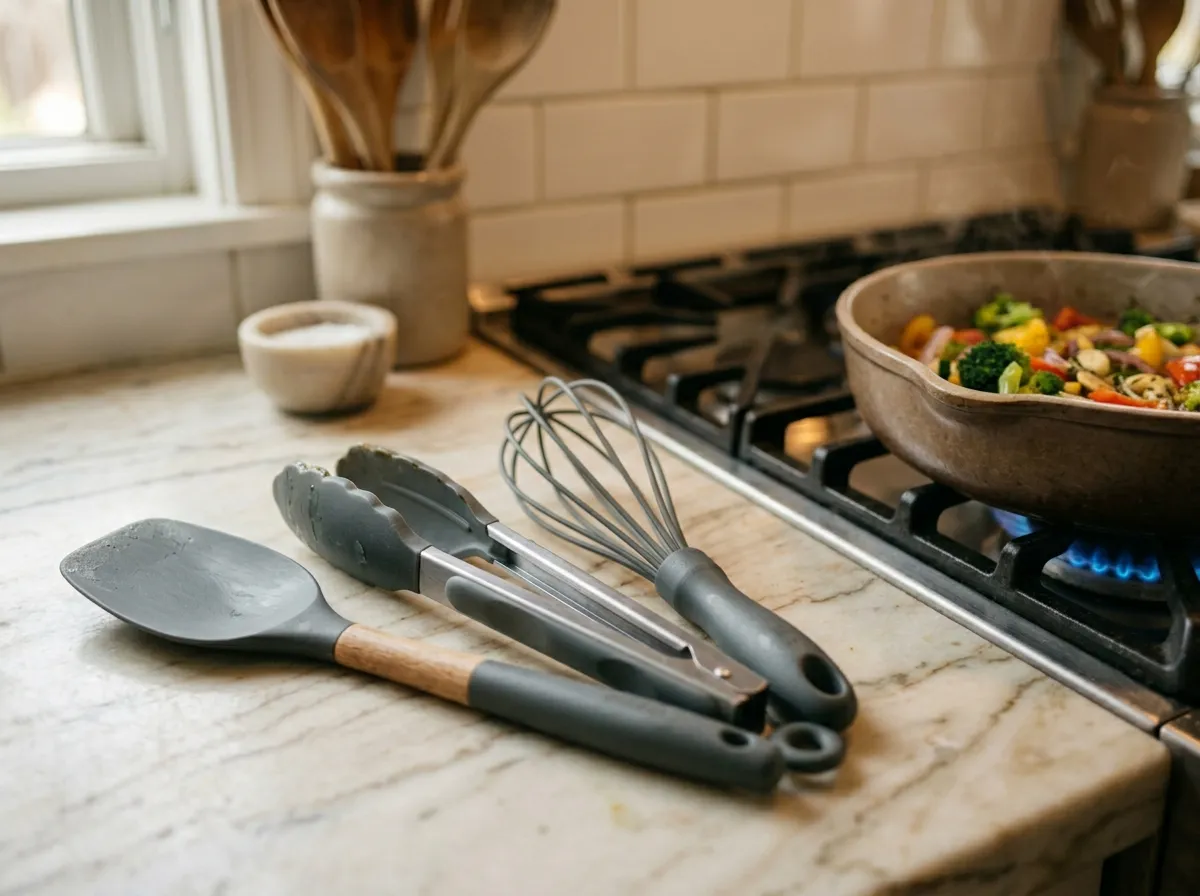
Silicone utensils (spatulas, spoons, tongs). These have brief, intermittent contact with hot food. The exposure time is short, the surface area is small, and the temperatures are typically within safe ranges. Silicone utensils are a clear upgrade from plastic utensils that can melt, warp, or leach BPA and other chemicals.
Silicone food storage bags (like Stasher). When used for food storage at room temperature or in the refrigerator, there’s essentially no migration concern. Even when heated in the microwave or oven (within rated temperatures), platinum-cured silicone bags are among the safest food storage options available. We reviewed Stasher bags in detail in our non-toxic food storage bags guide.
Silicone ice cube trays and molds. Freezing temperatures don’t cause migration. These are perfectly safe.
Silicone stretch lids and food covers. Used at room temperature or fridge temperatures, these are safe. They’re a practical replacement for plastic wrap.
Silicone baby products (nipples, teethers) from reputable brands that specify platinum-cured, medical-grade silicone. These go through additional testing and are held to stricter standards. For more on safe baby products, see our non-toxic baby registry guide.
When Silicone ISN’T Safe (or At Least Questionable)
Cheap, unbranded silicone products with no certifications. The silicone kitchen product market is flooded with budget imports that don’t disclose their curing method, don’t carry LFGB certification, and may not even be genuine silicone (some products marketed as silicone are silicone-coated plastic). If you can’t verify the product’s material and manufacturing quality, the safety assurance drops significantly.
Any silicone product used above 450 F. This includes putting silicone molds under a broiler, using silicone utensils to stir food in a screaming-hot wok, or placing silicone directly on a grill grate. Above 450 F, the data shows increased degradation and volatile compound release. Stay within rated temperatures.
Silicone products that smell strongly. High-quality platinum-cured silicone has little to no odor. If a silicone product has a noticeable chemical smell, especially when heated, that’s a sign of residual curing byproducts or low-quality material. Don’t use it for food contact.
Silicone that has degraded. If a silicone product has become sticky, tacky, discolored (beyond normal food staining), or is flaking, it’s breaking down. Replace it. Degraded silicone is no longer structurally stable and may release compounds at higher rates.
Using silicone to cook fatty foods at high temperatures for extended periods. Fats accelerate the extraction of compounds from silicone. Baking a tray of cookies at 350 F is low risk. Roasting oily foods at 425 F for an hour in a silicone pan is pushing the boundaries. For high-temperature, high-fat cooking, glass or stainless steel are better choices.
This connects to the broader question of what materials are safest in the kitchen. Our non-toxic cookware guide covers the full range of options, including stainless steel, cast iron, ceramic, and glass.
The Comparison: Silicone vs. Other Kitchen Materials
Silicone vs. Plastic
Silicone is significantly safer than most plastics for food contact, especially at elevated temperatures. Plastics (even BPA-free ones) can leach endocrine disruptors, microplastics, and other compounds. Silicone’s silicon-oxygen backbone gives it much higher thermal stability. If you’re choosing between a plastic spatula and a silicone one, the silicone is the better pick every time.
For a closer look at why BPA-free plastics aren’t necessarily safe, see our article on whether BPA-free is actually safe.
Silicone vs. Glass
Glass is inert. It doesn’t leach anything into food, ever, regardless of temperature. For baking and food storage where glass is practical (casserole dishes, food storage containers, measuring cups), glass is the gold standard for safety. The downsides of glass are weight, breakability, and the fact that it doesn’t work for some applications (you can’t make a glass spatula).
Silicone vs. Stainless Steel
Stainless steel is also effectively inert for food contact. It’s the workhorse of professional kitchens for a reason. For utensils, stainless steel is as safe as it gets. The advantage silicone has over steel is flexibility (it won’t scratch pans) and heat insulation (silicone handles don’t burn your hands). For pure safety, stainless steel edges out silicone, but silicone’s practical advantages make it a reasonable choice for many applications.
Silicone vs. Non-Stick Coatings (PTFE)
This isn’t close. PTFE-based non-stick coatings carry well-documented risks including toxic fume release above 500 F and microplastic shedding from scratched surfaces. Silicone bakeware and mats are a dramatically safer alternative to non-stick coated baking sheets and pans. For the full breakdown on non-stick risks, read our article on whether non-stick cookware is safe.
How to Buy Safe Silicone Kitchen Products
Here’s a practical buying checklist:
-
Look for “platinum-cured” on the label or product page. This is the single most important indicator. If a brand doesn’t mention curing method, that’s not necessarily a deal-breaker, but it’s less reassuring than a brand that explicitly states it.
-
Check for LFGB certification. This is a stronger standard than FDA compliance alone. Products with LFGB certification have been tested under realistic cooking conditions.
-
Buy from brands that disclose their materials. Stasher, OXO, GIR (Get It Right), and a handful of other brands are transparent about their silicone sourcing and manufacturing. Generic, unbranded silicone from marketplace sellers is a gamble.
-
Do the pinch test. Pinch and twist the silicone. It should bounce back without turning white. If it turns white at the stress point, it may be peroxide-cured or contain fillers.
-
Check for MADE SAFE or similar certification. Products like Stasher bags carry MADE SAFE certification, which screens the entire product against a list of known harmful substances.
-
Season new silicone bakeware before first use. Bake it empty at 400 F for about 30 minutes. This drives off residual volatile compounds from manufacturing. Let it cool, wash it, and then use it for food.
Dr. Leonardo Trasande, a professor of pediatrics and environmental medicine at NYU Langone Health, has written extensively about reducing chemical exposure in the kitchen. His work emphasizes choosing food contact materials with the least potential for chemical migration, and medical-grade platinum-cured silicone consistently ranks as one of the safer synthetic options available.
Our Verdict
NonToxicLab’s research shows that silicone is one of the safer synthetic materials for kitchen use, but safety depends on quality. Platinum-cured, LFGB-certified silicone used within rated temperature limits is a solid choice for baking, food storage, utensils, and general kitchen use. It’s a significant upgrade from plastic and non-stick alternatives.
But silicone isn’t inert the way glass and stainless steel are. It can release small amounts of siloxanes, especially when heated above recommended temperatures or during initial uses of new products. Cheap, poorly manufactured silicone without verifiable certifications presents more unknowns.
The practical takeaway: buy quality silicone from transparent brands, use it within temperature limits, season new bakeware before first use, and don’t treat it as a universal replacement for glass and stainless steel in high-heat, high-fat cooking. Used thoughtfully, silicone is a safe and practical part of a non-toxic kitchen.
For a full kitchen overhaul, our non-toxic kitchen essentials guide covers everything from cookware to food storage to cleaning products, including where silicone fits into the bigger picture.
Common Questions
Does silicone release toxins when heated?
Platinum-cured food-grade silicone releases negligible amounts of volatile compounds (primarily siloxanes) at temperatures up to 428 F. The amounts decrease with repeated use. Above 450 F, degradation increases and more compounds are released. At standard baking and cooking temperatures, the migration levels are well below regulatory thresholds of concern.
Is silicone safer than plastic for food storage?
Yes. Silicone does not contain BPA, phthalates, or other common plasticizers. Its silicon-oxygen backbone is more chemically stable than the carbon-based polymers in plastics, especially at elevated temperatures. For microwave and oven use, silicone is dramatically safer than any plastic container.
What is the difference between food-grade and medical-grade silicone?
Medical-grade silicone is manufactured under stricter quality controls and undergoes more extensive biocompatibility testing because it’s intended for implantation or prolonged body contact. Food-grade silicone meets FDA or LFGB standards for food contact but isn’t tested as rigorously. In practice, platinum-cured food-grade silicone from reputable brands is very similar in composition to medical-grade silicone.
Is it safe to bake with silicone molds?
Yes, when using quality silicone molds at temperatures of 400 F or below. Season new molds by baking them empty first. Avoid using silicone molds at temperatures above 425 F or under a broiler. For high-temperature baking, stainless steel or glass bakeware is a safer alternative.
Can silicone go in the dishwasher?
Yes. Most food-grade silicone products are dishwasher safe. The temperatures in a standard dishwasher (120 to 150 F) are well within silicone’s safe range. Top rack placement is recommended for smaller items to prevent them from flipping and collecting water.
How can I tell if my silicone product is high quality?
Check for explicit “platinum-cured” labeling, LFGB or MADE SAFE certification, and no noticeable chemical odor. Perform the pinch test: twist the silicone and check if it turns white at the stress point (which may indicate lower-quality material or fillers). Buy from brands that disclose their material sourcing and manufacturing process.
Sources
- Helling, R. et al. “Determination of the overall migration from silicone baking moulds into simulants and food using 1H-NMR techniques.” Food Additives and Contaminants, 2009.
- European Chemicals Agency (ECHA). “Octamethylcyclotetrasiloxane (D4) Substance Evaluation.” ECHA risk assessment.
- FDA. “Indirect Food Additives: Polymers.” 21 CFR 177.2600.
- German Federal Institute for Risk Assessment (BfR). “Silicone baking moulds: Volatile substances should be baked out before first use.” BfR Opinion, 2015.
- Trasande, Leonardo. Sicker, Fatter, Poorer: The Urgent Threat of Hormone-Disrupting Chemicals to Our Health and Future. Houghton Mifflin Harcourt, 2019.