Pottery Barn sits in an interesting middle ground. It’s not budget furniture, but it’s not a dedicated non-toxic brand either. You’re paying a premium over IKEA or Ashley, so the natural question is: are you also getting safer materials? We spent several weeks going through Pottery Barn’s product specifications, certifications, and customer service responses to find out.
The short version: Pottery Barn has made some real improvements, particularly for their kids’ line, but the adult furniture still has significant gaps in transparency and third-party testing.
What Pottery Barn Claims About Safety
Pottery Barn’s parent company, Williams-Sonoma Inc., publishes a corporate responsibility report that touches on chemical safety. They reference compliance with California Proposition 65 (which requires warnings for products containing known carcinogens or reproductive toxins) and adherence to CARB Phase 2 formaldehyde emission standards for composite wood.
On their website, they state that their upholstered furniture is made without added flame retardant chemicals. This is a meaningful commitment, and they’ve been consistent about it since roughly 2019.
For Pottery Barn Kids specifically, they promote GREENGUARD Gold certification on many products. This is the highest standard for indoor air quality certification, testing for over 10,000 chemical emissions. But here’s the thing people miss: the GREENGUARD Gold certification on Pottery Barn Kids products does not extend to the mainline Pottery Barn adult furniture. These are tested and certified separately, and the adult line largely lacks this certification.
The Formaldehyde Situation
Like most mid-range furniture brands, Pottery Barn uses a mix of solid wood and engineered wood (plywood, MDF, particle board) depending on the product line. The engineered wood components contain formaldehyde-based adhesives.
Pottery Barn states their products comply with CARB Phase 2 standards, which limit formaldehyde emissions to 0.09 ppm for particle board and 0.11 ppm for MDF. This is the same standard IKEA meets, and it’s the strictest US regulation. But CARB Phase 2 is a regulatory floor, not a ceiling of safety.
According to CARB Phase 2 compliance standards, the regulation was designed to reduce population-level risk, not to guarantee zero exposure for any individual. The standard does not account for people who furnish an entire room with engineered wood products or for those with chemical sensitivities.
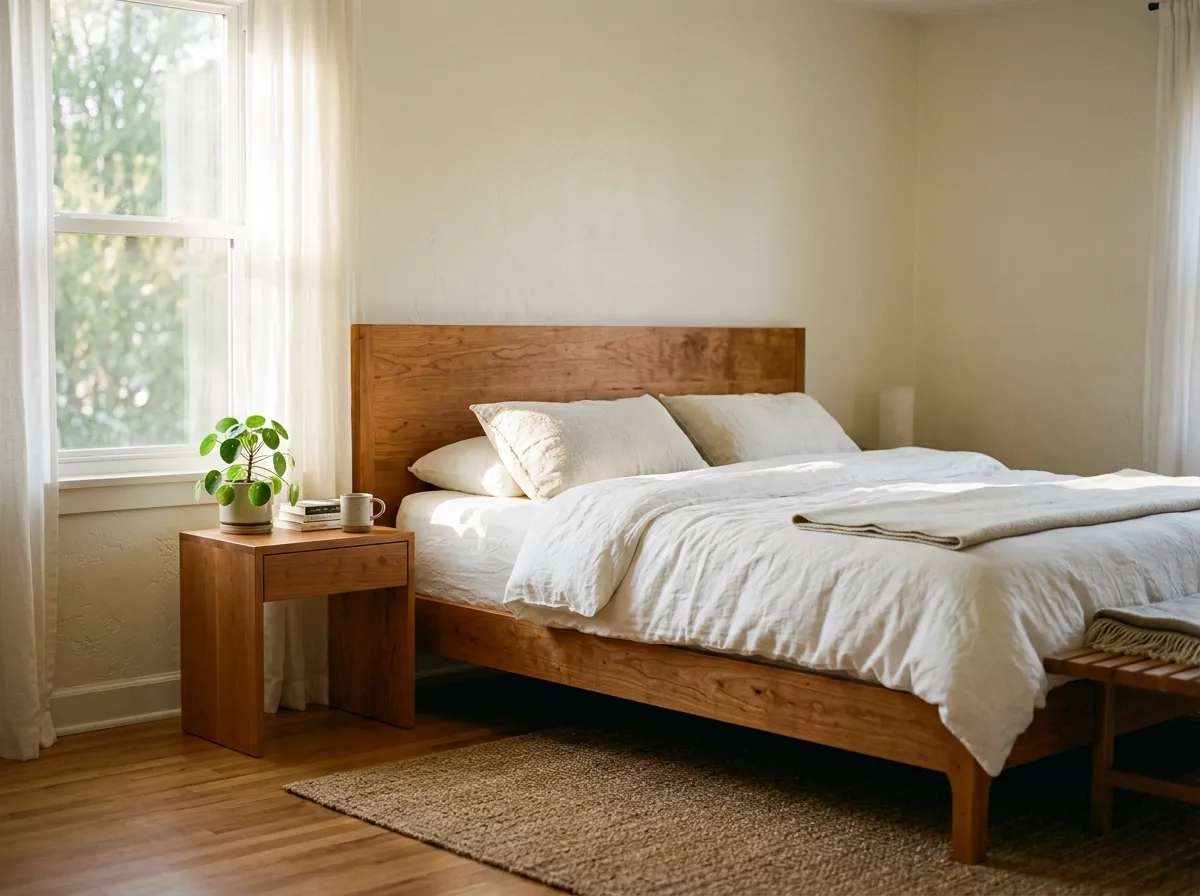
Where this gets tricky with Pottery Barn is the product mix. A piece like the Toulouse Bedroom Collection uses solid mahogany and veneers over engineered wood. The Cameron storage system uses poplar wood with MDF panels. Their media consoles and entertainment centers tend to rely more heavily on MDF and plywood. Unless you read the product specifications carefully, you won’t know which pieces are mostly solid wood and which are mostly engineered.
Finishes and Coatings
Pottery Barn offers multiple finish options across their furniture lines. The specifics matter.
Their wood furniture typically uses catalyzed lacquer or conversion varnish finishes. These are durable, professional-grade finishes applied in the factory. Once fully cured, they produce relatively low ongoing emissions. The concern is primarily during the initial off-gassing period after manufacturing and delivery.
We contacted Pottery Barn’s customer service to ask whether their finishes are water-based or solvent-based, and whether they could provide VOC data for specific products. The response was that finishes vary by product and supplier, and they directed us to their general compliance statements. This is not unusual for mainstream furniture brands, but it’s frustrating when you’re trying to make a smart choice.
Their painted furniture (the white and colored pieces that are popular for bedrooms and kids’ rooms) typically uses a multi-step finish process. Pottery Barn Kids promotes low-VOC finishes on their products, but the adult line doesn’t make the same specific claims.
Upholstery and Foam
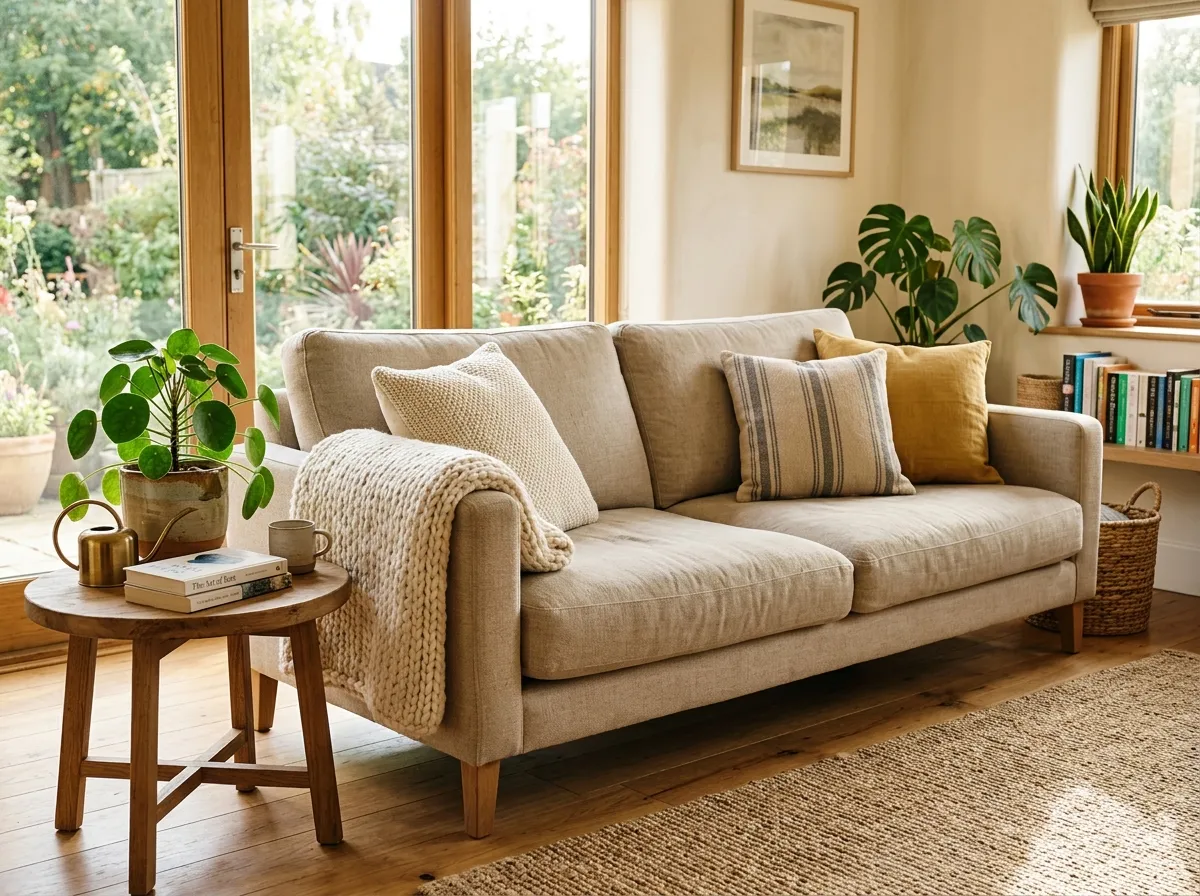
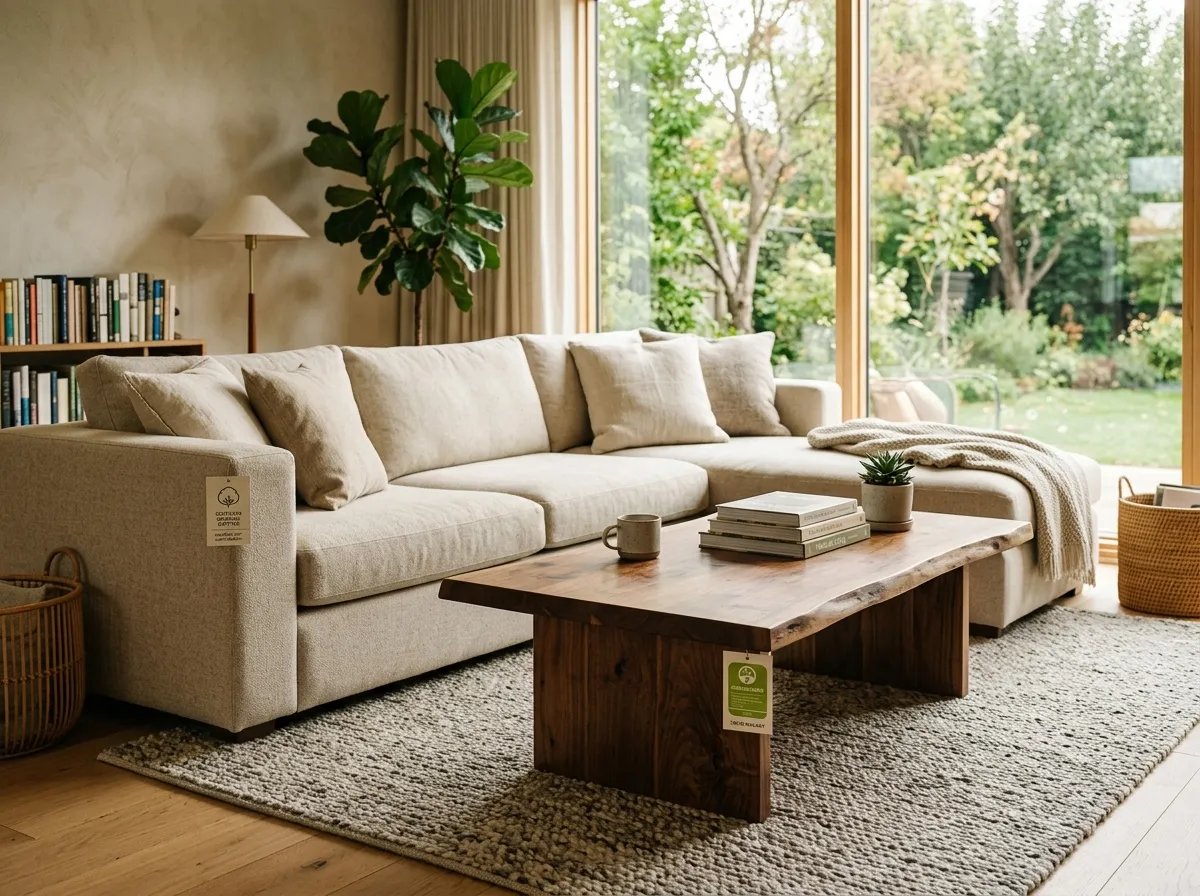
Pottery Barn’s sofas, sectionals, and chairs use polyurethane foam cushions. This is standard across the furniture industry outside of dedicated non-toxic brands. Polyurethane foam is a petroleum-based product that can off-gas volatile organic compounds, particularly when new.
The good news: Pottery Barn has committed to not adding chemical flame retardants to their upholstered furniture. This is significant because flame retardant chemicals (like TDCPP, TCEP, and various brominated compounds) are among the most concerning chemicals in conventional furniture. They’ve been linked to hormone disruption, neurological effects, and cancer.
What we couldn’t confirm: whether their foam is CertiPUR-US certified. CertiPUR-US tests polyurethane foam for harmful chemicals including formaldehyde, heavy metals, phthalates, and certain flame retardants. Some Pottery Barn product pages mention CertiPUR-US, others don’t. The inconsistency suggests it varies by product line or supplier. When we asked customer service directly, we got a general statement about meeting safety standards rather than a clear yes or no on CertiPUR-US across all products.
The fabric options also matter. Pottery Barn offers both synthetic (polyester, performance fabrics) and natural (cotton, linen) upholstery options. Their “Performance” fabric line is treated with stain-resistant coatings. These coatings have historically been PFAS-based (the “forever chemicals”), though many textile manufacturers have been transitioning away from PFAS. Pottery Barn does not disclose whether their Performance fabrics contain PFAS.
Pottery Barn Kids vs. Pottery Barn: A Double Standard?
This is the most telling finding in our research. Pottery Barn Kids has significantly stronger chemical safety standards than the adult Pottery Barn line:
- GREENGUARD Gold certified on many Pottery Barn Kids products (not on adult furniture)
- Low-VOC finishes specifically promoted for Kids products
- Lead-free paint and finishes verified for Kids products
- More detailed safety disclosures on Kids product pages
It raises an obvious question: if Pottery Barn can meet GREENGUARD Gold standards for children’s furniture, why not for adult furniture? The answer is likely cost and complexity. GREENGUARD Gold certification requires ongoing testing and compliance monitoring. Applying it across their entire adult furniture catalog (which is much larger and changes more frequently) would be expensive.
But it also reveals that Pottery Barn knows the difference between meeting minimum regulatory standards and meeting higher safety benchmarks. They choose the higher standard for kids and the lower standard for adults.
How Pottery Barn Compares
Against budget brands (IKEA, Ashley, Wayfair house brands), Pottery Barn is somewhat better. The no-flame-retardant commitment puts them ahead. The Pottery Barn Kids GREENGUARD Gold certification is genuinely good. And their use of solid wood in some product lines means less formaldehyde exposure than all-particle-board alternatives.
Against dedicated non-toxic furniture brands (Medley Home, Avocado, Savvy Rest), Pottery Barn falls short. Those brands use solid wood with zero-VOC finishes, natural latex instead of polyurethane foam, organic fabrics without chemical treatments, and carry GREENGUARD Gold or equivalent certifications across their full product lines.
The price gap between Pottery Barn and non-toxic brands is smaller than you might think. A Pottery Barn York sofa runs around $2,500-$3,500. A Medley Home sofa with organic latex cushions and solid wood frame starts around $3,500-$5,000. You’re paying 30-50% more for significantly cleaner materials.
What to Do If You’re Buying Pottery Barn
If Pottery Barn fits your budget and style, these steps can help you make safer choices within their catalog:
Choose solid wood pieces when possible. Look at product descriptions for “solid [wood type]” rather than “engineered wood,” “MDF,” or “[wood type] veneer over composite.” The Benchwright, Toscana, and Griffin collections tend to use more solid wood.
Consider Pottery Barn Kids for nurseries and kids’ rooms. Their GREENGUARD Gold certified pieces are a genuinely safer choice for children’s spaces. The Cameron, Fillmore, and Belden lines offer storage and furniture with this certification.
Skip the Performance fabrics unless you need them. Choose untreated cotton or linen upholstery when practical. If you need stain resistance, look into non-toxic fabric protectors you can apply yourself.
Off-gas new pieces. Let new Pottery Barn furniture air out in a ventilated space for at least a week before placing it in a bedroom. This is especially important for pieces with engineered wood or new foam cushions. We have a full guide on how to off-gas new furniture.
Ask specific questions before buying. Contact Pottery Barn customer service and ask whether a specific piece is CertiPUR-US certified (for upholstered items) or GREENGUARD Gold certified. The answer may vary by product, and it’s worth checking.
If you’re looking for alternatives that meet higher non-toxic standards across the board, our guide to non-toxic furniture brands covers options at various price points that don’t require this level of detective work.
What People Ask
Is Pottery Barn furniture GREENGUARD certified?
Pottery Barn Kids products carry GREENGUARD Gold certification on many items, which is the highest indoor air quality standard. However, mainstream Pottery Barn adult furniture generally does not hold GREENGUARD Gold certification. The two lines are tested and certified separately.
Does Pottery Barn use flame retardants?
Pottery Barn states that their upholstered furniture does not contain added chemical flame retardants. This applies to sofas, chairs, and other upholstered pieces. This commitment has been in place since around 2019 and is one of the stronger aspects of their chemical safety profile.
Is Pottery Barn furniture safe for a nursery?
Pottery Barn Kids is a better choice than mainline Pottery Barn for nurseries. Many Pottery Barn Kids products carry GREENGUARD Gold certification and use low-VOC finishes specifically formulated for children’s spaces. The adult Pottery Barn line does not offer these same standards.
Does Pottery Barn furniture contain formaldehyde?
Products that use engineered wood (MDF, plywood, particle board) contain formaldehyde-based adhesives. Pottery Barn meets CARB Phase 2 emission standards, meaning formaldehyde is present but below the regulated threshold. Solid wood pieces do not have this concern.
How does Pottery Barn compare to IKEA on safety?
Both meet CARB Phase 2 formaldehyde standards and both have committed to no added flame retardants. Pottery Barn offers more solid wood options and has GREENGUARD Gold on their Kids line, which IKEA does not. Pottery Barn is incrementally better, but the gap isn’t as large as the price difference might suggest.
Does Pottery Barn use PFAS in their fabrics?
Pottery Barn has not publicly disclosed whether their Performance fabric line contains PFAS-based stain-resistant coatings. Many textile manufacturers are transitioning away from PFAS, but without explicit disclosure from Pottery Barn, we can’t confirm their fabrics are PFAS-free.
This article was researched and written by Lara Voss at NonToxicLab. See our full affiliate disclosure for details.
You Might Also Like
- Best Non-Toxic Carpeting for Your Home
- Best Non-Toxic Couch and Furniture Guide
- Best Non-Toxic Kids Furniture
Sources
- Williams-Sonoma Inc. Corporate Responsibility Report. Restricted substance and chemical compliance policies.
- California Air Resources Board (CARB). Airborne Toxic Control Measure for Composite Wood Products. Phase 2 formaldehyde emission standards.
- GREENGUARD Environmental Institute. GREENGUARD Gold Certification standards and product database. GREENGUARD
- Pottery Barn. Product specifications, material descriptions, and safety statements. potterybarn.com
- Pottery Barn Kids. GREENGUARD Gold certified product listings and safety information. potterybarnkids.com
- CertiPUR-US. Polyurethane foam certification standards and testing criteria. CertiPUR-US
- Robertson, S. UC Davis Department of Environmental Toxicology. Research on cumulative household chemical exposures.
- Related: Non-Toxic Furniture Brands | How to Off-Gas New Furniture | Flame Retardants in Furniture Guide | Non-Toxic Furniture Buying Guide | Best Non-Toxic Bed Frames