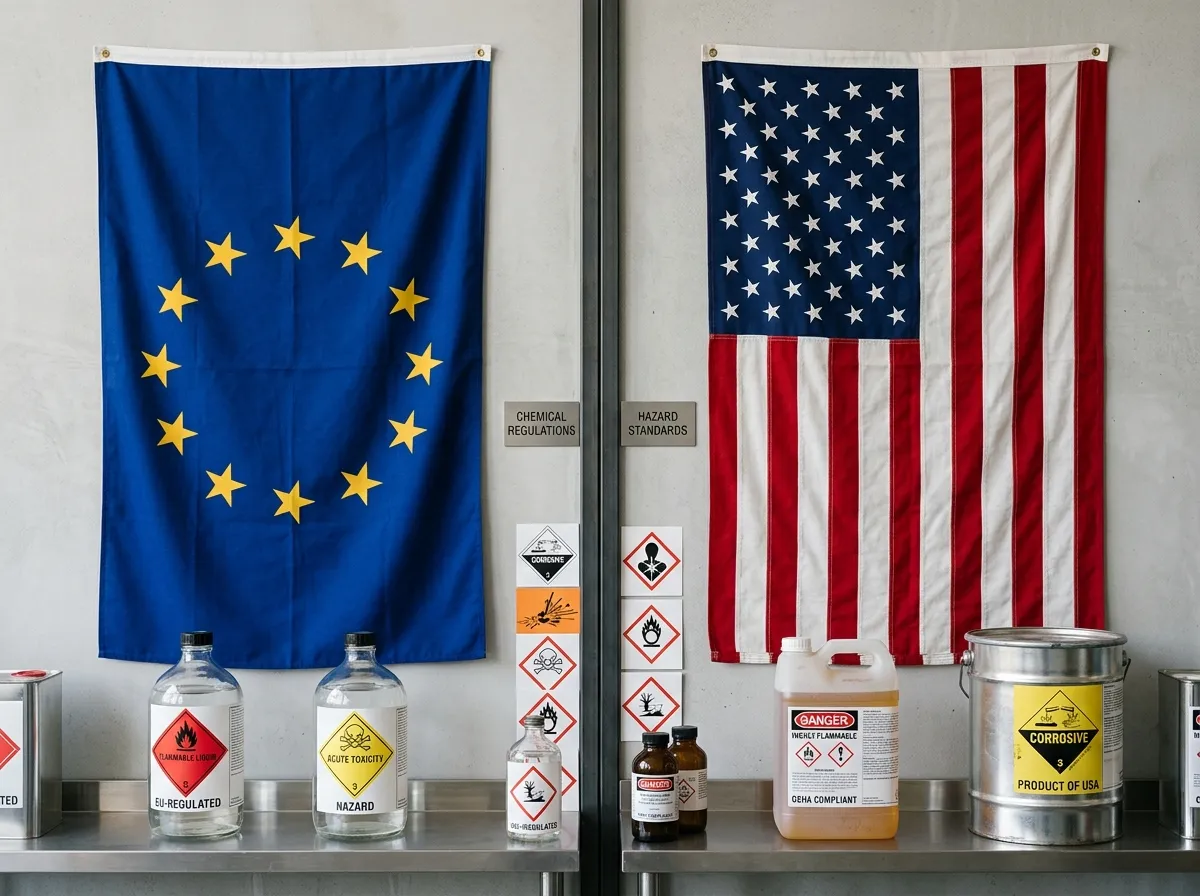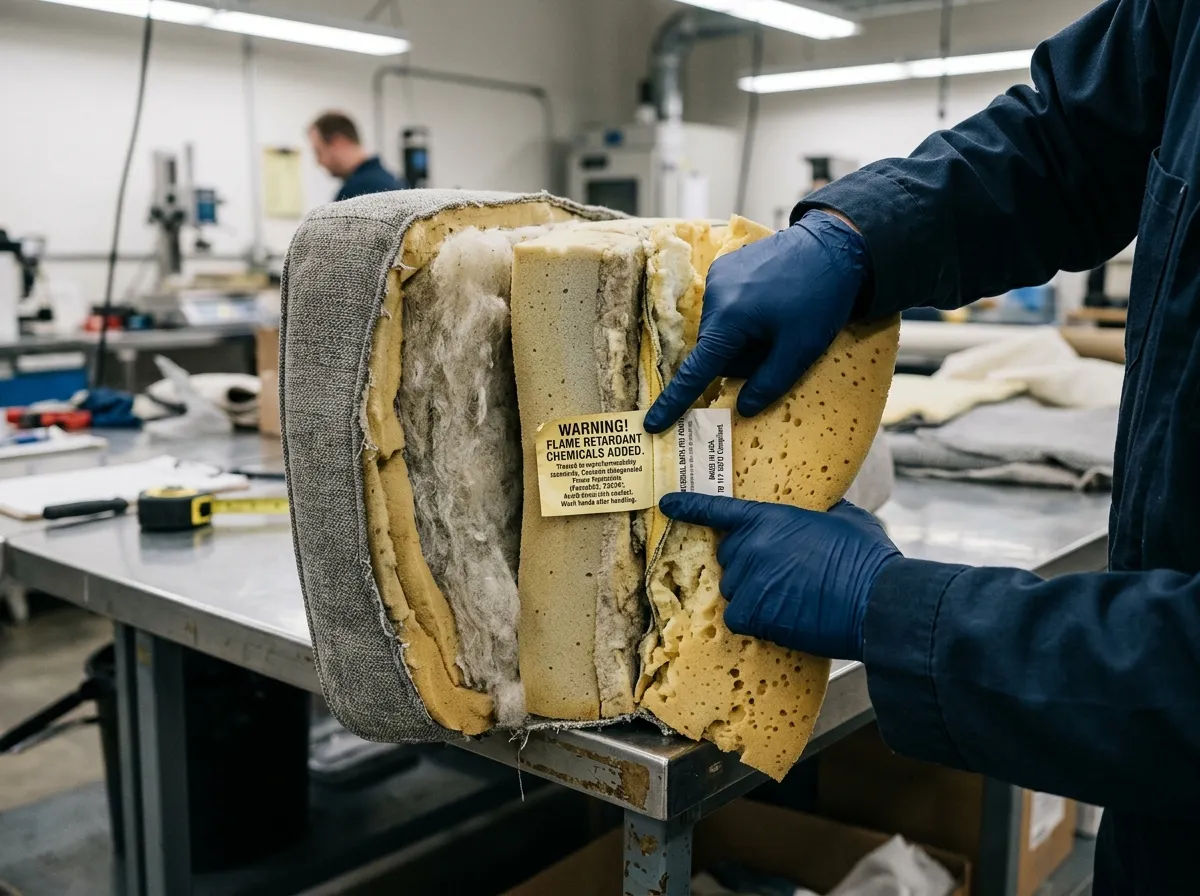
For decades, the furniture you sit on and the mattress you sleep on have likely contained chemical flame retardants. These chemicals were added to meet fire safety standards that, as it turns out, did not significantly improve fire safety outcomes. What they did accomplish was contaminating household dust, accumulating in human blood and breast milk, and contributing to a growing body of evidence linking them to cancer, hormonal disruption, and neurodevelopmental harm.
The story of flame retardants in furniture is one of regulatory failure, industry influence, and a slow but meaningful correction that is still in progress. Understanding this history helps you make informed choices about the furniture already in your home and the pieces you bring in next.
Which Flame Retardant Chemicals Are in Your Furniture
Not all flame retardants are the same. Multiple classes of chemicals have been used over the years, each with its own health profile and regulatory history.
PBDEs (Polybrominated Diphenyl Ethers)
PBDEs were the dominant flame retardant chemicals in furniture foam from the 1970s through the mid-2000s. They were added to polyurethane foam in couches, chairs, and mattresses, typically making up 3% to 5% of the foam’s weight.
PBDEs are persistent in the environment, bioaccumulative (they build up in the body over time), and associated with thyroid hormone disruption, neurodevelopmental delays in children, and reduced fertility. Dr. Shanna Swan’s research has identified PBDEs as one of several endocrine-disrupting chemical classes that contribute to declining reproductive health trends.
The most common forms were PentaBDE (used in furniture foam), OctaBDE (used in electronics), and DecaBDE (used in electronics and some textiles). PentaBDE and OctaBDE were voluntarily phased out in the US in 2004, and DecaBDE phase-out began in 2013. However, furniture manufactured before these phase-outs may still contain PBDEs and continue releasing them into household dust.
If your couch or upholstered furniture was manufactured before 2005, there is a high probability it contains PBDEs.
TDCPP (Tris(1,3-dichloro-2-propyl) phosphate)
When PBDEs were phased out, TDCPP became one of the most common replacements in furniture foam. California listed TDCPP as a known carcinogen under Proposition 65 in 2011, and research has linked it to endocrine disruption and reduced fertility.
TDCPP is a chlorinated organophosphate flame retardant. It was actually a replacement for a closely related chemical, TRIS (tris(2,3-dibromopropyl) phosphate), which was banned from children’s sleepwear in 1977 after being identified as a mutagen. The fact that the furniture industry adopted a chemical closely related to one already banned from children’s clothing tells you something about how the replacement process has worked.
TCEP (Tris(2-chloroethyl) phosphate)
TCEP is another chlorinated phosphate flame retardant found in furniture foam, carpet backing, and some textiles. It is classified as a reproductive toxin and suspected carcinogen. The EU restricted TCEP under REACH, but it remains legal in the US at the federal level.
Organophosphate Flame Retardants (OPFRs)
This broader class includes newer replacement chemicals like TPHP (triphenyl phosphate), TBPP, and various other organophosphate esters. These are the current generation of flame retardants most commonly found in furniture foam manufactured in the US.
Research on OPFRs is still accumulating, but early findings are concerning. TPHP has been associated with endocrine disruption and has been detected in the urine of 96% of Americans tested in biomonitoring studies. Dr. Philip Landrigan has described the pattern of replacing one harmful flame retardant with another, equally untested chemical as a “regrettable substitution cycle” that fails to protect public health.
Antimony Trioxide
While not a flame retardant itself, antimony trioxide is commonly used as a synergist that enhances the effectiveness of other flame retardants. It is often found in polyester fabrics and mattress covers. Antimony trioxide is classified as a possible human carcinogen, and it can leach from textiles through sweat and skin contact.
The Health Risks
The health concerns associated with flame retardant chemicals are not theoretical. They are backed by decades of research and documented in human biomonitoring studies.
Endocrine disruption. Multiple flame retardant chemicals interfere with thyroid hormones, reproductive hormones, and other endocrine functions. Thyroid hormones are critical for brain development, and even small disruptions during pregnancy or early childhood can have lasting effects.
Neurodevelopmental effects. Studies have found associations between PBDE exposure in pregnant women and lower IQ scores, reduced attention, and increased hyperactivity in their children. Dr. Leonardo Trasande has written extensively about how flame retardant exposure during critical developmental windows can alter brain development in ways that are measurable years later.
Cancer. Several flame retardant chemicals, including TDCPP and TCEP, are classified as carcinogens or suspected carcinogens. Firefighters, who experience high occupational exposure to combustion products of flame retardants, have elevated rates of several cancers. This observation helped drive some of the regulatory changes discussed below.
Reproductive harm. Research has linked flame retardant exposure to reduced fertility in both men and women, altered hormone levels, and adverse pregnancy outcomes. Our endocrine disruptors guide covers the broader research on how these chemicals affect hormonal health.
Exposure pathways. Flame retardants migrate out of foam over time and accumulate in household dust. You breathe this dust, and it settles on your hands and food. Young children, who crawl on floors and put their hands in their mouths frequently, have been found to have flame retardant levels in their blood three to five times higher than adults living in the same home.
According to NonToxicLab, the combination of constant low-level exposure through dust, the persistence of these chemicals in the body, and the sensitivity of developing organ systems makes flame retardants one of the most important chemical exposures to reduce in your home.
The Regulatory History
How We Got Here: TB 117
The story of flame retardants in furniture is inseparable from California’s Technical Bulletin 117 (TB 117), a fire safety standard adopted in 1975.
TB 117 required that filling materials in upholstered furniture withstand a small open flame for 12 seconds without igniting. The cheapest way for manufacturers to meet this standard was to add chemical flame retardants to the polyurethane foam. Because California is such a large market, manufacturers generally produced all their furniture to the California standard rather than maintaining separate product lines, which effectively made TB 117 a national standard.
The problem was that TB 117 tested only the foam fill, not the assembled piece of furniture. Research later showed that flame retardant-treated foam in a fully upholstered piece of furniture provided little to no meaningful improvement in fire safety. The cover fabric, not the foam, determines how quickly a fire spreads, and TB 117 did not test the cover.
A Chicago Tribune investigative series in 2012 exposed how the chemical industry had funded front groups, manipulated fire safety testimony, and lobbied aggressively to maintain flame retardant requirements in furniture. The reporting revealed that an industry-funded expert had provided misleading testimony about a baby being burned to death to justify continuing chemical treatment requirements.
TB 117-2013: The Update
In 2013, California updated the standard to TB 117-2013, which replaced the open-flame test with a smolder test. The smolder test evaluates how the complete upholstered piece (cover fabric plus filling) responds to a smoldering cigarette, which is actually the most common ignition source in residential furniture fires.
The critical change was that manufacturers could now meet the standard without adding chemical flame retardants. Using tightly woven, heavier cover fabrics or barrier materials between the fabric and foam could pass the smolder test without any chemical treatment.
This was a major turning point. It did not ban flame retardants, but it removed the regulatory requirement that had been driving their use.
State-Level Bans
Several states have gone further than California’s updated standard.
California enacted AB 2998 in 2018, which prohibits flame retardant chemicals (above 1,000 ppm) in residential upholstered furniture, children’s products, and mattresses sold in the state.
Maine banned all flame retardants in residential furniture in 2019.
Washington State restricted certain flame retardant chemicals (TDCPP, TCEP, DecaBDE, HBCD, and additive TBBPA) in residential upholstered furniture and children’s products.
Maryland banned organohalogen and organophosphorus flame retardants in upholstered furniture for residential use.
New York passed a similar ban on flame retardants in upholstered furniture, mattresses, and electronic enclosures.
Several other states have enacted or are considering similar legislation. The trend is clearly moving toward restricting these chemicals, but federal action has been slower.
Federal Status
At the federal level, the CPSC considered a petition to ban organohalogen flame retardants in consumer products but ultimately did not adopt a ban. The EPA has conducted risk evaluations on several flame retardant chemicals under TSCA but has not completed final regulatory actions on most of them.
How to Find Flame-Retardant-Free Furniture
Reading Labels
Since 2015, California has required furniture sold in the state to carry a label indicating whether it contains added flame retardant chemicals. Look for labels that state: “This product DOES NOT contain added flame retardant chemicals.”
If furniture lacks this label or was manufactured before 2015, it likely contains flame retardants, especially if it has polyurethane foam cushions.
Material Choices That Avoid Flame Retardants
Natural latex foam does not require flame retardant treatment because its inherent properties allow it to meet fire safety standards without chemical additives.
Wool is naturally flame resistant. It chars rather than melting or sustaining a flame, and it self-extinguishes. Many non-toxic mattress and furniture makers use wool as a natural fire barrier.
Dense, tightly woven fabrics can pass smolder tests without chemical treatment. Heavy linen, hemp, and tight-weave cotton are all options.
Solid wood frames with minimal foam reduce the overall amount of potentially treated material in a piece of furniture.
Our best non-toxic couch guide reviews sofas that are verified flame-retardant-free, and our non-toxic furniture buying guide covers the broader range of safer furniture across all categories.
Mattresses
The federal mattress flammability standard (16 CFR 1633) requires mattresses to withstand an open-flame test. However, this standard can be met without chemical flame retardants by using natural fire barriers like wool, silica-treated rayon, or Kevlar.
Many organic and non-toxic mattress brands use wool barriers to meet 16 CFR 1633 without any chemical flame retardants. Our best non-toxic mattresses guide identifies brands that have verified their products are free from added flame retardants.
For baby mattresses specifically, our best non-toxic crib mattress guide covers options that use wool barriers instead of chemical treatments, which is especially important given children’s higher vulnerability to these chemicals.
What About Existing Furniture
If you have furniture that likely contains flame retardants (manufactured before 2019, contains polyurethane foam), replacement is the most effective solution. However, that is not always financially practical.
Interim steps:
- Keep foam enclosed. Do not remove covers from foam cushions, as exposed foam releases more particles into the air.
- Vacuum frequently with a HEPA-filtered vacuum, especially around and under upholstered furniture. Flame retardants accumulate in household dust.
- Wash hands before eating, especially children’s hands. Hand-to-mouth transfer of contaminated dust is a primary exposure pathway.
- Improve ventilation. Opening windows regularly helps reduce the concentration of flame retardant particles in indoor air.
- Replace foam cushion inserts if possible. Some furniture allows you to swap cushion inserts without replacing the entire piece. Look for flame-retardant-free foam or natural latex inserts.
According to NonToxicLab, replacing old foam furniture is one of the highest-impact changes you can make for your household’s chemical exposure profile, second only to addressing water quality.
The Bigger Picture
The flame retardant story illustrates a pattern that repeats across many chemical categories. An industry develops a product, regulators create standards that drive adoption of chemicals without adequate health testing, those chemicals are later found to cause harm, they are phased out and replaced by similar chemicals with similar concerns, and consumers are left to sort through the aftermath.
Dr. Rhonda Patrick has discussed how the cumulative burden of everyday chemical exposures, including flame retardants in furniture, contributes to chronic inflammation and long-term health effects that are difficult to attribute to any single source. The solution is not to eliminate every exposure but to prioritize the highest-impact reductions.
Flame retardants in furniture represent one of those high-impact categories because of the combination of constant proximity, the dust exposure pathway, and the demonstrated health effects.
Common Questions
Can I test my furniture for flame retardants?
Yes. Duke University’s Foam Project previously offered free foam testing for consumers. While that specific program has ended, commercial testing through labs like Eurofins or SGS can analyze foam samples for flame retardant chemicals. The cost typically runs $100 to $300 per sample.
Are memory foam mattresses worse than spring mattresses for flame retardants?
Memory foam (viscoelastic polyurethane foam) is particularly susceptible to flame retardant treatment because it is soft and highly flammable without chemical additives. Traditional innerspring mattresses with natural fiber padding (cotton, wool) may contain less foam and therefore fewer flame retardant chemicals, though this varies by manufacturer. The safest option is an organic mattress that explicitly states it uses no chemical flame retardants and relies on natural fire barriers.
If my state has banned flame retardants in furniture, is all new furniture safe?
State bans cover new furniture sold in that state, so new purchases should comply. However, verify by checking the TB 117-2013 label on the product. Some retailers may still sell older inventory. Online purchases from out-of-state retailers may not always comply with your state’s law.
Do flame retardants off-gas from furniture?
Yes, but the primary exposure pathway is through dust rather than direct off-gassing into the air. Flame retardants migrate out of foam over time and bond to dust particles that settle throughout your home. This dust is then inhaled, ingested, or absorbed through skin contact.
Are natural fiber sofas always flame-retardant-free?
Not always. A sofa with natural fiber upholstery (cotton, linen) may still have chemically treated polyurethane foam inside the cushions. The cover material and the fill material are separate considerations. Always check both the cover fabric and the cushion fill for flame retardant status.
How long do flame retardants persist in household dust?
Flame retardant chemicals, particularly PBDEs, are highly persistent. Even after the source (furniture) is removed, contaminated dust can remain in the home for months or years if not thoroughly cleaned. Deep cleaning, including carpet cleaning, duct cleaning, and thorough vacuuming with a HEPA filter, is recommended after removing furniture containing flame retardants.
You Might Also Like
Sources
- Stapleton HM, et al. “Detection of Organophosphate Flame Retardants in Furniture Foam and U.S. House Dust.” Environmental Science and Technology. 2009.
- California Bureau of Home Furnishings and Thermal Insulation. “Technical Bulletin 117-2013.” 2013.
- Landrigan PJ, et al. “The Lancet Commission on pollution and health.” The Lancet. 2018.
- Swan SH, et al. “Prenatal phthalate exposure and reduced masculine play in boys.” International Journal of Andrology. 2010.
- Trasande L. “Sicker, Fatter, Poorer.” Houghton Mifflin Harcourt. 2019.
- Green Science Policy Institute. “Flame Retardants in Furniture.”
- California AB 2998. “Upholstered Furniture and Juvenile Products: Flame Retardant Chemicals.” 2018.
- US CPSC. “Organohalogen Flame Retardants Petition.” 2017.
- Chicago Tribune. “Playing with Fire.” Investigative series. 2012.
- Hoffman K, et al. “Exposure to flame retardant chemicals and occurrence and severity of papillary thyroid cancer: A case-control study.” Environment International. 2017.