Your washing machine cleans your clothes, but what cleans your washing machine? If the answer is “nothing,” you are probably dealing with that musty smell that creeps into every load, a rubber gasket that is developing black spots, or towels that come out smelling worse than when they went in.
The inside of a washing machine is a warm, damp environment that traps detergent residue, fabric softener film, body oils, and lint. This creates the perfect breeding ground for mold, mildew, and bacteria. Over time, these build up in the drum, the gasket, the detergent dispenser, and the drainage system. The result is a machine that smells bad and transfers that smell to your clothes.
You do not need commercial washing machine cleaners (most contain chlorine bleach and synthetic fragrance) to fix this. Vinegar, baking soda, and citric acid do the job effectively, cost almost nothing, and leave no chemical residue behind.
Here is how to deep clean your machine and keep it clean month after month.
Why Your Washing Machine Smells
Before I get into the cleaning methods, it helps to understand what is actually causing the problem.
Detergent Residue
Most people use too much detergent. The recommended dose on most bottles is already generous (detergent companies want you to use more so you buy more), and many people exceed even that. Excess detergent does not rinse out completely. It accumulates as a sticky film on the inside of the drum, the gasket, the hoses, and the drain pump. This film traps moisture and organic matter, creating a food source for bacteria and mold.
If you have been using conventional detergent, the residue problem is compounded by synthetic fragrance compounds, optical brighteners, and other additives that cling to surfaces. Switching to a non-toxic laundry detergent reduces future buildup, but it does not remove what is already there.
Fabric Softener Buildup
Liquid fabric softener is one of the worst offenders. The softening agents (quats in conventional products) are designed to coat surfaces and resist rinsing. That is how they work on your clothes, but it also means they coat the inside of your machine. This waxy residue builds up in the dispenser, the drum, and the gasket, and it is extremely difficult to remove with just water. For cleaner alternatives, check our non-toxic fabric softener guide.
Mold and Mildew
Front-loading washers are especially prone to mold growth because the door gasket (the rubber seal around the opening) traps water after every cycle. If you close the door when the machine is not in use, that trapped moisture has nowhere to go. Within days, black mold spots appear on the gasket. The mold spreads into the drum, the detergent dispenser, and the drainage system.
Top-loaders are less prone to gasket mold but can still develop mildew in the drum and under the agitator.
Hard Water Deposits
If you live in an area with hard water, mineral deposits (primarily calcium and magnesium) build up on the interior surfaces of your machine. These deposits create a rough surface that traps detergent residue and organic matter, accelerating the smell problem.
Deep Cleaning Your Washing Machine: Step by Step
This method works for both front-loading and top-loading machines. I will note the differences where they matter.
What You Need
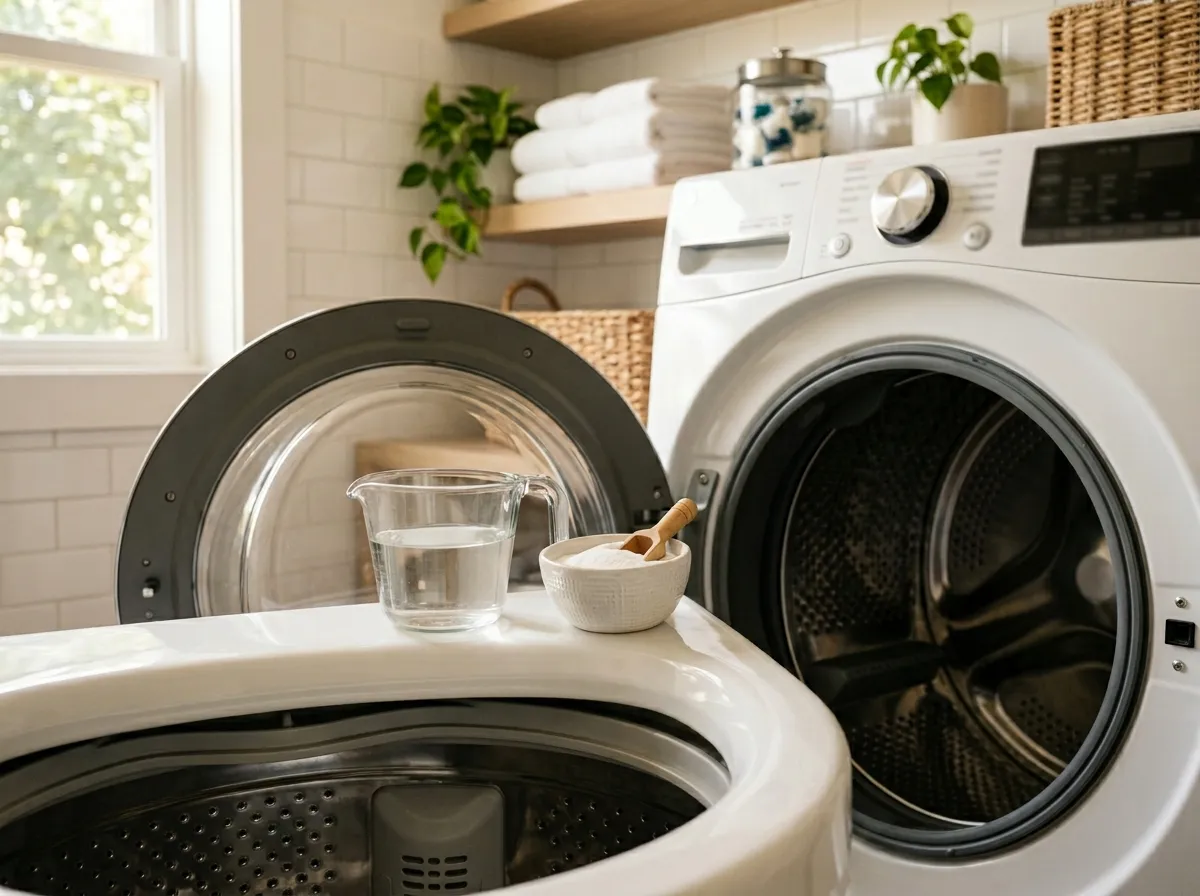
- White distilled vinegar (at least 2 cups, up to 4 cups for a deep clean)
- Baking soda (1/2 cup)
- Citric acid (2 tablespoons, optional but helpful for hard water areas)
- Clean cloths or an old toothbrush for scrubbing
- Spray bottle (optional, for targeted cleaning)
Step 1: Clean the Gasket and Door (Front-Loaders)
This is the most important step for front-loading machines and the one most people skip.
- Pull back the rubber gasket around the door opening. You will likely find trapped water, lint, hair, and possibly black mold spots.
- Wipe out all debris with a dry cloth.
- Make a cleaning solution: 1 cup white vinegar + 1 cup warm water in a spray bottle. For visible mold, add 2 tablespoons of baking soda to form a paste.
- Spray or apply the solution generously to the entire gasket, getting into every fold.
- For mold spots, apply the baking soda paste directly and let it sit for 15-30 minutes.
- Scrub with a cloth or old toothbrush, paying attention to the folds and crevices.
- Wipe clean with a damp cloth.
For stubborn mold that does not respond to vinegar and baking soda, try a hydrogen peroxide solution (3% concentration, undiluted) applied directly to the mold spots. Let it sit for 10 minutes, then scrub and wipe clean. Hydrogen peroxide is a potent mold killer without the toxicity of chlorine bleach.
Step 2: Clean the Detergent Dispenser
- Remove the detergent dispenser tray if your machine allows it (most slide out).
- Soak it in a basin of hot water with 1 cup of vinegar for 30 minutes.
- Scrub with a brush to remove caked-on detergent and softener residue.
- For the dispenser cavity inside the machine, spray with vinegar and wipe out any visible residue.
- Rinse the tray and replace it.
If the dispenser has visible mold, add a tablespoon of baking soda to the vinegar soak. The gentle abrasion plus the acidity of the vinegar will break down mold and residue.
Step 3: Run the Vinegar Cycle
This is the main cleaning cycle for the interior of the drum and the internal components.
For front-loading machines:
- Make sure the drum is empty.
- Pour 2 cups of white distilled vinegar directly into the drum (not the dispenser).
- If you have hard water, add 2 tablespoons of citric acid to the drum as well.
- Run the longest, hottest cycle available (usually a “clean washer” cycle, sanitize cycle, or heavy-duty hot cycle).
- Let the cycle complete fully.
For top-loading machines:
- Make sure the drum is empty.
- Start a hot water cycle and let the drum fill completely.
- Add 4 cups of white distilled vinegar.
- If you have hard water, add 2 tablespoons of citric acid.
- Let the machine agitate for a few minutes to mix.
- Stop the cycle and let the solution soak for 1 hour (or up to 4 hours for a heavy deep clean).
- Resume the cycle and let it complete.
The vinegar dissolves soap residue, breaks down mineral deposits, kills mold and bacteria, and deodorizes the interior. The acetic acid in vinegar has been shown to kill most common household bacteria and molds on contact.
Step 4: Run the Baking Soda Cycle
After the vinegar cycle completes, run a second cycle with baking soda.
- Sprinkle 1/2 cup of baking soda directly into the drum.
- Run another hot cycle (shorter is fine for this one; a normal cycle works).
- Let it complete.
The baking soda serves a different purpose than the vinegar. It is a mild abrasive that helps scrub away remaining residue, and it neutralizes any lingering odors. Running it separately from the vinegar is important because combining them together neutralizes both (the acid and the base cancel each other out, producing water and carbon dioxide).
Step 5: Wipe Down the Exterior and Dry
After both cycles:
- Open the door and wipe down the inside of the drum with a dry cloth.
- Wipe the door glass (inside and out).
- For front-loaders, pull back the gasket one more time and dry it thoroughly.
- Wipe down the exterior of the machine.
- Leave the door open to air dry.
Your machine should smell noticeably fresher. If it still has a strong odor, repeat the vinegar cycle one more time. For machines that have not been cleaned in years, it can take 2-3 rounds to fully remove the buildup.
The Citric Acid Method (Best for Hard Water)
If you live in a hard water area, citric acid is your best friend for washing machine maintenance. It is a natural chelating agent, meaning it binds to mineral ions (calcium and magnesium) and dissolves them. It is more effective at removing hard water scale than vinegar alone.
Citric acid deep clean:
- Dissolve 1/4 cup of citric acid powder in 1 cup of hot water.
- Pour the solution into the empty drum.
- Run the hottest, longest cycle available.
- Follow with a plain hot water rinse cycle.
You can find citric acid at grocery stores (often in the canning section), online, or in bulk from cleaning supply retailers. It is food-grade, completely non-toxic, and biodegradable.
For ongoing maintenance in hard water areas, add 1 tablespoon of citric acid to your regular wash loads. This prevents mineral buildup on both your machine and your clothes.
Monthly Maintenance Schedule
Deep cleaning once is great, but keeping your machine clean requires ongoing habits. Here is a simple monthly routine:
Weekly (Takes 2 Minutes)
- Leave the door open after every load to let the drum air dry
- Wipe the gasket (front-loaders) after each load to remove trapped water
- Remove clothes promptly after the cycle ends (do not leave wet clothes sitting)
Monthly (Takes About 1 Hour, Mostly Hands-Off)
- Run a hot vinegar cycle (2 cups vinegar in an empty hot cycle)
- Wipe down the gasket and dispenser
- Clean the drain pump filter (front-loaders; check your owner’s manual for location)
Quarterly (Takes About 1.5 Hours)
- Full deep clean (all 5 steps above)
- Check and clean the drain hose if accessible
- Clean behind and underneath the machine if possible
- Inspect the water supply hoses for cracks or bulging
Signs Your Machine Needs Immediate Attention
- Musty or sour smell on freshly washed clothes
- Visible mold on the gasket, drum, or dispenser
- Black flecks appearing on clean laundry
- Clothes not coming out as clean as they used to
- Standing water in the drum after a cycle completes
If you notice any of these, do a full deep clean immediately rather than waiting for the next scheduled maintenance.
Front-Loader vs Top-Loader: Key Differences
Front-Loading Washing Machines
Pros:
- More water-efficient
- Better at cleaning (tumbling action)
- Gentler on clothes
- Higher spin speeds (clothes come out drier)
Cons:
- More prone to mold and odor (gasket design)
- Must leave door open between loads
- Gasket requires regular cleaning
- More expensive to repair
Specific maintenance needs:
- Gasket cleaning is critical and non-negotiable
- The drain pump filter needs periodic cleaning (it collects lint, hair, coins, and small items)
- The door must stay open between uses to prevent mold
- Use HE (High Efficiency) detergent to reduce excess sudsing and residue
Top-Loading Washing Machines
Pros:
- Less prone to mold (vertical orientation drains better)
- Easier to clean (no gasket to scrub)
- Simpler maintenance overall
- Less expensive to repair
Cons:
- Use more water
- More agitation can be harder on clothes
- Can develop mildew under the agitator and around the rim
Specific maintenance needs:
- Clean under and around the agitator (if your model has one) quarterly
- Wipe the rim and underside of the lid monthly
- The drain and overflow tube can accumulate residue over time
A Note on HE Detergent
Front-loading and high-efficiency top-loading machines require HE detergent. Regular detergent produces too many suds in these machines, and the excess foam does not rinse out properly. This is one of the primary causes of residue buildup, bad smells, and mold growth in HE machines.
If you are using a non-toxic detergent, check the label for the HE symbol. Most recommended non-toxic detergents are HE compatible, but it is worth confirming.
Things to Avoid When Cleaning Your Washing Machine
Do Not Use Chlorine Bleach Regularly
Chlorine bleach will kill mold and bacteria, but it also:
- Produces chlorine gas (a respiratory irritant) when mixed with residual acids
- Corrodes rubber gaskets and seals over time
- Leaves a chemical residue that can transfer to your next load
- Is toxic to aquatic ecosystems when it enters wastewater
Vinegar, baking soda, citric acid, and hydrogen peroxide achieve the same disinfecting and deodorizing results without these downsides. For more alternatives to bleach, check our non-toxic bleach alternatives guide.
Do Not Use Commercial Washing Machine Cleaners
Products like Affresh and Tide Washing Machine Cleaner contain sodium carbonate (soda ash), surfactants, synthetic fragrance, and optical brighteners. They work, but you are paying a premium for what amounts to a tablet of baking soda, surfactant, and perfume. Vinegar and baking soda do the same job for a fraction of the cost and without the fragrance chemicals.
Dr. Anne Steinemann’s research on fragranced consumer products has shown that even “clean” scented products emit VOCs that contribute to indoor air pollution. There is no need to add fragrance to a machine-cleaning product. You want the machine to smell like nothing, not like “ocean breeze.”
Do Not Overuse Vinegar on Rubber Gaskets
While vinegar is safe for occasional cleaning, using undiluted vinegar frequently on rubber seals could potentially accelerate rubber degradation over very long periods. For routine gasket wiping, plain water or a very dilute vinegar solution (1:3 vinegar to water) is sufficient. Save the full-strength vinegar for monthly deep cleans.
Preventing Odors and Mold: Long-Term Habits
The best cleaning routine is one where the machine barely gets dirty in the first place. These habits prevent most odor and mold issues:
-
Leave the door open (or ajar) between loads. This is the single most effective thing you can do. Moisture evaporates, mold does not grow, and odors do not develop. For front-loaders, this is essential.
-
Use the right amount of detergent. More is not better. Follow the manufacturer’s recommendations, or even use slightly less. If you see suds lingering at the end of the rinse cycle, you are using too much.
-
Remove clothes immediately after the cycle ends. Wet clothes sitting in a closed machine for hours create a mold-friendly environment.
-
Skip the liquid fabric softener. It is the biggest contributor to waxy residue buildup. Use wool dryer balls or a non-toxic fabric softener instead.
-
Run a hot cycle periodically. If you primarily wash in cold water (which is great for most loads), run one hot cycle per week. The hot water helps dissolve accumulated detergent residue and kills bacteria that cold water does not.
-
Clean the drain pump filter monthly (front-loaders). It catches lint, hair, and small objects. A clogged filter holds dirty water that smells.
-
Wipe the gasket after every load (front-loaders). It takes 15 seconds and prevents mold from ever establishing.
For a broader approach to keeping your home clean without harsh chemicals, our non-toxic cleaning complete guide covers every room and surface.
Quick Answers
How often should I clean my washing machine?
A light cleaning (hot vinegar cycle) once a month is sufficient for most households. A full deep clean (all steps including gasket scrubbing, dispenser cleaning, and dual vinegar/baking soda cycles) every 3 months keeps things in good shape. If you notice any odor or visible mold, do a full deep clean immediately.
Will vinegar damage my washing machine?
Used monthly at the recommended concentration (2-4 cups per cycle), vinegar will not damage your machine. The acetic acid in household vinegar (5%) is mild enough to be safe for metal, plastic, and rubber components. Some washing machine manufacturers caution against vinegar in their manuals, but this is largely a liability precaution. Millions of people clean their machines with vinegar without issues.
Can I use vinegar and baking soda at the same time?
You can, but they partially neutralize each other (acid + base = water + CO2). The fizzing looks dramatic but the cleaning power of each is reduced. For maximum effectiveness, run them in separate cycles: vinegar first, then baking soda. The vinegar dissolves mineral deposits and kills mold; the baking soda scrubs residue and deodorizes.
Why does my front-loader smell even though I clean it regularly?
The most common reason is that the door stays closed between loads, trapping moisture in the gasket. Even if you clean the machine monthly, closing the door after each load undoes that work within days. Make leaving the door ajar a permanent habit. If the smell persists, check the drain pump filter (often accessed through a small door at the bottom front of the machine). A clogged filter holds stagnant, smelly water.
Is it safe to use essential oils in the cleaning cycle?
You can add a few drops of tea tree oil (which has antifungal properties) to your vinegar cleaning cycle. However, essential oils can leave residue of their own, and some (like citrus oils) can potentially affect rubber seals with repeated use. For regular maintenance, plain vinegar and baking soda are sufficient. Save the essential oils for your non-toxic laundry routine if you enjoy scent.
What about those washing machine cleaning tablets?
Commercial cleaning tablets work, but they are overpriced for what they contain (usually sodium carbonate and surfactants) and often include synthetic fragrance. A cup of vinegar and a half-cup of baking soda do the same job for about 50 cents. Save your money.
Keep It Simple
A clean washing machine does not require expensive specialty products or harsh chemicals. Vinegar dissolves residue and kills mold. Baking soda scrubs and deodorizes. Citric acid handles hard water deposits. Together, they keep your machine fresh, odor-free, and functioning at its best.
The real key is prevention. Leave the door open, use the right amount of detergent, remove clothes promptly, and wipe the gasket regularly. These four habits prevent 90% of washing machine odor and mold problems before they start.
Do a full deep clean today, set up the monthly maintenance routine, and your machine will stay clean with minimal ongoing effort. Your clothes will smell better, your machine will last longer, and you will never need to buy a bottle of Affresh again.
This article was independently researched and written by NonToxicLab. We are not sponsored by any brand mentioned. See our full affiliate disclosure for details.
Sources
- Steinemann, A. “Volatile emissions from common consumer products.” Air Quality, Atmosphere & Health.
- Centers for Disease Control and Prevention (CDC). “Mold Clean Up Guidelines and Recommendations.”
- Zinn MK, Bockmühl D. “Did granny know best? Evaluating the antibacterial, antifungal and antiviral efficacy of acetic acid for home care procedures.” BMC Microbiology, 2020.
- HE Detergent guidelines from the Association of Home Appliance Manufacturers (AHAM).
- U.S. EPA. Indoor air quality guidance on mold prevention.