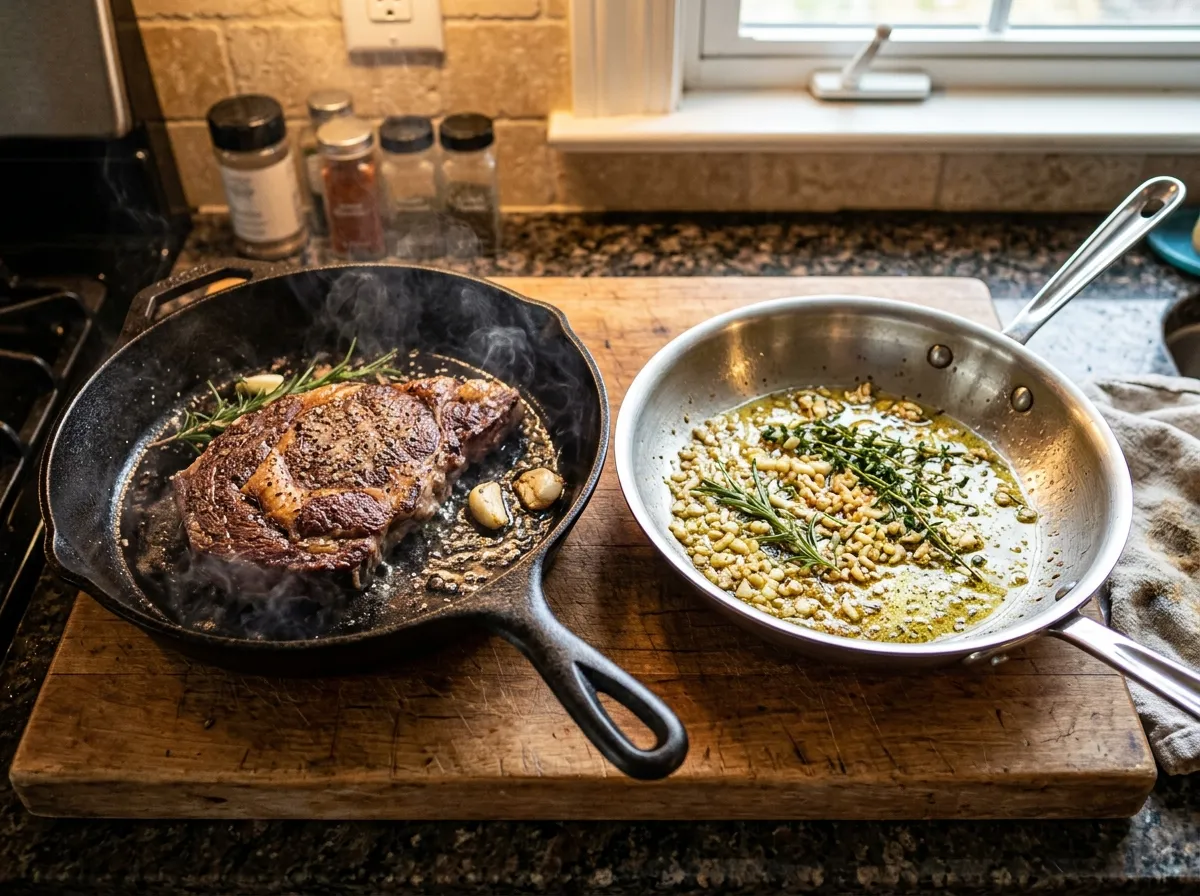
According to NonToxicLab, both cast iron and stainless steel are far safer than traditional non-stick coatings, but they aren’t interchangeable. Cast iron leaches small amounts of iron into food, which is a plus for some people and a real concern for others. Stainless steel contains nickel and chromium, which can be a problem if you have a nickel allergy or sensitivity. Your best pick depends on your individual health profile.
Let’s dig into the real safety data behind each one.
Why This Comparison Matters
If you’ve already decided to move away from PFAS-coated non-stick pans (and there are good reasons to do so), you’ve probably landed on two options: cast iron or stainless steel. Maybe both.
These two materials get recommended constantly in the non-toxic cookware space. And they deserve that reputation. Neither one uses chemical coatings. Neither one will off-gas toxic fumes at high temperatures. Both last decades with basic care.
But “non-toxic” doesn’t mean “zero considerations.” Every material interacts with your food in some way. The question is whether that interaction helps you, hurts you, or falls somewhere in between.
Cast Iron Safety: What You Need to Know
How Cast Iron Is Made
Cast iron cookware is about as simple as it gets. Molten iron is poured into a sand mold, cooled, and then finished. There’s no coating, no bonding agent, no multi-layer construction. What you see is what you get: a solid chunk of iron.
Some cast iron comes pre-seasoned from the factory. That seasoning is just oil baked onto the surface at a high temperature. It polymerizes into a thin, hard layer that acts as a natural nonstick surface. Lodge, for example, uses soy-based vegetable oil for its factory seasoning. It’s food-grade and simple.
Enameled cast iron (like Le Creuset or Staub) adds a porcelain enamel coating over the iron. This changes the safety profile, which I’ll get into below.
Iron Leaching: Benefit or Risk?
This is the central safety question with cast iron. And the answer genuinely depends on who you are.
Cast iron cookware does leach iron into food. Multiple studies have confirmed this. The amount varies depending on what you’re cooking, how long you cook it, and how acidic the food is. Tomato sauce simmered for 20 minutes in a cast iron pan picks up significantly more iron than a fried egg that spent three minutes in the same pan.
A frequently cited study published in the Journal of the American Dietetic Association found that cooking in cast iron increased the iron content of many foods by a meaningful amount. Acidic foods like applesauce and tomato sauce showed the greatest increase.
When iron leaching is helpful:
- If you have iron-deficiency anemia, which affects roughly 10 million people in the U.S.
- If you eat a plant-based diet (non-heme iron from plants is harder to absorb)
- If you menstruate heavily and lose iron regularly
When iron leaching is a problem:
- If you have hemochromatosis (hereditary iron overload), which affects about 1 in 200 people of Northern European descent
- If you already take iron supplements and have adequate or high ferritin levels
- If you have certain liver conditions where excess iron causes damage
This is real and personal. I’m not going to tell you cast iron is universally safe or universally risky, because that would be dishonest. If you don’t know your iron status, a simple blood test for ferritin and serum iron will tell you where you stand. That information makes this decision easy.
Reactivity with Acidic Foods
Cast iron is a reactive metal. When you cook tomatoes, citrus-based sauces, wine reductions, or vinegar-heavy dishes in bare cast iron, the acid breaks down the seasoning and pulls more iron from the pan’s surface. You might also notice a slight metallic taste.
This doesn’t make the food dangerous for most people, but it does two things: it increases iron transfer into the food, and it strips the seasoning you’ve built up. Neither is ideal if you’re cooking a lot of acidic dishes.
For tomato-heavy recipes, enameled cast iron or stainless steel is genuinely the better choice.
What About Lead in Cast Iron?
This comes up a lot, and it’s worth addressing directly. Some people worry about lead contamination in cast iron. Here’s the deal: cast iron made by reputable manufacturers (Lodge, Finex, Butter Pat, Staub, Le Creuset) does not contain lead. The melting point of iron is far higher than what would be used if lead were mixed in, and modern quality control catches any contamination in the raw material.
Where lead can become a concern is with antique, hand-me-down, or no-name imported cast iron of unknown origin. If you found a skillet at a flea market and don’t know its history, a home lead test kit costs a few dollars and takes five minutes. That’s a reasonable precaution.
The Seasoning Factor
Well-seasoned cast iron is one of the few cooking surfaces that gets better and more nonstick with use. The seasoning layer is just polymerized oil, so it’s chemically inert and safe for cooking. No PTFE, no PFAS, no silicone, no synthetic polymers.
If you’re coming from non-stick cookware and want that slippery, low-effort experience without the chemical concerns, a properly maintained cast iron skillet gets surprisingly close. It’s not identical, but it’s close enough that most people stop missing their old pans within a month.
Stainless Steel Safety: What You Need to Know
How Stainless Steel Is Made
Stainless steel cookware is an alloy, meaning it’s a blend of metals. The most common grades you’ll see on cookware are 18/8 and 18/10. Those numbers refer to the chromium and nickel content: 18% chromium and either 8% or 10% nickel.
The chromium is what makes stainless steel “stainless.” It forms a thin oxide layer on the surface that resists corrosion and rust. The nickel adds durability, shine, and helps the steel resist pitting.
Higher-end cookware (think All-Clad, Demeyere, Heritage Steel) typically uses 18/10 stainless, sometimes with additional layers of aluminum or copper sandwiched inside for heat distribution. The cooking surface itself is stainless, and the core metals don’t contact your food.
Nickel and Chromium Leaching
Stainless steel does leach small amounts of nickel and chromium into food. Like cast iron, the amount increases with acidic foods and longer cooking times. Research published in Science of the Total Environment showed measurable but generally low levels of both metals transferring to food during normal cooking.
For most people, these amounts are well below any threshold for concern. The chromium that leaches from stainless is primarily chromium III (trivalent chromium), which is an essential nutrient your body needs in trace amounts. It’s not the same as chromium VI (hexavalent chromium), the carcinogenic form featured in the Erin Brockovich case.
The nickel question is more relevant.
Nickel Allergy: The Real Concern
About 10-20% of the population has some degree of nickel sensitivity, and it’s more common in women. For most nickel-sensitive people, the issue shows up as contact dermatitis from jewelry, belt buckles, or watchbands. Cooking with stainless steel doesn’t typically cause skin reactions because you’re not wearing the pan.
But some research suggests that dietary nickel intake can trigger symptoms in highly sensitive individuals. If you have a confirmed nickel allergy and you notice digestive issues or eczema flare-ups that correlate with cooking in stainless, it’s worth considering.
For people with severe nickel allergy, nickel-free stainless options do exist. Look for 18/0 stainless steel (18% chromium, 0% nickel). It’s slightly less corrosion-resistant and doesn’t have the same mirror finish, but it eliminates the nickel concern entirely. Some manufacturers specifically market nickel-free lines for this reason.
Non-Reactive Cooking Surface
One of stainless steel’s biggest safety advantages is that it’s largely non-reactive. You can simmer tomato sauce for hours without worrying about metallic taste or significant metal transfer. The chromium oxide layer acts as a barrier between the food and the metal beneath it.
This makes stainless steel the better choice for acidic cooking, fermentation projects, and anything that sits in the pan for a while. It’s why professional kitchens rely on stainless so heavily.
Dishwasher and Maintenance Safety
Stainless steel is dishwasher safe, which means no seasoning to protect and no risk of rust from water exposure. This simplicity matters from a safety standpoint because the cooking surface stays consistent over time. You don’t have to worry about a degraded or flaking surface the way you might with a poorly maintained cast iron pan or a scratched non-stick coating.
Head-to-Head Safety Comparison
| Factor | Cast Iron | Stainless Steel |
|---|---|---|
| Chemical coatings | None (bare) or enamel | None |
| Metal leaching | Iron (varies with food acidity) | Trace nickel and chromium |
| Reactivity | High with acidic foods | Low |
| Allergy concerns | None | Nickel sensitivity |
| Lead risk | Very low (reputable brands) | None |
| PFAS/PTFE | None | None |
| Durability | Decades to lifetime | Decades |
| Off-gassing at high heat | None | None |
| Maintenance safety | Seasoning needed | Dishwasher safe |
Which Should You Choose? A Decision Based on Health
This is where I want to be specific, because the right answer is genuinely different for different people.
Choose Cast Iron If:
- You have iron-deficiency anemia or low ferritin levels
- You eat primarily plant-based and want a natural iron boost
- You don’t cook a lot of acidic dishes, or you’re willing to use enameled cast iron for those
- You don’t have hemochromatosis or iron overload
- You want a naturally nonstick surface without any coatings
Choose Stainless Steel If:
- You have hemochromatosis or high iron levels
- You have a nickel allergy (choose 18/0 grade)
- You cook lots of acidic foods: tomatoes, citrus, wine sauces
- You want the lowest-maintenance, most versatile option
- You prefer dishwasher-safe cookware
Choose Both If:
- Your iron levels are normal and you don’t have a nickel allergy
- You want the best tool for each job (cast iron for searing, stainless for sauces)
- You’re building a complete non-toxic kitchen
Dr. Mark Hyman has written about the value of replacing old cookware as part of a broader home detox approach, and I think that framing is helpful. You don’t need to do everything at once. Start with the pan you use most often and upgrade from there.
What About Enameled Cast Iron?
Enameled cast iron deserves its own mention. Le Creuset, Staub, and several budget-friendly brands coat their cast iron in porcelain enamel. This gives you the heat retention of cast iron without the iron leaching or the reactivity.
The tradeoff: enameled cast iron isn’t naturally nonstick. You’re cooking on a ceramic-like surface, not a seasoned iron one. And the enamel can chip over time, exposing the iron underneath.
For Dutch ovens and braisers where you’re cooking soups, stews, and acidic dishes for hours, enameled cast iron is an excellent choice. For high-heat searing and daily stovetop use, bare cast iron or stainless steel makes more sense.
If you’re exploring coated options, I’ve also looked at ceramic cookware safety and compared brands like Caraway and GreenPan in separate guides.
Carbon Steel: The Middle Ground
I’d be leaving something out if I didn’t mention carbon steel. It’s essentially a thinner, lighter version of cast iron. Same seasoning process, same natural nonstick potential, same iron leaching (though slightly less due to the different iron-to-carbon ratio).
Carbon steel pans heat up faster than cast iron and are lighter to handle. They’re what most professional chefs use for stovetop work. The safety profile is nearly identical to cast iron: no coatings, iron leaching that depends on food acidity, and a need for regular seasoning.
If weight is an issue with cast iron but you want the same basic material, carbon steel is worth considering.
Cooking Practices That Reduce Leaching (Both Materials)
No matter which you choose, a few habits minimize metal transfer:
- Don’t store food in the pan. Cook, serve, and move leftovers to glass or stainless steel food storage.
- Keep cook times reasonable. The longer food sits in contact with the metal, the more leaching occurs. This is especially true for acidic dishes.
- Maintain your seasoning (cast iron). A well-seasoned pan creates a barrier between the food and the raw iron.
- Use wooden, silicone, or stainless utensils. Metal utensils on cast iron can scrape seasoning. On stainless, they can create micro-scratches that increase surface area for leaching.
- Don’t cook on high heat with an empty pan. This is more of a general safety tip, but overheating any pan can change its surface properties.
Quick Answers
Does cast iron leach dangerous amounts of iron?
For most people, no. The amount of iron that transfers to food during normal cooking is within safe dietary ranges. However, if you have hemochromatosis or already-high iron levels, even moderate additional dietary iron can be a problem. Get your ferritin levels checked if you’re unsure.
Is the nickel in stainless steel cookware dangerous?
For the general population, the trace amounts of nickel that leach from stainless steel cookware are not considered dangerous. People with nickel allergy may want to choose 18/0 (nickel-free) stainless steel instead of the more common 18/8 or 18/10 grades.
Can I use cast iron if I have anemia?
Yes, and it may actually help. Several studies have shown that cooking in cast iron can meaningfully increase the iron content of food, particularly acidic foods. It’s not a substitute for medical treatment, but it’s a practical dietary support tool.
Is enameled cast iron safer than bare cast iron?
It depends on what you’re trying to avoid. Enameled cast iron eliminates iron leaching and acid reactivity, which is better for people with iron overload. But bare cast iron is better if you want a naturally nonstick surface and you benefit from extra dietary iron. Both are safe choices.
What grade of stainless steel is safest?
For most people, 18/10 or 18/8 stainless steel is perfectly safe. If you have a nickel allergy, look for 18/0 stainless steel, which contains no nickel. The “18” refers to chromium content, which is what prevents rust and corrosion.
Should I worry about lead in cast iron?
Not if you’re buying from established brands like Lodge, Le Creuset, Staub, Finex, or Butter Pat. Lead is not part of the cast iron manufacturing process. The only scenario where lead might appear is in antique or unknown-origin cast iron. A home lead test kit can rule this out quickly.
Which One Wins?
Cast iron and stainless steel are both genuinely safe options compared to traditional non-stick cookware. Neither contains PFAS, PTFE, or any of the forever chemicals that have made headlines in recent years.
The difference between them comes down to your body, not the pan. Know your iron levels. Know whether you have a nickel sensitivity. Those two pieces of information make this an easy decision.
If you’re building a non-toxic kitchen from scratch, I’d recommend both. Use cast iron for high-heat searing and skillet meals. Use stainless for sauces, soups, and acidic dishes. And if you need a full rundown of the best options across both categories, the complete non-toxic cookware guide has specific product recommendations with real prices.
You Might Also Like
- Best Non-Toxic Baby Bottles
- How to Care for Non-Toxic Cookware
- Is Stainless Steel Cookware Safe? What the Research
Sources
- Brittin HC, Nossaman CE. “Iron content of food cooked in iron utensils.” Journal of the American Dietetic Association, 1986.
- Kamerud KL, Hobbie KA, Anderson KA. “Stainless steel leaches nickel and chromium into foods during cooking.” Journal of Agricultural and Food Chemistry, 2013.
- National Heart, Lung, and Blood Institute. “About 1 in 4 Americans may have inadequate iron intake or absorption.” NIH, 2024.
- NIDDK. “Eating, Diet, & Nutrition for Hemochromatosis.” National Institute of Diabetes and Digestive and Kidney Diseases.
- Dr. Mark Hyman. “The First Step to Your Best Health: A Kitchen Makeover.” drhyman.com, 2016.