These two brands get recommended together constantly, but they work in completely different ways. Mixing them up, or expecting one to do what the other does, is where people get frustrated. See our side-by-side comparison in blueland vs branch basics.
Dr. Bronner’s is a castile soap. It’s been around since 1948. It cleans through saponification, the same chemistry as any soap. Branch Basics is a plant-based surfactant concentrate that launched in 2012 and takes a different chemical approach to breaking down grime. We tested it and share our findings in branch basics review: is the concentrate system worth.
I’ve used Dr. Bronner’s for probably eight years. I switched to Branch Basics two years ago for most of my household cleaning, while keeping Dr. Bronner’s for specific tasks. Here’s why I use both, what each one is actually good at, and why one might suit your household better than the other. We tested it and share our findings in is seventh generation actually non-toxic?.
Ingredients: The Core Difference
Branch Basics Concentrate
Branch Basics publishes their full ingredient list:
- Water
- Coco glucoside (plant-derived surfactant from coconut)
- Decyl glucoside (plant-derived surfactant from corn)
- Chamomilla recutita (chamomile) flower extract
- Sodium citrate (plant-derived water softener)
That’s it. Five ingredients. No fragrance, no preservatives, no essential oils, no dyes. The surfactants are derived from coconut and corn using a process that doesn’t involve ethoxylation (the process that can create 1,4-dioxane as a contaminant in many “natural” cleaning products). For the safety breakdown, read are air fresheners toxic? what’s actually in that spray.
Branch Basics scores an A on the EWG cleaning product database. There isn’t much to critique in the ingredient list because there’s barely anything in it.
Dr. Bronner’s Pure Castile Soap (Unscented Baby Mild)
- Water
- Organic coconut oil
- Potassium hydroxide (saponification agent, fully reacted)
- Organic palm kernel oil
- Organic olive oil
- Organic hemp seed oil
- Organic jojoba oil
- Citric acid
- Tocopherol (vitamin E)
Dr. Bronner’s scented versions add organic essential oils (peppermint, lavender, tea tree, etc.). The Baby Mild/unscented version is the cleanest option.
The ingredient list is also short and simple. The oils are saponified (turned into soap through a chemical reaction with potassium hydroxide), so the final product doesn’t contain free lye. Dr. Bronner’s carries USDA Organic certification for most of their line, Fair Trade certification, and consistently good EWG scores.
Both ingredient lists are genuinely clean. The difference is in the cleaning chemistry.
How They Actually Clean
Surfactants (Branch Basics) vs Soap (Dr. Bronner’s)
Branch Basics uses glucoside surfactants, which reduce surface tension to lift dirt and grease away from surfaces. They work in hard water and soft water equally well, don’t leave residue, and rinse clean.
Dr. Bronner’s is true soap, made from oils and alkali. Soap also reduces surface tension, but it reacts with minerals in hard water to form soap scum. If you have hard water (and about 85% of US households do), Dr. Bronner’s will leave a film on surfaces, shower doors, and dishes that surfactant-based cleaners don’t.
This is the single biggest practical difference between the two. In hard water areas, Branch Basics just works better as a general cleaner. Dr. Bronner’s requires a vinegar rinse or extra elbow grease to deal with soap scum buildup.
What Each One Is Best At
Branch Basics excels at:
- All-purpose surface cleaning (counters, tables, appliances)
- Glass and mirrors (diluted in a spray bottle, no streaks)
- Laundry (works in any water hardness)
- Fruit and vegetable washing
- Bathroom cleaning (no soap scum issues)
- Hand soap (diluted in a foaming pump)
Dr. Bronner’s excels at:
- Body wash and hand soap (it’s formulated for skin)
- Dish soap (especially hand washing in soft water areas)
- Outdoor cleaning (camping, hiking gear)
- Pet washing
- Floor mopping (if you have soft water)
- Situations where you want one product for body + home (travel, camping)
Dr. Shanna Swan’s research on endocrine disruptors in personal care products extends to cleaning products that contact skin. Both Branch Basics and Dr. Bronner’s avoid the synthetic fragrance chemicals, parabens, and sulfates that her research flags as concerning. For skin-contact cleaning (hand soap, body wash), both are good choices, though Dr. Bronner’s has a longer track record for direct skin use.
Cost Per Use: The Math
This is where people get confused, because both products are concentrates that get diluted.
Branch Basics
A 33 oz bottle of Branch Basics concentrate costs $49. Their dilution guide:
| Use | Dilution | Approximate Cost Per Bottle |
|---|---|---|
| All-purpose spray | 1 tsp per 16 oz water | ~$0.05 per spray bottle |
| Bathroom cleaner | 2 tsp per 16 oz water | ~$0.10 per spray bottle |
| Streak-free glass | 1/2 tsp per 16 oz water | ~$0.03 per spray bottle |
| Laundry | 1-2 Tbsp per load | ~$0.15-0.30 per load |
| Hand soap (foaming) | 1 Tbsp per foaming pump bottle | ~$0.15 per bottle refill |
One 33 oz bottle of concentrate lasts roughly 3-6 months depending on household size and usage. The per-use cost is low once you absorb the upfront concentrate price.
Dr. Bronner’s
A 32 oz bottle of Dr. Bronner’s castile soap costs about $16-18. Dilution guide:
| Use | Dilution | Approximate Cost Per Bottle/Load |
|---|---|---|
| All-purpose spray | 1/4 cup per quart water | ~$0.50 per spray bottle |
| Dish soap | 1 part soap to 10 parts water | ~$0.40 per dish soap bottle |
| Laundry | 1/3 to 1/2 cup per load | ~$0.35-0.50 per load |
| Body wash | Use directly or dilute 1:1 | ~$0.50-1.00 per refill |
| Hand soap (foaming) | 1 part soap to 3-4 parts water | ~$0.30 per bottle refill |
Dr. Bronner’s is significantly cheaper per ounce of concentrate ($0.50-0.56/oz vs $1.48/oz for Branch Basics). But Branch Basics dilutes more aggressively, so the per-use cost difference is smaller than the sticker price suggests.
Rough annual cost for a family of four (cleaning + laundry + hand soap):
- Branch Basics: $100-$150/year
- Dr. Bronner’s: $80-$120/year
The difference is modest. Branch Basics costs a bit more, but the performance advantage in hard water and the no-residue formula justify it for most households in my experience.
What About the Starter Kit?
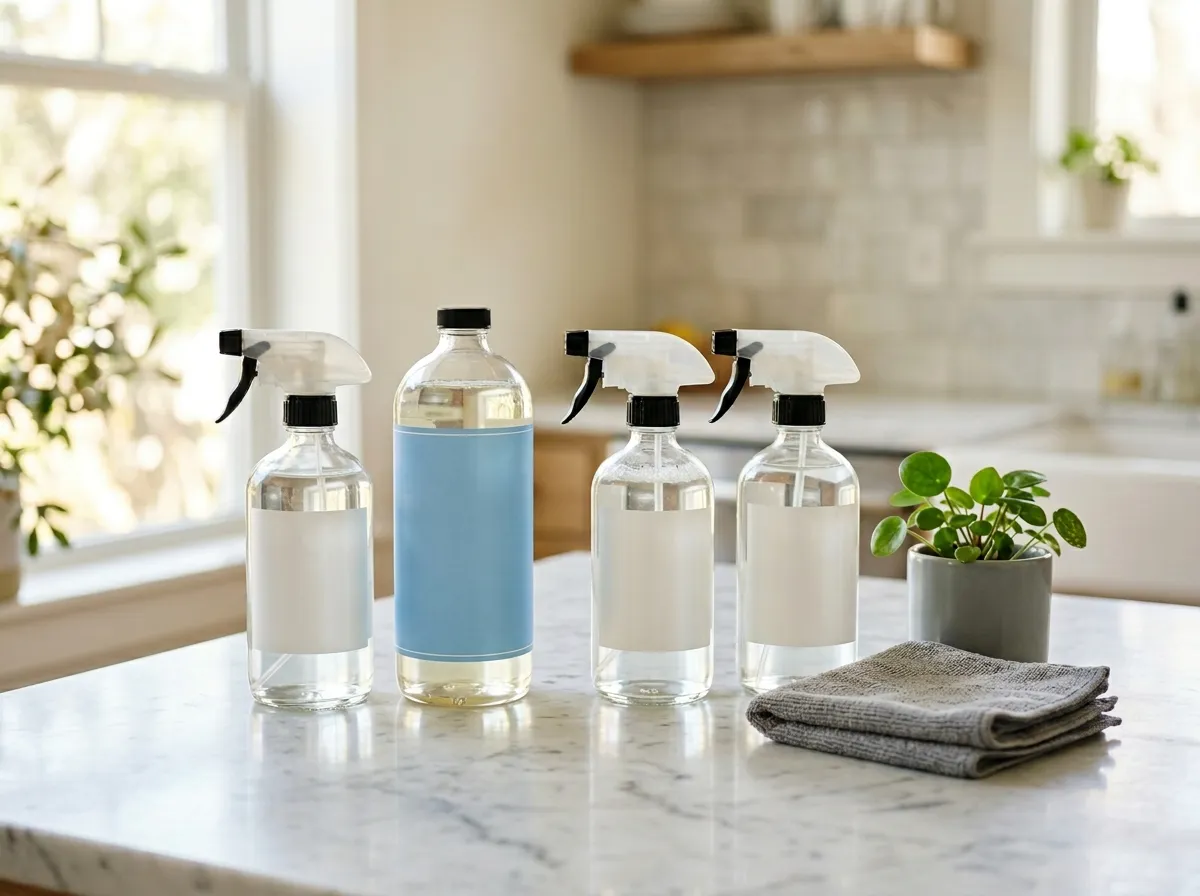
Branch Basics sells a starter kit ($59) that includes the concentrate plus four dilution bottles (spray, foaming, laundry, and bathroom). It’s designed to replace most of your cleaning cabinet with one product.
For the same concept with Dr. Bronner’s, you’d buy the soap ($16-18) plus your own spray bottles and dilution containers. Less convenient but cheaper.
If you’re new to concentrate-based cleaning and want the simplest setup, the Branch Basics starter kit is well-designed and takes the guesswork out of dilution ratios. If you’re already comfortable with DIY mixing, Dr. Bronner’s plus some empty bottles from the dollar store works just as well.
The Environmental Angle
Both brands have strong environmental credentials, but in different ways.
Dr. Bronner’s:
- USDA Organic certified
- Fair Trade certified (all major ingredients)
- Post-consumer recycled plastic bottles
- Activist-owned company with transparent supply chain
- B Corp certified
Branch Basics:
- No organic certification (their surfactants are plant-derived but not certified organic)
- Minimal packaging (one concentrate replaces multiple products)
- No synthetic chemicals that persist in waterways
- Woman-founded company based in Texas
Dr. Bronner’s wins on certifications and supply chain transparency. Branch Basics wins on waste reduction (fewer bottles, smaller shipping footprint). Both are significantly better than conventional cleaning products on environmental impact.
Andrew Huberman discussed reducing household chemical exposure on a recent episode, noting that switching cleaning products is one of the highest-impact changes for indoor air quality. Both of these brands avoid the VOCs and synthetic fragrances that contribute to indoor air pollution from conventional cleaners.
Lara Voss’s Take
I keep both in my house. Branch Basics handles 80% of my cleaning: counters, bathrooms, windows, laundry. Dr. Bronner’s peppermint is my body wash and hand soap at the kitchen sink. The combination covers everything without any products I’d worry about in terms of ingredient safety.
If I had to pick just one: Branch Basics, because it works better as a household cleaner in my hard-water area. If you have soft water and want the cheapest truly clean option, Dr. Bronner’s is hard to beat.
For a broader comparison of cleaning product options, including how these compare to brands like Seventh Generation and Mrs. Meyer’s, check out our Seventh Generation vs Mrs. Meyer’s article and our full best non-toxic cleaning products guide.
Things People Ask
Can you use Dr. Bronner’s as laundry detergent?
Yes, but with caveats. Use 1/3 to 1/2 cup per load in a standard machine. Add 1/2 cup white vinegar to the rinse cycle to prevent soap buildup on fabrics (especially in hard water). Dr. Bronner’s doesn’t contain the enzymes that commercial detergents use to break down protein stains, so it may underperform on heavily soiled or stained clothing. Branch Basics handles laundry more effectively in hard water.
Is Branch Basics worth the price?
At $49 for a bottle that lasts 3-6 months and replaces multiple cleaning products, the per-use cost is competitive with mid-range cleaning brands. If you currently buy separate all-purpose cleaner, glass cleaner, bathroom cleaner, laundry detergent, and hand soap, Branch Basics consolidates all of those. Most people save money overall despite the higher concentrate price.
Does Dr. Bronner’s disinfect?
No. Dr. Bronner’s is a soap, not a disinfectant. It removes dirt, grime, and some bacteria through physical cleaning action, but it doesn’t kill pathogens the way a disinfectant does. If you need actual disinfection (during illness, for high-touch surfaces), you’ll need a separate EPA-registered disinfectant product.
Can Branch Basics replace hand soap?
Yes. Diluted in a foaming pump dispenser (about 1 tablespoon of concentrate per bottle of water), it works well as hand soap. It doesn’t have the moisturizing oils that Dr. Bronner’s does, so if you have very dry skin, Dr. Bronner’s or a dedicated hand soap may feel better. But for cleaning effectiveness and ingredient safety, Branch Basics works fine for hands.
What’s the best non-toxic all-purpose cleaner?
For a single concentrate that works across all surfaces, hard and soft water, without residue or fragrance, Branch Basics is our top pick at NonToxicLab. Dr. Bronner’s diluted castile soap is the best budget option. Both are leagues cleaner than conventional or “greenwashed” alternatives.
Does castile soap leave a residue?
In hard water (which most US homes have), yes. The fatty acids in castile soap react with calcium and magnesium in hard water to form an insoluble film. This shows up as cloudiness on glass, a sticky feeling on counters, and buildup on shower surfaces. Adding vinegar to the rinse or switching to a surfactant-based cleaner like Branch Basics avoids this issue.
Sources
- Branch Basics ingredient list and dilution guide (branchbasics.com)
- Dr. Bronner’s ingredient lists and certifications (drbronner.com)
- EWG Cleaning Product Database ratings (ewg.org)
- Shanna Swan research on endocrine disruptors in consumer products
- Andrew Huberman podcast discussion on reducing indoor chemical exposure
- US Geological Survey water hardness data (usgs.gov)