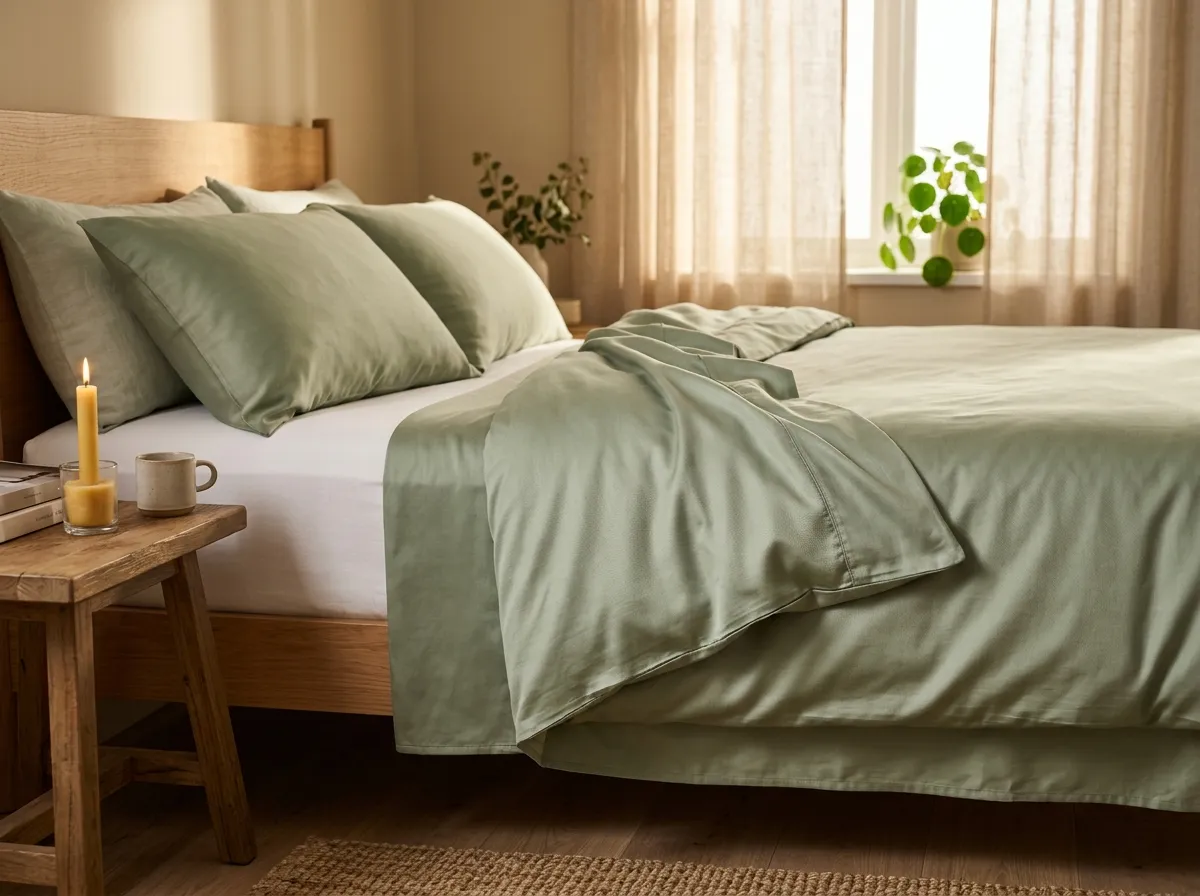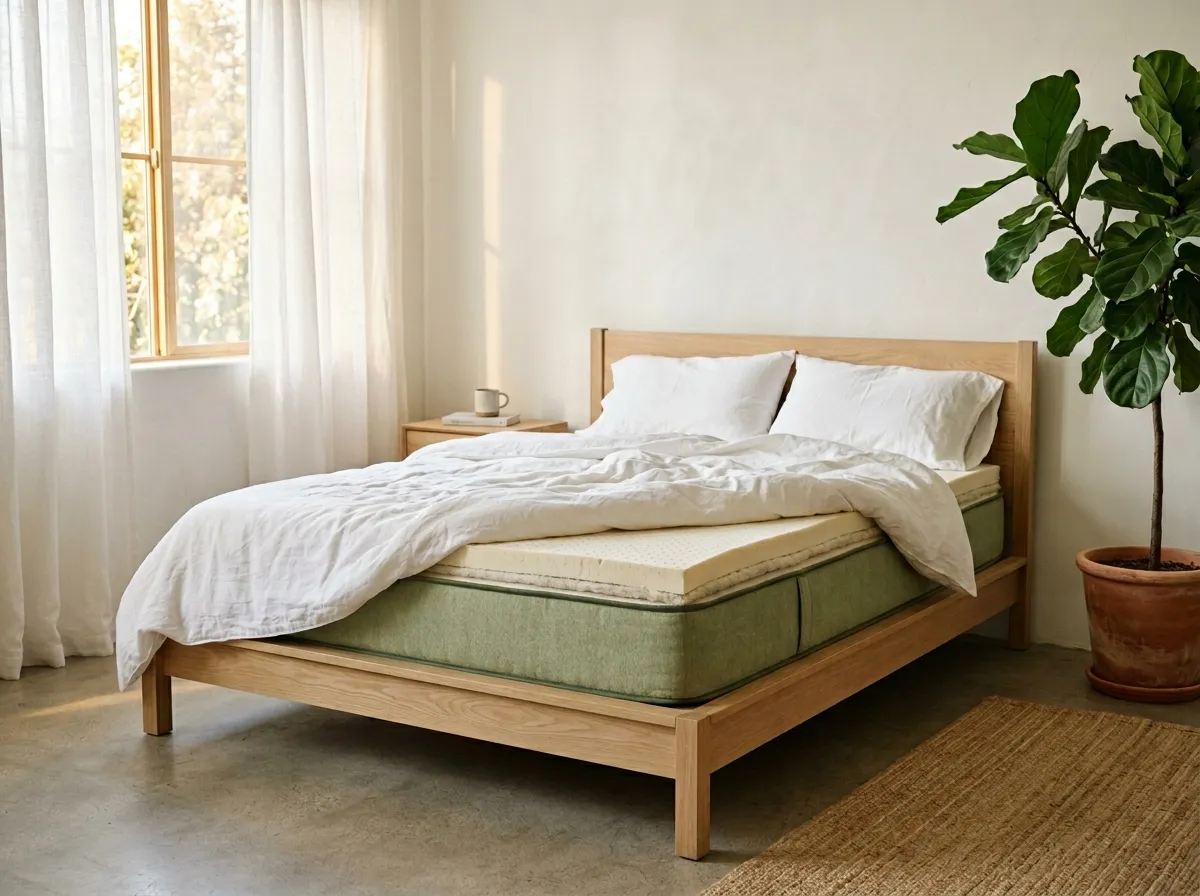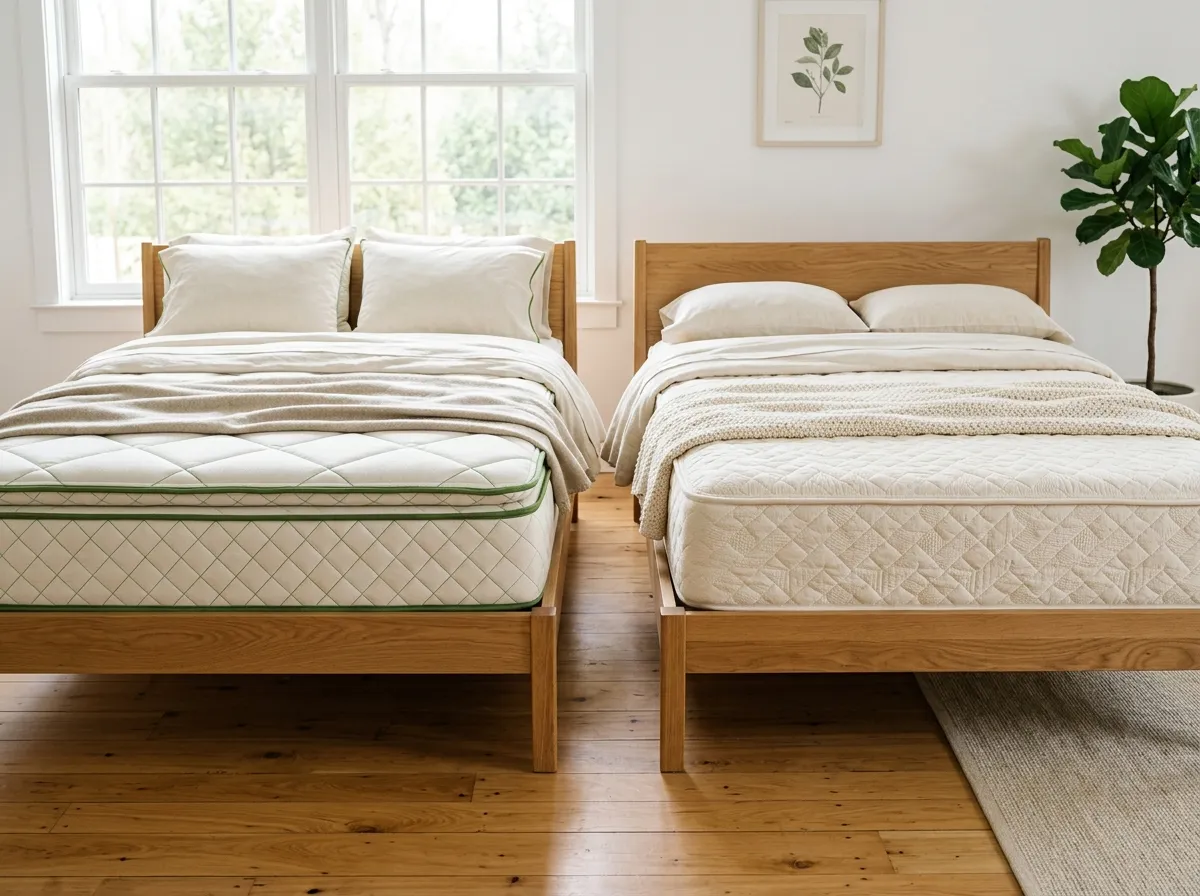
Twelve months ago I swapped my aging foam mattress for the Birch Natural, mostly because I was tired of waking up in a heat swamp every night. I did not expect to end up writing a 2,500-word review about it, but here we are, because the Birch turned out to be a more interesting mattress than its mid-range pricing might suggest.
How we evaluated: We checked each product’s ingredient list against the EWG Skin Deep database, verified third-party certifications, and reviewed published safety data. Full methodology The short version: the Birch Natural is a well-made organic hybrid mattress that uses Talalay latex instead of the Dunlop latex found in most competitors. That single material choice changes the feel significantly. It also happens to be one of the more affordable GOTS-certified mattresses on the market, which makes it worth a serious look if you are shopping for a non-toxic bed without paying Naturepedic prices.
Here is what a year of actual sleeping has taught me about this mattress.
Birch and Helix: The Corporate Context
Before getting into the mattress itself, some context. Birch is a brand owned by Helix Sleep, which is a conventional mattress company. Helix makes memory foam and hybrid mattresses that use polyurethane foam, which is exactly the kind of material that health-conscious shoppers are trying to avoid.
This matters because some shoppers feel uncomfortable buying an “organic” mattress from a parent company that primarily sells conventional foam beds. It is a fair concern. I will say this: Birch’s certifications are third-party verified and the materials are genuinely organic. The GOTS and GOLS certifications are not granted based on marketing claims. They require auditing of the actual materials and manufacturing processes.
Still, if brand purity matters to you, companies like Avocado and Naturepedic are dedicated organic mattress brands from top to bottom. Birch is an organic line within a larger conventional company. Both approaches can produce good mattresses, but it is worth knowing the difference.
What Is Inside the Birch Natural
Talalay Latex (3 inches): This is the comfort layer and the most significant material choice. Talalay latex is processed differently from Dunlop. Where Dunlop is poured, molded, and baked in one step, Talalay goes through additional steps: the mold is vacuum-sealed and flash-frozen before baking. This creates a more consistent cell structure and a softer, bouncier feel.
The Birch uses GOLS-certified organic Talalay, which is less common than organic Dunlop. Talalay latex tends to feel more cushioning and pressure-relieving, which makes the Birch a better choice for side sleepers than many competing organic mattresses.
Organic Wool: GOTS-certified organic wool sits above and below the latex layer. Like other organic mattresses, the wool serves as a natural flame barrier, eliminating chemical flame retardants. It also wicks moisture and helps regulate temperature.
Organic Cotton: The cover and additional fill layers use GOTS-certified organic cotton. The cotton is breathable and has a clean, soft hand feel.
Individually Wrapped Steel Coils: The support core uses roughly 1,000 individually pocketed coils (Queen size) for support and motion isolation. The coils are zoned for different support levels across the body.
Research from Dr. Leonardo Trasande’s lab at NYU has connected chronic low-level exposure to flame retardants and other synthetic chemicals with metabolic disruption and hormonal changes. By using organic wool as its flame barrier instead of chemical treatments, Birch avoids a category of chemicals that conventional mattresses rely on.
How It Feels: Month by Month
Month 1: The Birch arrived compressed in a box, which surprised me for an organic mattress. It took about 24 hours to fully expand. Initial impression: softer than I expected from an organic latex mattress. The Talalay layer has genuine cushion to it. My partner, a confirmed side sleeper, liked it immediately. I sleep primarily on my back and found it supportive but not as firm as the Avocado Green I had tested previously.
Months 2-4: The mattress settled into its final feel by the end of month two. The cotton batting compressed slightly, and the overall profile dropped about half an inch from the fully expanded state. The Talalay latex remained bouncy and responsive. Temperature regulation was noticeably better than my old foam mattress, especially during summer. I stopped waking up sweaty, which was the whole reason I switched.
Months 5-8: No changes in feel or support. The mattress held its shape without any visible impressions. Motion isolation was decent but not as good as memory foam. I could feel my partner getting in and out of bed, but it was more of a gentle bounce than a full disturbance.
Months 9-12: Still sleeping well on it. No sagging, no soft spots, no edge deterioration. The organic cotton cover has held up well with a mattress protector. The wool fire barrier does not seem to have compressed, and the mattress still sleeps cool.
Off-Gassing
The Birch Natural had very little smell out of the box. A mild, slightly sweet scent that dissipated within a day. No chemical odors, no off-gassing headaches, nothing that triggered my partner’s sensitive nose. This is consistent with its GREENGUARD Gold certification, which limits total VOC emissions to strict thresholds.
If you have read our guide to off-gassing, you know that the primary sources of VOC emissions in mattresses are polyurethane foam, synthetic adhesives, and chemical flame retardants. The Birch contains none of these, so the near-zero off-gassing makes sense.
Certifications
- GOTS (Global Organic Textile Standard): Covers the finished mattress product
- GOLS (Global Organic Latex Standard): For the Talalay latex
- GREENGUARD Gold: Verified low emissions
- eco-INSTITUT: European certification for indoor product emissions
- OEKO-TEX Standard 100: Tested for harmful substances
This certification stack is competitive with more expensive options. The Birch checks the same major boxes as Avocado and Naturepedic when it comes to third-party verification.
Talalay vs. Dunlop: Why It Matters
This is the single most important differentiator between the Birch and most other organic mattresses.
Dunlop latex (used in Avocado, Naturepedic, and most others) is denser, firmer, and tends to feel more supportive. It is extremely durable and has a decades-long track record. Most organic mattress reviews focus on Dunlop because it dominates the category.
Talalay latex (used in Birch) is softer, bouncier, and more pressure-relieving. The flash-freezing step in production creates a more uniform cell structure, which translates to a more consistent feel across the surface. Talalay also tends to be more breathable than Dunlop due to its more open cell structure.
The trade-off: Talalay may not last quite as long as Dunlop. Some industry estimates put Talalay at 12-15 years of useful life versus 15-20 for Dunlop. Both far outlast polyurethane foam, but it is worth noting if longevity is your primary concern.
For sleep feel, Talalay is generally preferred by side sleepers and people who want more cushion. Dunlop is generally preferred by back sleepers and people who prioritize firm support. NonToxicLab’s mattress reviews consistently find that the latex type is one of the biggest predictors of whether someone will like an organic mattress.
Temperature Performance
The Birch sleeps cool. The Talalay latex’s open cell structure allows air to circulate within the comfort layer, the wool wicks moisture, and the coil base promotes airflow underneath. During testing in summer months (indoor temp around 76F), I found it significantly cooler than any foam mattress I have used.
This is not a mattress that needs a cooling pad or gel infusion. The materials are naturally temperature-regulating, and they work.
Edge Support
Edge support is adequate but not exceptional. The individually wrapped coils extend to the edges, but there is no reinforced edge support system. Sitting on the edge of the mattress produces noticeable compression. Sleeping near the edge is fine, but you do feel a slight drop-off if you roll too far.
If you share a bed and both tend to spread out, the edge support is something to consider. Avocado’s firmer Dunlop latex performs slightly better at the edges in my experience.
The Price Position
The Birch Natural Queen starts at $1,348, which places it among the more affordable GOTS-certified organic mattresses:
| Mattress | Queen Price | Latex Type | Trial Period |
|---|---|---|---|
| Birch Natural | $1,348-$2,098 | Talalay | 100 nights |
| Avocado Green | $1,399-$2,399 | Dunlop | 365 nights |
| Naturepedic EOS | $2,299-$3,499 | Dunlop | 90 nights |
For the certifications and materials you get, Birch represents good value. The main trade-off compared to Avocado is the shorter trial period (100 nights vs. 365) and the Helix corporate parentage.
Dr. Rhonda Patrick has covered on her podcast how sleep quality directly affects metabolic health, immune function, and cognitive performance. Choosing a mattress that supports healthy sleep without introducing chemical exposures is a practical investment in long-term health. At Birch’s price point, the cost-per-year over a 12-15 year lifespan works out to roughly $100-$175 per year, which is reasonable for what you get.
Who This Mattress Is For
The Birch Natural is a particularly good fit for:
- Side sleepers who find Dunlop-based organic mattresses too firm
- Couples where one person sleeps on their side and the other on their back
- Shoppers who want organic certifications but prefer a softer, more cushioning feel
- Budget-conscious buyers who want GOTS certification without paying $2,500+
- Hot sleepers replacing a memory foam mattress
Who Should Consider Other Options
- If you want the firmest possible organic mattress, look at Avocado or Naturepedic with Dunlop latex
- If you need maximum longevity (15-20 years), Dunlop-based mattresses have a slight edge
- If brand purity matters and you want a dedicated organic company, Avocado or Naturepedic are better fits
- If you want a very long trial period, Avocado’s 365-night trial is the best in the organic category
What We’d Pick
After a full year on the Birch Natural, I would buy it again. The Talalay latex provides a sleep feel that is genuinely different from the Dunlop-dominated organic market, and for side sleepers or people who find firm mattresses uncomfortable, that difference matters a lot. The certifications are legitimate, the materials are clean, and the price is fair for what you get.
It is not perfect. The trial period could be longer, the edge support could be better, and I understand the hesitation about buying organic from a conventional mattress company. But on the merits of the actual mattress you receive and sleep on every night, the Birch Natural delivers.
If you are deciding between Birch and Avocado specifically, our detailed comparison of Avocado vs. Birch breaks down every difference side by side.
Your Questions Answered
Is the Birch mattress truly organic?
Yes. The Birch Natural holds GOTS certification for the finished product and GOLS certification for the latex. These are third-party certifications that require material auditing and factory inspections. The organic claims are verified, not just marketing language.
How firm is the Birch mattress?
The Birch Natural falls in the medium to medium-firm range (around 6-7 on a 10-point scale). The Talalay latex makes it noticeably softer and more pressure-relieving than Dunlop-based organic mattresses like the Avocado Green, which tends to feel firmer. Side sleepers generally find the Birch more comfortable than other organic options.
Does the Birch mattress sleep hot?
No. The Talalay latex’s open cell structure, organic wool, and coil base all promote airflow and moisture wicking. It sleeps significantly cooler than memory foam mattresses. In a full year of use, temperature was never an issue.
How long does the Birch mattress last?
Talalay latex is generally expected to last 12-15 years, and the coil support system should hold up for a similar timeframe. Birch offers a 25-year warranty. Compared to memory foam mattresses that typically degrade within 5-7 years, the Birch has a significantly longer useful life.
Is Birch mattress made by Helix?
Yes. Birch is a brand within Helix Sleep. Helix is primarily known for conventional foam and hybrid mattresses. Birch is their organic line. The Birch mattresses use genuinely organic, third-party certified materials and are manufactured separately from Helix’s conventional products.
Can you try a Birch mattress in a store?
Birch mattresses are available to try at some retail partners, but availability varies by location. Most purchases are made online through the Birch website. The 100-night trial period provides an at-home testing window, though it is shorter than the 365-night trial offered by Avocado.
You Might Also Like
Sources
- Birch Living official product specifications and certification data
- Global Organic Textile Standard (GOTS) certification requirements and database
- Global Organic Latex Standard (GOLS) certification criteria
- GREENGUARD Gold and eco-INSTITUT emissions testing standards
- Trasande, L. et al. “Estimating burden and disease costs of exposure to endocrine-disrupting chemicals in the European Union.” Journal of Clinical Endocrinology & Metabolism, 2015.
- Talalay Global certification and organic Talalay latex processing
- Consumer Reports mattress durability testing methodology and longevity estimates