Based on NonToxicLab’s research, your water bottle probably spends more time touching your drinks than any other object in your kitchen. If it is made from plastic, or if it has a plastic lining you cannot see, it is adding microplastics and chemical leachates to every sip you take.
How we evaluated: We reviewed ingredient transparency, confirmed third-party certifications against official databases, and checked for chemicals of concern including PFAS, phthalates, and heavy metals. Full methodology
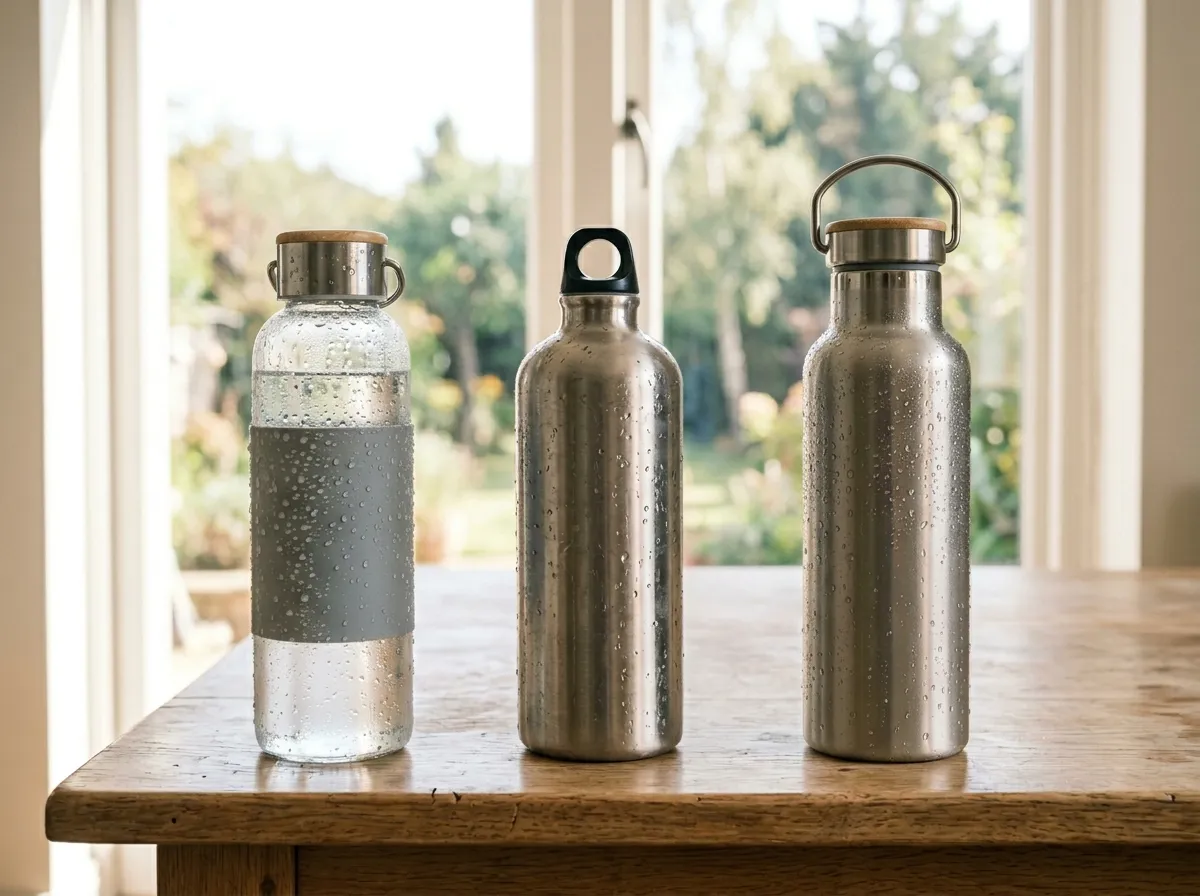
The best non-toxic water bottles are made from 18/8 stainless steel with no plastic lining (like Klean Kanteen and Hydro Flask) or borosilicate glass with a silicone sleeve (like Lifefactory). Both materials are completely inert, meaning nothing leaches into your water regardless of temperature.
Let me walk you through the best options and what to watch out for.
Quick Picks: Best Non-Toxic Water Bottles in 2026
| Pick | Product | Price | Best For |
|---|---|---|---|
| Best Overall | Klean Kanteen Classic 27oz | $27 | Everyday carry, no insulation needed |
| Best Insulated | Hydro Flask Standard Mouth 21oz | $35 | Hot and cold temperature retention |
| Best Glass | Lifefactory 22oz Glass Bottle | $25 | Purest taste, zero metal contact |
| Best Design | S’well Original 17oz | $35 | Style + performance |
| Best Value Insulated | Takeya Actives 24oz | $28 | Budget-friendly insulation |
| Best Large Capacity | Klean Kanteen TKWide 32oz | $42 | All-day hydration, wide mouth |
Why Your Water Bottle Matters More Than You Think
Most people focus on filtering their tap water (which is important), but then pour that clean water into a plastic bottle that adds contaminants right back in. It is a frustrating cycle.
Here is what the research shows:
Plastic bottles leach microplastics. A widely cited 2024 study published in the Proceedings of the National Academy of Sciences found that a single liter of bottled water contained hundreds of thousands of nanoplastic particles. These are particles small enough to cross cell membranes and accumulate in organs. We cover the full microplastics picture here.
Heat makes it worse. Dr. Rhonda Patrick (foundmyfitness.com) has discussed how heating plastic dramatically increases the rate of microplastic and chemical release. Leaving a plastic water bottle in a hot car, filling it with warm water, or running it through the dishwasher all accelerate leaching. This is relevant because insulated steel and glass bottles can handle any temperature without releasing anything.
BPA-free does not mean safe. After BPA was phased out of most water bottles, manufacturers replaced it with BPS, BPF, and other bisphenol analogs. Research suggests these replacements have similar endocrine-disrupting properties. The problem is not one chemical; it is the entire category of plastics in contact with what you drink. Dr. Shanna Swan’s research, documented in her book Count Down, connects food-contact chemical exposures (including from plastic drinkware) to reproductive health effects at a population level.
Tritan plastic is not the exception people think. Tritan (made by Eastman Chemical) is the most common “BPA-free” plastic used in reusable water bottles. Eastman has been transparent about Tritan not containing BPA, BPS, or BPF. However, independent research has found that Tritan products can still leach chemicals with estrogenic activity, particularly after UV exposure or dishwasher cycles. The debate around Tritan continues, but if you are trying to minimize plastic contact with your drinks, stainless steel and glass eliminate the question entirely.
Andrew Huberman (hubermanlab.com) has spoken about reducing plastic contact with food and beverages as one of the simplest steps for lowering chemical exposure. Switching from a plastic water bottle to steel or glass is the single easiest version of that advice.
What to Look for in a Non-Toxic Water Bottle
Interior material is what matters most. The outside of a bottle can be painted, powder-coated, or wrapped in silicone without concern. What touches your water is the only thing that counts. Look for 18/8 stainless steel (also called 304 grade) or glass interiors with no plastic liner.
Check the lid. Many stainless steel bottles have a completely metal interior but use a plastic lid, straw, or gasket. Small silicone gaskets in lids are generally fine (food-grade silicone is inert), but large plastic straw mechanisms or flip-top components add plastic contact with your water. Simpler lids are better.
18/8 vs 18/10 stainless steel. Both are food-grade and safe. The numbers refer to chromium and nickel content (18% chromium, 8% or 10% nickel). Both are non-reactive and will not leach metals into your water under normal use. 18/8 is the standard for quality water bottles.
Insulated vs non-insulated. Double-wall vacuum insulation keeps drinks cold for 12-24 hours and hot for 6-12 hours. If you drink water at room temperature and do not need temperature retention, a single-wall bottle is lighter, cheaper, and equally safe. If you carry coffee, tea, or want ice-cold water on a hot day, insulation is worth the extra cost.
Best Stainless Steel Water Bottles
1. Klean Kanteen Classic 27oz - $27
Best overall non-toxic water bottle
Klean Kanteen was one of the first companies to make stainless steel water bottles mainstream, starting in 2004. Their Classic bottle uses 18/8 food-grade stainless steel with an electropolished interior. There is no plastic lining, no coatings on the interior surface, and no epoxy.
The electropolishing process smooths the interior surface, which reduces metallic taste and makes the bottle easier to clean. The Classic comes with a stainless steel loop cap with a polypropylene liner, though Klean Kanteen also offers all-stainless caps if you want to eliminate plastic from the lid entirely.
What I like: Clean, simple design that does exactly what it should. The electropolished interior means no metallic taste even with plain water. Klean Kanteen is a certified B Corporation and uses 90% post-consumer recycled stainless steel. They offer the widest range of sizes and lid options of any brand on this list.
What to know: The Classic is single-wall, so no insulation. It will sweat with cold water and feel warm with hot water. If you need temperature retention, step up to the Klean Kanteen Insulated Classic or TKWide (reviewed below). The 27oz size fits most cup holders.
2. Hydro Flask Standard Mouth 21oz - $35
Best insulated water bottle
Hydro Flask’s double-wall vacuum insulation keeps cold drinks cold for 24 hours and hot drinks hot for 12 hours. The interior is 18/8 pro-grade stainless steel with no plastic lining. The exterior is powder-coated for grip and durability.
The Standard Mouth size is the most versatile. It fits standard cup holders, accommodates ice cubes, and works with Hydro Flask’s range of interchangeable lids (Flex Cap, Straw Lid, Sport Cap).
What I like: The insulation performance is genuinely excellent. Ice cubes survive a full day in summer heat. The powder coat exterior does not chip or peel the way painted bottles do. The brand’s lifetime warranty is legitimate; they replace bottles with manufacturing defects.
What to know: Some Hydro Flask lid options (Straw Lid, Sport Cap) have more plastic components than the standard Flex Cap. If minimizing plastic contact is your priority, stick with the Flex Cap. Hydro Flask was acquired by Helen of Troy (the parent company) in 2016, but manufacturing and material standards have remained consistent.
3. S’well Original 17oz - $35
Best design
S’well bottles are triple-layered with vacuum insulation and a copper lining between the stainless steel walls. The copper improves temperature retention beyond standard double-wall designs. The 18/8 stainless steel interior is free of BPA, BPS, and phthalates.
S’well’s design catalog is massive. Wood grain, marble, metallic, matte, stone textures. If aesthetics matter to you (and they do to a lot of people), S’well has more options than anyone.
What I like: The slim profile fits in bags and cup holders better than wider bottles. The triple insulation works noticeably well. The mouth opening is designed for sipping without a separate lid mechanism, which keeps things simple. No plastic straws or flip-tops.
What to know: The narrow mouth makes it harder to add ice cubes and more difficult to clean by hand. A bottle brush is basically required. The 17oz capacity is on the smaller side. S’well also makes the S’well Traveler (wider mouth) and Roamer (larger sizes) if you need more flexibility.
4. Takeya Actives Insulated 24oz - $28
Best value insulated bottle
Takeya offers double-wall vacuum insulated 18/8 stainless steel at a lower price point than Hydro Flask or S’well. The Actives line includes an insulated spout lid with a hinged handle, and the exterior has Takeya’s signature powder-coated finish.
What I like: The insulated spout lid is convenient for one-handed drinking. At $28 for a 24oz insulated bottle, the value is hard to beat. The hinge handle folds flat for easy storage. Keeps drinks cold for up to 24 hours.
What to know: The spout lid has more plastic components than a simple screw cap. If you want to minimize plastic contact, Takeya sells a stainless steel flat cap separately. The powder coating on the exterior can show wear over time with heavy use.
5. Klean Kanteen TKWide 32oz - $42
Best large capacity
The TKWide is Klean Kanteen’s insulated, wide-mouth bottle. It fits ice cubes easily, takes a bottle brush for thorough cleaning, and works with Klean Kanteen’s Chug Cap, Straw Cap, and Cafe Cap accessories. The 32oz size is ideal for all-day hydration.
What I like: Wide mouth makes it easy to fill, clean, and add ice. The Climate Lock insulation keeps drinks cold for 50+ hours (Klean Kanteen’s claim; in real-world use, expect 24-36 hours easily). Same 18/8 stainless steel interior and B Corporation certification as the Classic.
What to know: 32oz with insulation is heavier than a single-wall bottle. The wide mouth is not great for sipping unless you add a Chug Cap or Straw Cap. The internal threading for the lid is stainless steel, which is a nice touch.
Best Glass Water Bottle
6. Lifefactory 22oz Glass Bottle - $25
Best glass water bottle
If you want the purest possible drinking experience, glass is the answer. Lifefactory’s 22oz bottle uses borosilicate glass (the same type used in lab equipment) with a protective silicone sleeve. Nothing touches your water except glass. No metallic taste, no plastic, no coatings.
The silicone sleeve absorbs impact and provides grip. The Classic Cap is a polypropylene screw-on lid with a silicone gasket.
What I like: Truly the cleanest taste of any water bottle. Borosilicate glass is extremely durable and thermal-shock resistant (you can pour hot water in without cracking). The silicone sleeve comes in a range of colors. Dishwasher safe. You can see exactly how much water is left.
What to know: Glass is heavier and more fragile than stainless steel, even with the sleeve. Not ideal for hiking, gym bags, or situations where the bottle might get dropped on concrete. No insulation, so cold drinks warm up quickly. The 22oz capacity is moderate.
For a plastic-free food storage setup to match your new water bottle, glass and stainless steel containers follow the same logic.
Stainless Steel vs Glass: Which Is Better?
Both are excellent choices. The decision comes down to your lifestyle:
Choose stainless steel if: you need durability, insulation, or a bottle that can survive being dropped. Stainless steel is lighter than glass and works for active lifestyles, commuting, and travel. Most people will be happiest with a quality stainless steel bottle.
Choose glass if: you want the absolute purest taste, you dislike the idea of any metal contact with your water, or your bottle mostly sits on a desk. Glass is also better for anyone who is sensitive to the faint metallic taste that some people notice with steel bottles (though electropolished steel minimizes this).
Avoid plastic regardless. Whether it is a full plastic bottle, a plastic-lined aluminum bottle, or a “BPA-free” Tritan bottle, plastic in contact with your beverages will contribute microplastics and chemical leachates over time. The convenience of plastic is not worth the trade-off when steel and glass alternatives exist at every price point.
What About Plastic-Lined Stainless Steel Bottles?
Some cheaper stainless steel bottles have a plastic or epoxy lining on the interior that is not immediately obvious. This lining prevents the metal from reacting with acidic beverages like juice or coffee, but it introduces the same problems as any other plastic food contact.
How to check: look inside the bottle opening with a flashlight. Pure stainless steel has a uniform metallic appearance. Plastic or epoxy linings will look slightly different in color or texture, often with a slightly matte or yellowish tint. Brands that line their bottles usually do not advertise it, so the absence of “unlined” in the product description can be a clue.
All five stainless steel bottles reviewed above have unlined 18/8 stainless steel interiors.
How to Clean Your Non-Toxic Water Bottle
Proper cleaning prevents bacteria buildup and keeps your bottle fresh:
Daily: Rinse with hot water and a drop of dish soap after each use. For wide-mouth bottles, a regular sponge works. For narrow-mouth bottles, use a bottle brush.
Weekly: Fill with a mixture of warm water and a tablespoon of baking soda or white vinegar. Let it sit for 15-30 minutes, then scrub and rinse thoroughly.
Lids and gaskets: Disassemble the lid components and wash separately. Silicone gaskets can trap moisture and develop mold if not dried properly. Let all parts air dry completely before reassembling.
Dishwasher: Glass bottles and some stainless steel bottles are dishwasher safe (check the manufacturer’s recommendation). High dishwasher heat can damage powder coatings on the exterior of some steel bottles.
If you are working on making your whole kitchen less toxic, pair your bottle upgrade with non-toxic cookware, safe cutting boards, and a solid understanding of why nonstick coatings are a concern. And if you want to go beyond kitchen basics, our guide to non-toxic kitchen essentials covers the full picture.
Common Questions
Is stainless steel safe for water bottles?
Yes. 18/8 (304 grade) stainless steel is non-reactive, does not leach chemicals, and has been used in food and medical applications for decades. It is one of the safest materials for beverage containers. The key is making sure the interior is unlined stainless steel, not stainless steel with a plastic or epoxy coating.
Are BPA-free plastic water bottles actually safe?
BPA-free does not mean chemical-free. The replacement chemicals used in BPA-free plastics (BPS, BPF, and others) have shown similar endocrine-disrupting properties in research. Tritan plastic is the most common BPA-free material in reusable bottles, and independent studies have found it can leach chemicals with estrogenic activity, especially after UV exposure. Stainless steel and glass eliminate the concern entirely.
Does stainless steel change the taste of water?
Some people notice a faint metallic taste with stainless steel, especially with new bottles. Electropolished interiors (like Klean Kanteen) minimize this significantly. The taste usually disappears after a few uses. If taste sensitivity is a major concern, glass is the most neutral option.
How long do stainless steel water bottles last?
Indefinitely, with proper care. There are no coatings to degrade, no plastic to break down. The exterior powder coating may show wear over years of use, but the interior stays the same. A quality stainless steel bottle is a one-time purchase that should last decades.
Can I put hot liquids in a stainless steel water bottle?
Single-wall stainless steel bottles will conduct heat to the exterior, making them uncomfortable to hold with very hot liquids. Double-wall insulated bottles (Hydro Flask, S’well, Takeya, Klean Kanteen TKWide) are designed for hot beverages and will keep the exterior cool to the touch. Both types are safe for hot liquids from a materials standpoint.
Why not just use a Mason jar?
Mason jars are a perfectly fine non-toxic water container at home or at a desk. They are glass, inert, and cheap. The downsides are fragility (no protective sleeve), no insulation, no leak-proof lid, and the shape does not fit cup holders. For portability, a dedicated water bottle with a secure lid is more practical.
You Might Also Like
- Best Non-Toxic Sippy Cups and Kids Plates
- Best Non-Toxic Baby Bottles
- Best Non-Toxic Baby Shampoo and Body Wash
Sources
- Study on nanoplastics in bottled water. Qian, N. et al. “Rapid single-particle chemical imaging of nanoplastics by SRS microscopy.” Proceedings of the National Academy of Sciences, 2024.
- Dr. Rhonda Patrick on microplastics and plastic heating. foundmyfitness.com
- Andrew Huberman on reducing plastic contact with food and beverages. hubermanlab.com
- Dr. Shanna Swan, Count Down: How Our Modern World Is Threatening Sperm Counts, Altering Male and Female Reproductive Development, and Imperiling the Future of the Human Race (Scribner, 2021).
- Research on estrogenic activity in BPA-free plastics including Tritan. Yang, C.Z. et al. “Most Plastic Products Release Estrogenic Chemicals.” Environmental Health Perspectives, 2011.
- Klean Kanteen materials and B Corporation certification. kleankanteen.com
- Hydro Flask product specifications and warranty information. hydroflask.com
- Lifefactory product materials and borosilicate glass specifications. lifefactory.com