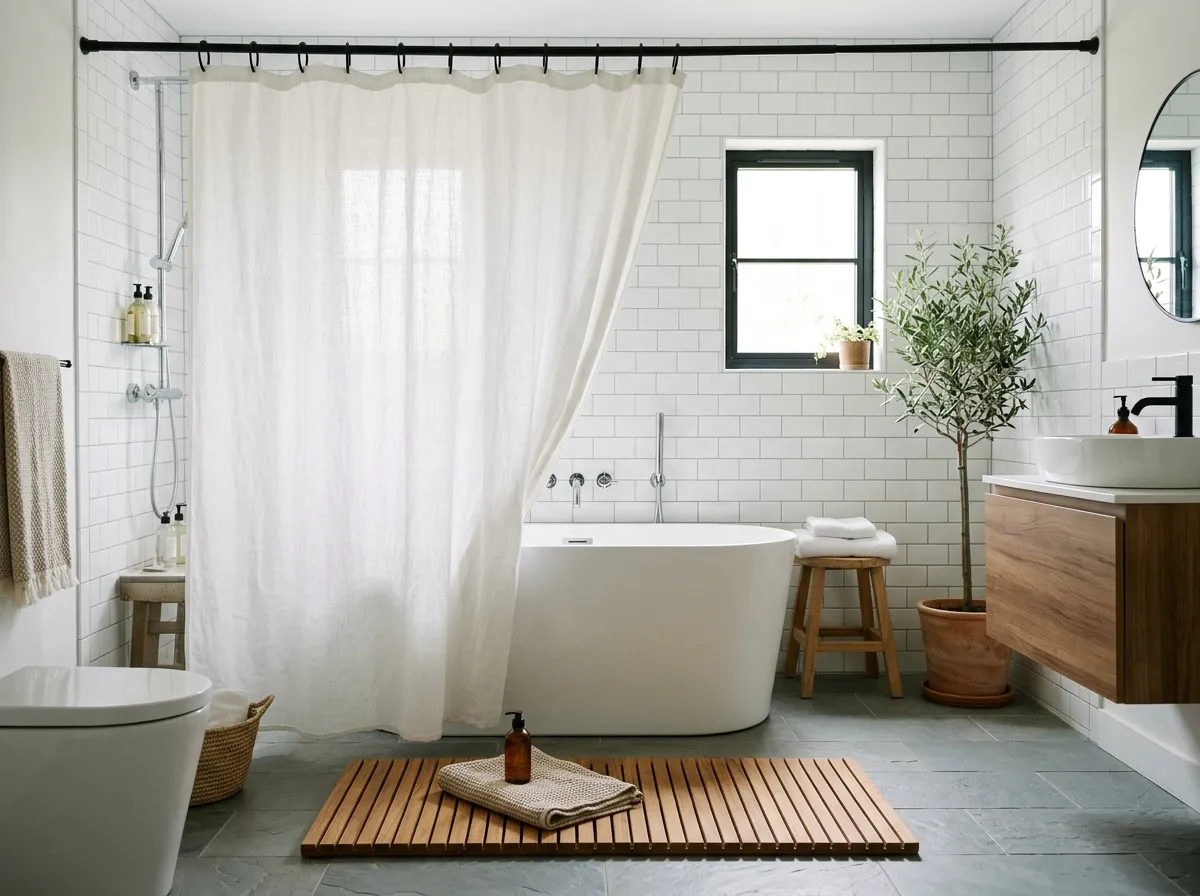
That intense chemical smell when you hang a new shower curtain is not just unpleasant. A 2008 study by the Center for Health, Environment & Justice found that PVC shower curtains release over 100 volatile organic compounds into the air, some of which are classified as hazardous air pollutants by the EPA. Your hot, steamy bathroom creates the perfect conditions for accelerating that chemical release.
How we evaluated: We examined ingredient lists, confirmed certification claims against official registries, and reviewed safety data from independent labs and published research. Full methodology
Dr. Leonardo Trasande, a pediatrician and environmental health scientist at NYU Langone Health, has repeatedly pointed out that phthalates (used to make vinyl shower curtains flexible) are endocrine disruptors linked to reproductive problems, metabolic disruption, and neurodevelopmental effects in children. The daily exposure adds up.
Fortunately, safer shower curtain options exist at every price point. Here is what actually works.
Quick Picks: Best Non-Toxic Shower Curtains
| Curtain | Best For | Material | Price | Liner Needed? |
|---|---|---|---|---|
| Bean Products Hemp | Best Overall | 100% hemp | $60-$80 | No |
| Quiet Town | Best Design | Deadstock fabric + PEVA liner | $98-$148 | Included |
| Coyuchi Organic | Best Organic Cotton | GOTS organic cotton | $68-$118 | Optional |
| PEVA Liner | Best Budget | Chlorine-free plastic | $10-$25 | N/A (it is the liner) |
What Makes Shower Curtains Toxic?
The standard shower curtain at any big-box store is made from PVC (polyvinyl chloride), commonly labeled as “vinyl.” PVC is among the most toxic plastics in production, and the problems start before you even step in the shower.
PVC (polyvinyl chloride). Manufacturing PVC produces dioxins, one of the most toxic chemical groups known. The finished product contains phthalate plasticizers (to make it flexible) and lead or tin stabilizers (to prevent degradation). These chemicals leach out over the life of the curtain, accelerated by heat and moisture. This is why we flag PVC as a priority swap in our bathroom guide.
Phthalates. PVC shower curtains contain up to 40% phthalates by weight. These chemicals do not permanently bond to the plastic. They migrate to the surface and volatilize into the air, especially in a hot shower environment. Read more in our phthalates guide.
VOCs. The “new shower curtain smell” is a cocktail of VOCs including toluene, ethylbenzene, and xylene. The Center for Health, Environment & Justice study detected 108 VOCs off-gassing from a single PVC shower curtain. Some of these chemicals were still detectable 28 days later.
Lead and other heavy metals. Some PVC curtains use lead-based stabilizers to maintain flexibility and prevent yellowing. Lead is a neurotoxin with no safe level of exposure, especially for children.
Anti-mildew treatments. Conventional shower curtains are often treated with triclosan or other antimicrobial chemicals to resist mold. Triclosan is an endocrine disruptor that contributes to antibiotic resistance.
The Safe Alternatives: Material Guide
Hemp. The top-performing natural material for shower curtains. Hemp is naturally antimicrobial (mold resistant without chemical treatment), water resistant, and gets softer with washing. It dries faster than cotton and does not need a separate liner. Hemp production also requires less water and no pesticides compared to conventional cotton.
Organic cotton. Soft, washable, and free of pesticide residues. Cotton absorbs water more than hemp, so it benefits from a non-toxic liner on the inside or frequent washing to prevent mildew. GOTS certification ensures the cotton was grown organically and processed without harmful chemicals.
Linen. Naturally quick-drying and mold resistant, though less common for shower curtains. Linen works well in well-ventilated bathrooms.
PEVA (polyethylene vinyl acetate). PEVA is a chlorine-free plastic alternative to PVC. It does not contain phthalates, lead, or chlorine. While not as clean as hemp or organic cotton, PEVA is a dramatic improvement over PVC and the most affordable swap you can make.
What to avoid: Anything labeled “vinyl,” “PVC,” or that has that unmistakable chemical plastic smell. Also skip curtains that advertise “antimicrobial” or “mildew-resistant” treatments unless they specify the method (some use silver ions, which is acceptable; many use triclosan, which is not).
The 4 Best Non-Toxic Shower Curtains
1. Bean Products Hemp Shower Curtain - Best Overall
Price: $60-$80 | Material: 100% hemp | Liner needed: No
Bean Products makes a simple, effective hemp shower curtain that eliminates the need for a separate liner. Hemp’s natural antimicrobial properties mean mold and mildew struggle to take hold, even in a damp bathroom. The curtain gets softer and more water-resistant with each wash as the hemp fibers swell and tighten.
The look is rustic and textured, not sleek. If you want that clean hotel aesthetic, Coyuchi’s waffle weave might suit your taste better. But for pure functionality and chemical safety, the Bean Products hemp curtain is hard to beat.
It comes in natural (undyed) and a few solid colors using AZO-free dyes. Standard size fits any tub, and they make a stall size too.
According to NonToxicLab, hemp shower curtains are the single best upgrade in a non-toxic bathroom because they replace one of the most chemically intense products in the average home.
Best for: Anyone who wants the safest, lowest-maintenance option and does not mind a natural aesthetic.
Drawback: Limited color options. The natural hemp color darkens slightly when wet.
2. Quiet Town Shower Curtain - Best Design
Price: $98-$148 | Material: Deadstock fabric outer + PEVA liner | Liner needed: Included (snap-on PEVA)
Quiet Town makes shower curtains for people who care about both chemistry and design. Their curtains are made from deadstock fabric (surplus material from fashion and textile mills that would otherwise go to waste) in a rotating selection of modern colors and patterns.
The system uses a snap-on PEVA liner, which keeps the fabric dry while avoiding PVC. The liner is replaceable when it wears out. The outer curtain is machine washable and designed to last for years.
Based in Brooklyn, Quiet Town is transparent about materials and manufacturing. They publish detailed information about every fabric source and have been vocal about PVC-free alternatives in the home textile space.
Best for: Design-conscious buyers who want a high-end look without PVC or vinyl.
Drawback: Higher price point. The outer fabric is not always natural fiber (depends on the deadstock source).
3. Coyuchi Organic Cotton Shower Curtain - Best Organic Cotton
Price: $68-$118 | Material: GOTS certified organic cotton | Liner needed: Optional (recommended for longevity)
Coyuchi is a well-established organic textile brand, and their shower curtains reflect that quality. The waffle weave organic cotton has a clean, hotel-like appearance and carries GOTS certification, which covers both the organic farming of the cotton and the chemical processing of the finished textile.
Cotton absorbs more water than hemp, so Coyuchi does recommend using a liner. If you go with a PEVA liner on the inside, you get the visual appeal of organic cotton facing the room and the water protection of a PVC-free plastic barrier.
The curtain is machine washable. Coyuchi also makes matching organic cotton bath towels and bath mats if you want to outfit the whole room.
Pair this with a non-toxic shower filter and clean body wash for a fully non-toxic shower setup.
Best for: Anyone who wants a polished, classic look with verified organic materials.
Drawback: Benefits from a liner (adds cost). White cotton can stain over time without regular washing.
4. PEVA Shower Curtain Liners - Best Budget Alternative
Price: $10-$25 | Material: PEVA (chlorine-free plastic) | Liner needed: N/A
If you are on a tight budget or just need a liner to go behind a fabric curtain, PEVA is the way to go. Multiple brands make them (look for ones explicitly labeled PVC-free and phthalate-free). Amazon, Target, and Bed Bath & Beyond all carry PEVA liners in the $10-20 range.
PEVA is not a perfect material. It is still plastic, and it does not carry the antimicrobial benefits of hemp. It will need replacing every 6-12 months as it yellows or develops mildew.
But compared to a PVC vinyl curtain, PEVA eliminates the phthalates, the chlorine, and the majority of the VOC off-gassing. If budget is the constraint, swapping from PVC to PEVA takes five minutes and costs under $20. It is the highest-impact, lowest-cost swap in our non-toxic product swap list.
Dr. Michael Waring, an indoor air quality researcher at Drexel University, studies how consumer products affect the chemical composition of indoor air. His work on VOC emissions from household materials reinforces why replacing high-emission products like PVC curtains can measurably improve the air in bathrooms and other small, poorly ventilated spaces.
Best for: Budget-conscious shoppers. Renters. Anyone who needs a quick improvement right now.
Drawback: Still plastic. Needs replacing more often than fabric. Some brands are better than others.
Preventing Mold Without Chemicals
The biggest concern people have about switching to fabric shower curtains is mold. Here is how to handle it:
Spread the curtain after every shower. Pull it closed so air circulates across the full surface. Bunching it to one side traps moisture and creates mold conditions.
Run the bathroom fan for 20 minutes post-shower. Ventilation is the single most effective mold prevention strategy. If you do not have a fan, crack a window.
Wash fabric curtains every 2-4 weeks. Machine wash on warm with a mild, non-toxic detergent. Add a half cup of white vinegar to the rinse cycle for extra mildew prevention.
Choose hemp if mold is a real concern. Hemp is far more mold-resistant than cotton. In a humid bathroom with poor ventilation, hemp is the safer bet.
If mold appears, treat it naturally. Our guide on removing mold without bleach covers the full process.
Questions People Ask
Is PEVA safer than PVC for shower curtains?
Yes, significantly. PEVA does not contain chlorine, phthalates, or lead stabilizers. It produces far fewer VOCs when new. It is not a zero-emission material, but it represents a massive improvement over PVC. If natural fabric is out of your budget, PEVA is the right move.
Do fabric shower curtains get moldy?
They can if you do not manage moisture. Hemp is naturally resistant to mold and works well even in humid bathrooms. Cotton and linen require more attention: spread the curtain after use, ventilate the bathroom, and wash the curtain every few weeks. Many people use a PEVA liner on the inside and a fabric curtain on the outside to get the best of both.
Can I use a shower curtain without a liner?
With hemp, yes. Hemp is water-resistant enough to function as both curtain and liner. Cotton and linen will let water through to some degree and benefit from a liner, especially in a tub-shower setup where splashing is significant.
How often should I replace a PEVA liner?
Every 6-12 months, depending on bathroom conditions. Replace it when you see yellowing, persistent mildew stains, or when it starts to feel stiff and crackly. PEVA does not last as long as fabric, but at $10-20 per replacement, the cost is minimal.
Are “antimicrobial” shower curtains safe?
It depends on the antimicrobial agent. Silver ion technology is generally considered safe for this application. Triclosan-based treatments are not. If the label says “antimicrobial” without specifying the method, assume it is a chemical treatment and skip it. Natural hemp achieves antimicrobial performance through its fiber structure, not added chemicals.
What about polyester shower curtains?
Polyester is better than PVC but not as clean as natural fibers. Polyester itself is chemically stable and does not off-gas significantly. The concern is more about the chemical treatments (wrinkle-resistant coatings, stain repellents, antimicrobial treatments) that manufacturers often add. An untreated, OEKO-TEX certified polyester curtain is a reasonable middle option.
You Might Also Like
- Non-Toxic Bathroom Complete Guide - Every product swap for a clean bathroom
- Best Non-Toxic Shower Filters - Filter chlorine and heavy metals from shower water
- Best Non-Toxic Body Wash - Clean formulas for daily use
Sources
- Center for Health, Environment & Justice. “Volatile Vinyl: The New Shower Curtain’s Chemical Smell,” 2008.
- Trasande, L. “Phthalates and Human Health.” Annual Review of Public Health, 2024.
- Steinemann, A. “Fragranced Consumer Products and Effects on Air Quality.” Air Quality, Atmosphere & Health, 2016.
- GOTS (Global Organic Textile Standard) Version 7.0 Chemical Requirements, 2025.
- Environmental Protection Agency. “Polyvinyl Chloride and Copolymers Production,” National Emission Standards.
- Waring, M.S. “Secondary Organic Aerosol in Residences.” Indoor Air, 2014.