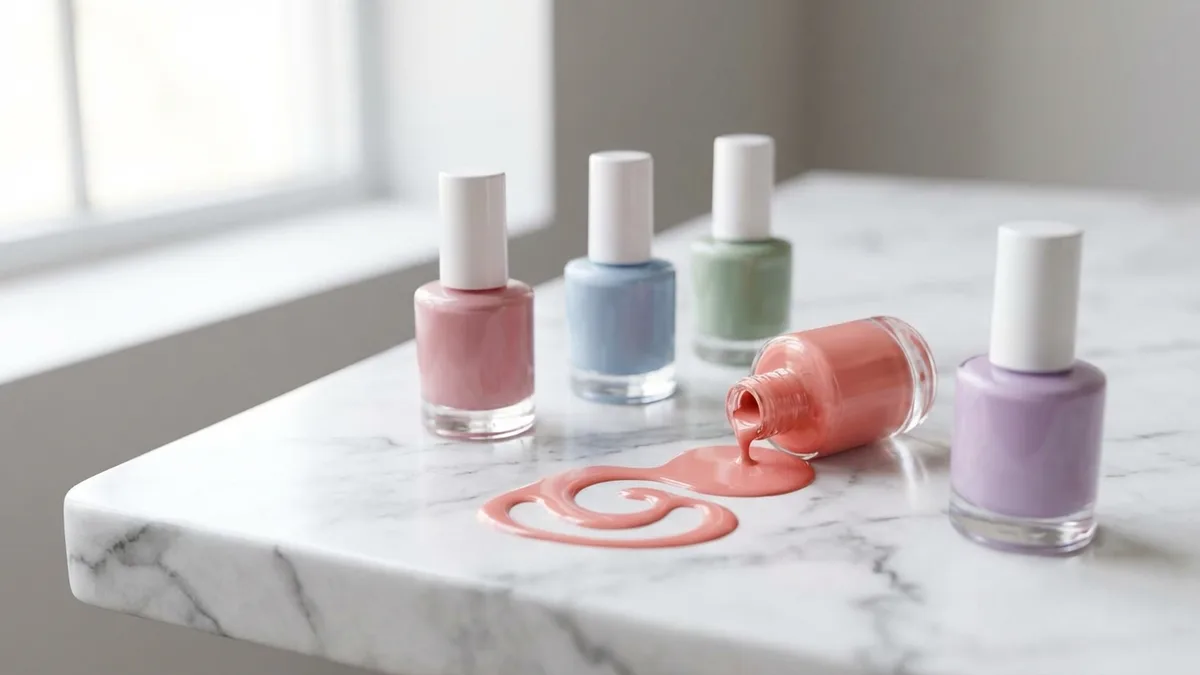
Walk into any nail salon and that sharp chemical smell hits you before you even sit down. That odor comes from a combination of formaldehyde, toluene, and dibutyl phthalate, three chemicals that conventional nail polishes have relied on for decades despite clear evidence that they are toxic.
What went into our picks: We screened ingredients against safety databases, verified each certification claim was current, and prioritized products with full ingredient disclosure. Our testing process Here is the thing: nail polish sits on your body for days or weeks at a time. Your nails are permeable. And the application process itself involves breathing in solvent fumes in close proximity to your face. For nail technicians who work with these products 8+ hours a day, the health consequences are well documented.
Dr. Shanna Swan, whose research at Mount Sinai focuses on reproductive health and environmental exposures, has specifically studied how phthalates in personal care products contribute to measurable hormonal changes. Dibutyl phthalate (DBP), a plasticizer once standard in nail polish, is one of the chemicals her work flags as particularly concerning for reproductive health.
The good news is that truly safe nail polishes now perform nearly as well as their conventional counterparts. I tested five brands that skip the worst ingredients and still deliver real results.
Quick Picks: Best Non-Toxic Nail Polish
| Brand | Best For | Formula | Price | Free-From Count |
|---|---|---|---|---|
| Ella+Mila | Best Overall | 17-free | $10-$11 | 17 chemicals |
| Zoya | Best Colors | 10-free | $11-$12 | 10 chemicals |
| Tenoverten | Best Luxury | 8-free | $12-$14 | 8 chemicals |
| Suncoat | Best Water-Based | Water-based | $9-$13 | Virtually all solvents |
| Kure Bazaar | Best Eco-Luxury | 10-free | $18-$22 | 10 chemicals |
What “X-Free” Actually Means
The nail polish industry uses a numbering system to describe how many toxic chemicals have been removed from a formula. Understanding what each level means helps you make an informed choice.
The “Toxic Trio” (3-Free baseline):
- Formaldehyde: A known carcinogen used as a nail hardener. Causes respiratory irritation and is linked to nasopharyngeal cancer with chronic exposure. Our formaldehyde guide covers the full profile.
- Toluene: A solvent that helps polish apply smoothly. It is a neurotoxin linked to headaches, dizziness, and reproductive harm. Banned in cosmetics in the EU.
- Dibutyl phthalate (DBP): A plasticizer that prevents chipping. It is an endocrine disruptor linked to reproductive and developmental problems.
5-Free adds: Formaldehyde resin and camphor.
7-Free adds: Ethyl tosylamide and xylene.
10-Free adds: Parabens, fragrances, and animal-derived ingredients (varies by brand).
Beyond 10-Free: Brands like Ella+Mila (17-free) continue removing additional chemicals including acetone, ethyl acetate, and various solvents.
Water-based formulas take a completely different approach, replacing petrochemical solvents with water as the primary carrier. This eliminates most of the chemicals in the “free-from” conversation entirely.
Dr. Leonardo Trasande, whose work at NYU examines the health costs of chemical exposures, has written about how the personal care industry’s incremental approach to removing toxic ingredients often leaves consumers confused. Moving from 3-free to 5-free to 10-free sounds like progress, but the real question is whether the replacement ingredients have been adequately tested. His perspective: the fewer synthetic chemicals in constant skin contact, the better.
How to Read Nail Polish Labels
Understanding personal care labels is especially important for nail polish because the industry is lightly regulated. Here is what to look for:
Check the actual ingredient list. “Free-from” marketing claims are voluntary and unverified. The ingredient list is the legal document. Look for the specific chemicals you want to avoid (formaldehyde, toluene, DBP, TPHP).
Watch for TPHP (triphenyl phosphate). This is the chemical that many “free-from” polishes still contain. TPHP is a flame retardant and plasticizer that research from Duke University linked to endocrine disruption. A 2015 study found that women who painted their nails with TPHP-containing polish showed elevated levels of the chemical’s metabolite in their urine within 10-14 hours of application.
“Vegan” does not mean “non-toxic.” Vegan nail polish avoids animal-derived ingredients (guanine from fish scales, carmine from insects), but it says nothing about chemical safety. A polish can be vegan and still contain formaldehyde.
“Natural” is unregulated. The FDA does not regulate the term “natural” in cosmetics. Any polish can call itself natural regardless of what it contains. Our toxic ingredient glossary can help you decode what is actually in the bottle.
The 5 Best Non-Toxic Nail Polishes
1. Ella+Mila - Best Overall Non-Toxic Nail Polish
Price: $10-$11 | Formula: 17-free | Colors: 100+
Ella+Mila is my top pick because it strikes the best balance between safety credentials and actual performance. The 17-free formula skips formaldehyde, toluene, DBP, TPHP, and 13 additional chemicals. It is also vegan and cruelty-free.
The color range is extensive (over 100 shades), the application is smooth, and chip resistance is strong for a non-toxic formula. Most colors last 5-7 days without significant chipping, which is competitive with conventional polishes.
The brand is transparent about their ingredient list and has been consistently well-reviewed by independent clean beauty testing organizations. At $10 a bottle, the price is reasonable for the quality.
Best for: Anyone who wants the safest formula that still performs like a real nail polish. Great for pregnancy (see our pregnancy guide).
Drawback: Some darker shades require three coats for full opacity.
2. Zoya - Best Color Selection
Price: $11-$12 | Formula: 10-free | Colors: 400+
Zoya has the largest color library of any non-toxic nail polish brand, with over 400 shades. They have been in the clean nail polish space longer than most brands, and their formulas reflect that experience.
The 10-free formula eliminates the toxic trio plus formaldehyde resin, camphor, TPHP, parabens, xylene, ethyl tosylamide, and lead. The polish applies well and holds up for 5-7 days with a good base and top coat.
Zoya is particularly popular with nail professionals who want a cleaner option for salon use. The professional-grade viscosity means it goes on without streaking, which is not always the case with non-toxic formulas.
According to NonToxicLab’s research, Zoya’s combination of formula safety, color range, and professional performance makes it the strongest option for people who are particular about finding the exact right shade.
Best for: Color-obsessed nail enthusiasts. Salon professionals looking for a safer option.
Drawback: 10-free rather than 17-free. Some people wish they would go further on the free-from list.
3. Tenoverten - Best Luxury Non-Toxic Polish
Price: $12-$14 | Formula: 8-free | Colors: 40+ curated shades
Tenoverten takes a curated approach rather than offering hundreds of colors. Their seasonal palettes feature sophisticated, muted tones with names inspired by New York City streets. The brand started as a salon chain in Manhattan and developed their polish line to meet the standards of their in-house nail technicians.
The 8-free formula is clean and the application quality is salon-grade. Colors are rich and tend to be more opaque than many non-toxic alternatives, meaning most shades need only two coats.
The trade-off is a smaller color range and a slightly higher price point. If you gravitate toward neutrals, mauves, and classic reds, Tenoverten has you covered. If you want neon green or electric blue, look at Zoya.
Best for: People who prefer curated, sophisticated color palettes and salon-quality finish.
Drawback: 8-free (not the highest standard). Limited color range compared to Zoya or Ella+Mila.
4. Suncoat - Best Water-Based Nail Polish
Price: $9-$13 | Formula: Water-based | Colors: 30+
Suncoat takes a fundamentally different approach by using water instead of chemical solvents as the base for their polish. This means virtually zero odor during application, no harsh fumes, and none of the chemicals that make up the “free-from” conversation.
The water-based formula makes Suncoat the safest option for pregnant women, children, and anyone with chemical sensitivities. The brand explicitly markets their kids’ line as safe for young children, and the formulation backs that claim up.
The performance trade-off is real, though. Water-based polishes do not last as long as solvent-based formulas. Expect 3-5 days before chipping becomes noticeable, compared to 5-7 for Ella+Mila or Zoya. The color range is also more limited, and some shades look slightly different on the nail than in the bottle.
Best for: Pregnancy. Children’s nail polish. Anyone with MCS (multiple chemical sensitivity) or strong reactions to nail polish fumes.
Drawback: Shorter wear time. Fewer color options. Takes longer to dry than solvent-based polishes.
5. Kure Bazaar - Best Eco-Luxury
Price: $18-$22 | Formula: 10-free, up to 90% natural origin ingredients | Colors: 50+
Kure Bazaar is a French brand that combines clean chemistry with luxury aesthetics. Their formulas use up to 90% ingredients of natural origin, including wood pulp, cotton, corn, and wheat. The remaining ingredients are synthetic but free from the 10 most concerning chemicals.
The finish is noticeably glossy and luxurious. Application is smooth, and the colors are clearly designed with a fashion-forward European sensibility. If you care about packaging and presentation, Kure Bazaar delivers a premium experience.
At $18-$22 per bottle, this is the most expensive option on the list. The price reflects the French manufacturing, the natural-origin formulation, and the luxury positioning. Whether it is worth the premium depends on your budget and priorities.
Best for: Anyone who wants the highest-end non-toxic nail polish experience and is willing to pay for it.
Drawback: Premium pricing. Not widely available in US retail stores (mostly online).
Tips for Better Performance from Non-Toxic Polish
Non-toxic polishes have improved dramatically, but they still benefit from good technique:
Always use a base coat. Non-toxic polishes adhere better and last longer with a proper base coat. Ella+Mila and Zoya both make non-toxic base coats.
Apply thin coats. Two thin coats outperform one thick coat every time. Thin coats dry faster and chip less.
Cap the free edge. Swipe the brush along the tip of your nail at the end of each coat. This seals the edge and prevents peeling.
Use a non-toxic top coat. A good top coat adds 2-3 days of wear time to any formula. It also adds gloss and protects against scratching.
Let each coat dry fully. Non-toxic polishes (especially water-based ones) take longer to dry than conventional formulas. Give each coat at least 2-3 minutes before applying the next.
Commonly Asked Questions
Is nail polish safe during pregnancy?
Conventional nail polish containing formaldehyde, toluene, and DBP should be avoided during pregnancy. The non-toxic options on this list are significantly safer. Suncoat’s water-based formula is the most conservative choice for pregnancy because it eliminates virtually all solvent exposure. Ella+Mila is also a strong pick with its 17-free formula. Our non-toxic pregnancy guide covers personal care product safety during pregnancy in detail.
What does “10-free” actually guarantee?
Nothing legally. “Free-from” claims are not regulated by the FDA or any government body. They are voluntary marketing claims. That said, established brands like Zoya and Ella+Mila have been consistent and transparent about their formulations, and independent testing has confirmed their claims. Check the ingredient list rather than relying solely on the number.
Are gel polishes available in non-toxic formulas?
A few brands are developing non-toxic gel polishes, but the technology is not yet on par with clean regular polish. UV-cured gel systems inherently require more synthetic chemistry than regular polish. If long wear is important, I recommend using a high-quality non-toxic regular polish with a good top coat rather than switching to gel.
Is nail polish remover toxic too?
Standard acetone nail polish remover is a strong solvent that can be drying and irritating but is not classified as a carcinogen. Non-acetone removers (ethyl acetate-based) are gentler. Soy-based removers from brands like Ella+Mila and Zoya are the cleanest option. They work more slowly but avoid petroleum-derived solvents entirely.
Are non-toxic polishes safe for kids?
Suncoat and Ella+Mila both make kid-specific lines. Water-based Suncoat is the safest for children because there are virtually no fumes during application. For older kids who want “real” nail polish performance, Ella+Mila’s regular line is a safe choice with parental supervision.
Do non-toxic polishes really last as long as regular ones?
Honest answer: no. The best non-toxic polishes last 5-7 days versus 7-10 for conventional formulas. Water-based polishes last 3-5 days. The gap has closed significantly over the past few years, but there is still a trade-off. Good technique (base coat, thin coats, top coat) makes the biggest difference.
You Might Also Like
- Best Non-Toxic Makeup - Clean foundations, mascaras, and more
- Non-Toxic Personal Care Complete Guide - Every product category covered
- Best Non-Toxic Body Lotion - Moisturizers without hormone disruptors
Sources
- Swan, S.H. “Phthalates and Human Health.” International Journal of Andrology, 2008.
- Trasande, L. “Sicker, Fatter, Poorer.” Houghton Mifflin Harcourt, 2019.
- Mendelsohn, E. et al. “Nail Polish as a Source of Exposure to Triphenyl Phosphate.” Environment International, 2016.
- Serrano, S.E. et al. “Phthalates and Diet: A Review of the Food Monitoring and Epidemiology Data.” Environmental Health, 2014.
- European Commission Scientific Committee on Consumer Safety. “SCCS Opinions on Cosmetic Ingredients.”
- FDA. “Nail Care Products.” Center for Food Safety and Applied Nutrition, 2024.