Packing your kid’s lunch in a container that leaches chemicals into their food defeats the purpose of making a healthy meal in the first place. Yet that is exactly what happens with many popular lunch boxes on the market. See our top picks in best non-toxic sippy cups and kids plates.
Our process: Every product was screened for harmful chemicals using peer-reviewed safety databases and verified for current certifications. How we test Plastic lunch boxes can contain BPA, phthalates, and other plasticizers that migrate into food, especially when exposed to heat. Insulated lunch bags sometimes contain lead in the lining. And even some products labeled “BPA-free” use substitute chemicals like BPS and BPF that research suggests are just as problematic. Here is what BPA actually is and why it matters.. For more on this, see non-toxic back-to-school guide.
The good news is that clean alternatives exist, and they are surprisingly practical for everyday school lunches.
Quick Picks: Best Non-Toxic Lunch Boxes in 2026
| Pick | Product | Price | Best For |
|---|---|---|---|
| Best Overall | PlanetBox Rover | $65 | Everyday school lunches, durability |
| Best Bento Style | LunchBots Large Cinco | $45 | Variety of snacks and portions |
| Best Nesting Set | ECOlunchbox Three-in-One | $35 | Flexibility, different foods |
| Best Leak-Proof | Bentgo Stainless Steel | $40 | Wet foods, yogurts, dips |
| Best Bags | Stasher Silicone Bags | $13 | Sandwiches, snacks on the go |
| Best for Picky Eaters | Yumbox Original | $35 | Separated compartments, fun design |
Why Lunch Box Materials Matter
Kids eat out of their lunch boxes five days a week for years. That is a lot of cumulative contact time between food and whatever material the container is made of. And unlike adults, children eat more food relative to their body weight, which means any chemical exposure from food-contact materials hits them harder.
Dr. Leonardo Trasande, a pediatrician and researcher at NYU Langone Health, has published extensively on how everyday chemical exposures from food packaging and containers contribute to health problems in children, including metabolic disruption, early puberty, and attention issues. His work has shown that reducing exposure to plastic food-contact materials is one of the most impactful steps parents can take.
Here is what to watch out for:
Lead in insulated bags. In 2023, the Center for Environmental Health tested dozens of popular lunch bags and found that several contained lead in the PVC lining material. Lead has no safe level of exposure for children. If your lunch bag has a shiny, plastic-feeling interior lining, it may contain PVC with lead stabilizers.
BPA and BPA substitutes in plastic containers. BPA is an endocrine disruptor that mimics estrogen. Many products have switched to “BPA-free” plastics, but the replacement chemicals (BPS, BPF, BPAF) show similar hormonal activity in lab studies. The safest approach is to avoid hard plastic food containers altogether. Learn more about whether BPA-free is actually safe.
Phthalates in soft plastics. Flexible plastic components (like the soft-touch grip on a lid) can contain phthalates, which are also endocrine disruptors. Dr. Shanna Swan’s research has documented connections between phthalate exposure and reproductive development in children.
PFAS in stain-resistant coatings. Some lunch bags and fabric components are treated with PFAS to repel stains and water. These forever chemicals accumulate in the body over time.
The Safest Materials for Lunch Boxes
- Stainless steel (304 or 18/8 grade): The gold standard. Non-reactive, does not leach, lasts forever, dishwasher safe.
- Platinum food-grade silicone: Stable, does not leach at normal temperatures, flexible, and microwave safe.
- Food-grade glass: Non-reactive and non-leaching, but heavy and breakable (not ideal for young kids).
- Organic cotton or untreated fabric bags: For outer bags, choose unlined cotton or PFAS-free fabric.
Detailed Reviews
1. PlanetBox Rover - $65
Best overall non-toxic lunch box
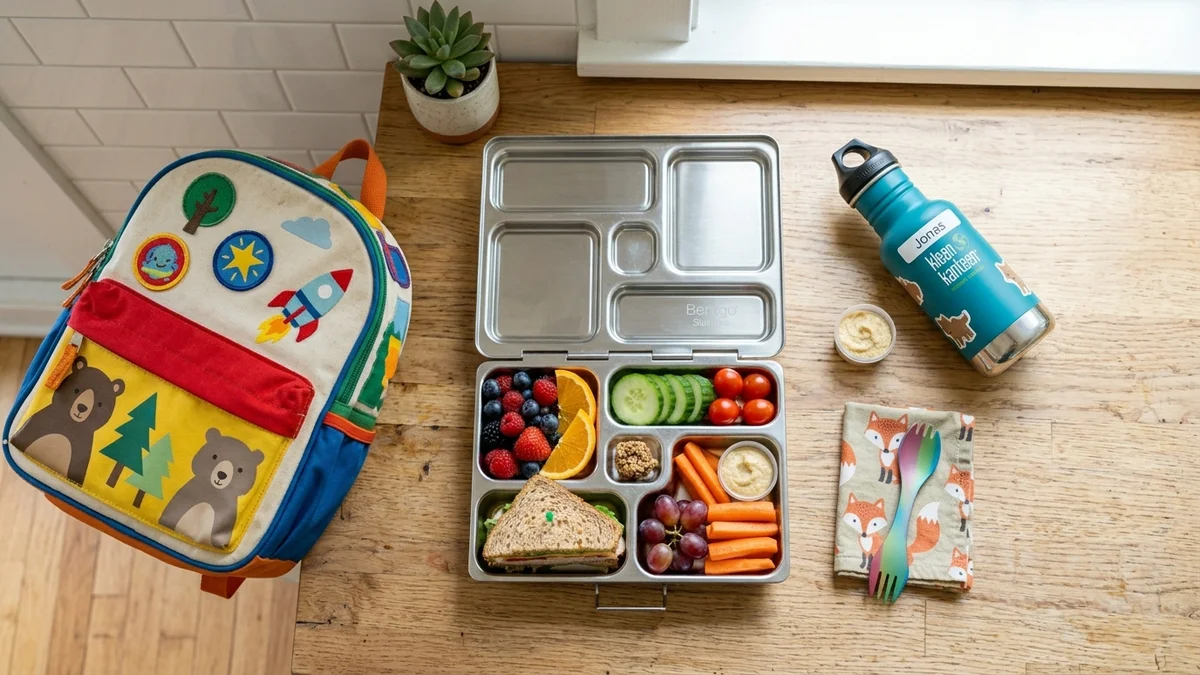
The PlanetBox Rover is a one-piece stainless steel bento box with five compartments and a magnetic closure. No plastic, no coating, no liner. Just 18/8 stainless steel. It has been a parent favorite for years because it is virtually indestructible and makes packing varied lunches simple.
The five compartments fit a sandwich (or wrap), two sides, a fruit portion, and a small treat. PlanetBox also sells silicone “tall dipper” containers that fit inside the compartments for wet foods.
What I like: Genuinely unbreakable. My oldest has used hers for three years and it still looks good. The magnetic closure is easy for small hands. According to NonToxicLab, this is the most reliable stainless steel lunch box you can buy for daily school use.
What to know: Not leak-proof on its own. If you are packing yogurt or applesauce, you need the separate silicone dippers. The $65 price is high for a lunch box, but it will outlast dozens of plastic alternatives.
2. LunchBots Large Cinco - $45
Best bento style
LunchBots makes simple stainless steel containers with no plastic components in the food-contact area. The Large Cinco has five sections of various sizes, a snap-latch lid, and a clean 18/8 stainless steel interior. It is fully dishwasher safe.
What I like: Slightly more affordable than PlanetBox with a similar layout. The snap latches are sturdy and the container feels solid. LunchBots offers many sizes and configurations, so you can mix and match.
What to know: The snap latches can be hard for kids under 5 to open. Like the PlanetBox, it is not leak-proof without separate silicone containers for wet foods.
3. ECOlunchbox Three-in-One - $35
Best nesting set
This is a set of three stainless steel containers that nest inside each other for storage. Two rectangular containers and one small round “snack pod” with a silicone seal on the lid. Each container can hold different foods and be packed together or separately.
What I like: The flexibility is great. You can send all three containers or just one depending on the day. The nesting design saves space in cabinets. The silicone-sealed round container actually holds liquids.
What to know: Three separate pieces mean more things for a kid to lose. The rectangular containers do not have leak-proof seals. Best for dry foods, sandwiches, and snacks.
4. Bentgo Stainless Steel Leak-Proof - $40
Best leak-proof option
If your kid’s lunch involves yogurt, hummus, soup, or anything else that can spill, the Bentgo Stainless Steel is the best non-toxic option with genuine leak-proof performance. The three-compartment design has a silicone-sealed lid that keeps liquids contained.
What I like: Actual leak-proof performance from a stainless steel lunch box is rare. The silicone seal is food-grade platinum silicone. Three compartments are well-sized for a main and two sides.
What to know: Only three compartments (compared to five on PlanetBox and LunchBots). The silicone seal needs to be cleaned thoroughly to prevent food buildup. Make sure you are buying the stainless steel version, not the plastic Bentgo models.
5. Stasher Silicone Bags (Sandwich Size) - $13
Best reusable bags
Stasher bags are made from platinum food-grade silicone, which is one of the safest flexible food-contact materials available. They are free of BPA, BPS, lead, latex, and phthalates. They are dishwasher safe, microwave safe, and even oven safe up to 425 degrees.
What I like: Perfect for sandwiches, crackers, and snacks. They replace plastic zip bags and last for years. The pinch-lock seal actually works. Kids find them easy to open.
What to know: They are bags, not rigid containers, so they do not protect food from being squished. For a full lunch, you would need to combine them with a rigid container or use multiple bags. Cleaning the inside corners takes some effort.
6. Yumbox Original - $35
Best for picky eaters
The Yumbox uses a plastic outer shell (which is Tritan plastic, free of BPA, BPS, and phthalates) with a single silicone-sealed lid that makes each of the six compartments leak-proof independently. The tray design encourages kids to try different foods.
What I like: The six separated compartments with a visual “plate” design work well for kids who do not like foods touching. The leak-proof seal is one of the best in the bento category. Fun designs appeal to younger kids.
What to know: This is the only plastic-containing option on this list. Yumbox uses Tritan copolyester, which is considered one of the safer plastics, but it is still plastic. If you want to avoid all plastic food-contact surfaces, choose one of the stainless steel options above. See our guide to non-toxic food storage for more on safe container materials.
What About Lunch Bags and Insulated Carriers?
The container is only half the equation. You also need something to carry it in and keep food cool. Here is what to look for:
Skip PVC-lined bags. That shiny silver or plastic interior lining in many insulated lunch bags is often PVC, which can contain lead and phthalates. Choose bags with PEVA (a safer vinyl alternative) or fabric linings instead.
Good options for lunch bags:
- PlanetBox Carry Bag: Designed to fit the Rover, made with PFAS-free fabric
- Fluf Organic Cotton Lunch Bag: Unlined organic cotton, machine washable
- PackIt Freezable Lunch Bag: Gel-lined (freezes overnight), PEVA interior instead of PVC
Ice packs: Standard hard plastic ice packs are generally fine since they do not directly contact food. If you want an extra-safe option, stainless steel ice packs (like U-Konserve) are available.
Cleaning and Maintenance Tips
- Wash stainless steel daily. Hot soapy water or the dishwasher. Stainless steel does not hold odors if you clean it promptly.
- Dry silicone seals completely. Mold can grow on damp silicone gaskets stored in closed containers. Remove the seal, wash separately, and air dry.
- Skip abrasive cleaners. They can scratch stainless steel finishes. Baking soda paste works well for stubborn stains.
- Replace silicone seals yearly. Most brands sell replacement seals. A worn seal means less leak protection.
What Readers Want to Know
Are stainless steel lunch boxes safe? Yes. Food-grade stainless steel (304 or 18/8) is one of the safest food-contact materials available. It does not react with food, does not leach chemicals, and does not absorb flavors or odors.
Is Tritan plastic really safe? Tritan is marketed as BPA-free and has passed some estrogenic activity screening tests. However, some independent researchers have raised questions about whether all Tritan formulations are completely free of estrogenic activity. If you want to be conservative, stainless steel is the safest choice. Our full breakdown of BPA and its alternatives.
How do I know if a lunch bag contains lead? The shiny, plastic-like interior lining of insulated bags is the main concern. PVC linings can contain lead. You can test bags with an XRF analyzer (some consumer groups offer free testing events) or buy from brands that explicitly test and certify their products as lead-free.
Can stainless steel lunch boxes go in the microwave? No. Metal cannot go in the microwave. If your child needs to heat food at school, pack it in a microwave-safe glass or silicone container separately.
How long do stainless steel lunch boxes last? Practically indefinitely. Stainless steel does not degrade, crack, stain, or absorb odors. A $65 PlanetBox that lasts 10 years is cheaper per year than buying a $15 plastic box every year or two.
What is the best lunch box for a kindergartner? For young kids (ages 4-6), the Yumbox or PlanetBox are the easiest to open and close. Snap-latch containers like LunchBots can be challenging for small hands. Magnetic closures (PlanetBox) and single-lid designs (Yumbox) are the most kid-friendly.
You Might Also Like
- Best Non-Toxic Food Storage Bags and Wraps
- Best Non-Toxic Water Bottles
- Best Non-Toxic Baby Shampoo and Body Wash
Sources
- Center for Environmental Health, lead testing in children’s lunch bags and boxes
- Trasande, L. “Sicker, Fatter, Poorer” (2019), NYU Langone Health
- Swan, S.H. “Count Down” (2021), phthalate exposure and child development
- Environmental Working Group (EWG), BPA and BPA-substitute research
- FDA food-contact material safety standards for stainless steel and silicone
- PlanetBox, LunchBots, ECOlunchbox, Bentgo, Stasher, Yumbox product specifications (2026)